Handstand Shoulder Strength Exercises: 8 Moves That Carry Over

A client once asked me why his handstand kept collapsing at eight seconds when he could bench press his bodyweight. I had him do a single set of wall handstand shoulder shrugs, and he managed four shaky reps before his shoulders gave out. Bench press strength and overhead stability are different currencies, and the handstand only accepts one of them. These eight exercises build the specific shoulder strength that carries over to handstands: overhead stability, straight-arm endurance, and the trap strength to stay tall. This is the strength program I pair with my how-to-do-a-handstand technique work, and it sits alongside my broader best shoulder exercises guide for general development.
What Kind of Strength a Handstand Needs
A handstand asks your shoulders for three things at once: to hold your bodyweight overhead with straight arms, to make constant micro-adjustments for balance, and to keep doing it for 30 to 60 seconds. That is strength-endurance in an extreme range of motion, not maximal pressing power. This is why the guy with the big bench stalls and the gymnast with the modest bench holds a minute. Your training must match the demand: moderate loads, straight arms, overhead positions, and time under tension. Every exercise below is chosen because it trains at least two of those three demands.
Exercises 1-4: The Foundation Builders
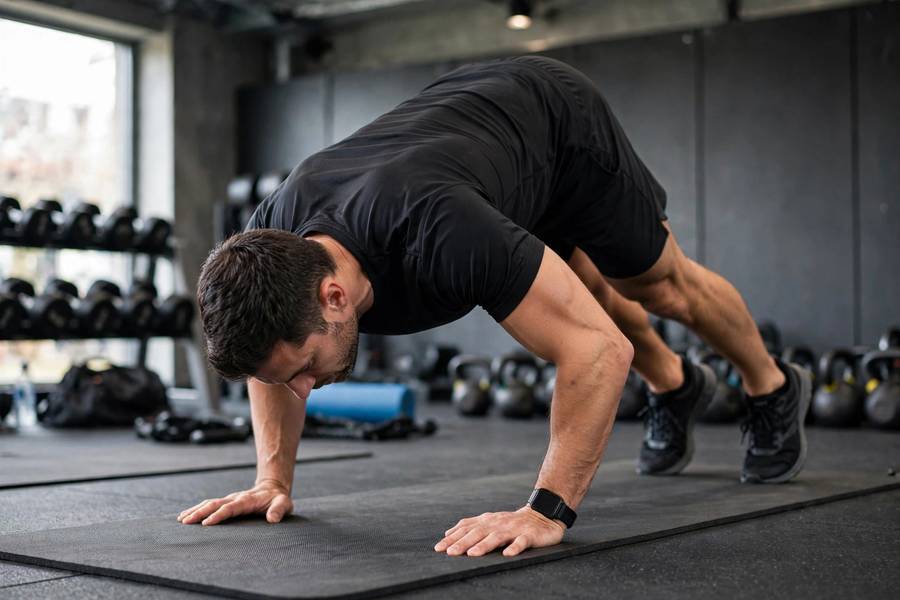
1. Pike push-up: 4 sets of 8-12. Hands on the floor, hips high, lower your head to touch between your hands. Elevate your feet on a box when 12 reps get easy; that shifts more load overhead. This is the base pressing movement for every handstand program I write.
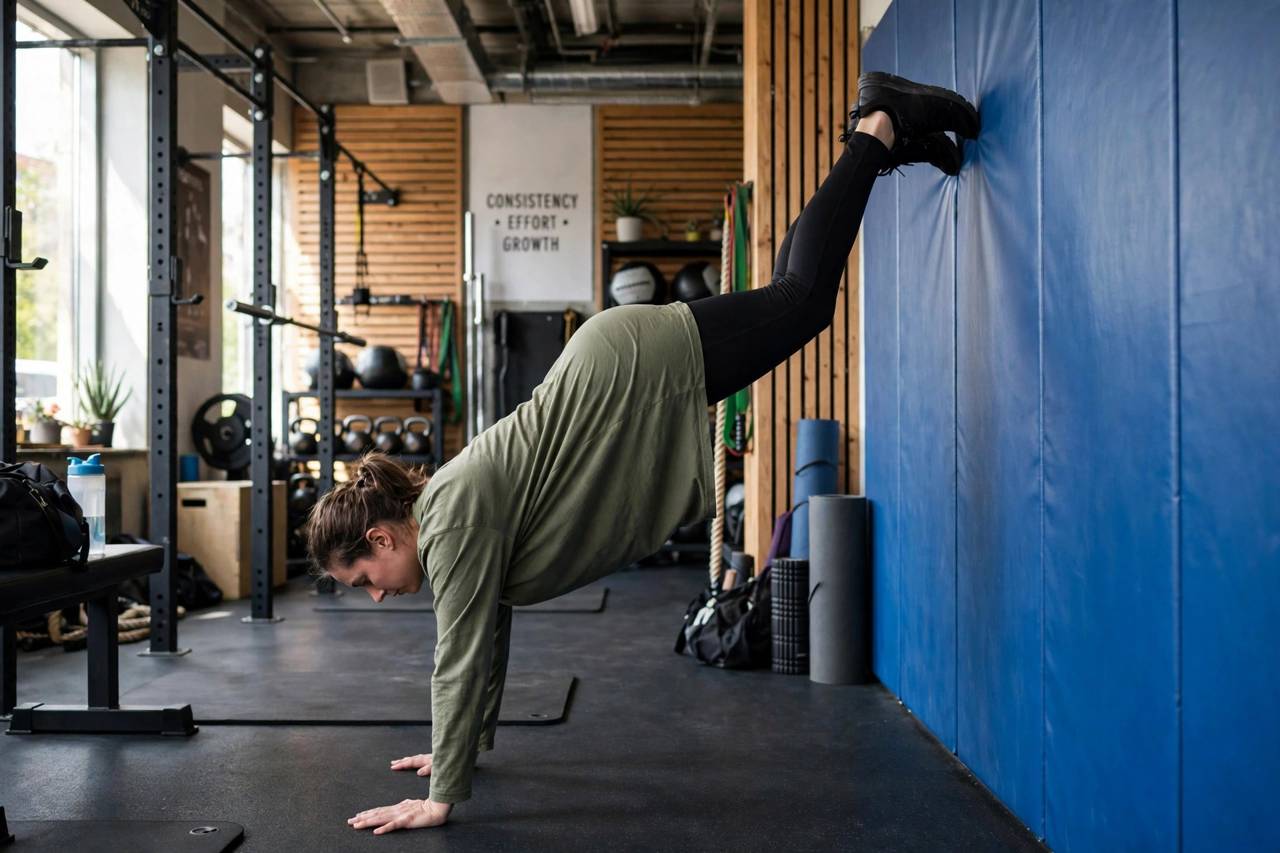
2. Wall walk: 4 sets of 3 walks. Start in a push-up with feet at a wall, walk your feet up and your hands in until your chest faces the wall, then walk back down. One walk up and down is one rep. This builds overhead strength through the full range while teaching the wall position.
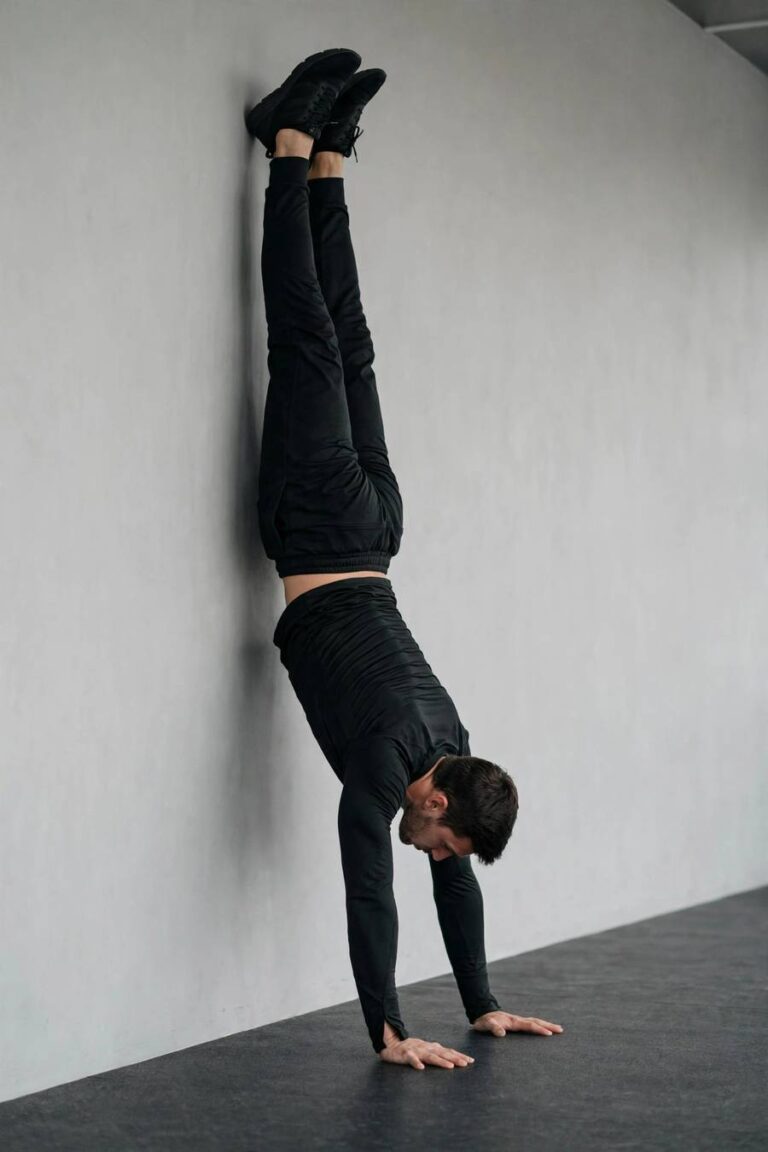
3. Handstand shoulder shrug: 3 sets of 12. In a chest-to-wall hold, shrug your shoulders up toward your ears and press back down, moving only an inch or two. This isolates the traps, the muscles that keep you “tall.” Most beginners cannot feel their traps working until this drill teaches them.
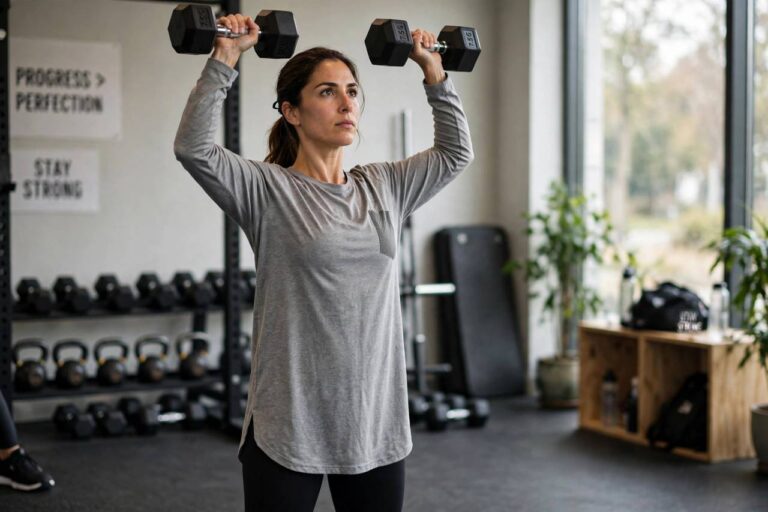
4. Overhead dumbbell press: 3 sets of 8. Standing, strict, no leg drive. This is general overhead strength that supports everything else. Keep the reps honest: full lockout, controlled lower.
Exercises 5-8: The Carryover Builders
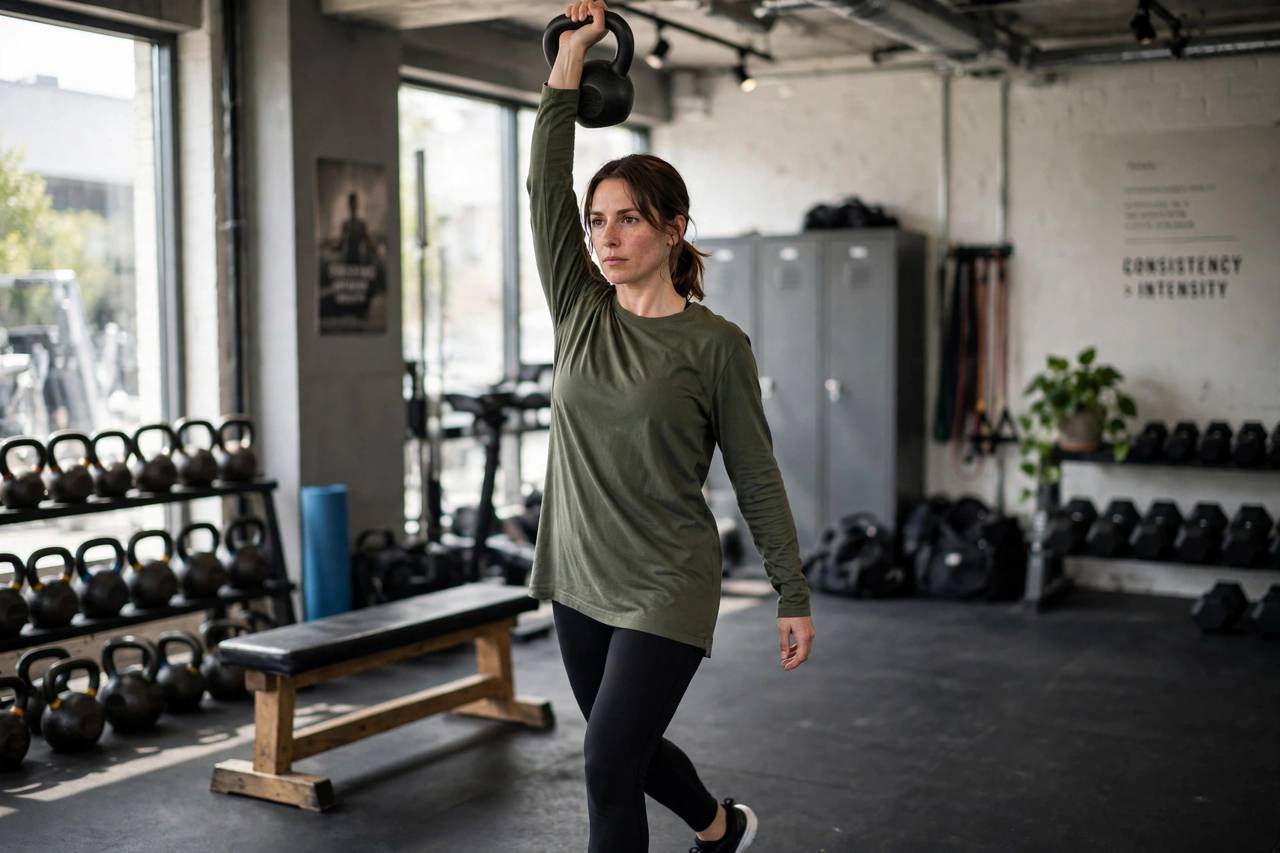
5. Overhead carry: 3 sets of 40 meters per arm. Press a dumbbell or kettlebell overhead and walk. Your shoulder stabilizers fire the entire time to keep the weight stacked. Start light; a 10kg bell humbles most people within 20 meters.
6. Turkish get-up: 3 sets of 2 per side. My Turkish get-up guide covers the technique. For handstand purposes, the value is the long time under tension with a load locked overhead through multiple positions. One heavy get-up per side is worth ten minutes of light shoulder work.
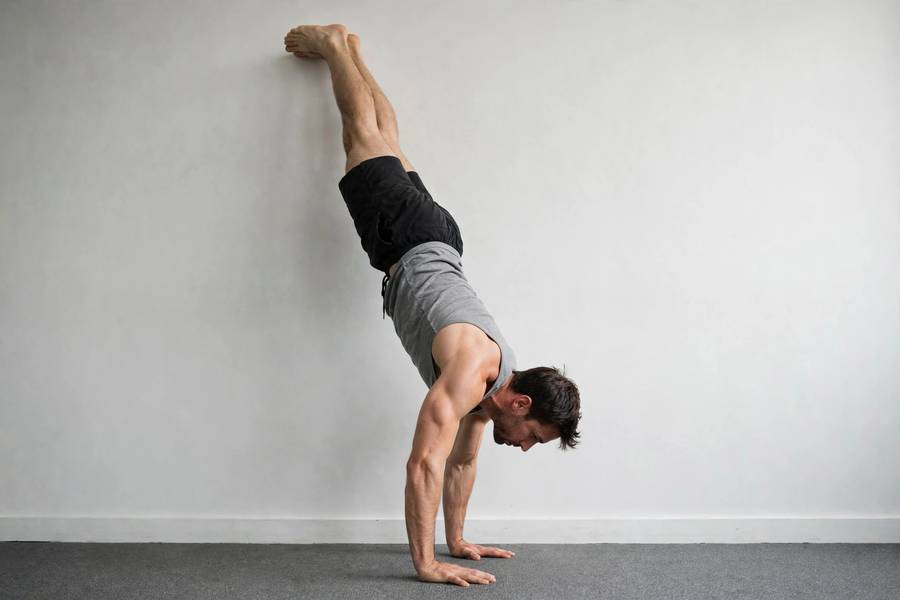
7. Wall handstand hold for time: 5 sets building to 45 seconds. Strength built in the actual position. Chest-to-wall, flat back, pushing tall. Time it, and add five seconds per week.
8. Band overhead pull-apart: 3 sets of 20. Hold a light band overhead and pull it apart behind your head. This trains the lower traps and rear delts that keep your shoulders healthy under all the pressing volume above.
How to Program Them
Two strength sessions per week, 30 minutes each, on days you are not doing long skill practice. Session A: pike push-ups, wall walks, overhead press, band pull-aparts. Session B: handstand shrugs, overhead carries, Turkish get-ups, wall hold for time. Rest 90 seconds between sets; this is strength work, not cardio. Add one rep or five seconds per week to one exercise. When you can do 4×12 elevated pike push-ups, 3×40-second wall holds, and a 60-second overhead carry per arm with a quarter of your bodyweight, your shoulders are ready for serious freestanding volume. Until then, the strength work is the priority and the skill work is the practice.
Balancing Push With Pull
All eight exercises are pushing. If you only push, your shoulders will eventually complain; the joint needs pulling to stay balanced. Twice a week, do how to do pull-ups work: 3 sets of as many clean reps as you can, plus horizontal rows 3×12. The pull-up builds the lats and upper back that stabilize the shoulder from behind, and it is the single best injury-prevention tool in a handstand program. I have never had a client develop chronic shoulder pain while maintaining a 2:1 push-to-pull ratio. The ones who got hurt were the ones who “did not have time” for pull-ups.
The 8-Week Strength Benchmark Plan
Here is how I layer these exercises across eight weeks for a client starting from average fitness. Weeks 1-2: pike push-ups 3×8, wall walks 3×2, band pull-aparts 3×15. Learn the movements; leave two reps in reserve on everything. Weeks 3-4: add handstand shrugs 3×8 and overhead carries with a light bell, 3×25 meters per arm. Pike push-ups go to 4×10. Weeks 5-6: introduce the Turkish get-up, 2×2 per side with a moderate kettlebell, and start timing wall holds: 5 sets, adding five seconds each week from a 20-second baseline. Weeks 7-8: full program as written above, pushing for the benchmarks: 4×12 elevated pike push-ups, 3×40-second wall holds, 60-second carries. Test day at the end of week 8: max strict pike push-ups, max chest-to-wall hold, and max overhead carry distance with a quarter bodyweight. Write the numbers down. Retest every eight weeks. Clients who track these numbers improve them; clients who do not track stay vaguely “working on shoulders” forever. The numbers are the program. On test day, warm up with 5 minutes of easy wall holds and band pull-aparts, then test in this order: max pike push-ups, max wall hold, max carry distance. Rest 3 minutes between tests. If you fail a benchmark, repeat the 8 weeks with 10 percent more volume on the weak movement; if you pass all three, graduate to harder variations like deficit pike push-ups and single-arm carries. Most clients pass on the second cycle, which is exactly how long real strength takes to build.
Mistakes That Waste Your Time
Training to failure. Grinding the last ugly rep teaches bad patterns and fries the nervous system you need for skill practice. Stop every set with one or two clean reps in reserve.
Skipping the shrugs. Everyone wants to do the impressive exercises and skip the tiny shrug drill. The shrug builds the exact muscle that keeps you tall. Do the boring drill.
Adding weight before owning bodyweight. If you cannot do 12 strict pike push-ups, you do not need a weighted vest; you need more pike push-ups. Load is earned.
Doing strength work right before skill work. Fatigued shoulders cannot practice balance. Strength sessions and skill sessions go on different days, or skill first with at least four hours between.
Frequently Asked Questions
The practical benchmarks: 12 strict pike push-ups, a 45-second chest-to-wall hold, and a 60-second overhead carry per arm with a quarter of your bodyweight. Hit those and strength will not be your limiter; miss them and no amount of balance practice compensates.
Yes, up to a solid intermediate level. Pike push-ups, wall walks, handstand shrugs, and wall holds for time cover everything until you hold 30+ seconds freestanding. After that, overhead carries and get-ups with external load build the extra stability for advanced skills.
Two dedicated strength sessions per week plus the shoulder work inherent in your skill practice. More than three heavy sessions invites overuse; the shoulder is a mobile joint doing a stability job here, and it needs recovery to adapt.
It builds dense, defined shoulders and traps, especially with the pressing volume, but it is not a hypertrophy program. Expect athletic, capped shoulders rather than bodybuilder size. If size is the goal, add dedicated overhead pressing with progressive overload.
Painless clicking is common and usually harmless, often tendons moving over bone in a new range. Clicking with pain, pinching, or weakness is different: stop the exercise and get assessed. The band pull-aparts in this program help many people resolve painless clicking within weeks.
Put them on different days: skill practice Monday, Wednesday, Friday and strength work Tuesday, Saturday, for example. If you must combine, do the skill work first while fresh and keep the strength session to 20 minutes. Never do heavy shoulder work the day before a hard skill session; fatigued stabilizers learn nothing and get hurt faster.