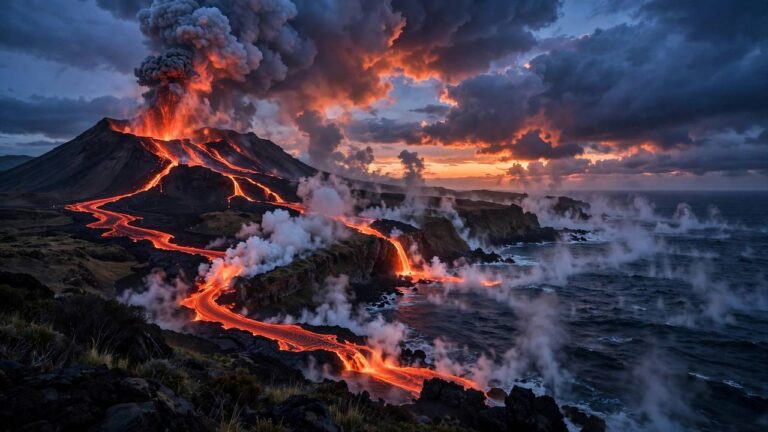
How Do Volcanoes Erupt? Gas, Pressure and the Flow-or-Blow Question

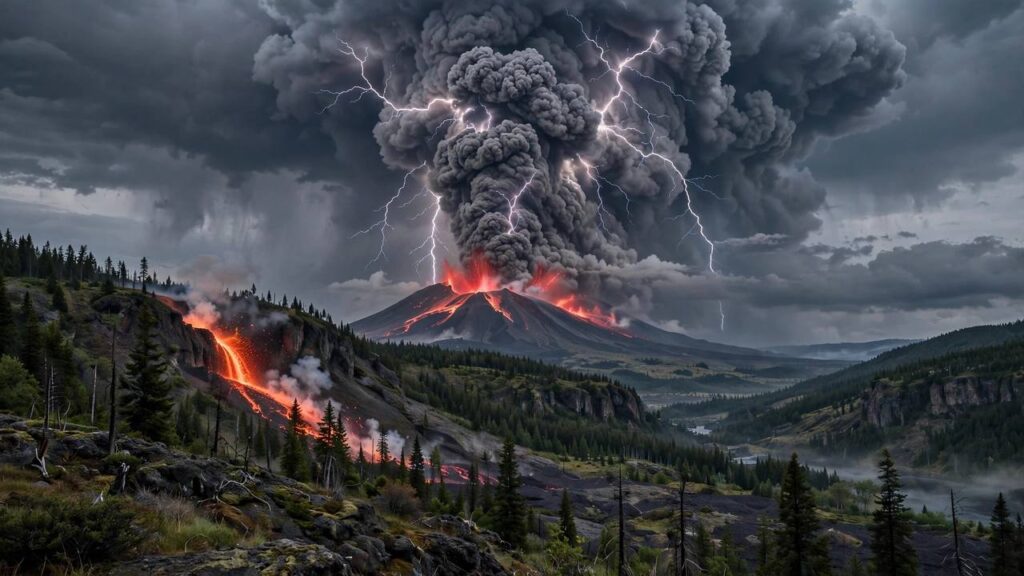
Every eruption looks like chaos from a distance, but the process underneath is orderly enough to teach in three steps. Magma collects underground, gas inside it starts forming bubbles as the pressure drops, and then the magma’s stickiness decides the ending: flow, or blow. If you understand those three steps, you understand why one volcano pours lava that tourists can watch from a viewing platform while another, of the same basic design, explodes sideways.
This guide takes the process slowly, step by step, because the short versions skip the one variable that matters most — the dissolved gas. Where the magma itself comes from is a different article, on how volcanoes form in the first place; this one starts with magma already formed and asks what makes it come out, and why it comes out the way it does.
The Short Answer
Deep within the Earth, it is so hot that some rocks slowly melt and become a thick, flowing substance called magma. Because magma is lighter than the solid rock around it, it rises and collects in magma chambers. Eventually, some of the magma pushes through vents and fissures to the Earth’s surface — and magma that has erupted is called lava. Whether that eruption flows or explodes depends on the composition of the magma, and above all on whether its gases can escape. That is the whole story; the rest of this guide is the story told properly.
Step 1 — Magma Collects and Starts to Rise
Magma originates many tens of miles beneath the ground. It is made of molten rock, crystals, and dissolved gas — the United States Geological Survey asks you to imagine an unopened bottle of soda with grains of sand inside, and that image is worth keeping, because the gas will run this entire article. At depth, under high pressure, the gas stays dissolved in the magma, the way the fizz stays dissolved in a sealed soda bottle. Nothing about the magma looks explosive yet. It is a liquid carrying an invisible load.
What moves it is buoyancy. The magma is lighter than the surrounding solid rock, so it is driven toward the Earth’s surface by that buoyancy, and by pressure from the gas within it. It forces its way upward, gathering in magma chambers — the storage areas in the parts of a volcano — and from there it pushes on through the conduit toward the vents and fissures above. Notice what has not happened yet: no bubbles, no violence. Step 1 is quiet. A light liquid, full of dissolved gas, rising slowly through rock because it weighs less than everything around it. The eruption is decided in the next two steps, on the way up.
Step 2 — Pressure Falls, Bubbles Form
As magma rises, the pressure on it falls — there is simply less rock weighing on it from above. And dissolved gas responds to falling pressure the way soda responds to a loosened cap: it starts coming out of the liquid as bubbles. Down in the chamber, the gas had no choice but to stay dissolved. On the way up, it increasingly does the opposite.
Why the Bubbles Grow as the Magma Climbs
Two things happen to the bubbles during the ascent, and both push in the same direction. First, more gas keeps leaving the magma to form new bubbles as the pressure keeps dropping — the higher the magma climbs, the more of its dissolved load converts to gas. Second, the bubbles that already exist expand, because the pressure squeezing them is weakening. The process of gas forming bubbles inside rising magma is called vesiculation, and its result is a liquid that is becoming, meter by meter, part froth.
Picture the soda bottle again, opened slowly this time. Deep magma is the sealed bottle: gas dissolved, surface calm. Rising magma is the bottle with the cap being eased off: fizz building, bubbles swelling, pressure looking for a way out. Whether that pressure finds a way out gently — or is still trapped when the magma reaches the surface — is the entire subject of Step 3. The bubbles have formed in every magma. What differs is whether they can escape.
Hold on to one consequence of vesiculation, because it explains the speed of what follows. A magma full of expanding bubbles is a magma under growing internal pressure: the gas wants more room than the liquid can give it. In a runny magma this resolves itself continuously, bubble by bubble, all the way up. In a sticky magma it does not resolve at all — the pressure simply accumulates inside a liquid too thick to release it, and it keeps accumulating for as long as the magma keeps rising. Step 2, in other words, is where an explosive eruption is loaded. Step 3 is where we find out whether it goes off.
Step 3 — What Decides: Flow or Blow?
Whether a volcano erupts explosively or effusively — non-explosively — is determined by several interconnected factors: the viscosity of the magma, its composition, its temperature, the amount of gas trapped in it, and whether water gets added to it. Three of those factors do most of the deciding.
Viscosity: How Sticky Is the Magma?
Viscosity is the resistance of a material to flow. Highly viscous materials do not flow easily; they are sticky, like honey. Materials with low viscosity flow easily — fluid and runny, like water. This single property leans on everything else in this section, because magma that is viscous is far more explosive than runny magma. Runny magma lets bubbles rise through it and escape at the surface, bleeding off pressure the whole way up. Sticky magma holds its bubbles prisoner.
The Role of Silica
What makes one magma runny and another sticky is, above all, its silica content. Silica works in magma the way a thickener works in a sauce: the more of it, the thicker the result. A felsic, rhyolitic magma has the most silica and is therefore the most viscous; an intermediate, andesitic magma has slightly less; a mafic, basaltic magma has less silica still and is the least viscous of the three. Temperature rides along with composition — rhyolitic magmas are cooler than andesitic magmas, which are cooler than basaltic magmas — and cooler means stickier still. This is the chain to memorize: composition sets silica, silica sets viscosity, viscosity sets the eruption style. It is also why eruption style is not random, and why you can read a volcano’s likely behavior from its magma type — the same relationship that organizes which types erupt explosively and which mostly flow.
How Much Gas Is Trapped
The final factor is the gas itself — specifically, how much of it is still trapped when the magma arrives. A thicker, stickier magma traps gas inside it far more easily, and magmas with more trapped gas are more explosive than magmas whose gas escaped on the way up. The textbook analogy uses two bottles of pop: one left uncapped all night and gone mostly flat, the other tightly capped and shaken around in a backpack all day. Open both, and only one sprays. The flat pop has little gas left to lose; the shaken bottle’s trapped gas comes rushing out the moment the pressure is released. A volcano works the same way — the more gas trapped within the magma, the more likely that gas is to explode out, carrying the magma with it, once the magma starts to move to the surface and the pressure comes off.
Effusive Eruptions: When Lava Flows
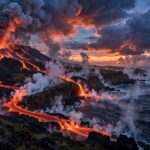
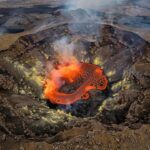
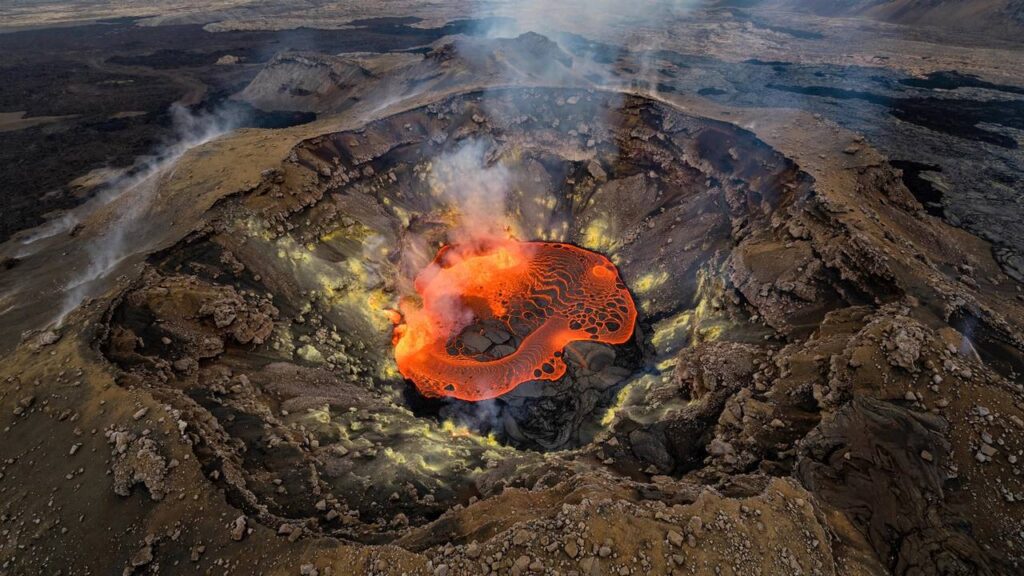
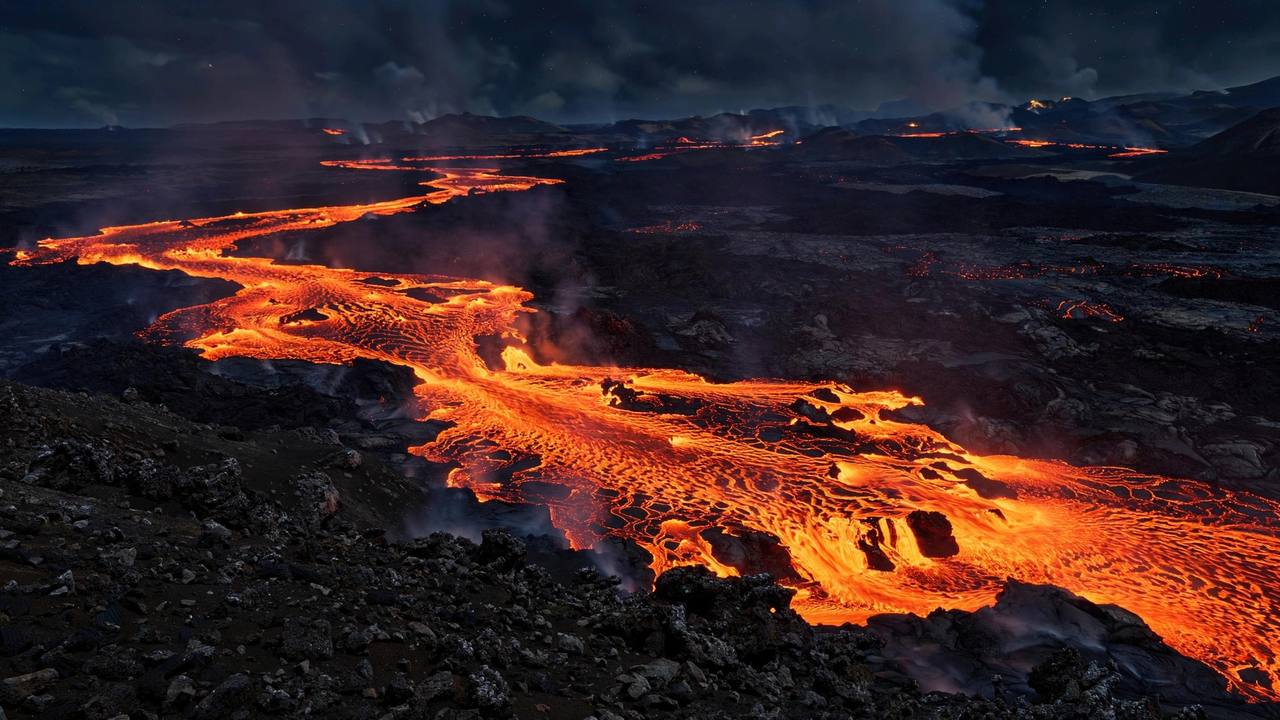
Put runny magma through the three steps and the ending is calm by volcanic standards. If magma is thin and runny, gases can escape easily from it — the bubbles rise, burst at the surface, and vent their pressure continuously instead of storing it. When this type of magma erupts, it flows out of the volcano. Sometimes the molten rock simply pours from the vent as fluid lava flows. The USGS gives the standard example: the eruptions at Hawaii’s volcanoes, fed by basaltic magma at the low-silica, low-viscosity end of the range. Kilauea, on the island of Hawaii, has been erupting almost nonstop since 1983 — an effusive eruption can run for years precisely because nothing in it needs to build to a climax.
Effusive does not mean harmless, and I do not let students write that in an exam. Lava flows destroy what they cover, and they can cut roads, isolate communities, and burn structures. But the pacing is different: lava flows rarely kill people because they move slowly enough for people to get out of their way. The danger of an effusive eruption is measured in property and land. The danger of the other kind is not.
Explosive Eruptions: When It Blasts
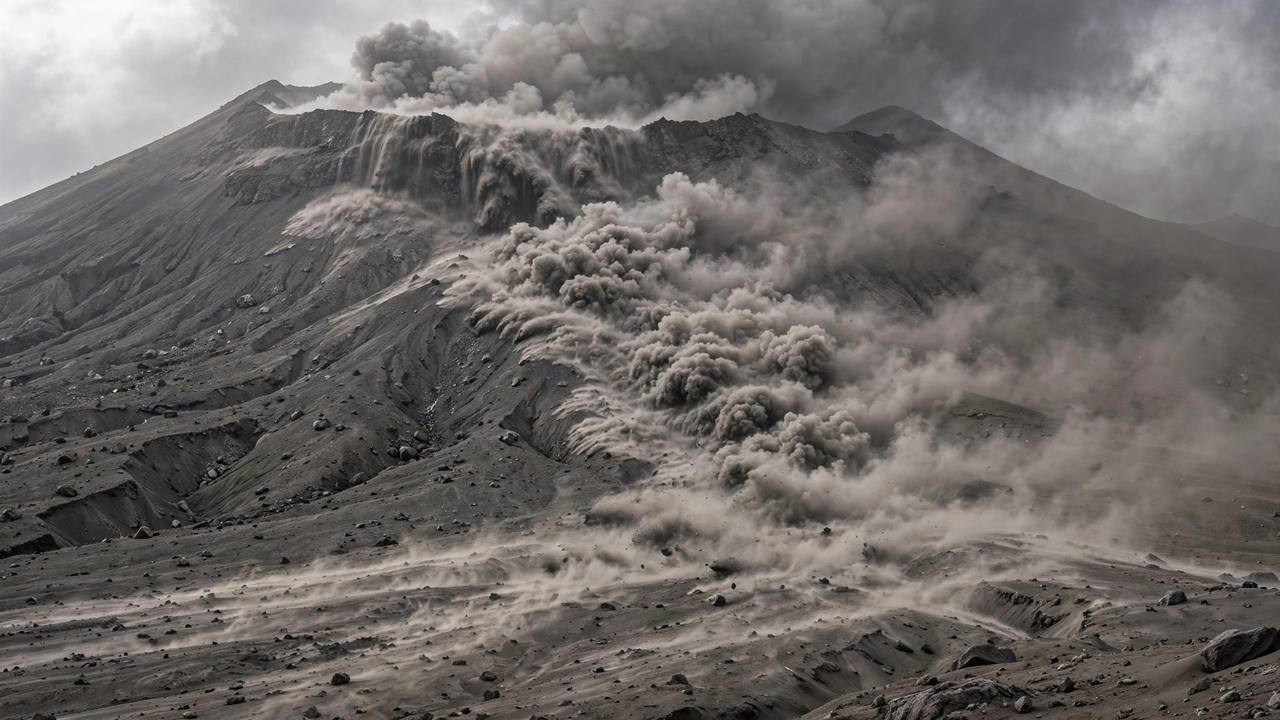
Now run sticky magma through the same steps. If magma is thick and sticky, gases cannot escape easily. The bubbles formed in Step 2 stay trapped, multiply, and expand — and pressure builds up until the gases escape violently and explode. In this type of eruption, the magma does not pour; it blasts into the air and breaks apart into pieces called tephra. The USGS example is the eruption of Washington’s Mount St. Helens: andesitic magma, at the sticky end of the range, doing exactly what Step 3 predicts.
Explosive eruptions can blast out clouds of hot tephra from the side or the top of a volcano, and those fiery clouds can race down the mountainsides destroying almost everything in their path. What goes up also comes down over a wide area: ash erupted into the sky falls back to Earth like powdery snow, and if it falls thick enough, blankets of ash can suffocate plants, animals, and humans. The violence is not a different process from Hawaii’s — it is the same three steps, run with a magma that would not let its gas go.
Tephra: From Ash to House-Size Boulders
Tephra is the name for the solid material an explosive eruption throws into the air — the magma, blasted apart. Its size range is the part students underestimate: tephra can range from tiny particles of ash to house-size boulders. The ash end of that range travels furthest. Ash consists of tiny pieces of tephra the thickness of a strand of hair; it may be carried by the wind and fall to the ground many miles away, and the smallest ash particles can be erupted miles into the sky and carried many times around the world by winds high in the atmosphere before they fall. The largest fragments, by contrast, fall back around the vent — which is why an explosive volcano builds its slopes partly out of its own debris.
What Comes Out of an Eruption
| What comes out | What it is |
|---|---|
| Lava flows | Magma that has reached the surface and pours or flows from the vent — the product of effusive eruptions |
| Tephra and ash | Magma blasted into the air and broken apart, from hair-thin ash particles to house-size boulders; larger fragments fall near the vent, ash can travel many miles or around the world |
| Gases | The dissolved gas that drove the eruption, escaping continuously from runny magma or violently from sticky magma — the engine of the whole process |
| Lahars | Mudflows formed when hot volcanic materials mix with water from streams or melted snow and ice; lahars have buried entire communities near erupting volcanoes |
The lahar row deserves one extra sentence, because it surprises students: an eruption’s deadliest product can arrive after the eruption itself, when its hot material meets water and turns into a moving wall of mud. Lahars are a hazards topic in their own right; here they belong on the list of what an eruption produces, and no further.
What Triggers the Final Moment?
This is where the “what causes a volcano to erupt” question actually gets answered, so let us be precise. The steps above describe a system loading itself: magma rising by buoyancy, gas forming bubbles, pressure building in sticky magma. The final moment comes when that loaded system gets its release. Magma forces its way upward and may ultimately break through weak areas in the Earth’s crust — if so, an eruption begins. In sticky magma, the trigger is the pressure itself: it builds until the gases escape violently, and that escape is the explosion. And there is one outside trigger the textbooks single out: water. If water reaches the magma, the immense heat flashes it instantly to steam, and the rapid expansion can turn what would have been an effusive eruption into an explosive one — as happened at Surtsey, off Iceland, where seawater pouring into the vent turned basaltic lava flows explosive at the start of an eruption that went on to build an island. Three routes — breakthrough, pressure release, added water — one result: the system stops loading and starts erupting. And because the magma can break through at a vent or through fissures, that release can begin at the top of the volcano or out of its side — which is why explosive eruptions can blast their clouds of hot tephra from either place.
Frequently Asked Questions
There is no standard duration, and the sourced examples span almost the whole range. An explosive eruption is an event — pressure released, magma blasted out. An effusive one can run far longer: Surtsey erupted for over three and a half years, and Kilauea has been erupting almost nonstop since 1983. Duration follows the same logic as style: a volcano fed by runny magma and an open pathway can keep flowing as long as the supply lasts, while an explosive eruption spends its trapped pressure and stops.
No. Some volcanic eruptions are explosive and others are not — the explosivity depends on the composition of the magma. Thin, runny magma lets its gas escape and flows; thick, sticky magma traps its gas and explodes. Most of the difference is decided before the magma ever reaches the surface, by its silica content, its viscosity, and how much gas it is still holding.
Only location. Molten rock below the surface that rises in volcanic vents is magma; after it erupts from a volcano, it is called lava. At the moment of eruption, the material crossing the vent changes its name, not its nature — the lava pouring down the slope is the same substance that was magma, with its crystals and remaining gas, one minute earlier underground.