How Do Volcanoes Form? The 3 Ways Explained, Step by Step

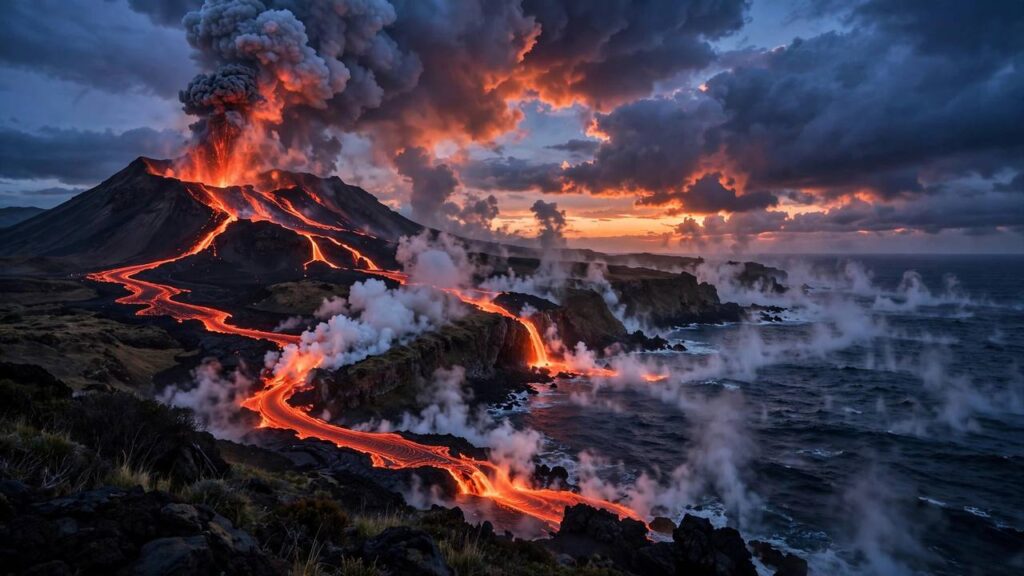
Here is something most explanations skip: a volcano is not really built. It grows. Nobody stacks the rock, and there is no construction moment you can point to. What happens instead is slower and simpler — rock deep underground partly melts, that melt collects and rises, it erupts at the surface, and the erupted material piles up around the opening. Eruption after eruption, the pile becomes a mountain.
Students ask me where the pile starts, and that is the right question, because the starting point decides almost everything else. Volcanoes form in three main settings: where one tectonic plate dives beneath another, where plates pull apart, and above hotspots deep in the mantle. Each setting melts rock in a different way, and each tends to produce its own kind of volcano.
What Is a Volcano?
Start with a distinction students often miss: not every mountain is volcanic. Many mountains form by folding, faulting, uplift, and erosion of the crust. Volcanic terrain is built differently — by the slow accumulation of erupted lava.
The Smithsonian’s Global Volcanism Program defines a volcano as an accumulation of explosively or effusively erupted materials originating from single or multiple vents or fissures at the surface of the Earth. That definition holds the whole answer in miniature: a volcano is both an opening and a pile — the vent or fissure where material comes out, and the material itself, stacked around that opening over time.
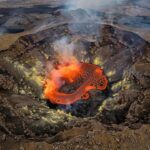
The vent may be visible as a small bowl-shaped depression at the summit of a cone or shield-shaped mountain. Through a series of cracks within and beneath the volcano, the vent connects to one or more linked storage areas of molten or partially molten rock below. That connection matters more than the shape: a volcano with a live connection to fresh magma can erupt in the same place again and again — and that repetition is exactly how it forms and grows.
Magma vs Lava
The same molten rock has two names, and the name changes with location: below the surface it is magma, and after it erupts from a volcano it is called lava. That is the whole distinction — nothing about the material itself changes at the moment it crosses the surface.
It Starts With Magma: Where Does Magma Come From?
Every volcano, whatever its setting, starts with the same event: solid rock underground partly melts. No melting, no magma; no magma, no volcano. So the honest way to explain formation is to explain how rock melts — the three settings in this guide are three different answers to that one question.
Partial Melting — Rock Does Not Melt All at Once
The key term here is partial melting. Underground rock does not melt completely, the way ice turns fully to water. Only part of it melts, while the rest stays solid. The magma that results is molten or partially molten rock — a mixture, not a clean liquid pool.
This corrects a common classroom picture. There is no vast underground sea of liquid rock waiting beneath a volcano. There is hot solid rock, and under the right conditions, a fraction of it melts. That fraction is enough — it can separate, collect, and rise, and when it does, a volcano becomes possible.
What creates the right conditions? The textbooks group them cleanly. Adding water can lower the melting point of rock, so it melts at a temperature where it would otherwise stay solid — that is flux melting, and it drives subduction-zone volcanoes. Dropping the pressure on hot rock can let it melt as it rises — that is decompression melting, and it drives volcanoes at divergent boundaries and above mantle plumes. Two triggers, one result: partial melt that becomes magma.
Collecting in a Magma Chamber and Rising
Newly formed magma does not erupt immediately. Originating many tens of miles beneath the ground, magma is lighter than the surrounding solid rock, so it is driven toward the surface by buoyancy — and by pressure from the gas within it. It forces its way upward and collects in linked storage areas of molten or partially molten rock: magma chambers. The cracks connecting a chamber upward to a vent are part of the parts of a volcano working as one system.
Think of it as supply and plumbing: melting creates the supply, buoyancy moves it upward, and the chamber stores it. The only question left is where the melting happens. It happens in three settings.
Way 1 — Subduction Zones (Convergent Boundaries)
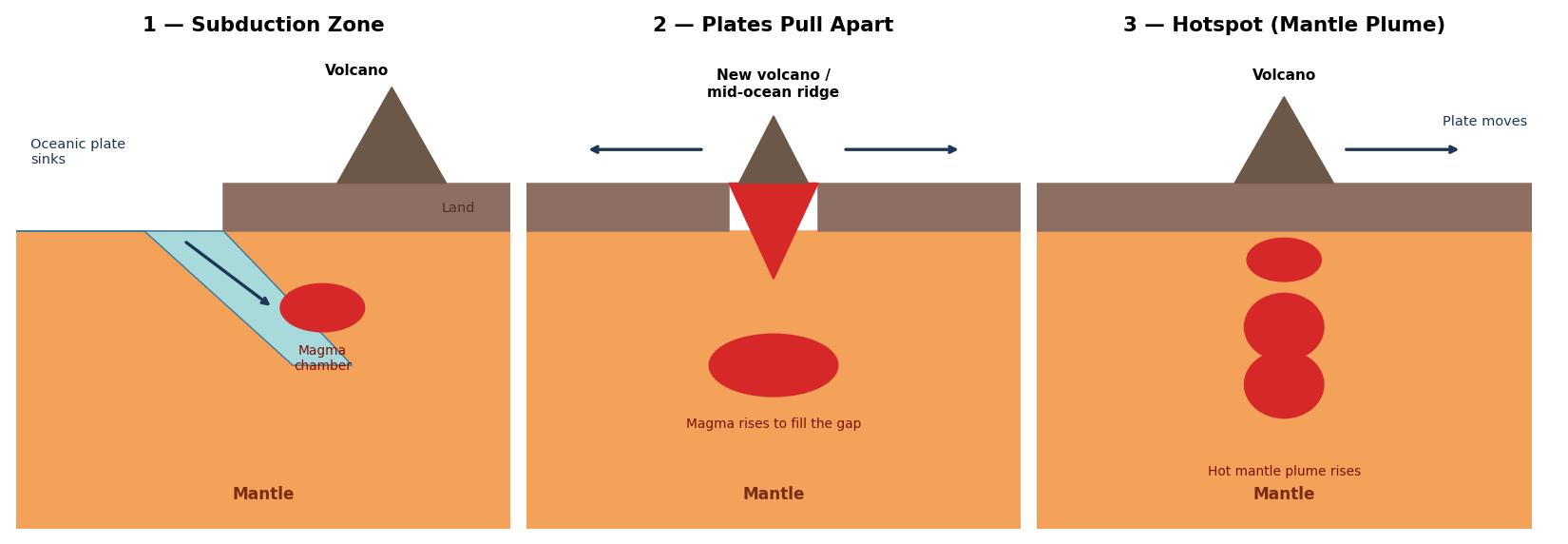
Most volcanoes on the planet form at subduction zones. A subduction zone is formed where two tectonic plates come together and one plate overrides the other. The plate with lower density, usually continental crust, stays on top, while the denser plate, usually oceanic crust, is pushed and pulled beneath it, into the mantle. As that plate sinks, it carries something that matters enormously: water and other volatiles locked in its minerals.
How Water Lowers the Melting Point: Flux Melting
As the subducting plate descends, volatiles such as water are liberated from it and rise into the hot mantle rock above — where water does something counterintuitive: it lowers the melting point of that rock.
This is flux melting, or fluid-induced melting: melting caused not by making the rock hotter, but by adding water so it melts at a lower temperature than it otherwise would. The mantle above a subducting plate was already hot; its chemistry was keeping it solid. Change the chemistry, and part of the rock melts. That partial melt is the magma that collects, rises, and eventually builds volcanoes at the surface.
Remember it as a before-and-after: before, hot mantle rock sits solid above a sinking plate; after the water arrives, the same rock, at much the same temperature, is partly molten.
Examples: Shasta, Lassen Peak, and the Ring of Fire
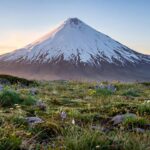
The United States Geological Survey names Mount Shasta and Lassen Peak in California as subduction-related volcanoes, fed by oceanic crust diving beneath the continent. Subduction chains like these ring the Pacific — the Ring of Fire is a series of them. Magma generated at subduction zones is commonly intermediate, or andesitic, and tends to build large, steep-sided stratovolcanoes — Mount Fuji and Mount St. Helens are the textbook examples.
Zoom out, and these examples connect into the Ring of Fire. The Pacific Ring of Fire is the dense line of volcanoes associated with the subduction zones surrounding the Pacific Ocean — not a separate mechanism, but the map of this first way drawn around an entire ocean. Approximately three quarters of the volcanoes on the planet are found along it. Its full geography belongs to another article; for formation, what matters is the engine underneath — plates sinking, water released, rock melting, volcanoes rising at the surface.
Way 2 — Divergent Boundaries and Rifts
The second way runs in the opposite direction: plates pull apart instead of colliding — and that spreading, all by itself, is enough to make magma.
Decompression Melting: Less Pressure, New Magma
As two plates separate, hot mantle rock rises to fill the gap between them. Rising means moving toward lower pressure, and when the pressure on hot rock drops far enough, part of it melts — no water added, no extra heat required. The release of pressure does the work. This is decompression melting.
Notice the contrast with Way 1, because students mix it up constantly: flux melting changes the rock’s chemistry; decompression melting changes its pressure. Same outcome, two different routes.
Mid-Ocean Ridges
Most divergent-boundary volcanism happens out of sight, along mid-ocean ridges: the divergent boundaries in the ocean. There, magma generated through decompression erupts as basalt, and basalt erupted along mid-ocean ridges forms new oceanic crust — the seafloor itself is the product of this process. At most ridge locations, the activity does not rise above sea level, and the basalt solidifies into pillow basalts on the ocean floor.
Occasionally, ridge activity does build above the sea — and where it rises above sea level, the basalt spreads out to create shield volcanoes — broad, gently sloping volcanoes built from runny lava.
Continental Rifts: The East African Rift
Plates can also pull apart on land. A continental rift is a divergent boundary cutting through a continent — the East African Rift is the major living example, listed among the very few active continental rifts in the world, alongside the Baikal Rift, the West Antarctic Rift, and the Rio Grande Rift. The formation logic is the same as at a mid-ocean ridge: crust stretches, mantle rock rises beneath it, pressure falls, and decompression melting generates magma. What differs is the scenery — volcanism spread along a rift valley on a continent in the early stages of pulling apart.
Way 3 — Hotspots (Mantle Plumes)
The third way is the odd one out. The first two ways need a plate boundary; hotspots do not. Plate interiors are quite stable — yet intraplate volcanoes do occur, far from any boundary, and hotspots are the reason.
How Does a Volcano Form in the Middle of a Plate?
A hotspot is where a mantle plume — a rising column of hot material — brings magma generated deep in the mantle up toward the surface. The plume is anchored deep below, while the tectonic plate drifts across the top of it. Where the plume’s magma reaches the surface, a volcano forms — in the middle of a plate, with no collision and no rift nearby.
The melting above mantle plumes is grouped with decompression melting: as plume material rises, pressure falls and partial melting follows. So a hotspot volcano is the second melting trigger operating in a third setting — deep, rising mantle material doing under a plate’s interior what a spreading ridge does at its edge.
The Hawaii Chain: The Plate Moves, the Plume Stays
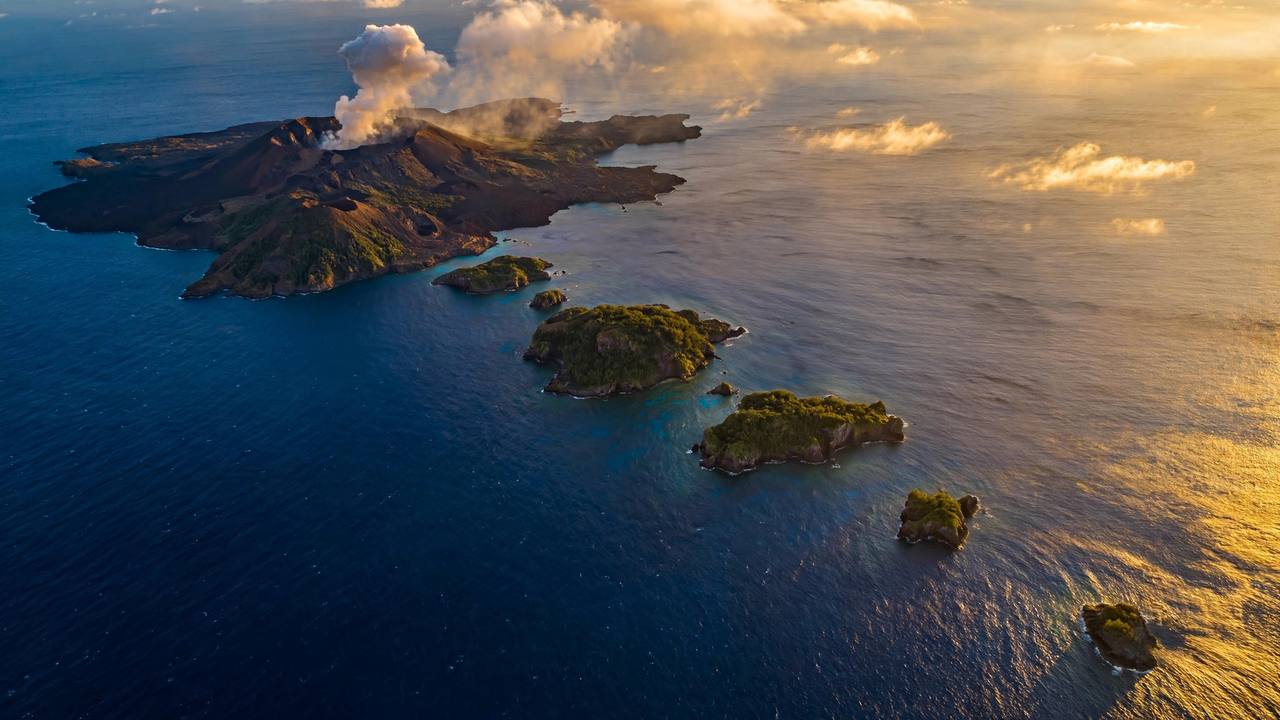
The cleanest evidence for how hotspots work is the Hawaiian Islands chain. The magma in mantle plumes is basaltic, which leads to chains of large shield volcanoes at oceanic hotspots — and Hawaii is the classic example. The mechanism is simple: the plume stays in place while the plate moves over it. The plume supplies the volcano above it today; as the plate carries that volcano away, a new one begins over the plume, and the process repeats.
The result is a chain, and the chain keeps a record. The Hawaiian Islands are part of a much longer chain, now mostly eroded and underwater. The other islands have moved off the hotspot and are now extinct volcanoes; the active hotspot sits southeast of the big island of Hawaii, supplying its active volcanoes. The chain’s newest volcano, Loihi, is still below sea level — with continued growth, it will one day rise above the surface and build another shield volcano.
Yellowstone: A Hotspot Under a Continent
Hotspots also occur underneath continents, and the magma can change character on its way up. Where a plume cuts through continental lithosphere instead of oceanic lithosphere, basaltic magma rising through that thick crust can incorporate parts of it and become much more felsic. That is the case at Yellowstone, in the western United States: the magma there can become rhyolitic, which results in very explosive eruptions, and its magma chamber is extremely large compared to a typical volcano.
A continental hotspot also leaves a track: past volcanism carried away with the moving plate. The Yellowstone track, across the Snake River Plain, lets geologists read the plate’s motion from the volcanoes left behind. Same plume, same process as Hawaii — different crust on top, and a very different volcano as the result.
From First Eruption to a Mountain: A Volcano Grows Layer by Layer
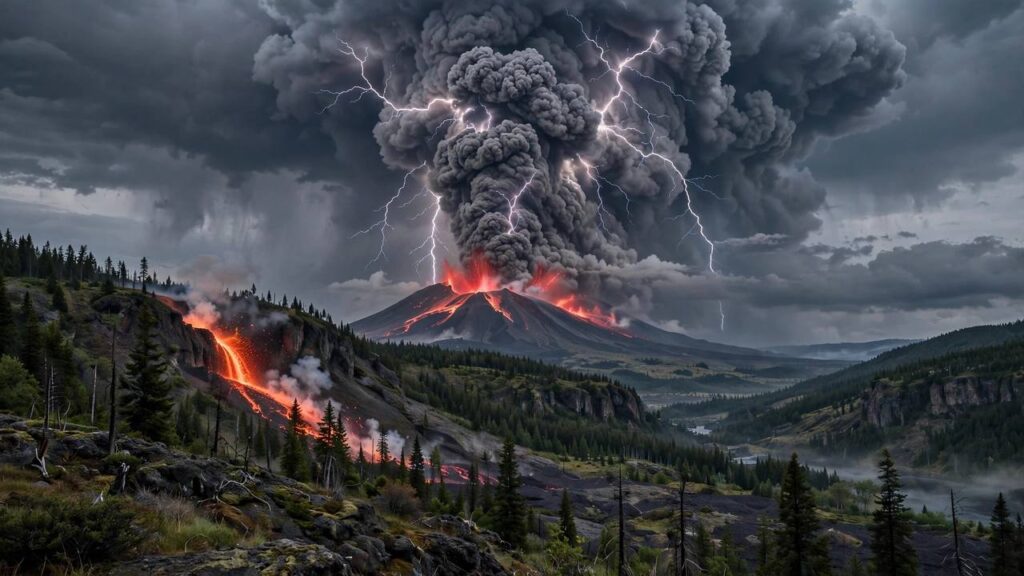
However the magma formed — flux melting, decompression melting, or a plume — the last stage is shared. Magma collected in a chamber forces its way upward through weak areas in the crust and, if it breaks through, an eruption begins. What comes out is now lava, along with rock fragments and ash — and what comes out stays: it accumulates around the vent.
That accumulation is the growth. Sometimes molten rock simply pours from the vent as fluid lava flows, cooling as sheets over the slopes; at other times, erupted material falls back around the opening and piles up there. Many volcanoes also grow by additions from flank vents, not only from a central crater. Either way: every eruption adds a layer, and the layers build the edifice.
A volcano can keep growing in one place because of the connection underneath it: the vent connects, through cracks within and beneath the volcano, to the magma storage below, and that connection to fresh magma allows it to erupt over and over again in the same location. In this way it grows ever larger, until it is no longer stable, and pieces collapse as rock falls or as landslides. A mature volcano is not a single event frozen in stone — it is a stack of many eruptions, held together by a plumbing system that keeps refilling from below.
Why Most Volcanoes Sit on Plate Boundaries — and Some Do Not
Step back, and the map makes sense. Tectonic plates are the dominant controlling factor for volcanism, so most volcanic activity is present along plate tectonic boundaries — the first two ways both live on boundaries, one where plates converge and one where they diverge. Hotspots are the exception: they form volcanoes inside plates, driven by what happens beneath the plates, in the mantle. The whole story, in one table:
| Setting | Why the rock melts | Common volcano type | Example |
|---|---|---|---|
| Subduction zone (convergent boundary) | Flux melting — water released from the sinking plate lowers the melting point of the mantle above it | Stratovolcano (composite) | Mount Fuji; Mount Shasta |
| Divergent boundary (mid-ocean ridge or continental rift) | Decompression melting — mantle rock rises as plates pull apart, and falling pressure lets it melt | Shield volcano, where activity rises above sea level | Mid-ocean ridges; East African Rift |
| Hotspot (plate interior) | A mantle plume brings magma generated deep in the mantle up to the surface | Large shield volcanoes at oceanic hotspots | Hawaiian Islands; Yellowstone (continental) |
Read the middle column slowly — it is the part worth memorizing. Every volcano in this guide exists because rock melted, and there are only two melting tricks on offer: add water to lower the melting point, or drop the pressure on rising hot rock. The three settings are just the three places where those tricks happen. Which setting a volcano forms in also shapes what grows there — covered in our guide to the main types of volcanoes.
Once a volcano has formed and its chamber is supplying magma, a second story begins: individual eruptions, and why some pour quietly while others blast apart. Formation explains where a volcano comes from; the next natural question is how volcanoes erupt once that magma starts to move.
Frequently Asked Questions
The same three ways — including along mid-ocean ridges, where plates pull apart underwater. At most ridge locations the activity never rises above sea level, and the basalt solidifies into pillow basalts on the ocean floor. An underwater volcano is usually just a ridge or hotspot volcano whose eruptions have not built it up to the surface yet.
By accumulation, continued past sea level. Erupted material piles up around a vent on the ocean floor, layer by layer, until the edifice breaks the surface and becomes an island. The Hawaiian Islands formed this way above a hotspot, and the process is still running: Loihi is still below sea level, growing toward the surface.
A volcano can begin in a single event: a new vent opens, magma breaks through, and erupted material immediately starts piling up around it. But beginning is not finishing: a large volcano is the work of many eruptions. The first day gives you a vent and the start of a cone, not a mountain.
No — most do, but hotspot volcanoes form in plate interiors, where a mantle plume brings magma up through the middle of a plate. Hawaii and Yellowstone are the standard examples: no collision, no rift — just a plume below and a plate drifting over it.
There is no single schedule. A volcano grows eruption by eruption, for as long as its connection to fresh magma below keeps supplying it. Some edifices are still under construction, like Loihi near Hawaii; others, carried away from their magma supply, stop growing altogether.