The Real Benefits of Minimalism (Beyond a Tidy Shelf)

When I first heard about minimalism, I rolled my eyes so hard I nearly sprained something. It looked like a competition to own the fewest things, judged by people with all-white apartments and no children. Then my own apartment hit a breaking point — I spent a Saturday looking for my keys for 40 minutes in a place with 480 square feet, and something in me snapped. I spent the next month decluttering ruthlessly — following a how to declutter your house room by room plan — and what happened surprised me: the benefits had almost nothing to do with tidy shelves. (New here? Start with what minimalism actually means.)
This article is my honest accounting of what changed — the real benefits of minimalism as lived by a normal person with a normal amount of stuff, not an influencer with 33 possessions. Some benefits were immediate, some took months, and one or two I didn’t expect at all. If you’re minimalism-curious but skeptical, this is the no-hype version.
In this guide:
- Mental Clarity: The Quiet Mind Benefit
- Time: The Benefit Nobody Talks About Enough
- Money: Spending Less Without Feeling Deprived
- Freedom and Flexibility
- Relationships Get Better (Seriously)
- The Benefits I Didn’t Expect
- Honest Caveats
Mental Clarity: The Quiet Mind Benefit
The first thing I noticed wasn’t visual — it was mental. Every object in your home is a tiny open loop in your brain: the pile of clothes to fold, the drawer of dead batteries, the bookshelf of books you’ll never reread. Psychologists call this the “mere ownership effect” on attention — your brain tracks your possessions the way it tracks unfinished tasks. Fewer possessions, fewer loops, quieter mind.
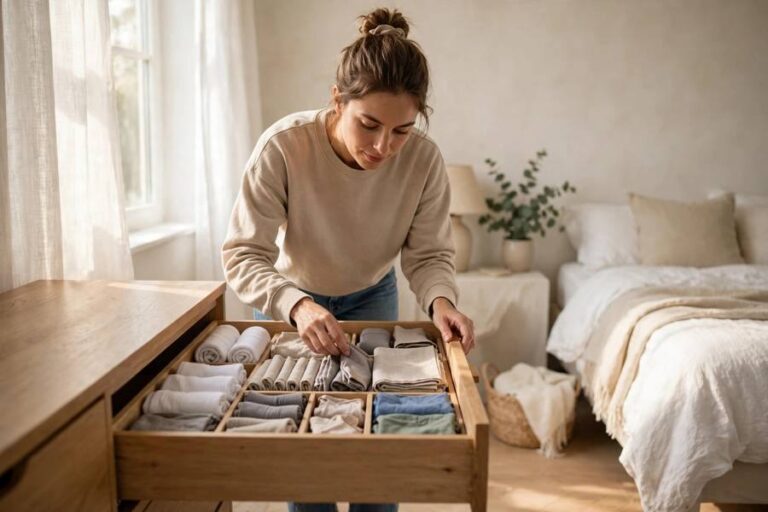
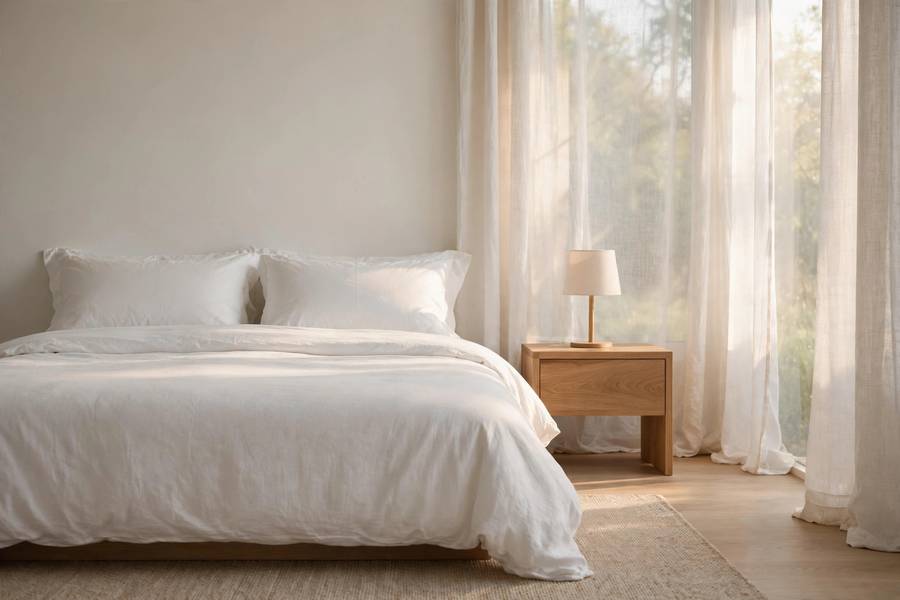
I felt it most in the mornings. My old bedroom had surfaces covered in stuff — mail, chargers, books, clothes in various states of clean. My decluttered bedroom has a bed, a nightstand with a lamp and a book, and a dresser. It has a touch of hygge lifestyle and cozy minimalism — minimal does not have to mean cold. Waking up to calm instead of clutter changed my whole morning mood, and I am not exaggerating. These days it is anchored by a morning routine for a calmer mind. There’s research backing this up: a well-known UCLA study found that people who described their homes as “cluttered” had flatter cortisol slopes — meaning their stress hormones didn’t drop properly in the evening. Your stuff is literally stressing you out on a chemical level.
The decision fatigue reduction is real too. Fewer clothes means faster mornings. A streamlined kitchen means cooking feels easy instead of overwhelming. Fewer options in every category means less daily deliberation about trivial things, which leaves more mental bandwidth for things that matter. Minimalism is, at its core, a decision-fatigue diet.
Time: The Benefit Nobody Talks About Enough
Here’s the math that converted me: every possession costs time. Time to buy it, organize it, clean it, maintain it, move it, and eventually get rid of it. I once estimated that my “stuff management” — tidying, organizing, looking for things, dealing with clutter — ate 5-7 hours a week. After decluttering, it’s under two. That’s 200+ hours a year returned to me. That’s five full work weeks. Every year.
Cleaning a minimalist-ish home is almost comically fast. My entire apartment — top to bottom — takes about 45 minutes now, because there are clear surfaces to wipe and floors to vacuum with nothing to move. Compare that to the old days of “cleaning” meaning “moving piles from one surface to another.” If you’ve ever spent a Saturday “organizing” without anything actually changing, you know exactly what I mean.
Shopping time drops too, once you break the browsing habit. I used to spend hours scrolling shopping sites and wandering stores “just looking” (and buying). Now I buy replacements when things wear out and almost nothing else. The average American spends about 6 hours a week shopping; even cutting that in half returns 150 hours a year. Time is the one resource you can’t earn more of — minimalism is one of the few lifestyles that gives it back.
Money: Spending Less Without Feeling Deprived
The financial benefit of minimalism isn’t about being cheap — it’s about breaking the cycle of buying things that don’t actually improve your life. Before, I spent roughly $300-400 a month on non-essential stuff: clothes I didn’t need, home decor impulses, gadgets, sale items that were “too good to pass up.” After a year of minimalist-ish living, that’s under $100 — and I don’t feel deprived, because I stopped wanting the stuff. The wanting was the habit, not the stuff.
What changed the spending wasn’t willpower — it was the decluttering itself. Hauling bags of barely-used purchases to donation is a powerful teacher. Every item I donated with tags still on was a little lesson in “I didn’t need that.” After enough lessons, the impulse to buy just… faded. Now when I want something, I wait 30 days. About 90% of the time, I forget about it entirely. The 10% that’s left is usually worth buying.
The money compounds in unsexy ways: smaller living spaces cost less (I genuinely don’t need more room now), less spent on storage and organizing products, fewer replacement purchases because you buy better versions of fewer things. Over five years, conservative estimates put my savings in the tens of thousands. Minimalism won’t make you rich, but it plugs one of the biggest leaks in most budgets: mindless consumption.
Freedom and Flexibility
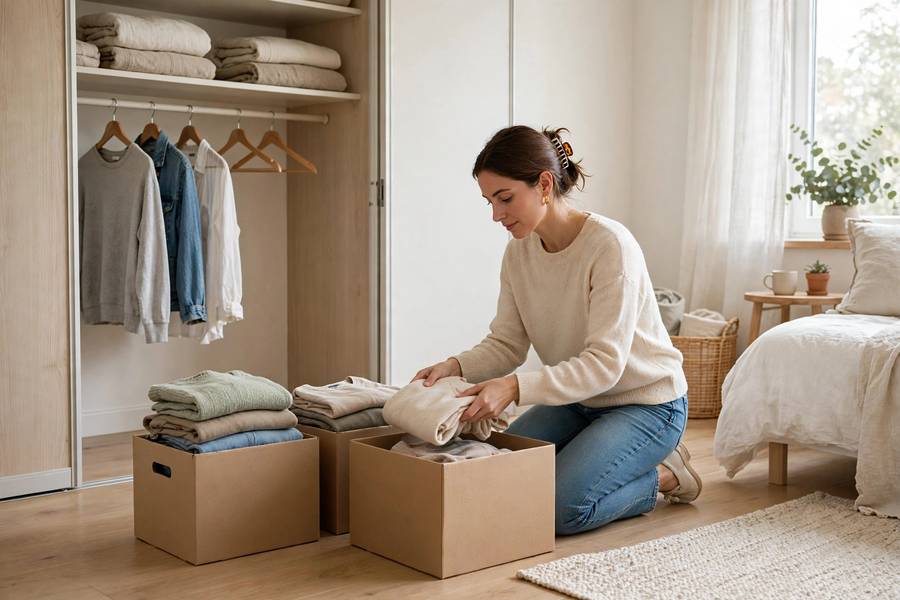
Owning less makes you lighter in a very literal sense. When a job opportunity came up in another city, I packed my entire apartment in a weekend with help from two friends — because there just wasn’t that much. Compare that to friends who need a moving truck, three weeks, and $3,000 to relocate the same distance. Minimalism is geographic freedom.
It’s also schedule freedom. Less house to maintain means weekends are yours. Less financial overhead means you can take the pay cut for the better job, go part-time for a season, or weather an emergency without panic. Every possession has a carrying cost; every carrying cost is a tiny chain. Fewer chains, more options. That’s not poetry, it’s arithmetic.
There’s an identity freedom too, which I didn’t expect. When your home isn’t full of aspirational stuff — the guitar you don’t play, the fancy cookware for the chef you aren’t, the clothes for the life you don’t live — you stop performing versions of yourself and start being the actual one. Letting go of the “someday” items was letting go of guilt about all the people I wasn’t. What was left was just… me. It was a relief.
Relationships Get Better (Seriously)
I was nervous that minimalism would make me judgmental about other people’s stuff. The opposite happened: once I stopped managing my own clutter anxiety, I stopped projecting it. I’m more relaxed as a guest in messy homes, more generous with lending things (because I know I can replace the few things I own), and less stressed about hosting (the place is always 20 minutes from guest-ready).
There’s also the gift-giving shift. Minimalists become famously hard to shop for, which forces everyone to level up: experiences instead of objects, consumables, or genuinely wanted items from an actual list. My family now does experience gifts and charitable donations, and our holidays are better for it. Less wrapping paper, more memories.
And the big one: time with people. The hours freed from stuff-management go somewhere, and for me they went to friendships — longer dinners, actual availability, being the friend who can show up. Minimalism gave me the two things relationships need most: time and presence. I didn’t see that benefit coming, and it’s the one I’d miss most.
The Benefits I Didn’t Expect
A few bonuses nobody warned me about. I sleep better — the calm bedroom thing is real, and there’s research linking bedroom clutter to worse sleep. I get compliments on my “style” now, which is funny because I own less than ever; it turns out constraint reads as curation. People assume I have great taste when really I just have fewer opportunities to clash.
I’m better at letting go generally — of grudges, of dead projects, of the need to be right. Practicing “does this serve me?” on objects trained the same muscle for everything else. And I’m more creative: boredom plus fewer distractions turned out to be productive. Some of my best writing has come from staring-out-the-window time that used to be filled with reorganizing closets.
Oh, and moving house went from a dreaded month-long ordeal to a long weekend. I cannot overstate how good this feels. Every future move of my life just got 80% easier, permanently.
Honest Caveats
Minimalism isn’t magic, and I want to be straight about its limits. It won’t fix depression, anxiety, or a bad relationship — though a calmer environment helps you address those things. The first month can feel weirdly empty, like something’s missing (something is: your stuff — you’ll adjust). And taken too far, it becomes its own obsession — counting possessions or judging others is just consumerism with extra steps.
It’s also easier with money, which nobody likes to admit. Decluttering is low-risk when you can replace a mistake; it’s scarier when you can’t. If budgets are tight, go slower and keep the “maybe” box longer. And minimalism looks different with kids, hobbies, or medical needs — the principle (keep what serves you) matters more than any aesthetic. A woodworker’s shop isn’t clutter; it’s a workshop.
The honest summary: minimalism gave me back time, money, mental quiet, and freedom — not through deprivation, but through editing. You don’t have to own 33 things or paint everything white. You just have to stop letting your possessions run your life instead of serving it. Start with one drawer. See how it feels. I think you’ll be surprised.
The biggest benefits are mental clarity (fewer possessions competing for attention), significant time savings (less cleaning, organizing, and shopping), lower spending without feeling deprived, and greater freedom — easier moves, lower overhead, and more flexibility in work and life. Many people also report better sleep and stronger relationships.
Yes — research supports it. A UCLA study found people who described their homes as cluttered had unhealthy cortisol patterns, meaning their stress hormones stayed elevated. Every possession is a small mental open loop; reducing possessions quiets that background noise and reduces daily decision fatigue.
It breaks the cycle of mindless buying: decluttering teaches you how much you’ve wasted, which kills impulse purchases. Minimalists also spend less on storage, organizing products, replacements, and housing (needing less space). The 30-day waiting rule alone eliminates most impulse buys.
The aesthetic version can look privileged, but the principle — keep what serves you, release the rest — works at any income. If budgets are tight, declutter more slowly and keep a ‘maybe’ box longer so mistakes are reversible. The time and mental-clarity benefits are free regardless of income.
It won’t fix underlying mental health or relationship issues, the first month can feel strangely empty, and taken to extremes it becomes its own obsession (counting items, judging others). It’s also harder with kids, hobbies, or tight budgets — the principle matters more than any specific aesthetic or possession count.