How to Declutter Like a Minimalist: A Room-by-Room Plan

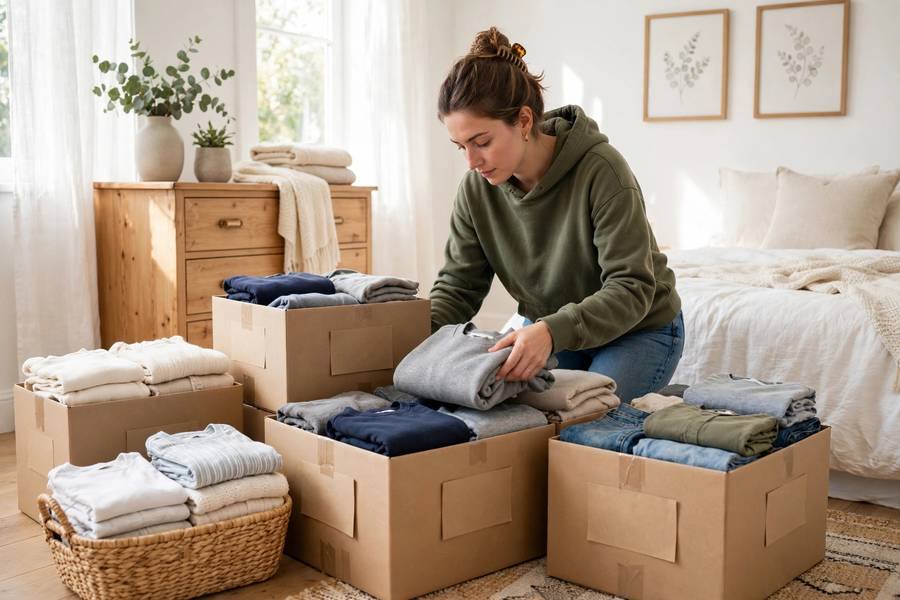
The first time I tried to declutter, I did what everyone does: I started in the bedroom, pulled everything out of the closet at 10 a.m., and by 2 p.m. I was sitting on the floor crying surrounded by what looked like a clothing bomb had detonated. I’d made the classic mistake — starting too big, with the hardest category, and no plan for where things would go. I shoved it all back in and didn’t try again for six months.
The second time, I did it like a minimalist — which is exactly what minimalism actually means in practice: small zones, clear rules, and a strict order of operations. It took five weekends, and by the end my apartment felt like a different place. This is that method — the room-by-room plan I wish someone had handed me the first time — the full version lives in our how to declutter your house room by room guide, including the five questions that make every keep-or-toss decision easy and what to actually do with the stuff once you’ve decided.
In this guide:
- Before You Start: The Setup That Prevents Quitting
- The 5 Questions for Every Item
- The Order: Easiest Wins First
- Room by Room
- Where It All Goes (Donate, Sell, Toss)
- After the Declutter: Keeping It That Way
Before You Start: The Setup That Prevents Quitting
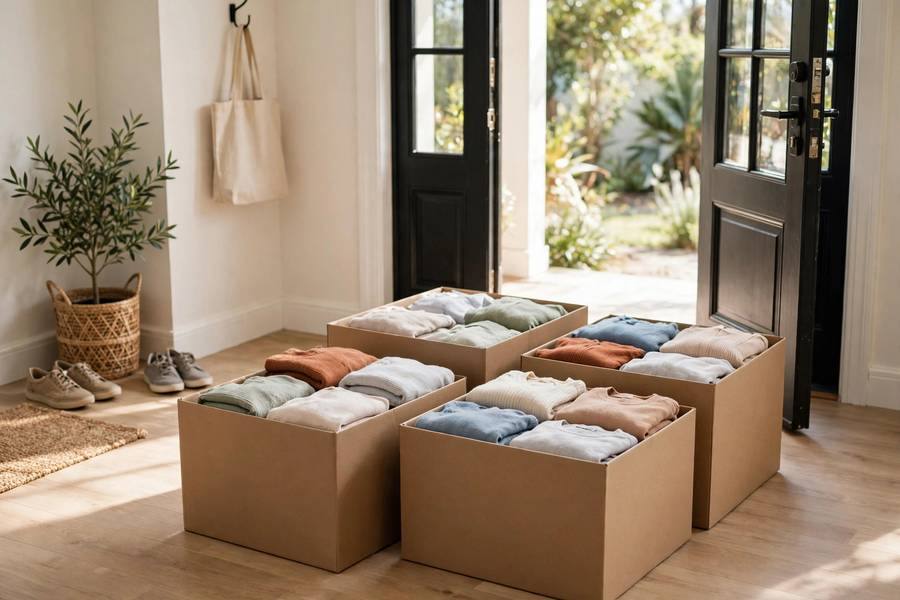
Most decluttering attempts fail in the preparation, not the execution. Here’s the setup: get four large bags or boxes and label them — Donate, Sell, Relocate (belongs in another room), Trash/Recycle. Get a fifth box labeled “Maybe” for the hard decisions (more on that below). Put on music or a podcast, set a timer for 90 minutes, and work in one small zone at a time — one shelf, one drawer, one closet section. When the timer ends, you stop, even mid-zone. This prevents the crying-on-the-floor scenario.
Schedule the donation drop-off before you start. Seriously — put it on the calendar for the day after your first session. Bags of donations sitting in your hallway for three weeks have a way of migrating back into closets. The appointment creates a deadline that keeps the whole process honest. Same with listing sell items: photograph and list them the same week, or they become permanent “I’ll sell that someday” clutter.
And decide your rules upfront: the one-in-one-out rule going forward (buy something, something leaves), the 90/90 rule for “maybe” items (haven’t used it in 90 days and won’t in the next 90? it goes), and permission to be imperfect. You’re not aiming for an empty apartment; you’re aiming for an apartment where everything earns its place. Small space? This how to organize a small apartment guide helps.
The 5 Questions for Every Item
Decision fatigue is what makes decluttering exhausting, so replace deliberation with a script. For each item, ask in order: 1. Have I used it in the last year? (If no, it’s already a candidate.) 2. Would I buy it again today at full price? (This kills the sunk-cost fallacy — what you paid is gone regardless.) 3. Is it the best version of this thing I own? (Duplicates: keep the best, release the rest.) 4. Does it serve my actual life, or an imaginary one? (The fondue set, the “someday” clothes, the hobby gear for the hobby you quit.) 5. Would I pay to move it? (Imagine paying $5 per item to move it to a new place — suddenly the “maybe” pile gets honest fast.)
If an item survives all five, it stays — no guilt. Minimalism isn’t about owning as little as possible; it’s about everything you own passing a basic usefulness test. Sentimental items get special handling: keep the best representatives, not the whole archive. Your grandmother’s recipe cards? Keep. Every birthday card from 2014? Photograph the meaningful ones, release the rest. The memories live in you, not in the paper.
The “Maybe” box is for genuine hard calls — items you’re not ready to decide on. Seal it, date it for six months out, and store it out of sight. If you haven’t opened it when the date arrives, donate the whole thing unopened. In my experience, about 80% of maybe boxes get donated unopened, which tells you everything about how “essential” those items were.
The Order: Easiest Wins First
Declutter in order of increasing emotional difficulty, building your decision muscle on easy wins. Start with trash and expired stuff — old magazines, dead pens, expired medications and sunscreen, dried-up nail polish, takeout menus for closed restaurants. This is pure victory with zero hard decisions, and clearing it first gives you visible progress in 20 minutes.
Next: duplicates and obvious excess. The seven water bottles (keep two), the mug collection (keep the favorites), the tangle of nearly-identical black t-shirts, the drawer of plastic bags. Then easy categories: books you’ve read and won’t reread, DVDs in the streaming age, clothes that don’t fit or you haven’t worn in a year. Save the hard stuff — sentimental items, hobby gear, gifts — for last, when your decision muscle is strong and your momentum is high.
Work in this room order: bathroom first (small, mostly expired stuff — quick win), then kitchen (duplicates and gadgets), then living areas, then closets and clothes, then storage areas, and sentimental items dead last. Never start with photos and memorabilia. That’s like starting your workout with a marathon.
Room by Room
Bathroom: Toss expired medications, sunscreen, and cosmetics (most have a 12-month life once opened). Consolidate the six half-used shampoos into one. Keep one backup of essentials, not five. The bathroom should take under an hour and it’s the perfect confidence-builder.
Kitchen: The duplicate zone. Keep the best version of each tool and release the rest — you need one good chef’s knife, not four mediocre ones. Gadgets you haven’t used in a year (bread maker, juicer, the avocado slicer) go. Mismatched food storage: keep sets that nest, recycle the orphans. Expired pantry items, spice jars older than your lease, the novelty mugs — be ruthless. A minimalist kitchen has clear counters, and clear counters make cooking feel easy.
Living areas: Books (keep favorites and unread; release the “read once, keeping for the shelf” ones — the library exists), decor that’s just filling space, the cable-and-remote graveyard, board games nobody plays, and the infamous junk drawer (empty it entirely, then only put back what earns a spot). Media and decor are where “someday” lives — evict it.
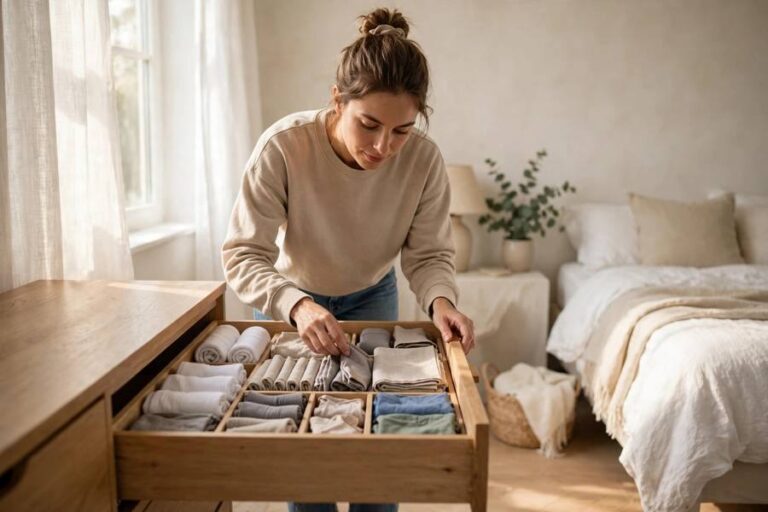
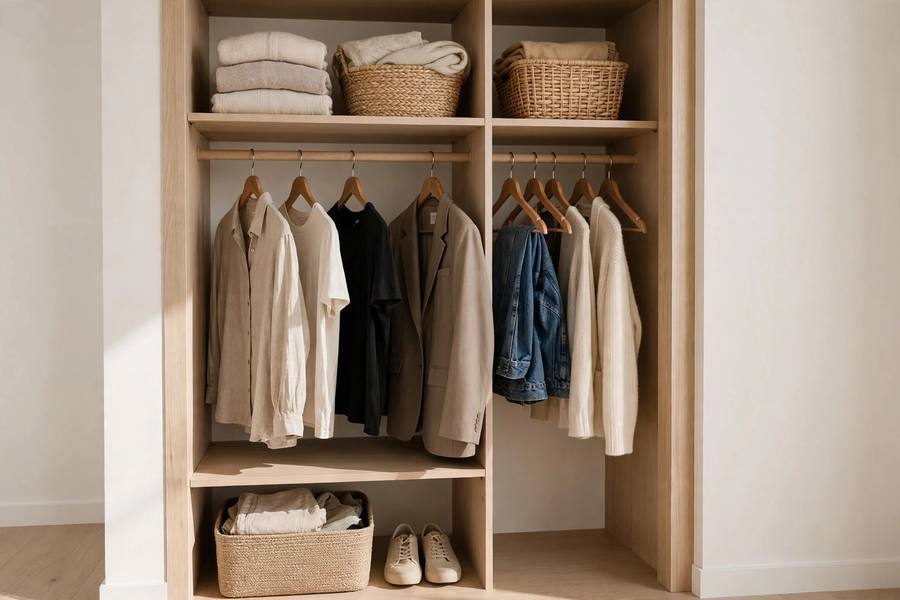
Bedroom and closet: The 90/90 rule shines here. (Deep dive: how to declutter your closet.) Clothes you haven’t worn in a year, “someday” sizes in both directions, worn-out basics, the aspirational items for a life you don’t live. Hang everything with hangers facing backward; in six months, anything still backward goes. Shoes: if they hurt, they go — life’s too short and closets too small for painful shoes. Keep bedding to two sets per bed; that’s plenty.
Storage areas: The final boss. Old electronics and their mysterious cables (if you don’t know what it charges, it’s e-waste), “just in case” items you’ve never needed, boxes from things you no longer own, and anything you put here specifically to avoid deciding. Storage areas should hold seasonal and genuinely useful overflow — not decisions you’re postponing indefinitely.
Sentimental items (the gentle method)
Do these last, in one dedicated session, with tea and no time pressure. Sort into: display-worthy (give these a real place of honor — that’s what they’re for), archive-worthy (one small box of the truly precious), and releasable (photograph first, then let go). Kids’ artwork: keep the best 10-20%, photograph the rest into a photo book. Inherited items: keep what you’d choose yourself, not what guilt chooses for you. Love is not storage.
Where It All Goes (Donate, Sell, Toss)
Deciding is only half the job — the stuff has to actually leave. Donate: clothes, household goods, books, and furniture in usable condition go to thrift stores or local charities (many pick up furniture free). Sell: only items worth real money and worth your time — the 80/20 rule applies; sell the 20% worth selling (electronics, designer items, furniture) and donate the rest. Your time has value too; spending three hours to sell a $10 item is a loss.
Recycle properly: electronics (e-waste events or retailer programs — never trash), batteries, paint, and chemicals (hazardous waste days). Trash: broken, stained, or genuinely useless items — and let them go without guilt. Not everything deserves a second life; some things are just trash, and that’s okay.
The golden rule: everything leaves the house within one week of deciding. Donation bags go the next day. Sell listings go up within 48 hours or the item gets donated. Trash goes out immediately. Stuff in limbo is just clutter with a plan, and plans expire.
After the Declutter: Keeping It That Way
Decluttering without changing the inflow is mopping with the tap running. The maintenance system: one in, one out — new shirt in, old shirt out, no exceptions. The 30-day list — want something non-essential? Write it down; if you still want it in 30 days, buy it (you won’t, 90% of the time). The annual review — one weekend a year, quick pass through every room with the five questions. Takes a few hours once the big declutter is done.
Fix the inflow sources: unsubscribe from marketing emails (the sales create the wants), unfollow shopping influencers, stay out of stores “just to browse,” and delete shopping apps from your phone. Most clutter enters through boredom and advertising, not need. Bored? Go for a walk. The urge passes.
And enjoy it. Sit in your decluttered living room with a coffee and notice how it feels — calmer, lighter, easier to breathe. That feeling is the whole point, and it’s what you’ll remember the next time you’re tempted by a sale. You didn’t just clean your apartment. You edited your life. Everything left earned its place — including you, sitting there enjoying it.
Start small and easy: work in 90-minute sessions on one zone at a time (one drawer, one shelf), beginning with trash and expired items for quick wins. Use four labeled boxes (Donate, Sell, Relocate, Trash) plus a ‘Maybe’ box, and schedule your donation drop-off before you start so everything actually leaves.
If you haven’t used an item in the last 90 days and won’t use it in the next 90, let it go. It’s a simple decision shortcut that cuts through ‘but I might need it someday’ thinking. Seasonal items are the exception — judge those on the last season you could have used them.
Go from easiest to hardest: bathroom first (mostly expired stuff), then kitchen (duplicates), living areas, closets and clothes, storage areas, and sentimental items absolutely last. Within rooms, start with trash, then duplicates, then easy categories — building decision momentum before the hard calls.
Handle them last, in a dedicated unhurried session. Keep display-worthy pieces in real places of honor, archive the truly precious in one small box, photograph the rest before releasing it. For kids’ artwork, keep the best 10-20% and make a photo book of the rest. Love is not storage.
Control the inflow: one-in-one-out for purchases, a 30-day waiting list for non-essential wants, and an annual review pass through every room. Remove the sources — unsubscribe from marketing emails, delete shopping apps, stop browsing-as-entertainment. Maintenance takes hours a year once the big declutter is done.