How to Shoot a Layup: Footwork, Angles and Finishing Like a Pro

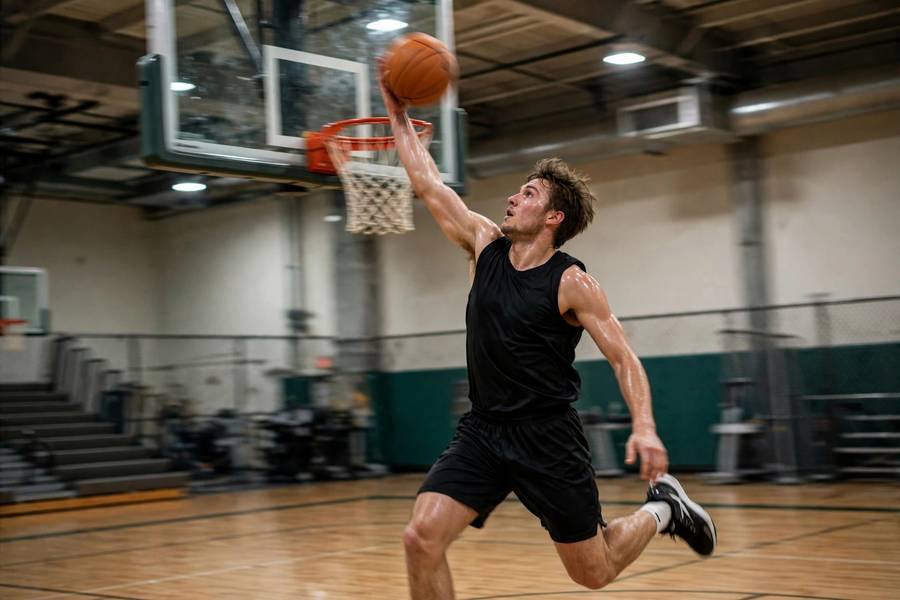
The layup is the highest-percentage shot in basketball and somehow also the most disrespected — players practice step-back threes for hours and can’t finish a simple left-hand layup in traffic. I’ve watched games lost by missed layups more times than I can count, and every single one was preventable. The layup isn’t basic. It’s fundamental, which is a very different thing.
This guide teaches how to shoot a layup properly: the two-step footwork, the soft finish, left-hand development, backboard angles, and finishing through contact. Pair it with our guide to proper shooting form for the complete scoring package.
In this guide:
- Why Layups Deserve Your Respect
- The Footwork: Right-Left, Left-Right
- The Finish: Soft Touch Off the Glass
- Left-Hand Layups: The Non-Negotiable
- Using the Backboard Like a Pro
- Reverse Layups and the Euro Step
- Finishing Through Contact
- Layup Drills That Build Both Hands
Why Layups Deserve Your Respect
A layup is worth the same two points as a 20-foot jumper but converts at roughly twice the rate — yet most players spend 90% of practice time on jumpers. The math of winning says the rim is where games are decided: transition buckets, cuts, drives, and putbacks. Coaches at every level preach “paint touches” because shots at the rim bend defenses and generate fouls. If you can finish reliably with both hands through contact, you are valuable on any team, at any level. That’s not an exaggeration — it’s a scouting report.
The Footwork: Right-Left, Left-Right
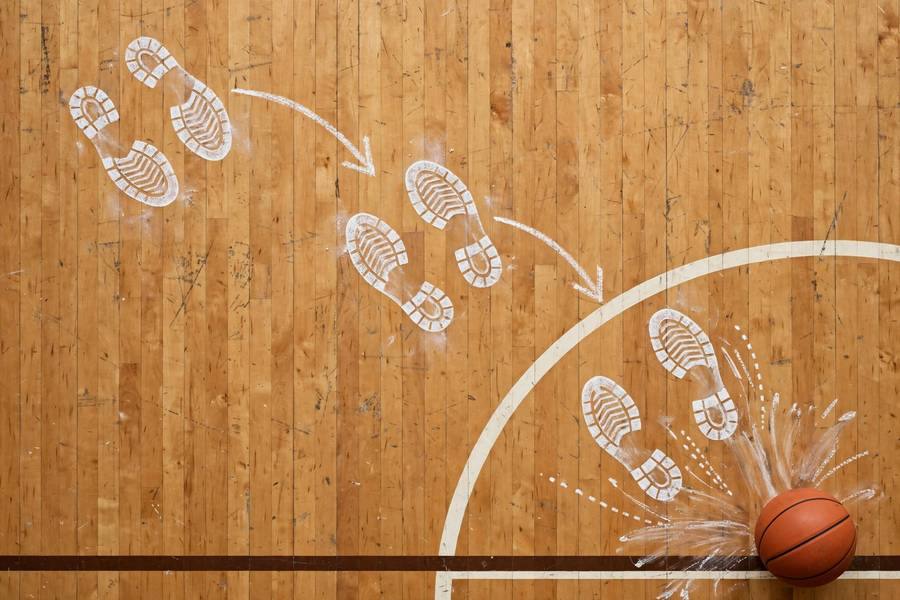
Layup footwork is a two-step rhythm, and it’s the opposite of what feels natural:
- Right-hand layup (driving from the right): step RIGHT, then LEFT — you jump off your LEFT (inside) foot and finish with your RIGHT hand. Right-left, jump left, shoot right.
- Left-hand layup (driving from the left): step LEFT, then RIGHT — jump off your RIGHT foot, finish with your LEFT hand.
The mnemonic: outside-inside — the outside foot steps first, the inside foot is the takeoff foot, and the shooting hand matches the side you’re driving from. Beginners almost always jump off the wrong foot; drill it walking-speed slow until the pattern is unconscious. The jump is more up than forward — you’re elevating to lay the ball in softly, not long-jumping into the stanchion.
The Finish: Soft Touch Off the Glass
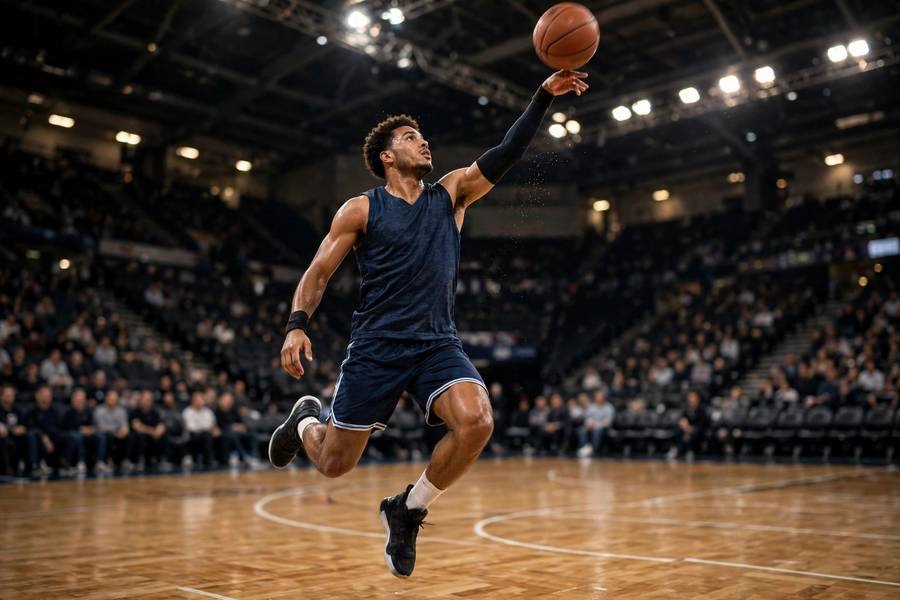
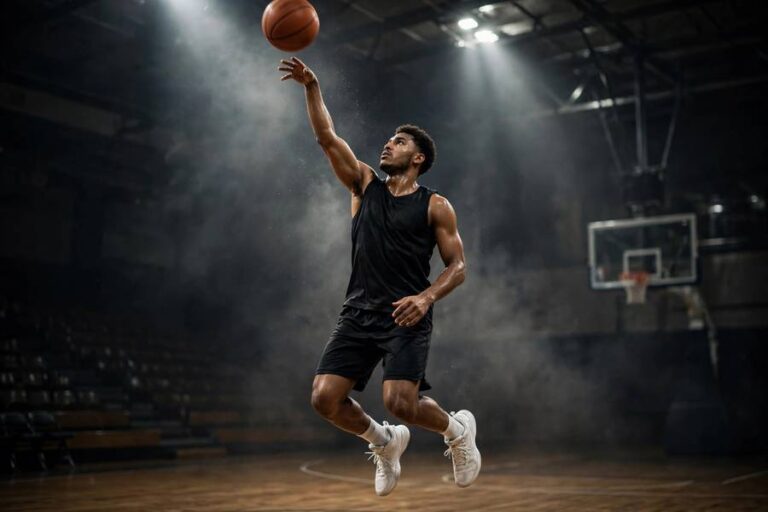
The layup finish is all touch: extend your shooting arm up, release the ball softly off your fingertips with a gentle backspin, aiming for the top corner of the backboard square. The ball should kiss the glass and drop through — not slam it. Think “lay” the ball up, not throw it. The harder you throw a layup, the more it rattles out; soft shooters make everything.
Protect the ball on the way up: keep it on the outside shoulder (away from the defender), bring it up strong with two hands until the final extension, and finish high. The classic beginner error is bringing the ball down low where any defender can strip it. High and tight, then extend.
Left-Hand Layups: The Non-Negotiable
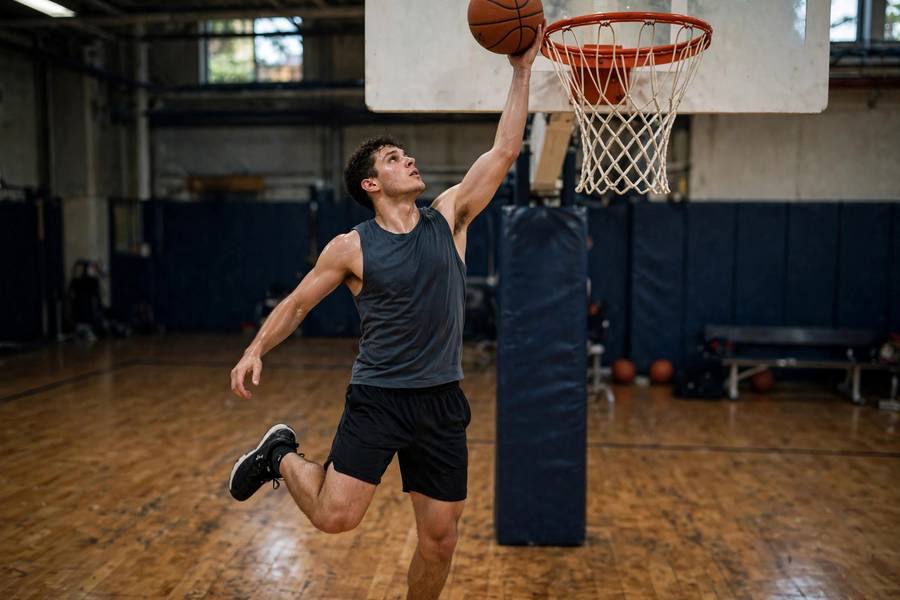
If you can only finish with your right hand, defenders know it — they’ll overplay your right and you’ll drive into walls all game. A reliable left-hand layup doubles your driving angles overnight. The development plan:
- Week 1–2: 50 left-hand Mikan layups daily (stand under the basket, alternate, but emphasize the left). It will feel like writing with your wrong hand. That’s normal.
- Week 3–4: left-hand layups from the left block with the correct left-right footwork, walking speed, then jogging.
- Week 5+: full-speed left-hand drives in the Mikan drill and 3-man weave. Add a coach or partner contesting lightly.
Your left will never feel as natural as your right, and it doesn’t need to — it needs to be reliable. A 70% left-hand layup that keeps defenses honest is infinitely more valuable than a 0% one. And if you’re chasing the ultimate finish, our guide to how to dunk is the vertical-leap companion — though fair warning, dunking is optional; layups are mandatory.
Using the Backboard Like a Pro
The backboard is a teammate: from most angles, banking is higher-percentage than going direct. The target is the top corner of the painted square nearest your driving side — hit it softly and the geometry does the rest. Key angles:
- 45-degree drives: aim for the near top corner of the square. The classic, highest-percentage finish in basketball.
- Baseline drives: the angle is sharp — aim higher on the glass and softer, letting the ball drop in. Rushing baseline finishes is the top cause of blown layups.
- Straight-on: no glass needed; go direct with soft touch over the front of the rim.
Practice bank shots from both blocks until the square feels like a magnet. Great finishers don’t aim at the rim on angles — they aim at the glass and trust physics.
Reverse Layups and the Euro Step
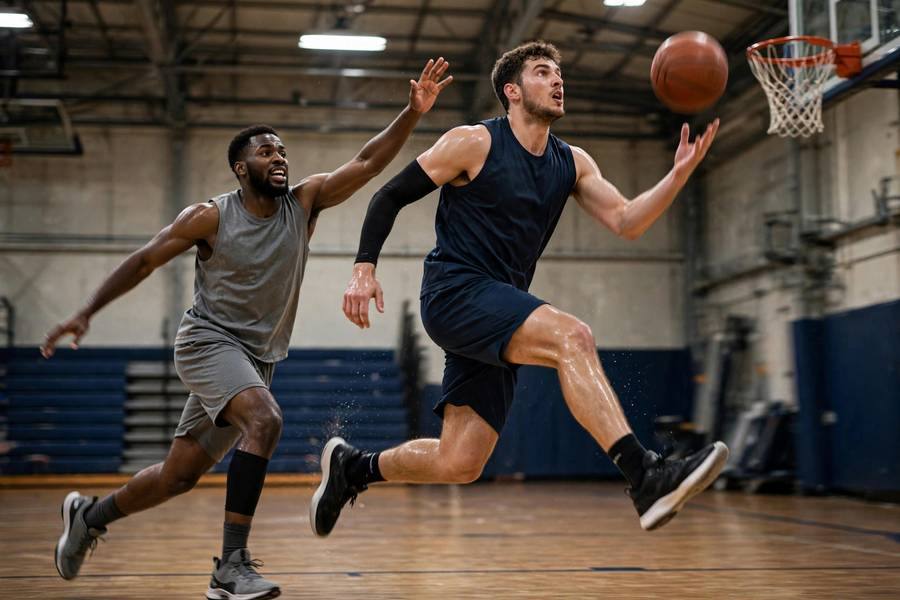
Once basic layups are automatic, add the two moves that beat shot-blockers:
- Reverse layup: drive one side of the basket, finish on the other — using the rim itself as a shield between you and the defender. The footwork mirrors the standard layup; the finish uses the far side of the glass. Practice the angle slowly; the geometry feels strange until it clicks.
- Euro step: a long lateral first step one way, then exploding the other way — a legal two-step move that wrong-foots defenders. The key is the deceleration on step one (sell the fake) and explosion on step two. Master it at half speed before adding pace; a sloppy Euro is a travel waiting to happen.
Neither move replaces the basic layup — they’re options for specific defensive reads. The player with a reliable basic layup and one counter move is a nightmare to guard. The player with five fancy moves and no basic finish is a blooper reel.
Finishing Through Contact
Game layups come with a forearm in your back. Finishing through contact requires three things: strength (a strong core and upper body let you absorb bumps without losing balance — general strength work like our strength training for runners builds the base), technique (jump into the contact slightly, keeping your body between defender and ball), and composure (expect the hit, finish the shot anyway — and-ones come to players who don’t flinch).
Drill it: have a partner bump you with a pad (or their chest, lightly) as you drive. Start soft, build up. The goal isn’t toughness theater — it’s teaching your body that contact is normal and the finish continues through it. Players who’ve never practiced contact fold at the first bump; players who have treat it as background noise.
Layup Drills That Build Both Hands
- Mikan drill: 60 seconds, alternate hands, count makes. The daily vitamin — never skip it.
- 3-man weave: full-court passing on the move, finish with a layup, no dribbling. Teaches finishing at speed off a pass.
- X-out layups: start at one elbow, drive and finish, sprint to the other elbow, repeat. Conditioning + finishing.
- Contact layups: partner provides light contact with a pad as you finish. 10 each side.
- Left-hand only week: one week per month, every layup in every drill with the left hand. Brutal, transformative.
Do the Mikan drill religiously every single day you touch a court — it takes two minutes and maintains the touch that wins games. The layup will never be glamorous. It will always be the shot that matters most.
Use a two-step rhythm: for a right-hand layup, step right then left, jump off your left (inside) foot, and finish softly with your right hand off the backboard. Keep the ball high and protected, extend fully, and aim for the top corner of the backboard square with soft touch.
Jump off the inside foot — the foot closest to the basket. For a right-hand layup driving from the right, that’s your left foot (step right, then left, jump left). The pattern is outside-inside: outside foot steps first, inside foot takes off.
Mirror the right-hand version: step left then right, jump off your right foot, finish with your left hand. Start with 50 daily left-hand Mikan layups for 2–4 weeks to build basic coordination, then add the footwork at walking speed before going full speed.
Yes, from most angles — bank the ball softly off the top corner of the backboard square nearest your driving side. The backboard makes layups higher-percentage by giving you a larger, more forgiving target than the rim alone.
A two-step move where you take a long lateral step one way, then explode the opposite direction for the finish — legally within the two-step rule. The deception comes from decelerating on step one (selling the fake) and exploding on step two. Master it at half speed first to avoid traveling.