Summer Bucket List for Friends: Make This the Best One Yet

My friend group has a problem that I suspect is universal: we’re all busy, we all mean well, and left to our own devices we’ll see each other roughly twice between June and September. Two years ago, one of us snapped and said, “We’re making a list and we’re doing the list.” She created a shared note titled SUMMER OR BUST with 30 ideas, and something shifted. Having the list made suggesting plans effortless — nobody had to invent fun from scratch, they just had to pick a number. We did 24 of the 30. It was the best summer of our adult friendship.
That’s the pitch for a friends’ summer bucket list: it removes the friction that kills group plans. Below are 40+ ideas built for friend groups — mixed budgets, mixed schedules, mixed energy levels — plus the logistics that make group plans actually happen. Send this to the group chat. Start the shared note. Thank me in September. (Start from these summer bucket list ideas if your note is blank.)
In this guide:
- Group Adventures Worth Coordinating
- Cheap Hangs (the Bread and Butter)
- Food-Centered Friend Dates
- Get Active Together
- Traditions That Bond a Group
- The Logistics of Actually Doing It
Group Adventures Worth Coordinating
Some things are better with a crowd, and summer is full of them. The group road trip is the classic for a reason: pile into cars, pick a destination 2-4 hours away, and spend a long weekend somewhere with a lake, a beach, or a fun small town. Split an Airbnb (way cheaper per person than hotels), cook half your meals, and let the trip be gloriously unstructured. Our group’s annual lake weekend costs each person under $150 and generates stories for the entire year.
Try a group adventure day: everyone meets for something slightly out of everyone’s comfort zone — a ropes course, kayaking trip, hiking a real mountain, or a day at an amusement park. Shared mild adrenaline bonds people fast. One friend who was terrified of kayaking is now the one suggesting it; conquering something together rewires the friendship.
Festival summer is friend-group summer. Brush up with these music festival tips for groups before you go. Outdoor music festivals, food festivals, cultural festivals, county fairs — pick two or three and go as a crew. The group makes festivals better (someone holds the spot, someone gets food, someone knows the schedule) and festivals make groups better (shared experiences, inside jokes, the photo of all of you sunburned and happy).
The big group photo
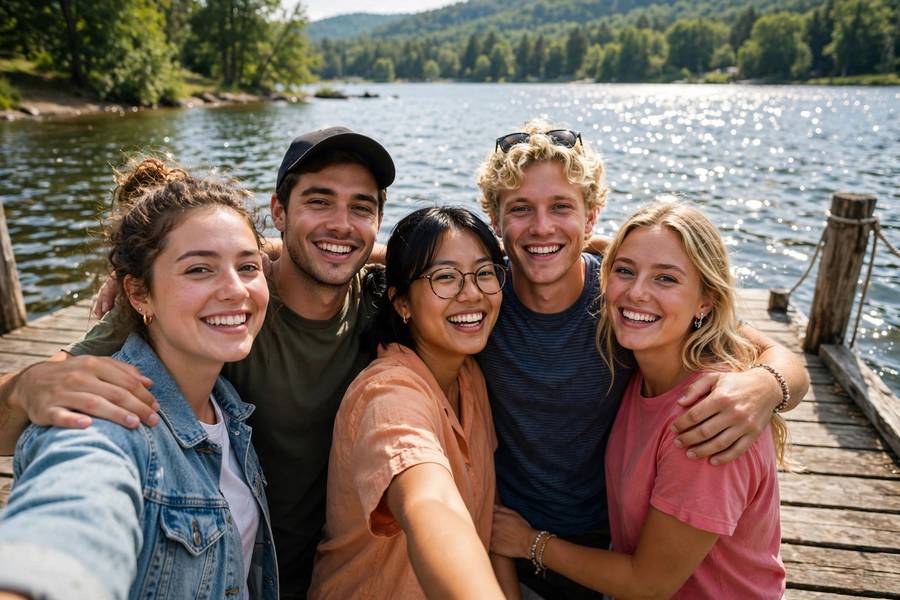
Take one proper group photo each summer — not a selfie, a real photo with a timer or a kind stranger. Same spot every year if you can (our group does the lake dock). In ten years, the series of photos will be one of your most treasured possessions. Future you is begging present you to take the picture.
Cheap Hangs (the Bread and Butter)
Grand adventures are great, but friendships run on cheap, frequent hangs. The standing hangout is the single most powerful friendship tool I know: pick a recurring slot (every other Friday, first Sunday of the month) and a dead-simple format (park, someone’s backyard, a bar with a patio). Recurring beats elaborate — people can plan around “every other Friday” in a way they can’t around sporadic big plans.
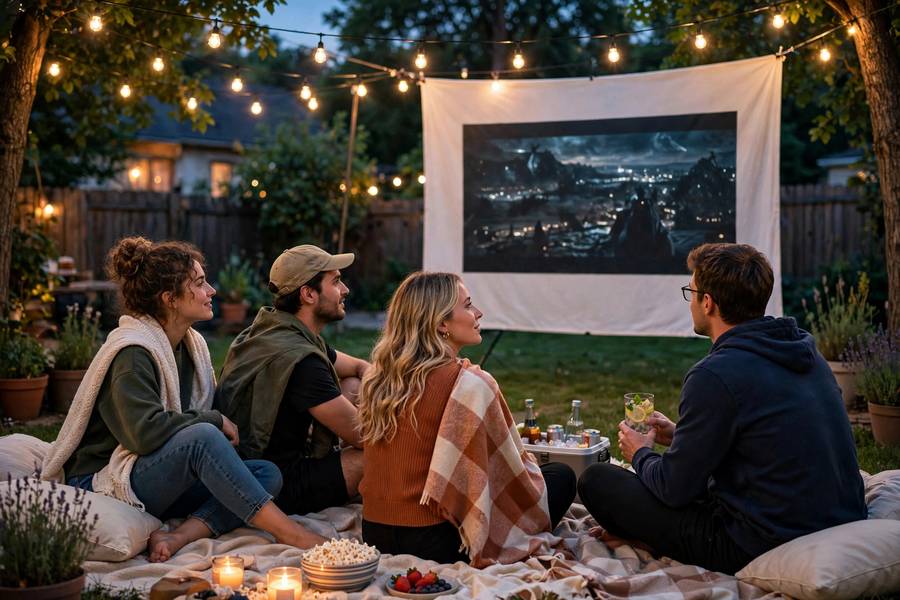
Rotate hosting low-effort gatherings: potluck dinners where everyone brings one thing — and when you want to level up, here is how to host a dinner party done properly, backyard movie nights with a borrowed projector, game nights (card games, trivia, video game tournaments — losers bring snacks next time), or “come over, I’m making too much food” nights. The host provides the venue and one dish; guests handle the rest. Low effort per person, high fun per gathering.
Beach, lake, or pool days are summer’s natural friend magnet. The formula: pick a date two weeks out, everyone brings their own food and gear, one person brings the speaker and the sunscreen to share. For a cozy night in, borrow a page from the hygge lifestyle — candles, blankets, warm drinks, and a no-phones rule turn a simple hangout into something memorable. No hosting stress, no cost beyond your own stuff, and six hours of unstructured time together — which is where the real conversations happen.
Food-Centered Friend Dates
Friend groups and food are a natural pair. The progressive dinner party: each course at a different person’s place — appetizers at one, mains at another, dessert at a third. Everyone cooks one thing, everyone walks or drives between, and the evening has built-in momentum. It works for groups of 6-12 and costs each host one dish.
Do a group cooking challenge: pick a theme (tacos, dumplings, desserts), everyone makes their version, blind taste-test, vote. Or go the other direction — a restaurant crawl through one neighborhood, one dish per spot, walking between. Food truck festivals and night markets are built for groups: everyone grazes independently, then regroups to compare finds.
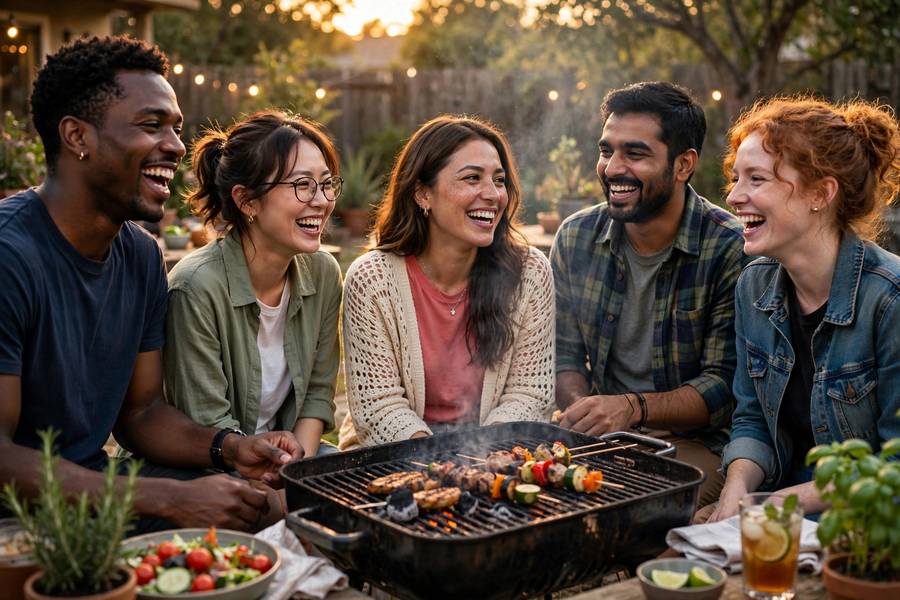
Themed potlucks keep things interesting all summer: breakfast-for-dinner, “cook your heritage” night, iron-chef mystery basket (everyone gets the same three surprise ingredients), or a full barbecue where each person owns one component (someone does burgers, someone does sides, someone does dessert). Assign, don’t hope — specific assignments prevent the classic “everyone brought chips” disaster.
Get Active Together
Active hangs solve the “we just sit and drink” rut. Start a casual sports league for your group — kickball, softball, volleyball, ultimate frisbee — the kind where athletic ability is optional and enthusiasm is mandatory. Many cities have recreational leagues specifically for the athletically unserious. Our kickball team lost every game for two seasons and had the time of our lives.
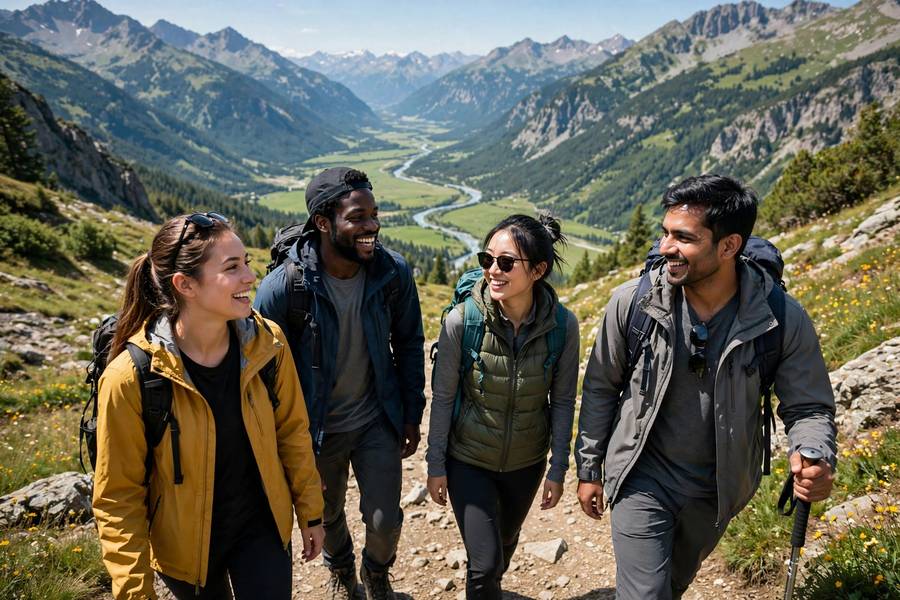
Group hikes with a destination (waterfall, viewpoint, swimming hole) give you hours of conversation time plus a shared achievement. Morning group runs or walks — same time weekly, all paces welcome, coffee after — build surprising consistency. And try something new together as a group: a dance class, paddleboarding lesson, rock climbing gym session. Being beginners together is bonding rocket fuel.
For the competitive: tournament brackets for anything — cornhole, mini golf, bowling, Mario Kart, trivia. Seed the bracket, keep a running leaderboard all summer, crown a champion at the end-of-summer party. Low stakes, high engagement, endless group-chat material.
Traditions That Bond a Group
The groups with the best friendships aren’t doing more — they’re repeating more. Start two or three traditions this summer and protect them. Ours: the lake weekend (annual), Friendsgiving planning brunch (August, yes really — good ones need planning), and the “first patio night” of spring. Yours could be a yearly camping trip, a holiday-movie-in-July night, or a group volunteer day.
Create group rituals within the traditions: the same toast, the same playlist, the same ridiculous photo pose. Rituals feel silly until they’re yours, and then they’re sacred. Our lake weekend has a ceremonial first jump off the dock and a final-night awards ceremony (categories include “best wipeout” and “most improved griller”). I would fight to protect these traditions.
Keep a group summer journal or shared photo album — one place where the season’s evidence lives. The group chat is ephemeral; the album is forever. Assign one person as the unofficial historian (every group has one — it’s the person already taking all the photos). Future reunions will revolve around this archive. Trust me.
The Logistics of Actually Doing It
Here’s the unglamorous truth: friend groups need a system, not just a list. Use a shared note or doc for the bucket list itself — everyone can add ideas, and crossing things off is visible to all. Use polls for scheduling (built into most group chats now, or a free polling tool) — “which Saturday in July for the lake?” beats 47 messages of “I’m flexible-ish.”
Designate (or volunteer as) the gentle organizer — not a dictator, just the person who says “okay, lake weekend: July 18-20, who’s in?” and follows up once. Groups without an organizer default to nothing; groups with one default to plans. Rotate the role if it gets heavy. And set the expectation early: RSVP yes means yes, and flaking has social consequences (good-natured roasting, at minimum).
Handle money like adults: split costs transparently (apps make this painless), keep group activities cheap by default, and never let cost be the reason someone misses out — quietly cover or adjust when needed. Nothing poisons a friend group faster than money awkwardness. Talk about it openly once, then it’s never weird again.
Your friendships are worth the effort of a list and a group chat poll. The people in that chat are the ones who will show up for the real stuff — which is exactly why how to balance work and personal life matters: protect time for the people who matter — the moves, the breakups, the celebrations. Summer is when you bank the good times that carry the friendship through the busy seasons. Make the list. Send the poll. See everyone in July.
Create a shared list everyone can add to, use polls to pick dates (not endless chat threads), designate one gentle organizer per event, and keep a standing recurring hangout so plans don’t depend on constant coordination. Split costs transparently with an app and keep the default cheap.
Standing park hangouts, backyard movie nights with a borrowed projector, potluck dinners, beach or lake days where everyone brings their own stuff, game nights, and group hikes. The best friend activities are cheap and frequent — save the big spending for one or two anchor events.
Start a recurring hangout (every other Friday, first Sunday monthly) that’s easy to attend, keep a shared photo album of the season, and be the person who sends the poll. Consistency beats intensity — regular low-effort time together maintains friendships better than one big annual trip.
An annual weekend trip, a yearly group photo in the same spot, a seasonal party (Friendsgiving planning brunch, first-patio-night), group rituals like a ceremonial toast or awards night, and a shared journal or album. Traditions give the friendship a timeline and inside jokes that compound yearly.
Reduce friction: pick dates by poll well in advance, keep plans simple and cheap, send one reminder, and make RSVPs meaningful (yes means yes). Start with the reliable core — a smaller group that shows up beats a big group that doesn’t. Momentum attracts people; successful small hangs grow into bigger ones.