9 Garden Tools Every Beginner Needs (And 5 You Don’t)

Walk into any garden center in spring and you will find entire aisles of shiny tools promising to change your gardening forever. My first year, I bought half of them. The ergonomic weeder with seven attachments? Used twice. The soil pH meter that looked like a science project? Still in a drawer somewhere. The garden tools every beginner needs fit in a surprisingly short list, and most of them are gloriously boring. After years of gardening, I reach for the same nine tools every single week, and everything else was either a duplicate, a downgrade, or a dust collector. In this guide, I will show you exactly what to buy, what quality level actually matters, and the five popular tools you can safely skip. Spend your money once, on the right things, and get back to the part that matters: growing. If you are setting up your first plot, my guide on how to start a garden covers the full setup alongside this tool list.
The Non-Negotiables: Trowel, Fork & Gloves
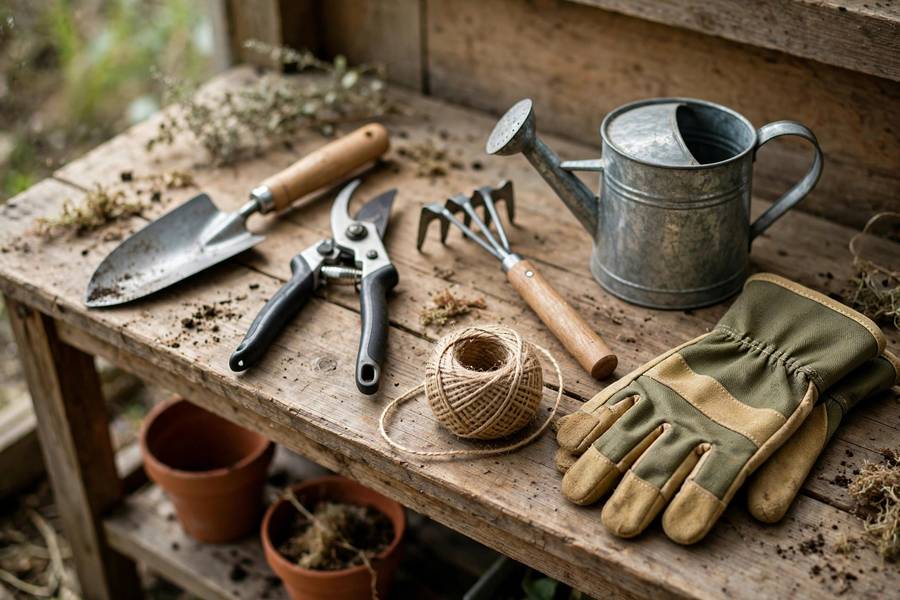
Every garden task starts with these three. A hand trowel is the tool you will use more than all the others combined: transplanting seedlings, digging planting holes, scooping compost, prying out weeds. Buy a solid one-piece forged trowel, not the flimsy stamped-metal kind that bends on the first root. I have had the same forged trowel for eight years; my first cheap one lasted three weeks.
A garden fork, the short hand version and ideally a full-size digging fork too, is for loosening soil without destroying its structure. The hand fork works planting holes and weeding; the full-size fork turns compost and loosens beds. And gloves: get a pair that actually fits. Loose gloves are worse than none because you lose all dexterity and take them off. I keep two pairs, one sturdy leather pair for thorny or rough work and one thin nitrile pair for planting and harvesting. Your hands will thank you, and so will your fingernails.
Cutting Tools: Pruners and a Good Knife
A bypass pruner is the second most-used tool in my garden. Bypass, not anvil: bypass pruners make clean scissor-like cuts that heal quickly, while anvil pruners crush stems. You will use them for harvesting, deadheading flowers, cutting back herbs, and pruning tomatoes. Buy the best you can afford; good pruners can be sharpened and last decades, cheap ones go dull and stay dull.
The tool nobody puts on beginner lists but everyone ends up buying is a hori hori, the Japanese gardening knife. It digs, cuts, weeds, measures planting depth, and opens bags. Mine lives in my back pocket all season. If you buy only one ‘extra’ beyond the basics, make it this. Between a trowel, pruners, and a hori hori, you can handle ninety percent of daily garden tasks without walking back to the shed.
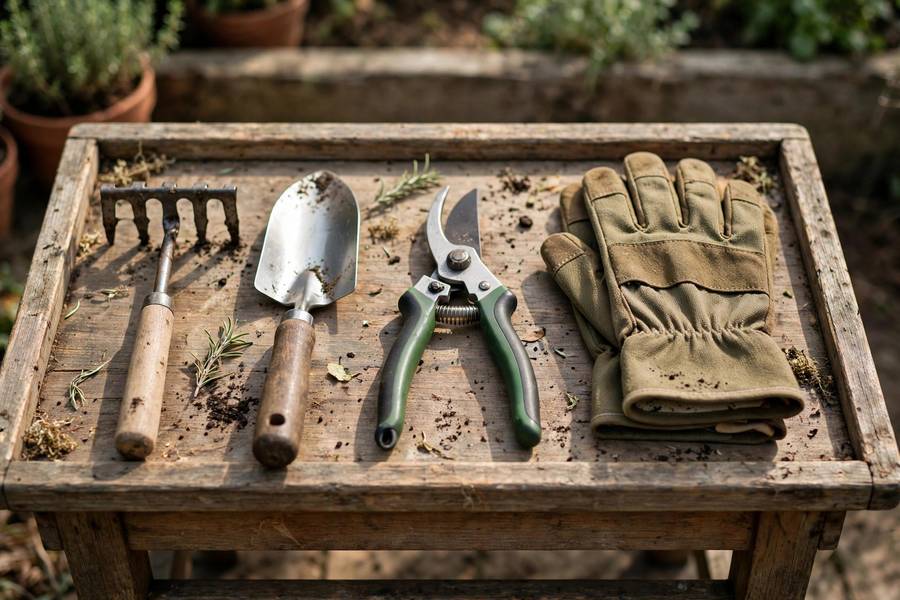
Keep a small sharpening stone or file with your cutting tools. A sharp pruner makes clean cuts that heal fast; a dull one tears stems and invites disease. Thirty seconds of sharpening every few weeks makes a real difference.
Watering Gear That Actually Works
You need a watering can and a hose with a gentle nozzle, and that is genuinely it for most beginners. The watering can is for containers, seedlings, and targeted watering; choose one with a removable rose (the sprinkler head) so you can switch between gentle shower for seedlings and direct spout for established plants. Two gallons is the sweet spot: big enough to be useful, small enough to carry comfortably.
For the hose, skip the gimmicky expandable ones that kink and burst; a standard rubber or reinforced hose with a simple adjustable nozzle lasts years longer. Water at the base of plants in the morning, and you will prevent most fungal problems before they start. If you want to upgrade one thing later, a soaker hose laid under mulch is the most water-efficient way to irrigate beds, and it waters while you drink your coffee.
The Support Crew: Rake, Hoe & Wheelbarrow
A bow rake levels soil, spreads mulch, and gathers debris; a leaf rake handles fall cleanup. You need both eventually, but the bow rake comes first for a vegetable gardener. A hoe is your weed prevention system: a sharp hoe used weekly on tiny weeds takes minutes, while monthly weed-pulling sessions take hours. The stirrup (or hula) hoe is my favorite because it cuts weeds just under the surface on both the push and pull stroke.
A wheelbarrow or sturdy garden cart moves compost, mulch, and harvests, and saves more backs than any other tool ever made. If storage space is tight, a collapsible garden cart or even a heavy-duty tarp for dragging works. These are the unglamorous tools that make the difference between a garden that gets maintained and one that gets abandoned by August.
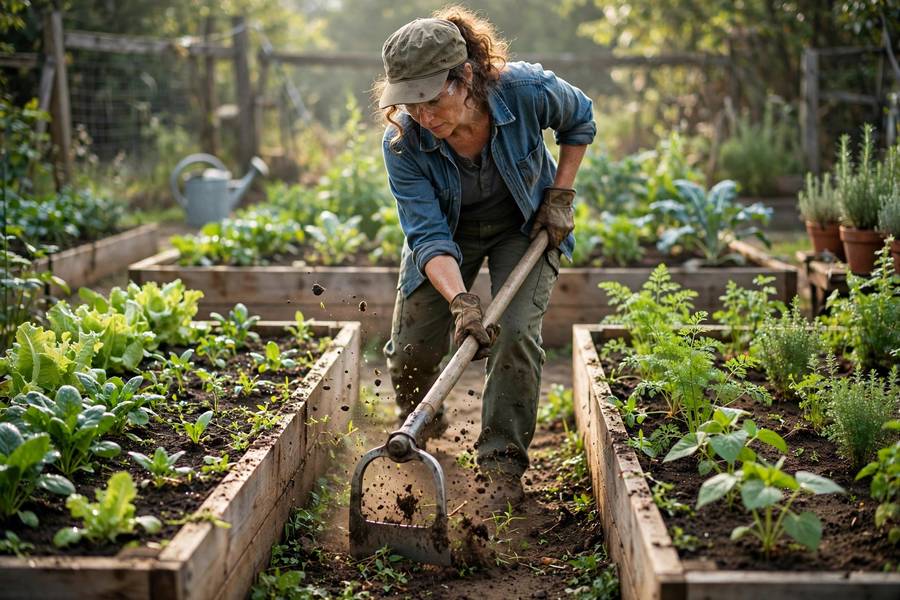
Buy handles you can grip comfortably and check the weight before you buy. A tool that is awkward to hold is a tool you will avoid using, no matter how good the reviews were.
5 Popular Tools Beginners Should Skip
One: the multi-attachment weeding gadget. It does five jobs badly instead of one job well; your hori hori and hand fork cover all of it. Two: the fancy electronic soil meter. Cheap ones are inaccurate, and a real lab soil test costs less and tells you more. Three: the kneeling bench with seventeen pockets. A five-dollar foam kneeling pad does the same job and stores flat.
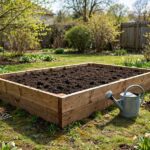
Four: the motorized cultivator for a small bed. It is overkill for anything under a few hundred square feet, it destroys soil structure, and a garden fork is faster for a 4×8 bed anyway. Five: decorative raised-bed corner brackets and kits at triple the lumber price. Basic lumber and screws build the same bed. Spend the savings on compost, which is what actually grows your garden. Every dollar not spent on gadgets is a dollar for good soil, good seeds, or the compost setup that feeds your garden for free.
Caring for Your Tools So They Last Decades
Good tools are a buy-once cry-once purchase, but only if you maintain them. The routine is simple and takes five minutes. Knock soil off after every use; a stiff brush by the shed door makes this automatic. Dry metal tools before storing, because rust is the number one tool killer. Once a season, wipe metal parts with an oily rag; I use plain vegetable oil, which is cheap and non-toxic around the garden.
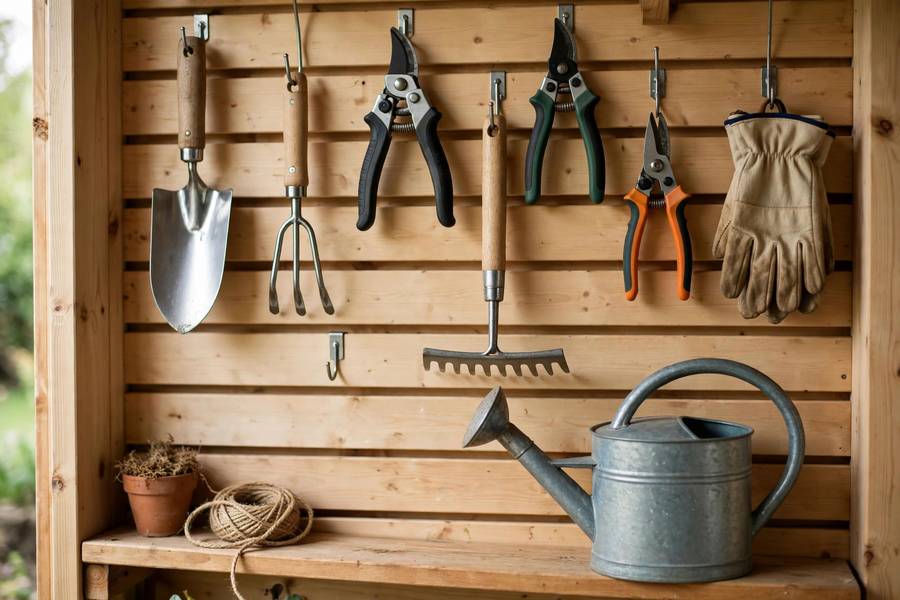
Sharpen cutting edges regularly, tighten loose handles, and store everything under cover. A five-dollar tool hung in a dry shed outlasts a fifty-dollar tool left out in the rain. At season’s end, give everything a proper once-over: sharpen pruners and hoes, oil wooden handles with linseed oil to prevent cracking, and hang tools off the ground for winter. Tools stored touching damp concrete rust from the bottom up, and this one autumn ritual adds years to every handle and blade you own.
I learned this watching my grandfather’s tools, some older than me, still working perfectly because they were cleaned and sheltered. Treat your nine essentials this way and you will hand them down, not throw them out. Now that you are equipped, my guide on how to start a garden will put those tools to work in the right order.A sturdy hand trowel. You will use it for transplanting, digging holes, scooping compost, and weeding more than any other tool. Buy a one-piece forged trowel rather than cheap stamped metal, which bends on the first tough root.
No, but buy decent quality on the tools you use daily: trowel, pruners, and gloves. Mid-range forged tools last years and work far better than the cheapest options. You can save money by skipping gadgets and buying the support tools (rake, hoe, wheelbarrow) at basic quality.
Bypass pruners. They make clean scissor-like cuts that heal quickly. Anvil pruners crush stems, which invites disease. Bypass pruners handle harvesting, deadheading, herb cutting, and tomato pruning, covering nearly all beginner pruning needs.
Skip multi-attachment weeders, cheap electronic soil meters, kneeling benches with pockets, motorized cultivators for small beds, and overpriced raised-bed kits. A hori hori knife, hand fork, foam kneeling pad, and basic lumber cover the same jobs better and cheaper.
Clean soil off after each use, dry metal before storing, wipe with an oily rag once a season, sharpen cutting edges regularly, and store under cover. Rust from being left out in rain kills more tools than actual use ever does.