How to Plan a Small Wedding on a Budget (2026 Guide)

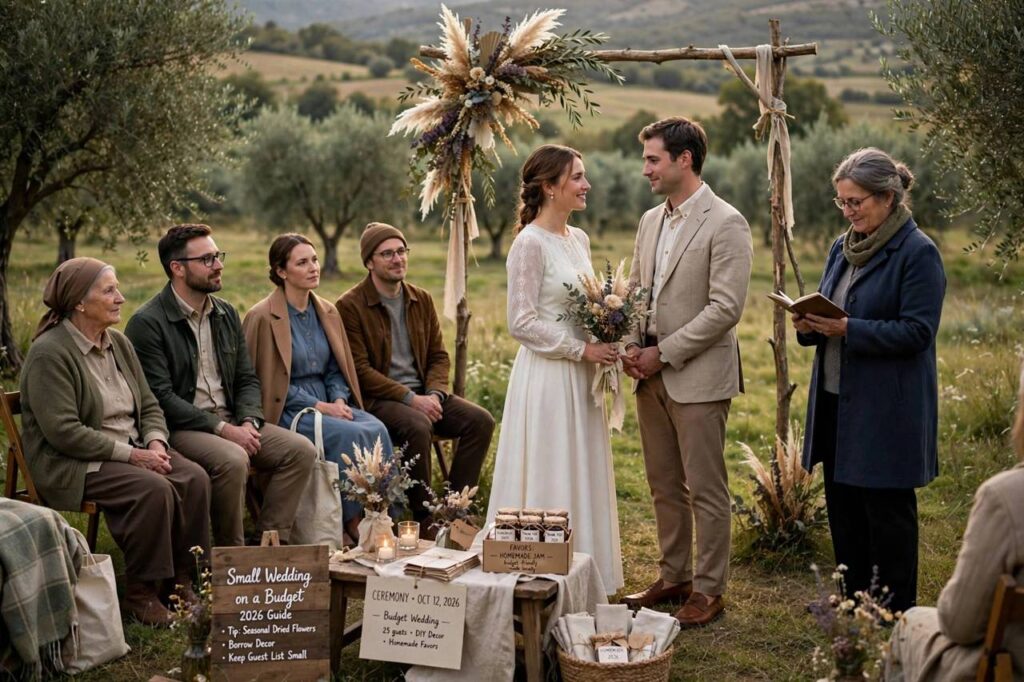
Here’s the lovely secret about learning how to plan a small wedding on a budget: the constraints are the gift. A smaller guest list and a real budget don’t produce a lesser wedding — they produce a more personal one, where you actually talk to every guest, spend on what matters to you, and skip the hundred-person performance. I’ve coordinated weddings from twelve guests to two hundred, and the small ones are consistently the most joyful. This guide walks through the whole process: setting a real budget, choosing what to prioritize, where the big savings hide, and the timeline that keeps it all calm.
First, define “small.” For most couples, a small wedding means 50 guests or fewer — often 20 to 30. That size unlocks venues and formats that big weddings can’t touch: restaurants, backyards, parks, galleries. And “on a budget” means whatever number lets you start married life without debt stress — for many couples, that’s $5,000 to $15,000 all-in, though beautiful weddings happen well below that.
How to Plan a Small Wedding on a Budget: Start With the Numbers
Before venues, before dresses, before anything: set the total number. Add up contributions from family (get explicit numbers, not vibes), your own savings, and decide the ceiling together. Then build a simple budget with the big categories: venue + food (usually 40–50% of the total), photography (10–15%), attire, flowers/decor, music, and a 10% contingency for surprises. The contingency isn’t optional — something always costs more than expected, and planning for it keeps it from becoming a crisis.
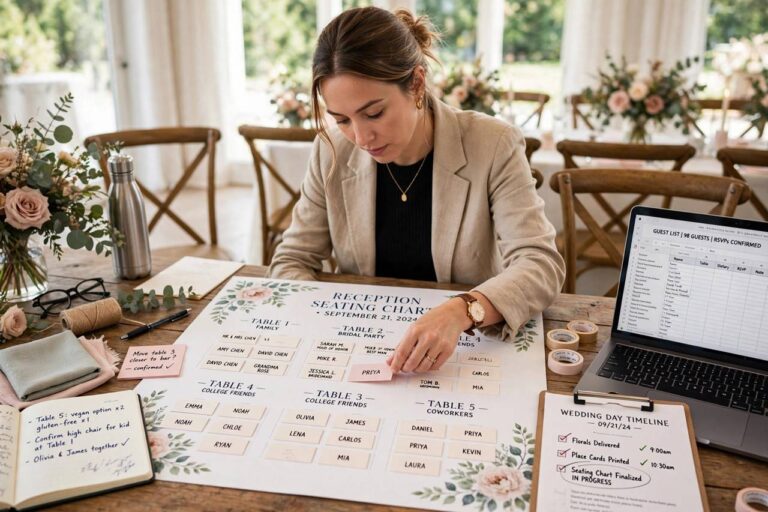
Track everything in one spreadsheet from day one. Every deposit, every balance due, every due date. The couples who stay on budget aren’t the ones with the most willpower — they’re the ones with the clearest tracking. When you can see the running total at a glance, saying no to the upgrade gets easy.
The Guest List Is Your Budget Lever
This is the single most powerful sentence in wedding budgeting: every guest costs money. At $75–150+ per head for food, drink, rentals, and favors, cutting twenty guests saves thousands — more than any vendor negotiation. A small wedding isn’t just romantic; it’s the highest-ROI budget decision you can make.
Build the list in tiers: non-negotiables (immediate family, best friends), then the next ring, then the “it would be nice” ring. Draw the line where the budget says to draw it, and hold it together as a couple — the line only works if both of you defend it. And remember: people who love you will understand. The ones who don’t weren’t going to be happy at any size.
Venue: Where Small Weddings Save the Most
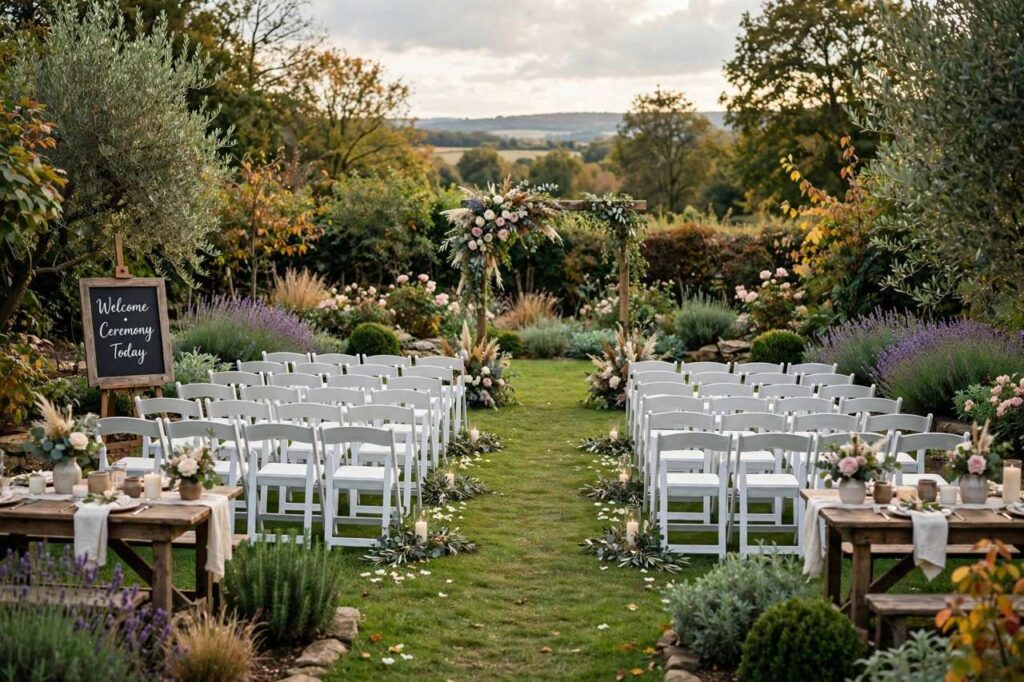
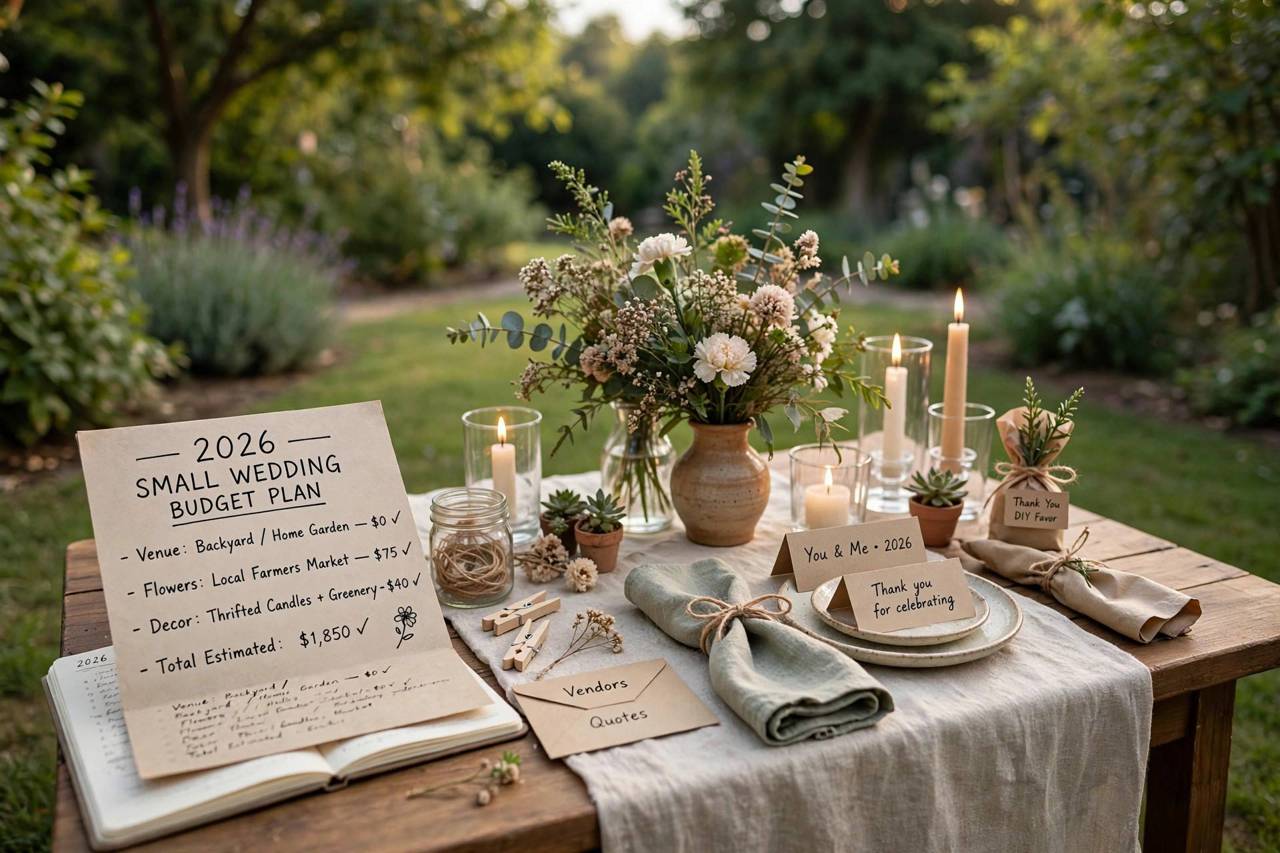
Big weddings need ballrooms. Small weddings can go anywhere — and “anywhere” is cheaper. Restaurants with private rooms often waive venue fees with a food-and-beverage minimum you’ll hit easily with 30 guests. Public parks and gardens rent for a few hundred dollars. Backyards are free (budget for a tent if weather is uncertain — non-negotiable insurance). Galleries, breweries, historic homes, and even well-designed Airbnb properties (confirm event permission first) all work at small scale.
Consider non-Saturday dates. Friday evenings and Sunday afternoons can cut venue and vendor costs 20–30%, and with a small guest list, attendance barely dips. Off-season months (January–March in most places) bring similar discounts. A small wedding on a Friday in February can cost half what the same wedding costs on a Saturday in June.
Food and Drink Without the Markup
With a small group, you can feed people well for less. Family-style service or food stations cost less than plated dinners and feel warmer. Brunch weddings are dramatically cheaper than dinner weddings — and mimosas plus a beautiful spread is nobody’s idea of settling. A restaurant reception means no catering logistics at all: great food, no rentals, built-in atmosphere.
On alcohol: a signature cocktail plus beer and wine satisfies nearly everyone at a fraction of a full open bar. Or skip the bar program and do a champagne toast only. Nobody has ever left a wedding saying “the open bar was insufficient” — but plenty have left raving about the food, so put the money there.
Photography: Don’t Skimp, Do Get Creative
If there’s one category where small weddings shouldn’t cut corners, it’s photography — the day flies by and the photos are what remain. But “don’t skimp” doesn’t mean “book the most expensive package.” It means: hire a professional whose style you love, for fewer hours. A talented photographer for 4–5 hours of coverage (ceremony through toasts) costs far less than an 8-hour package and captures everything that matters at a small wedding.
Ask about off-peak and weekday rates, associate shooters (talented seconds who shoot under a studio’s brand for less), and smaller deliverables. And give your photographer a shot list of the must-have groupings — with a small guest list, you can actually photograph everyone, which becomes a treasured record.
Attire, Flowers, and Decor on a Budget
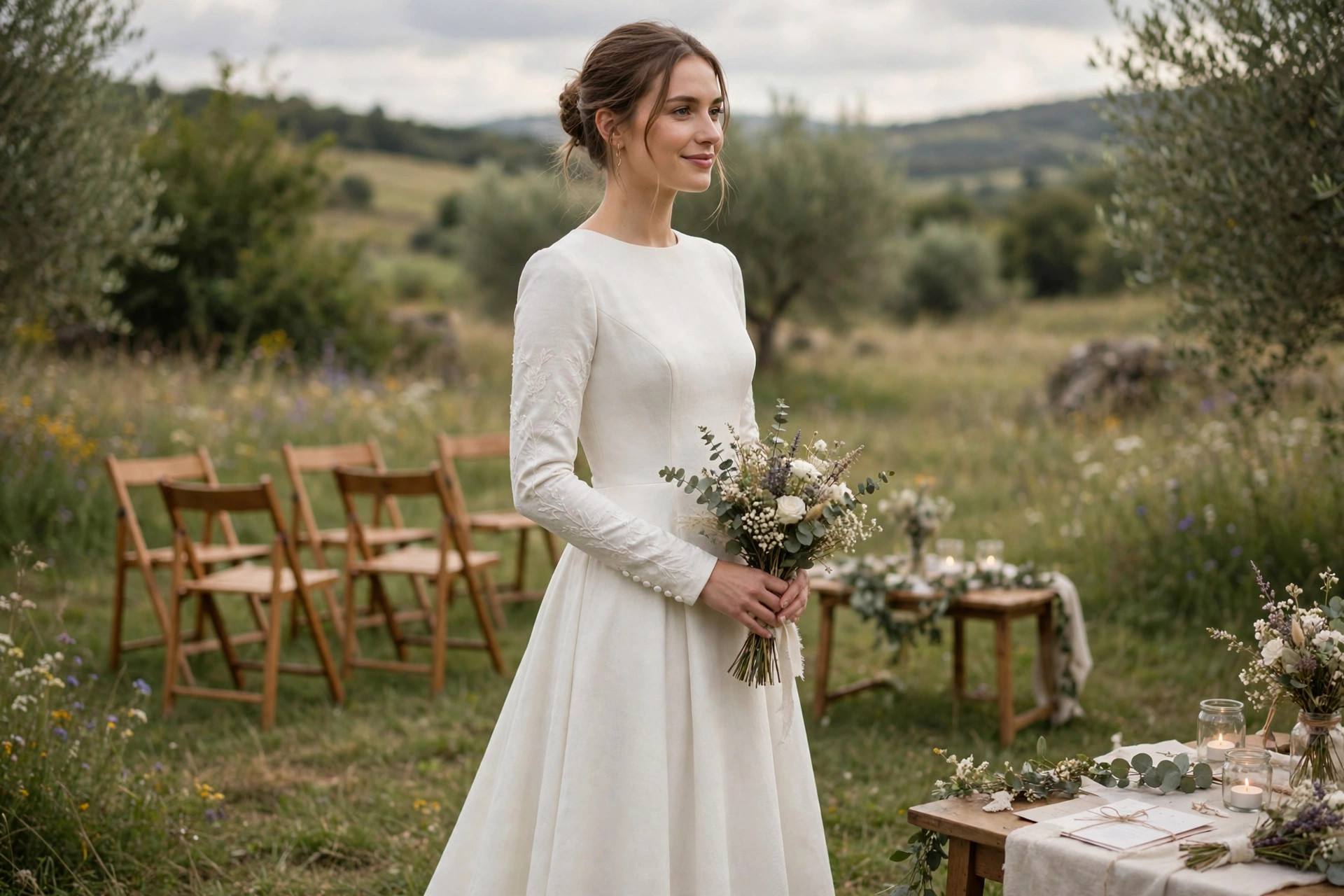
Attire: sample sales, pre-owned dresses, and non-bridal formalwear (a beautiful evening dress in ivory costs a fraction of a “wedding dress”) are the classic moves. For suits, renting remains the value king — or buying a suit you’ll actually wear again. If you’re browsing styles, our guide to wedding dress styles helps you identify the silhouette you want before you shop, which saves both time and money.
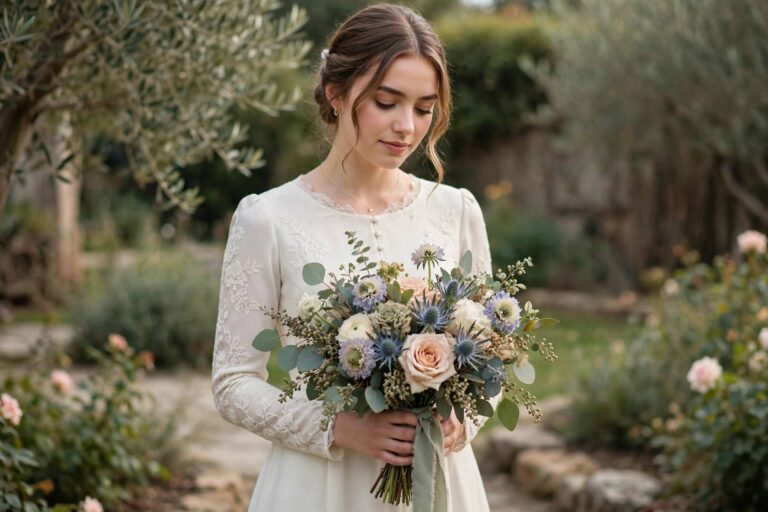
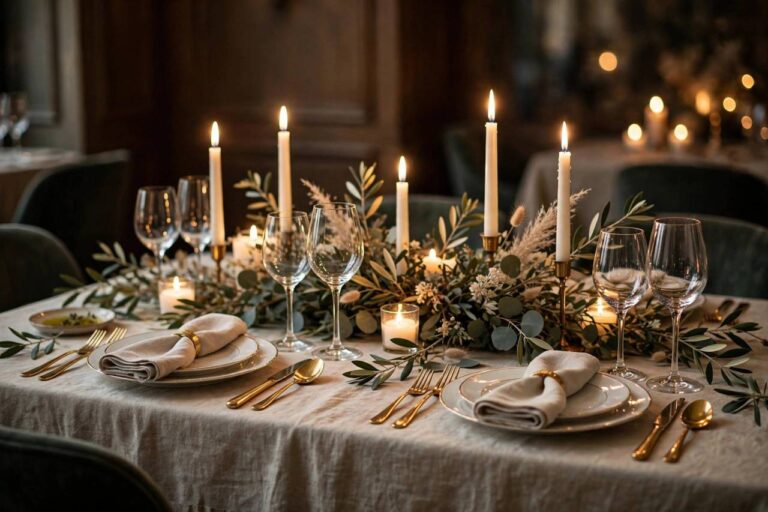
Flowers and decor: with a small wedding, you need less of everything — fewer centerpieces, a smaller bridal party (or none), one ceremony arrangement that doubles as reception decor. In-season, locally grown flowers cost a fraction of imported out-of-season blooms. And candles — dozens of them — create more atmosphere per dollar than any floral installation. A room full of candlelight makes everything look expensive.
For more inspiration on keeping costs down across the board, browse our affordable wedding ideas — dozens of specific swaps that save real money without looking cheap.
The Timeline: Planning Backwards From the Date
Small weddings need less lead time — 6 to 9 months is comfortable, and 3–4 months is doable if you’re decisive. Work backwards: book the venue first (everything depends on date and location), then photographer and caterer/food plan, then attire (allow time for alterations), then invitations (8 weeks out for a small wedding is plenty), then details — flowers, music, timeline — in the final two months.
The final month is for confirming, not deciding. Every vendor gets a confirmation call two weeks out: arrival times, setup needs, final headcount, balance payments. Build a day-of timeline in 30-minute blocks and give it to one trusted person (not you, not your partner) to run. Your only job on the wedding day is to be present.
DIY vs. Hiring: Where Your Time Pays Off
Small weddings are the perfect scale for DIY — but DIY everything and you’ll spend your engagement exhausted. The rule: DIY the things that are hard to mess up and genuinely fun (invitations, playlists, simple decor, favors), and hire the things where amateur hour shows (photography, food safety, day-of coordination). Flowers sit in the middle: a talented friend can do bouquets and a ceremony arch, but don’t hand the whole floral design to someone who’s never done it — bridezilla stories start here.
Price your own time honestly. If DIY invitations save $200 but cost three weekends, that’s a bad trade for most couples. The highest-value DIY is anything you’d enjoy as a craft project anyway — those hours aren’t costs, they’re part of the experience. The lowest-value DIY is fiddly, stressful work you resent: that’s what vendors are for, and small weddings need fewer vendor hours, so the pros cost less than you fear.
Sample Budget Breakdowns
Numbers make it real. Here’s a realistic $8,000 small wedding (30 guests): venue/park permit and tent backup $1,200; restaurant reception dinner $3,000; photography (5 hours) $1,500; attire $800; flowers and candles $500; invitations and misc $400; contingency $600. And a $15,000 version (50 guests): venue $3,500; catering $5,500; photography $2,000; attire $1,200; flowers/decor $1,000; music $600; invitations/misc $500; contingency $700.
Notice what drives both budgets: venue plus food is roughly half. That’s where small weddings win — a 30-person restaurant dinner costs what a 150-person plated dinner’s appetizers cost. Adjust any line up or down for your priorities (photography lovers: steal from decor; food lovers: steal from flowers), but keep the contingency sacred. Future-you, handling the surprise alteration fee or the extra vendor meal, will be grateful.
Frequently Asked Questions
How much does a small wedding cost on average?
It varies widely by location, but many couples plan beautiful small weddings (under 50 guests) for $5,000–$15,000 all-in. Backyard or park weddings with restaurant receptions can come in well under $5,000, while small weddings with premium venues and vendors can reach $20,000+.
What is considered a small wedding?
Generally 50 guests or fewer, often 20–30. Below about 20 guests it’s sometimes called a micro-wedding. The defining feature isn’t just the number — it’s that the size unlocks intimate venues and formats that don’t work at larger scales.
How far in advance should I plan a small wedding?
Six to nine months is comfortable; three to four months is doable if you’re decisive. Small weddings need less lead time because venues and vendors are easier to book, but popular photographers and venues still fill up — book those first.
Where can I save the most money on a wedding?
The guest list (every guest costs $75–150+), the venue (nontraditional spaces, off-peak dates), and food format (brunch, family-style, or restaurant receptions). These three decisions drive the majority of the budget.
Is it okay to have a wedding on a Friday or Sunday?
Absolutely — and it can save 20–30% on venues and vendors. With a small guest list, attendance barely dips, especially if you give guests plenty of notice. Friday evenings and Sunday afternoons are the sweet spots.
Should I hire a wedding planner for a small wedding?
A full planner is often unnecessary at small scale, but a day-of coordinator (typically a fraction of the cost) is worth every penny — they run the timeline and handle vendor questions so you can actually enjoy the day. Some venues include coordination, so ask before hiring separately.