Wedding Seating Chart Tips: From Dreaded to Done

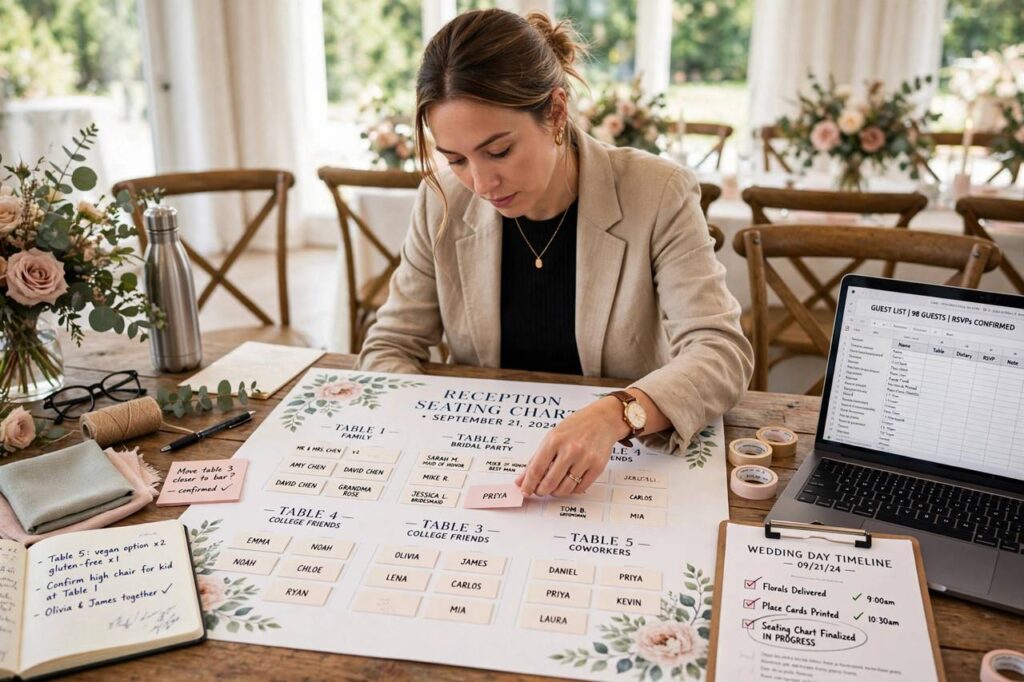
Of all the wedding planning tasks, the seating chart is the one that makes couples groan the loudest. It’s a logic puzzle with feelings — 120 people, 15 tables, divorced parents, feuding cousins, and your college friends who all need to sit together but also apart from your work friends. Take a deep breath. These wedding seating chart tips come from years of watching what works, and I promise: with the right approach, this goes from dreaded to done in a weekend.
We’ll cover when to start, the strategy for grouping guests, how to handle the tricky situations, and the practical tools that make it all manageable.
When to Start (and What You Need First)
Start your seating chart 4-6 weeks before the wedding — after RSVPs are in (or mostly in) but with enough buffer to handle late changes. Starting earlier means redoing it as RSVPs arrive; starting later means panic.
Before you place a single person, you need three things: the final (ish) guest count from RSVPs, the venue’s floor plan with table sizes and capacities, and your VIP list — the 10-15 people whose placement matters most (parents, grandparents, wedding party, closest friends). Place VIPs first, then build outward. If you’re still structuring the overall timeline, a structured planning checklist keeps seating in its proper planning phase.
Get your caterer or venue coordinator’s table diagram early — knowing exactly how many tables you have and how many each seats turns a vague puzzle into a concrete one. A 120-person wedding with twelve 10-tops is a very different puzzle from fifteen 8-tops.
Wedding Seating Chart Tips: Group by Connection, Not Obligation
The golden rule of seating: seat people with people they’ll enjoy, not people they “should” sit with. Guests remember whether they had fun at their table far longer than they remember the centerpieces.
Work in natural groups first: college friends together, work friends together, family clusters, your partner’s friends. These groups seat themselves — the art is in the remaining 20-30% of guests who don’t belong to an obvious cluster. For those, think in terms of bridges: who knows whom, who shares interests, who would genuinely enjoy meeting.
A few grouping principles:
- Mix ages thoughtfully, not randomly. A table of all 25-year-olds and one 70-year-old is awkward; a genuinely mixed table with conversational bridges works beautifully.
- Seat outgoing people strategically. Every table needs at least one social catalyst — someone who talks to strangers happily. Identify yours and distribute them.
- Consider energy levels. Your party friends want the lively tables near the dance floor; grandparents want conversation-friendly spots away from the speakers. Match table vibe to guest vibe.
- Couples sit together. This surprises no one, but it’s worth stating: never split established couples across tables. (Plus-ones you barely know stay with their partner — that’s their anchor.)
Handling the Tricky Situations
Divorced parents. The classic. Seat them at different tables, ideally with their own support people (siblings, close friends) at each. If they’re amicable, nearby tables are fine; if not, opposite sides of the room. When in doubt, ask — a quick “we want you comfortable, any preference?” prevents day-of drama.
Feuding family members. Separate tables, no shared sightlines if possible. You are not obligated to fix anyone’s relationship at your wedding. Your job is everyone’s comfort, including yours.
The singles table. Approach with care — a table labeled (even implicitly) as “the singles table” can feel like a penalty box. Instead, distribute single guests among tables where they’ll genuinely connect, or create a “friends” table of young, social people who’ll have a blast together regardless of relationship status.
Kids. Decide your policy early (kids invited or not) and apply it consistently — exceptions breed resentment. If kids attend, a kids’ table with activities works for ages 5+, while babies and toddlers stay with parents. Tell parents the plan in advance so they can prepare.
Head table vs. sweetheart table. A sweetheart table (just the two of you) is intimate and increasingly popular; a head table with the wedding party is traditional and social. There’s no wrong answer — but decide based on what you want, since you’ll spend the whole meal there. For more inspiration on the reception overall, wedding seating chart ideas has creative approaches worth browsing.
Two more situations that come up in nearly every seating chart. The friend group that doesn’t fit at one table: when you have eleven college friends and tables seat eight, don’t split them randomly — put the core group together and place the remaining three at an adjacent table with other friendly, social guests (not with your great-aunts). Tell the three in advance so it doesn’t feel like a surprise demotion. The guest who RSVPs “yes” to everything but you barely know: your coworker’s spouse you’ve met once, your cousin’s new partner — seat them with other sociable, low-drama guests rather than agonizing over the perfect match. Not every seat needs to be destiny; some seats just need to be pleasant.
Assigned Tables vs. Assigned Seats: Which Is Right?
Assigned tables (not specific seats): the modern standard. Guests find their table and choose their seat. Less work for you, more flexibility for guests, and it avoids the awkwardness of a rigid place card next to someone they don’t know. This is my recommendation for most weddings.
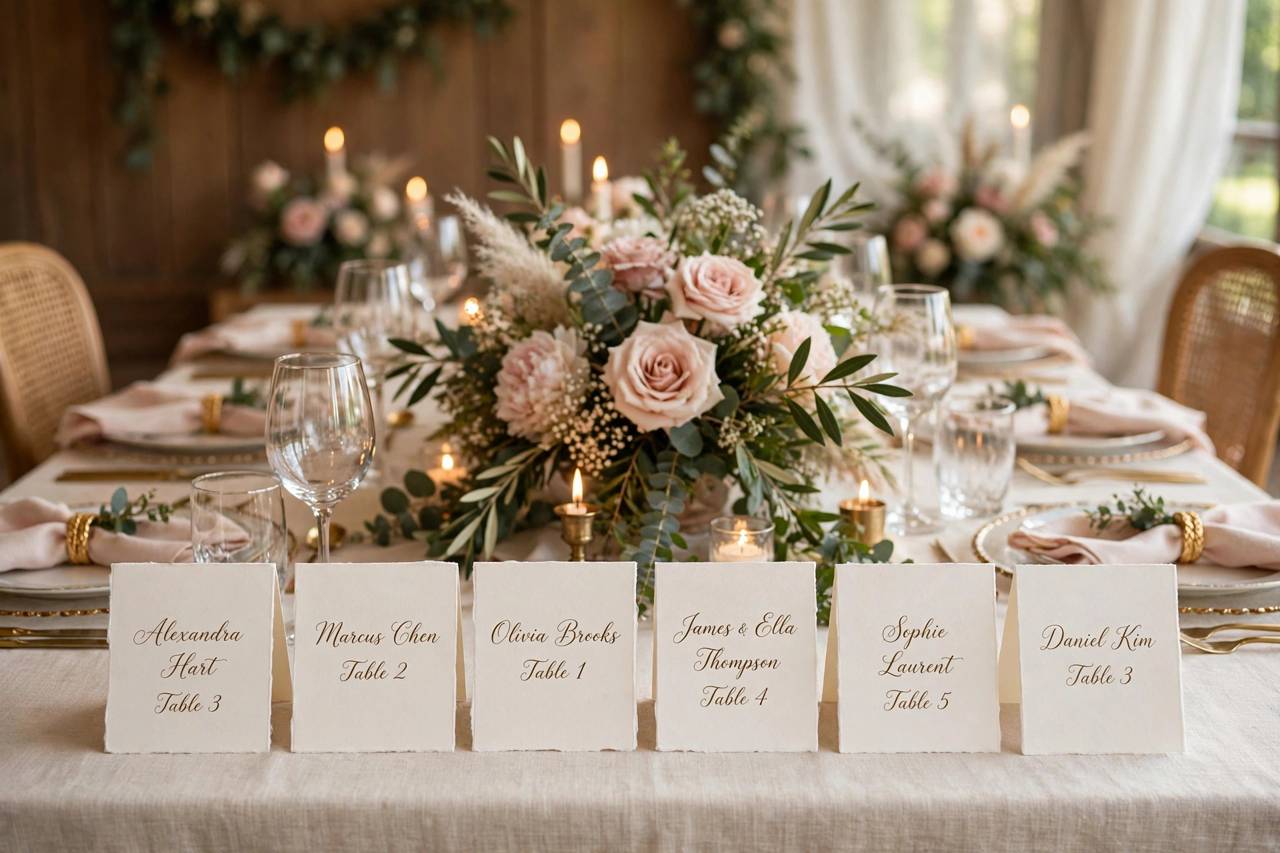
Assigned seats (place cards): worth the extra effort for formal plated dinners (it helps the caterer enormously — they know exactly who’s getting the fish), very large weddings where table-finding gets chaotic, or when you have specific dynamics to manage carefully.
Open seating: tempting for its simplicity, but risky above 50 guests — it creates anxiety (“where do we sit?”), the popular tables fill instantly, and shy or older guests often end up isolated. If you go open, at least reserve tables for VIPs and family.
Tools and Practical Tips
Use a seating chart tool. Allseated, WeddingWire’s seating tool, or even a simple spreadsheet — anything beats paper scraps. Digital tools let you drag-and-drop guests between tables and instantly see counts, which is invaluable when you’re on revision twelve.
Build in buffer. Leave 2-3 empty seats across the room for last-minute additions, no-shows’ plus-ones, and the inevitable “oh, we need to add Aunt Carol.” A chart with zero slack breaks the moment anything changes.
Do it together, in one sitting. Block a weekend afternoon, order food, pour wine, and power through. Seating by committee over three weeks is miserable; seating as a focused session is almost fun. Make the big decisions together, then one person handles the fiddly adjustments.
Finalize one week out. Send the final chart to your caterer, venue coordinator, and stationer seven days before. After that, only emergency changes — every late change risks a cascade of errors in printed materials.
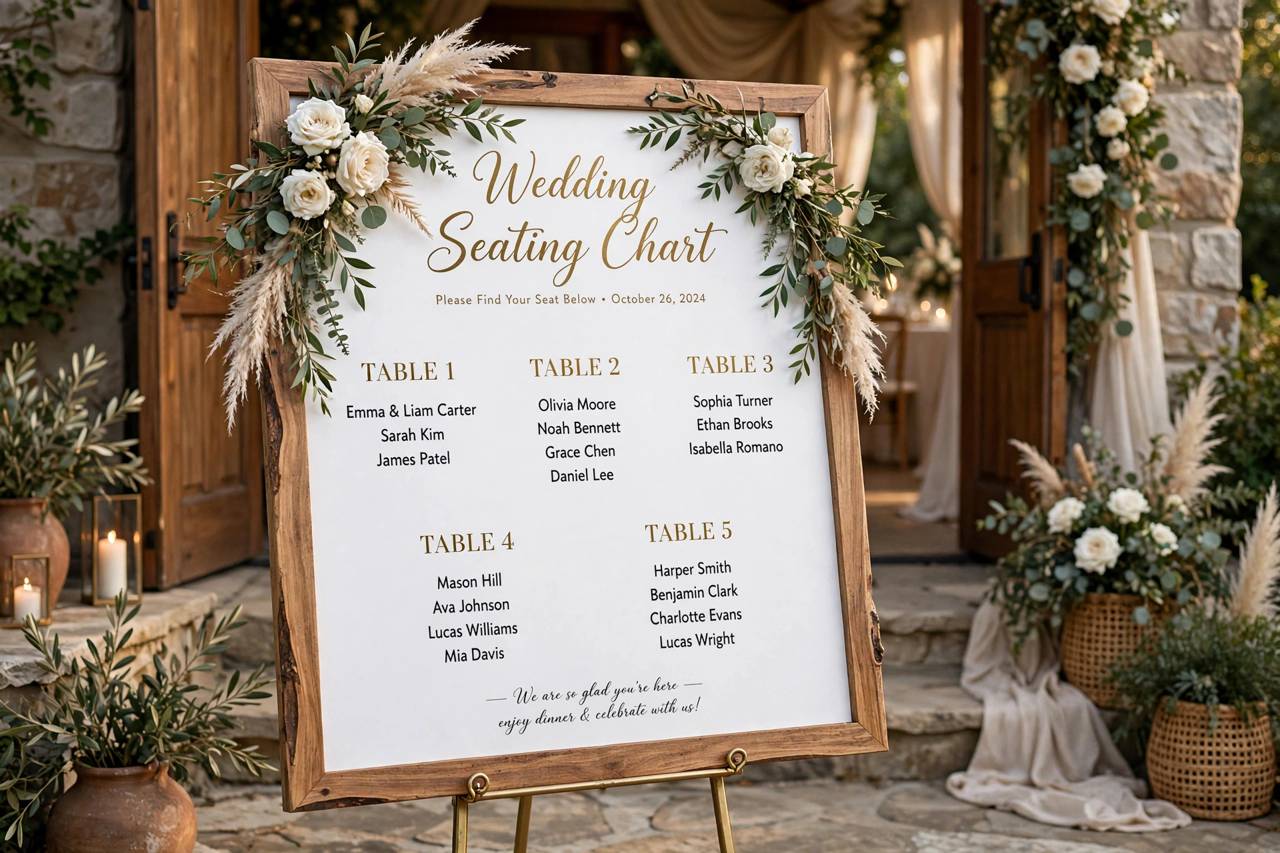
Display it beautifully. The seating chart is many guests’ first impression of the reception. Whether it’s an elegant board, a mirror display, or individual escort cards, make it clear, alphabetical, and easy to read in dim light. Confused guests bottleneck at the entrance — clarity is kindness.
Remember what the seating chart is actually for: making sure the people you love have a wonderful time celebrating with you. It’s not a test of your diplomacy or a puzzle with one right answer. Seat people with kindness and common sense, build in some buffer, and then let it go — on the day, nobody remembers the chart. They remember the joy. And if you need the bigger picture, how to plan a wedding walks through every planning phase in order.
The Head Table Question (and Other VIP Decisions)
Where do you sit? It sounds like the easiest decision — you’re the guests of honor — but the head table is secretly one of the most loaded choices in the whole seating chart. Let’s walk through the options honestly.
The traditional head table (couple plus wedding party, everyone facing the room) looks stunning in photos and keeps your closest people together. The downside nobody mentions: you spend dinner with your backs half-turned to half your guests, and wedding party members’ partners get exiled to other tables — which can feel awkward for plus-ones who know nobody.
The sweetheart table (just the two of you) is increasingly popular, and I understand why: it’s the only guaranteed alone time you’ll get all day, the photos are romantic, and your wedding party gets to sit with their own partners and friends. If you go this route, seat your wedding party at nearby tables so nobody feels demoted.
The family table (couple plus both sets of parents, maybe grandparents) honors the people who raised you and works beautifully for smaller, family-centered weddings. Just be honest with yourself about family dynamics — if your parents and your partner’s parents have never shared a pleasant meal, your wedding dinner is not the time to test it.
Where do vendors sit? Your photographer, videographer, planner, and band/DJ need to eat — feed them well and feed them on time (ideally when you eat, so they don’t miss key moments). A separate vendor table near the kitchen is standard and completely fine. And kids: a kids’ table works from about age 5 up if there are at least four of them and they’re old enough to sit through dinner; under 5, keep them with parents. Hire a babysitter for the kids’ table if you can — it’s the difference between charming and chaotic.
FAQ
When should I start my wedding seating chart?
Start 4-6 weeks before the wedding, once most RSVPs are in. You’ll need your guest count, the venue’s floor plan with table capacities, and your VIP list. Finalize about one week before the wedding.
Should I do assigned seats or assigned tables?
Assigned tables (guests choose their seat at the table) is the modern standard and my recommendation for most weddings. Use assigned seats for formal plated dinners, very large weddings, or when managing specific guest dynamics carefully.
How do I seat divorced parents at a wedding?
Seat them at different tables, each with their own support people. If they’re amicable, nearby tables are fine; if not, opposite sides of the room. When unsure, ask their preference — it prevents day-of drama.
What do I do with single guests at a wedding?
Avoid an obvious ‘singles table.’ Distribute single guests among tables where they’ll genuinely connect with others, or create a lively ‘friends’ table of social people who’ll enjoy each other regardless of relationship status.
How many people should sit at each wedding table?
Follow your venue’s table capacities — typically 8-10 per round table. Don’t overfill tables to save on rentals; crowded tables are uncomfortable. Leave 2-3 buffer seats across the room for last-minute changes.
What if someone RSVPs with a plus-one I didn’t invite?
First, check whether it was actually uninvited or a misunderstanding — sometimes plus-ones get lost between the invitation and the RSVP. If it’s genuinely uninvited, you have every right to address it kindly and directly: ‘We’re so excited to celebrate with you! We’re keeping the guest list tight, so we aren’t able to accommodate a plus-one, but we can’t wait to see you.’ Most people understand. The key is handling it promptly and privately — don’t let it sit, and don’t complain about it to mutual friends.