Who Pays for What in a Wedding Traditionally? Full Guide

Money is the one wedding topic nobody wants to bring up first, and yet it shapes nearly every decision you will make. Long before you choose flowers or a first-dance song, someone has to answer a delicate question: who pays for what in a wedding traditionally? Tradition has a clear answer, but modern life has rewritten many of the rules. This guide walks you through the traditional breakdown, how couples handle it today, and most importantly, how to have the conversation with grace.
Who Pays for What in a Wedding Traditionally? The Full Breakdown
Historically, wedding costs fell along clear family lines. These customs grew out of eras when weddings were hosted by the bride’s family as a formal social event. Here is the classic division:
The bride’s family traditionally pays for: the ceremony venue and decor, the reception venue, catering and cake, flowers and decorations, photography and videography, the bride’s attire and accessories, invitations and stationery, transportation for the wedding party, and often the bulk of the overall budget. Traditionally, this was by far the largest share.
The groom’s family traditionally pays for: the rehearsal dinner, the groom’s attire, the marriage license and officiant fee, the bride’s bouquet (in some traditions), boutonnieres for the groom’s side, and transportation for the groom’s family.
The groom traditionally pays for: the engagement ring, the bride’s wedding band, his own wedding band, the honeymoon, and gifts for the groomsmen.
The bride traditionally pays for: her wedding band for the groom, gifts for bridesmaids, and sometimes her own hair and makeup.
Bridesmaids and groomsmen traditionally cover their own attire, travel, and accommodation, and often chip in for the bachelor and bachelorette celebrations.
Why Tradition Looks Different Today
Those traditional lines made sense when couples married young and lived with parents until the wedding day. Today’s reality is different: couples are older, financially independent, and often planning alongside careers and mortgages. Surveys consistently show that the couple themselves now contribute the largest share of wedding costs, with families contributing what they comfortably can.
Family structures have evolved too. Blended families, same-sex weddings, second marriages, and couples whose parents are divorced or remarried all make the old bride’s-family/groom’s-family split awkward or irrelevant. The modern approach is contribution-based rather than role-based: everyone gives what they wish, and the couple fills the rest.
There is also a philosophical shift. Many couples prefer paying themselves because it means full control over decisions. When parents fund specific items, they often (understandably) expect a say in those items. Couples who self-fund report fewer conflicts, even if the wedding is smaller. A beautiful, intentional celebration beats a lavish resentful one every time.
The Modern Approach: Splitting Costs Fairly
Here are the models modern couples actually use:
Equal three-way split. The couple, the bride’s family, and the groom’s family each contribute a third. Clean and simple when all parties are willing and able.
Percentage-based contributions. Each party contributes a percentage of the total budget based on what they can afford. One family gives 20 percent, the other 30, the couple covers 50. Flexible and pressure-free.
Item-based division. Each party “claims” specific expenses: one family covers the venue, the other covers catering, the couple handles photography and attire. This works well when contributors want their money tied to something tangible.
Couple funds everything. Increasingly common. The couple sets the budget they can afford and plans within it, accepting monetary gifts gratefully but expecting nothing. Maximum autonomy, maximum peace.
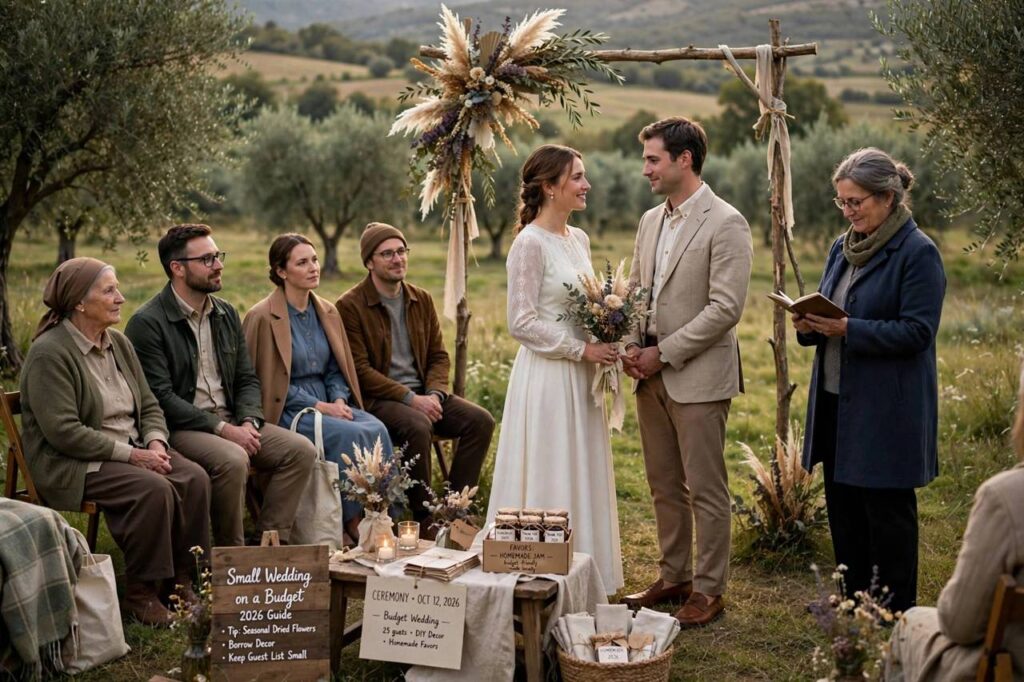
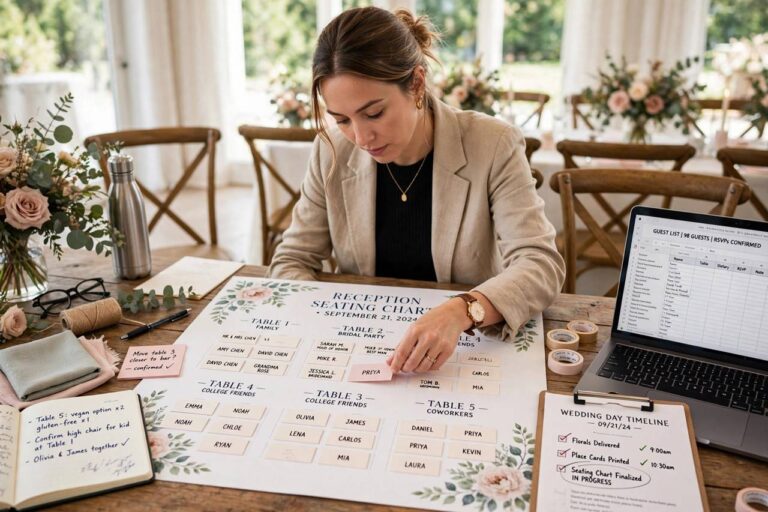
Whichever model you choose, put the total budget in writing early. A shared spreadsheet prevents 90 percent of money misunderstandings. Our guide on how to plan a wedding on a small budget shows how to build a celebration that feels abundant at any price point.

How to Have the Money Conversation Gracefully
This is the part everyone dreads, so let us make it easier. Timing matters: bring it up early, before venues are booked and deposits paid. A calm conversation at the start prevents painful renegotiations later.
Start with the couple. Before involving families, sit down together and agree on three things: your ideal total budget, what matters most to each of you, and what you can contribute yourselves. United front, always.
Ask, don’t assume. Approach each family separately with openness, not expectations. “We are starting to plan and wanted to talk about budgets. Is contributing something you would like to do, and if so, what feels comfortable?” This phrasing gives them dignity and an easy out.
Separate gifts from control. If a family member offers money with strings attached (“we will pay for the venue, but it must be at the country club”), decide together whether the strings are acceptable. It is perfectly fine to decline money that comes with conditions you cannot embrace.
Write it down. Who is contributing what, by when. Not because you distrust anyone, but because memories blur and weddings involve dozens of payments over many months.
Navigating Tricky Family Situations
Divorced parents. Speak to each parent individually. Never put them in the position of negotiating with each other through you. Keep contributions separate and private.
Unequal contributions. If one family gives significantly more, resist the urge to give them proportionally more control unless you have agreed to that. A gift is a gift. If control is expected, name it kindly before accepting.
When family cannot contribute. This is normal and nothing to be embarrassed about. Plan the wedding you can afford yourselves, and let family contribute in non-financial ways: hosting the rehearsal dinner at home, DIY decor, or simply their presence. For inspiration, browse our affordable wedding ideas for celebrations that feel rich without a big budget.
Cultural expectations. Many cultures have specific traditions about who pays, from the groom’s family covering everything to elaborate dowry customs. Honor your heritage while adapting to your reality. A respectful conversation with elders about which traditions to keep goes a long way.
Building Your Wedding Budget Step by Step
Once contributions are settled, build the budget in this order. First, set the total based on actual committed funds, not hoped-for amounts. Second, allocate by priority: venue and catering typically consume about half. Third, research real costs in your area before falling in love with anything. Fourth, add a 10 percent buffer for surprises, because there are always surprises.
Track every deposit and due date in one place. Wedding expenses arrive in waves: booking deposits early, attire mid-planning, final vendor payments in the last month. A timeline keeps cash flow smooth and stress low. Our 12-month wedding planning checklist maps every expense to its moment so nothing sneaks up on you.
Sample Budget Breakdowns at Three Price Points
Abstract percentages are hard to picture, so let us make this concrete. Here are three realistic budget scenarios showing how contributions might divide. Treat these as illustrations, not rules; your numbers will reflect your guest count, city, and priorities.
The $15,000 intimate wedding (50 guests). The couple contributes $8,000 from savings. The bride’s family offers $4,000 toward the venue and catering. The groom’s family hosts a $1,500 rehearsal dinner and covers the $1,500 honeymoon flights. Item-based division keeps everyone clear on their piece. The couple keeps the guest list tight and splurges on photography, the one thing they will look at for decades.
The $35,000 classic wedding (120 guests). The couple covers $15,000. Each family contributes $10,000, a clean three-way split. Venue and catering consume roughly $17,000, photography and videography $5,000, attire $3,000, flowers and decor $4,000, music $2,500, with the remainder spread across stationery, transportation, and the buffer fund. Because all three parties contribute equally, major decisions get made jointly, which works beautifully when everyone respects the couple’s vision.
The $75,000 large celebration (200 guests). The bride’s family, following tradition enthusiastically, contributes $40,000 covering venue, catering, and flowers. The groom’s family contributes $15,000 for the rehearsal dinner, bar service, and transportation. The couple covers $20,000: photography, attire, honeymoon, and stationery. With larger contributions come more voices, so this couple holds a monthly planning call with both families to keep decisions collaborative rather than contentious.
Notice what all three scenarios share: the total is set before spending begins, every contribution is specific, and the couple’s priorities drive the allocation. Whether your wedding costs $10,000 or $100,000, those three habits matter more than the number itself. Money conversations feel awkward for about ten minutes. Money surprises feel terrible for months.
Often-Forgotten Wedding Expenses to Budget For
Beyond the big-ticket items, a handful of smaller costs ambush nearly every couple. Alterations for wedding attire often run several hundred dollars on top of the purchase price. Gratuities for vendors, hair and makeup trials, postage for invitations (heavier suites cost more to mail), and marriage license fees add up quietly. Vendor meals are another surprise: your caterer will charge per head for photographers, planners, and DJs who work through dinner.
Then there are the getting-ready costs: hotel rooms the night before, welcome bags for out-of-town guests, and transportation between venues. None of these is huge alone, but together they can reach 10 percent of a budget. Decide early who covers them, a line in the spreadsheet beats an awkward text message later, and keep that 10 percent buffer sacred. The couples who stay calm about money are not the ones who spent the most. They are the ones who planned for the costs nobody posts about.
Key Takeaways
Traditionally, the bride’s family paid for most of the wedding, the groom’s family hosted the rehearsal dinner, and the couple handled personal items and the honeymoon. Today, most couples contribute the largest share themselves, with families giving what they comfortably can. The healthiest approach is an early, honest conversation: agree as a couple first, ask families without assumptions, put contributions in writing, and separate financial gifts from decision-making control. However the costs divide, a wedding planned within honest means and free of money resentment is the most luxurious kind there is.
FAQ
Who pays for what in a wedding traditionally?
Traditionally, the bride’s family pays for the ceremony, reception, catering, flowers, and photography. The groom’s family pays for the rehearsal dinner and the officiant. The groom covers the rings and honeymoon. Modern couples usually split costs differently.
Do the bride’s parents still pay for the wedding?
Sometimes, but it is no longer expected. Today the couple typically pays the largest share, with both families contributing what they wish. Many couples fully self-fund to keep complete control over decisions.
Who pays for the honeymoon traditionally?
The groom traditionally pays for the honeymoon. In modern practice, couples often pay for it together or register for honeymoon contributions as wedding gifts.
How do you split wedding costs fairly?
Common models include an equal three-way split between the couple and both families, percentage-based contributions by ability, item-based division where each party claims specific expenses, or the couple funding everything themselves.
Who pays for bridesmaid dresses?
Traditionally, bridesmaids pay for their own dresses, travel, and accommodation. The couple typically covers hair and makeup if they require a specific professional look.