How to Defog Car Windows Fast: 9 Tricks That Actually Work

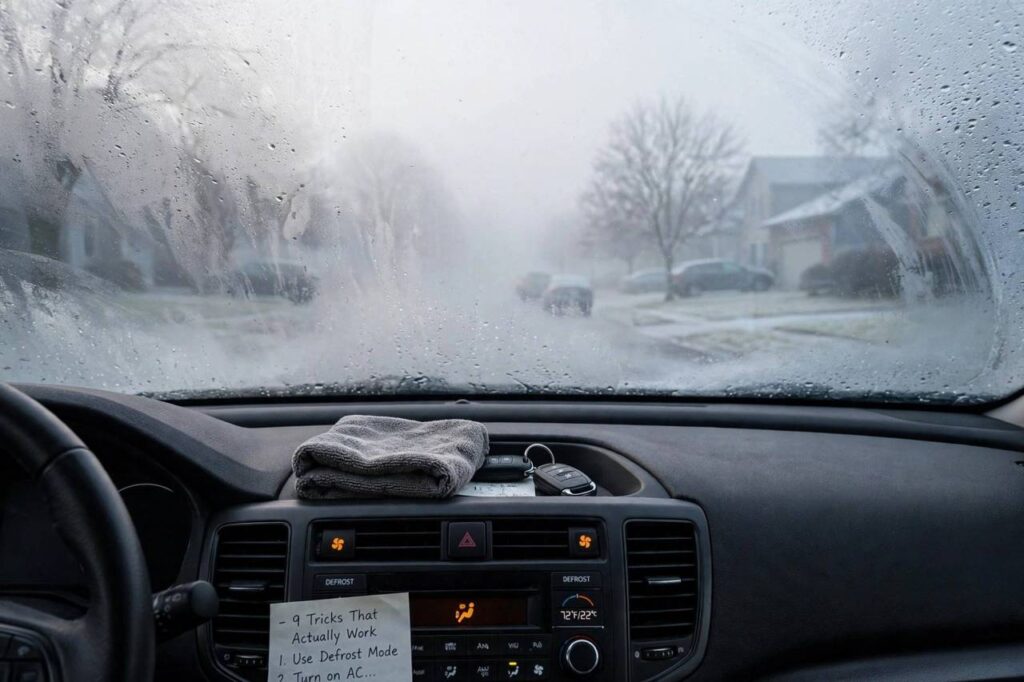
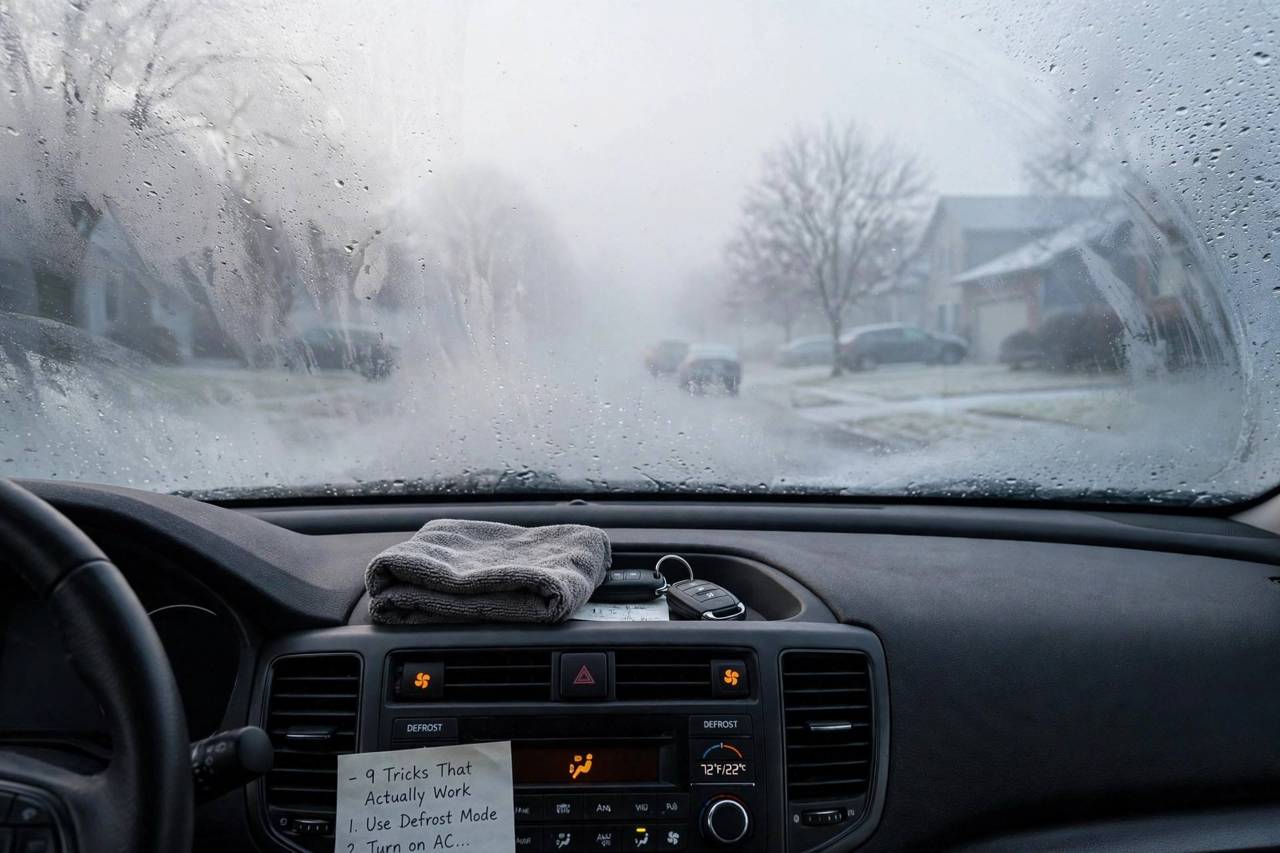
If you are reading this with a foggy windshield, here is the short version of how to defog car windows fast: turn your heater to max, switch the airflow to defrost mode, turn the air conditioning on, and make sure recirculation is OFF so fresh air flows in. Wipe the inside glass with a clean microfiber cloth while it works. That combination clears most windshields in two to three minutes. Everything below explains why that works, what to do when it doesn’t, and nine tricks that speed things up even more.
Fog forms when warm, moist air inside your car hits glass that is colder than the dew point of that air. Your breath, wet jackets, and damp floor mats all feed moisture into the cabin. The colder the glass, the faster it fogs. That is why the problem peaks on rainy mornings and cold winter days, and why a car full of passengers fogs up faster than an empty one.
How to Defog Car Windows Fast: The 60-Second Method
When the windshield goes white and you need to leave now, do this in order. First, start the car and set the temperature to full heat. Second, set the airflow to the windshield defrost setting, the one with the curved arrows pointing up. Third, turn the air conditioning ON, even though you want heat. The AC compressor strips moisture out of the air before it reaches the glass, which is the real trick. Fourth, turn recirculation off so the system pulls in drier outside air instead of recycling the humid air you have been breathing. Fifth, crack two windows about an inch to dump humid air fast. Roll the windows back up once the glass clears. Keep a clean microfiber cloth in the door pocket and give the inside of the windshield a firm wipe, working from the center outward.
Most cars clear in two to three minutes this way. If yours takes longer, one of the steps above is probably off, most commonly recirculation being left on, or the cabin air filter being clogged.
Why Your Windows Fog Up in the First Place
Understanding the cause makes the fixes obvious. Every passenger exhales warm air loaded with moisture. One person produces enough breath moisture in an hour to noticeably fog a cold windshield. Wet shoes soak the floor mats, and that water keeps evaporating into the cabin air all day. A clogged cabin air filter chokes airflow, so the moist air lingers against the glass. Leaks around door seals, the trunk, or a cracked windshield seal let rainwater in, which raises cabin humidity permanently. And if your AC compressor is dead, the system loses its dehumidifier, which is why some cars fog relentlessly no matter what buttons you press.
9 Tricks to Clear Fog Faster
1. Run the AC with the heat
This is the single fastest legal trick and most drivers never use it. Cold AC air is dry air. When you run AC and heat together, the system dehumidifies the air first, then heats it. Hot dry air clears glass far faster than hot humid air. Leave the AC on until the glass is fully clear, then you can switch it off.
2. Turn recirculation off
Recirculation keeps reusing the same moist cabin air. Fresh-air mode pulls in outside air, which is usually drier, especially in cold weather. Cold outside air holds very little moisture, so once the heater warms it, it becomes thirsty for water and pulls fog right off the glass.
3. Crack the windows
Opening two windows an inch creates a cross-flow that carries humid air out in seconds. This is the fastest free method and it works even in a car with a weak heater. Close them once the glass clears so the cabin can warm up.
4. Keep a microfiber cloth in the car
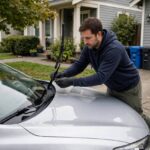
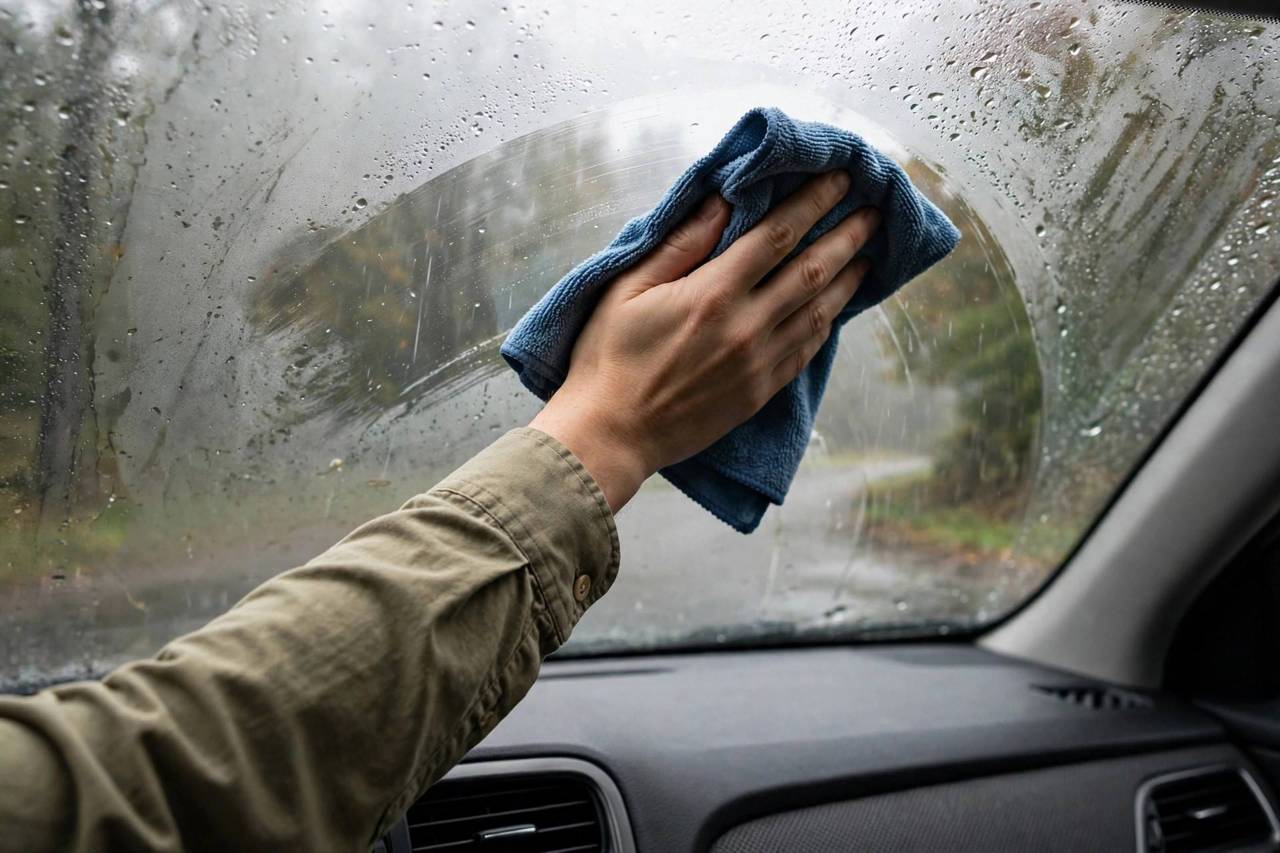
Wiping with your hand or a sleeve smears oils across the glass and makes future fogging worse. A clean, dry microfiber cloth clears the film in one pass without streaking. Wash it occasionally; a greasy cloth is worse than no cloth.
5. Use shaving cream as an anti-fog coating
Rub a thin layer of plain white shaving cream onto the inside of clean glass, then buff it off completely with a dry cloth until no residue shows. The surfactants left behind stop condensation from beading into visible fog. One application lasts a couple of weeks. Use the cheap foam kind, not gel, and buff thoroughly or you will get haze.
6. Park a sock of cat litter on the dash
Fill a clean sock with plain clay cat litter, tie it off, and leave it on the dashboard overnight. The litter absorbs moisture from the cabin air while you sleep, so the glass starts clearer in the morning. Swap the litter monthly. Silica-based litter works even better, but plain clay is fine.
7. Replace the cabin air filter
A filter clogged with leaves and dust cuts airflow so badly that the defroster cannot keep up. If your car fogs badly every morning and the filter has not been changed in two years, this is probably why. On most cars it takes ten minutes and a screwdriver, and the filter itself is inexpensive.
8. Clean the inside of the glass properly
Over time the inside of the windshield collects a film of plastic off-gassing, skin oils, and dust. Fog clings to dirty glass far worse than clean glass. Clean it with automotive glass cleaner and a fresh microfiber cloth, using a second dry cloth to buff. Do it in the shade so the cleaner does not bake on.
9. Fix water leaks and wet mats
If the carpets are damp, the fog will never stop. Pull up the floor mats and feel the carpet underneath. A musty smell means water is getting in, commonly through door seals, a blocked sunroof drain, or the trunk seal. Dry everything out, fix the leak, and keep rubber mats over carpet in wet weather.
Mistakes That Make Fogging Worse
Leaving recirculation on is the big one; it traps every breath you exhale. Wiping with your bare hand leaves oils that attract more condensation. Using the defroster on cold air alone does almost nothing, because cold air cannot absorb moisture. Idling for ten minutes with everything on low is slower than the full-heat, AC-on, windows-cracked method for two minutes. And anti-fog sprays applied to dirty glass just smear the dirt around, so always clean first.
How to Prevent Foggy Windows Overnight
Prevention beats the morning scramble. Park in a garage when you can; even an unheated garage keeps glass several degrees warmer than outside air, which often means no fog at all. Shake the snow and rain off your shoes before getting in, and knock wet umbrellas out. Leave the cat-litter sock on the dash. Run the AC for the last few minutes of every drive in humid weather to dry the system out. Keep the cabin filter fresh. And check that the trunk and door seals actually seal: a five-dollar weatherstrip can end months of foggy mornings.
When Foggy Windows Mean a Real Problem
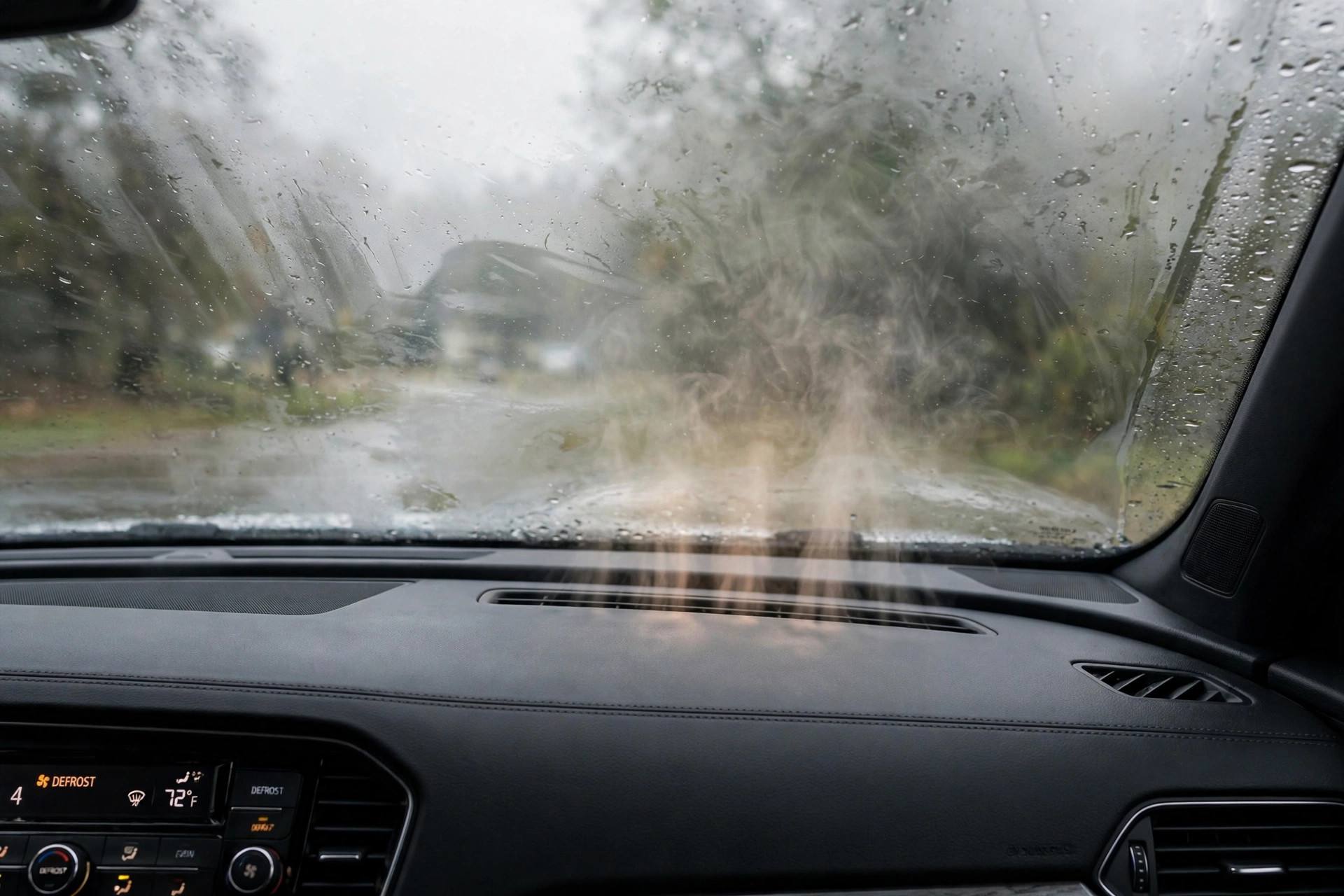
Sometimes fog is a symptom, not just weather. A sweet, syrupy smell with the fog points to a leaking heater core, which mists coolant onto the inside of the windshield and needs a shop visit. Fog that appears with the windows closed on a dry day can mean the AC compressor clutch has failed, so the system cannot dehumidify. Water sloshing in the trunk or soaked carpets mean a leak. If one specific corner always fogs first, check the seal near it. Fog that returns within seconds of wiping, every single drive, is your car telling you something is broken.
Defogging in Different Conditions
Not all fog is the same, and the fastest fix shifts with the weather. In rain, the enemy is humidity: run the AC with heat and keep recirculation off, because the air outside is wet and you need the system drying constantly. In freezing weather, the enemy is temperature difference: warm the glass as fast as possible with full heat on defrost, and scrape any exterior frost first, because the defroster cannot fight ice and interior fog at the same time. In humid summer, when the outside of the windshield fogs, the fix is counterintuitive: the glass is too cold relative to the muggy air, so turn the AC down or switch to fresh-air vent mode to let the glass warm toward the outside temperature.
Morning frost deserves its own mention. If there is ice on the outside and fog on the inside, clear the outside first with a scraper, then attack the inside with the heat-AC-recirculation-off routine. Never pour hot water on a frozen windshield; the thermal shock can crack the glass, turning a free fix into a very expensive one.
Products That Actually Help Prevent Fog
Beyond the home remedies, a few products earn their shelf space. Anti-fog interior glass treatments, applied to clean glass every few weeks, work better than shaving cream and last longer. Silica gel dehumidifier tubs, the reusable kind you recharge in the microwave, quietly pull moisture out of the cabin and beat the cat-litter sock for neatness. A quality windshield sunshade used on cold nights slightly insulates the glass, reducing the temperature gap that causes fog. None of these replace the core technique, but stacked together they mean fewer foggy mornings in the first place.
Frequently Asked Questions
What is the absolute fastest way to defog car windows?
Full heat, defrost mode, AC on, recirculation off, and two windows cracked an inch. That combination clears a normal fogged windshield in two to three minutes. Wipe the inside glass with a clean microfiber cloth while the system works.
Should I use hot or cold air to defog windows?
Hot air works faster because warm air absorbs more moisture than cold air. Use full heat aimed at the windshield with the AC on to dry the air first. Cold air alone will clear the glass eventually, but it takes much longer.
Why do my car windows fog up when it rains?
Rain raises the humidity of the air entering the car, and wet passengers and shoes add more moisture inside. The windshield stays cool, so the moist interior air condenses on it. Running the AC with heat and keeping recirculation off fixes it.
Does shaving cream really stop windows from fogging?
Yes, as a temporary measure. A thin layer of plain foam shaving cream, buffed completely off clean glass, leaves surfactants that prevent condensation from forming visible droplets. It lasts about two weeks per application.
Why does only the inside of my windshield fog up?
Because the moisture source is inside the car: your breath, wet clothing, damp mats, and sometimes leaks. The outside of the glass is exposed to moving air, so it rarely fogs. If the outside fogs too, it usually means the glass is colder than humid outside air, common on muggy summer nights.
Can a bad cabin air filter cause foggy windows?
Yes. A clogged filter strangles airflow to the windshield, so the defroster cannot move enough dry air across the glass. If your windows fog worse than they used to and the filter is old, replace it before trying anything else.