What Is Speedrunning? Categories, Runs & How to Start

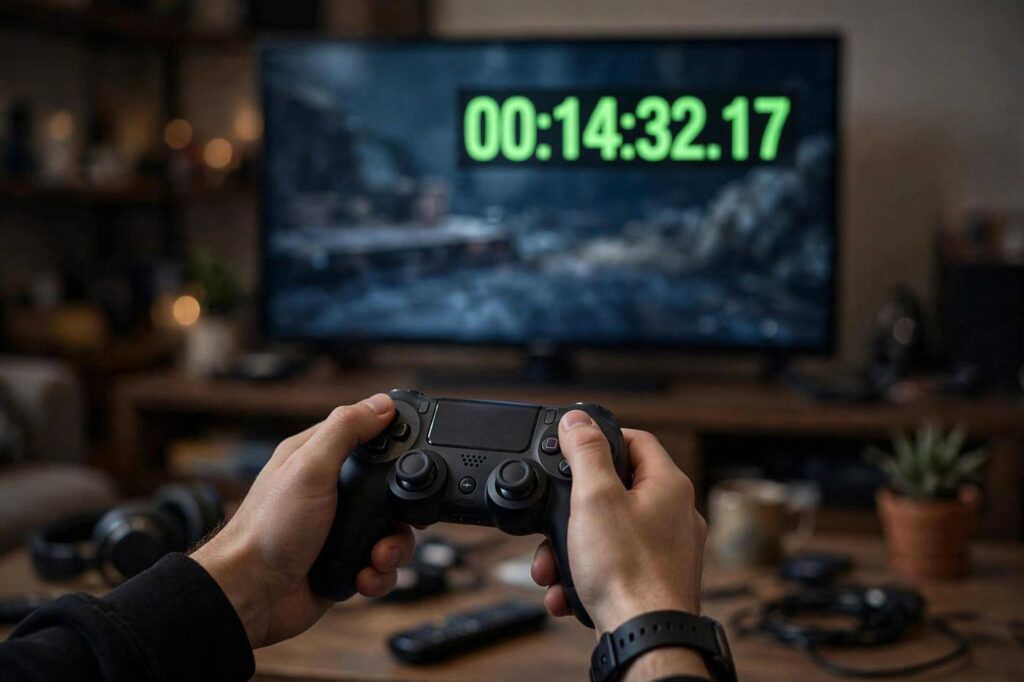
What is speedrunning? It is the art of finishing a video game as fast as humanly possible — and I mean that almost literally, because the fastest runs in the world look less like playing and more like a magic trick. A speedrunner takes a game you spent forty hours exploring and completes it in eleven minutes, using a sequence of jumps, glitches, and route optimizations that the developers never imagined and the community spent years perfecting. I have been gaming since I could hold a controller, and speedrunning is one of my favorite corners of the hobby: part sport, part science experiment, part collaborative puzzle that thousands of people solve together. No gatekeeping here — whether you are a casual player curious about those wild YouTube videos or someone who wants to run, this guide covers the categories, the legendary runs, the community, and exactly how to start.
Fair warning: watching one world-record run tends to create more speedrunners. Do not say I did not warn you.
What Is Speedrunning? The Basics
At its core, speedrunning is simple: complete a game (or a defined objective within it) in the shortest time possible, timed precisely — usually to the frame. Runs are recorded, verified by community moderators, and ranked on leaderboards. The most prominent leaderboard site is speedrun.com, which hosts leaderboards for tens of thousands of games, from Super Mario 64 to obscure indie titles with twelve runners.
But “complete the game” turns out to have layers, which is where categories come in. And the runs themselves fall into two flavors: real-time runs performed live by a human, and tool-assisted speedruns (TAS) created frame-by-frame with emulators to show the theoretical perfect run. TAS runs are not eligible for human leaderboards, but they are mesmerizing to watch and often reveal tricks that human runners later learn to perform.
The culture matters as much as the competition. Speedrunning is radically collaborative for a competitive pursuit: runners share their discoveries openly, route ideas get tested collectively, and a trick one person finds on Tuesday is in everyone’s run by Friday. The leaderboard says who is fastest; the community decides what is possible.
The Main Categories, Explained
Categories define what “finishing” means, and picking one is your first real decision as a runner:
Any%. Finish the game by any means necessary — glitches, skips, sequence breaks, all fair game. The only rule is reaching the credits (or the defined endpoint) as fast as possible. Any% runs are where the wildest tricks live: wrong warps that teleport across the game, out-of-bounds movement that skips entire worlds. If you have seen a jaw-dropping “game beaten in 4 minutes” video, it was any%.
100%. Complete everything — all collectibles, all bosses, all side content, whatever the game counts as full completion. These runs are marathons, sometimes lasting many hours, and they reward encyclopedic game knowledge and endurance over raw trick execution.
Glitchless. Finish fast without using glitches — pure optimized movement, routing, and execution. This is the category for people who love the idea of speedrunning but want the game played “as intended,” just perfectly. Glitchless runs tend to look the most like an incredibly skilled normal playthrough.
Low%. Finish with the minimum possible items, upgrades, or completion percentage. A puzzle of minimalism: how little can you pick up and still reach the end? These runs are brain-bending route-optimization challenges.
Category extensions and memes. Beyond the big four, communities invent endless variants: all bosses, no major glitches, 100% with specific restrictions, and joke categories that exist purely for fun. If a game has runners, it has categories you have never heard of.
Famous Runs Worth Watching
You do not need to know these to start, but they are the canon — the runs that show what the craft looks like at its peak:
Super Mario 64 0-star / 120-star. The granddaddy of speedrunning. The 120-star runs are marathons of precision; the low-star runs exploit parallel universes and precise movement in ways that rewrote what players thought the Nintendo 64 could do. Decades old, still evolving.
Minecraft random-seed any%. Beating Minecraft — entering the End and killing the dragon — on a completely random world as fast as possible. It combines routing genius with raw luck manipulation and nerves of steel, and the record progressions have been genuinely dramatic viewing.
The Legend of Zelda: Ocarina of Time any%. Famous for wrong-warping from the opening minutes straight to the final boss — a run that looks like sorcery and took the community years of reverse-engineering to discover.
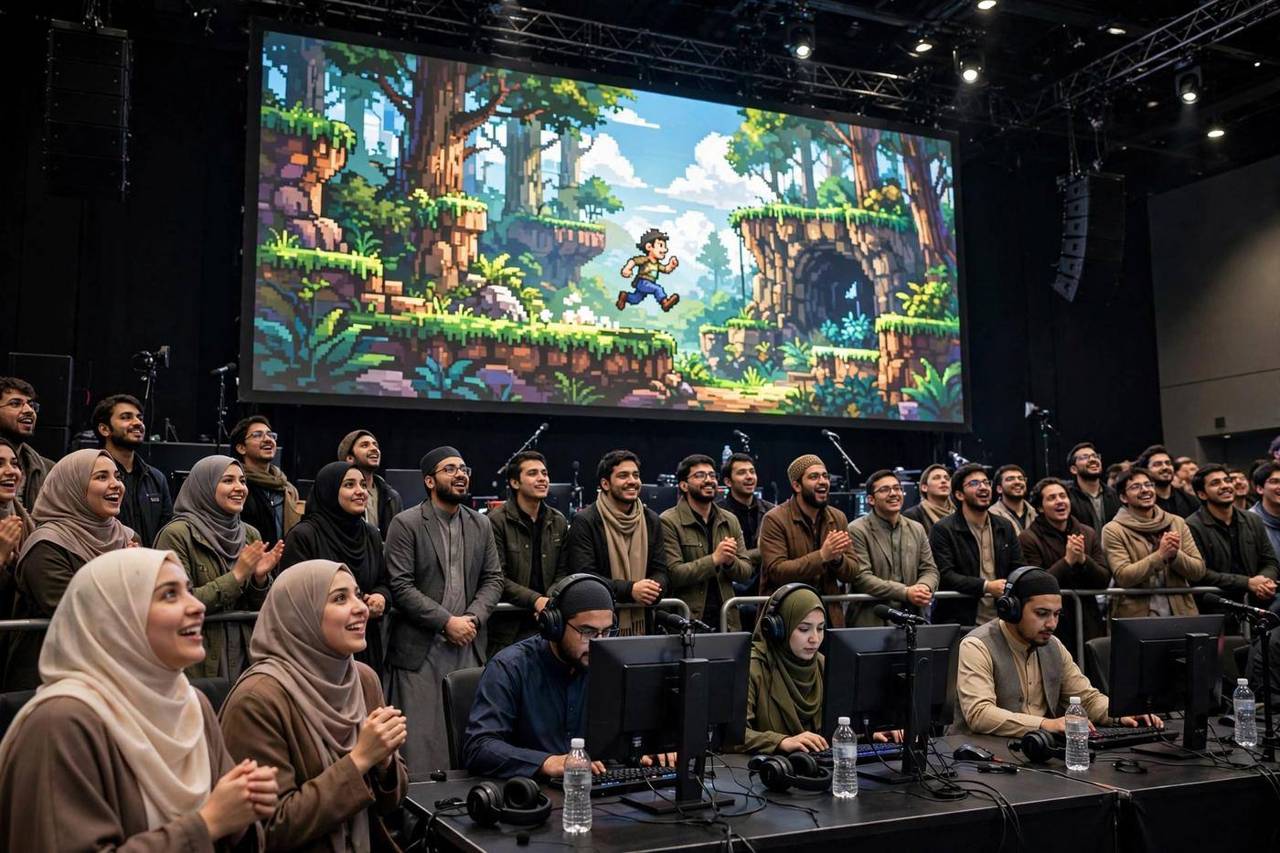
Games Done Quick marathons. Not a single run but the community’s cathedral: Awesome Games Done Quick and Summer Games Done Quick are week-long charity marathons where top runners perform live for hundreds of thousands of viewers, raising millions for charity. If you watch one speedrunning event, make it a GDQ. The energy is unreal, and yes, I have opinions about which runs were robbed of the finale slot. Strong ones.
The Community: Where Runners Actually Hang Out
Speedrunning lives in a few key places. Speedrun.com is the leaderboard hub — find your game, read its rules, study the top runs. Discord servers per game are where the real conversation happens: route discussion, trick tutorials, beginner help. Most game communities are genuinely welcoming to newcomers — remember, every world-record holder started by asking dumb questions in Discord.
Twitch is where runs happen live; following runners of your chosen game is the fastest education available. And YouTube hosts the documentaries and explainers — channels breaking down how famous tricks were discovered are some of the best gaming content on the platform, even if you never run yourself.
One community norm to know: read the rules before you submit. Every leaderboard has specific rules about timing, allowed glitches, and video proof. Nothing sours a first submission like a run rejected on a technicality you could have read in two minutes.
How to Start Speedrunning: Your First Run
Here is the part I love, because the barrier to entry is nearly zero:
1. Pick a game you love. Not the most popular speedgame — the game you already know deeply and enjoy playing. You will be replaying its opening hours hundreds of times. Love for the game is the fuel; pick accordingly. Short games (under an hour casually) make great first projects.
2. Watch the world record and some tutorials. Find your game on speedrun.com, watch the top run, then look for beginner guides — most active games have them. Do not try to learn the world-record route on day one; learn the beginner route, which skips the frame-perfect tricks.
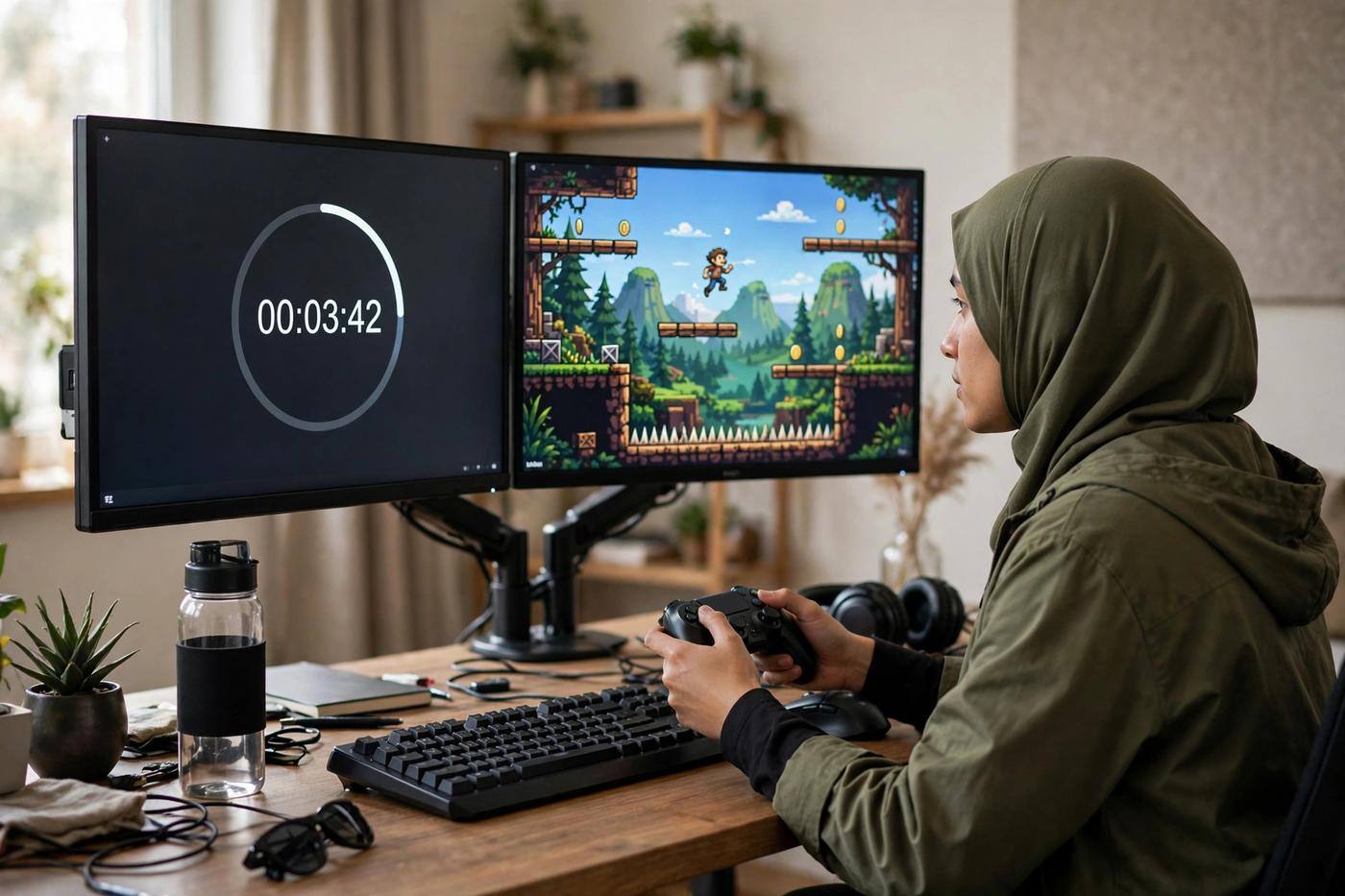
3. Get a timer. LiveSplit is the free standard — it tracks your pace against your personal best with splits per section. It feels intimidating for exactly one session, then becomes indispensable.
4. Do practice runs, then real attempts. Practice individual tricky sections first, then start doing full runs. Your first submitted time will be far from the record, and that is the point — speedrunning is a competition against yourself first. Submit it anyway. The leaderboard needs beginners; records need someone to chase them.
5. Join the Discord and ask questions. Seriously. “I am new, here is my time, what should I work on?” will get you genuine, specific help. This community loves new runners — you are the future of their leaderboard.
Equipment needs are minimal: the game, something to record with (most platforms require video proof for leaderboard submission), and a timer. If you want to share your runs live, learning how to stream on Twitch opens up the live-run experience — and streaming your grind is half the fun. And if you are curious about the technical side of what makes these games tick, our explainer on how video games are made gives useful context on why glitches exist in the first place.
Common Beginner Mistakes
Learning the hardest tricks first. The frame-perfect trick that saves three seconds is not where beginners lose time — sloppy movement everywhere else is. Nail the fundamentals before the flashy stuff.
Never submitting a run. Perfectionism kills more speedrunning careers than difficulty does. Submit the mediocre time. Improvement needs a baseline.
Comparing yourself to the record. The record holder has thousands of hours. You have dozens. Compare yourself to last week’s you — that is the only comparison that matters, and it is the one that keeps it fun.
Speedrunning Lingo: A Quick Glossary
Every hobby has its jargon, and speedrunning’s is particularly dense. A few terms you will meet in your first week: PB (personal best) — your fastest time, the number you are always chasing. WR (world record) — the fastest verified time on the leaderboard. Split — a timed section of the run; LiveSplit tracks these so you know exactly where you gained or lost time. Reset — abandoning a run early because the pace is dead; runners reset constantly, and it is not failure, it is strategy. RNG (random number generation) — the luck element; “bad RNG” is the universal lament. Frame-perfect — a trick requiring input on an exact frame, the stuff of legend and controller-throwing. Learn these and the Discord will feel like home within days.
Frequently Asked Questions
What does any% mean in speedrunning?
Any% means completing the game as fast as possible by any means — glitches, skips, and sequence breaks are all allowed. The only requirement is reaching the game’s endpoint (usually the credits). It is the most popular category and home to the most dramatic time saves and famous glitch discoveries.
How do speedrunners find glitches?
Through a mix of systematic testing, reverse-engineering, and community collaboration. Runners probe game boundaries, test collision quirks, and analyze game code or memory; tool-assisted runs often reveal what is theoretically possible, which human runners then learn to execute. Major discoveries are shared openly and get incorporated into everyone’s routes.
Can you make money speedrunning?
A small number of top runners earn through Twitch streaming, YouTube, and sponsorships, and charity marathons like Games Done Quick pay appearance fees to featured runners. But for the vast majority, speedrunning is a hobby, not an income. Stream and create content because you enjoy it; treat any earnings as a bonus.
What is a tool-assisted speedrun (TAS)?
A TAS is a speedrun created frame-by-frame using emulator tools, showing the theoretically perfect run — inputs no human could execute in real time. TAS runs are not eligible for human leaderboards, but they are valuable for discovering tricks and demonstrating what is possible. Think of them as the laboratory where human strategies get invented.
What is the easiest game to start speedrunning?
The easiest game to start with is one you already know and love, ideally short — under an hour for a casual playthrough. Games with active beginner communities and published beginner guides are ideal. Avoid starting with notoriously technical games; build fundamentals on something forgiving, then chase the harder stuff.