What Are Miranda Rights? The Complete Plain-English Guide

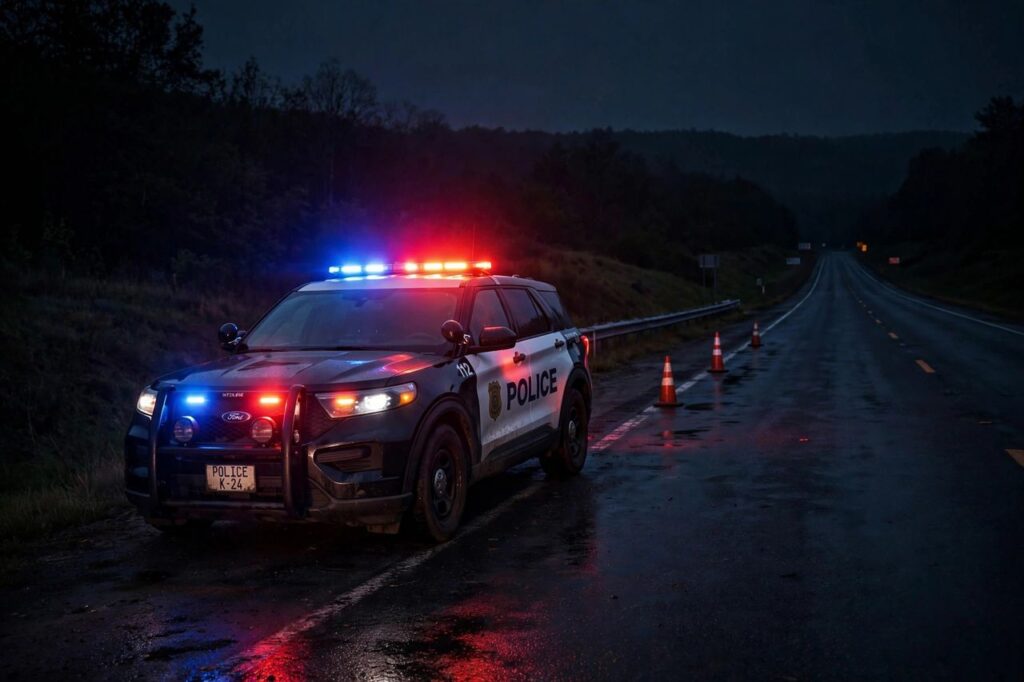
“You have the right to remain silent.” You have heard those words in every crime show ever made — but what are Miranda rights really, when do police actually have to read them, and what happens if they don’t? The answers are more specific, and more interesting, than television suggests.
What Are Miranda Rights? The Four Rights
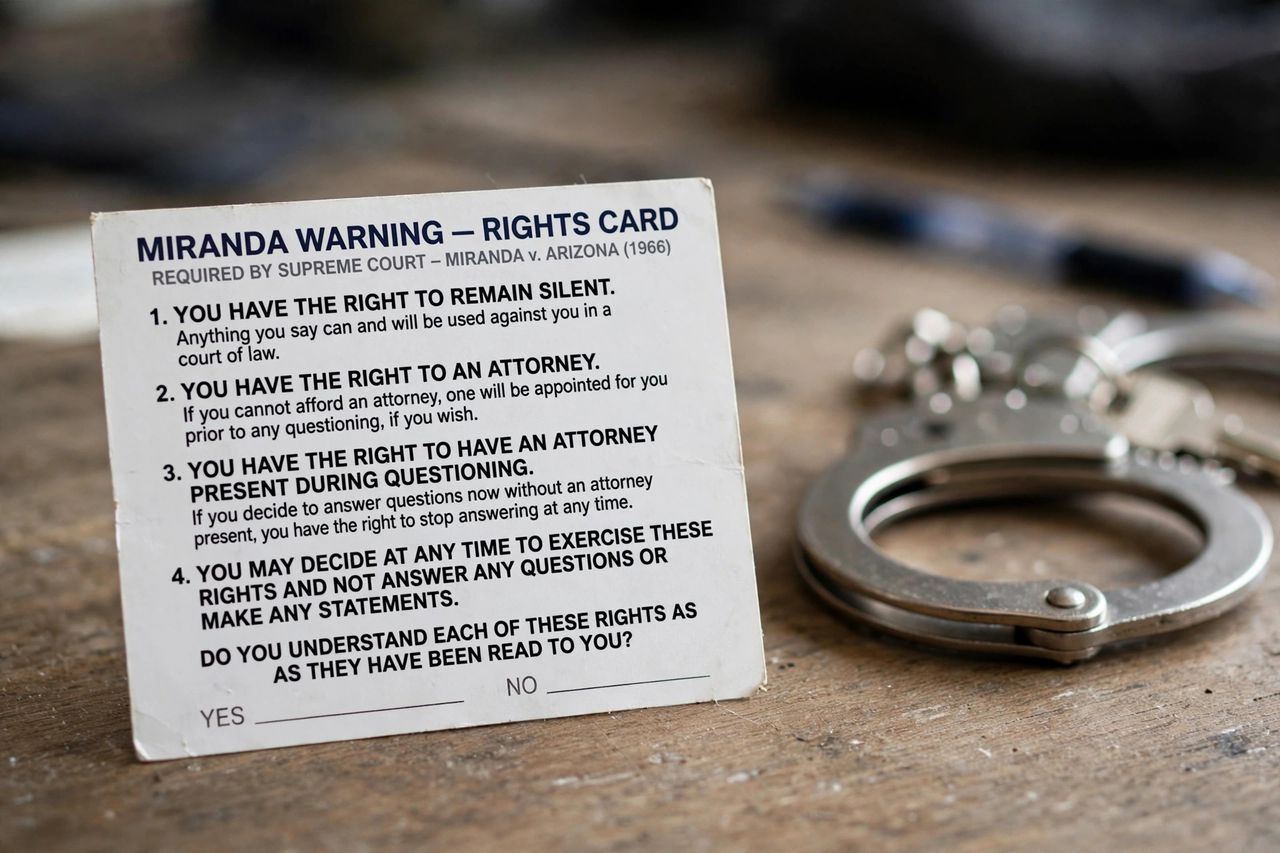
Miranda rights are the constitutional protections that must be communicated to a person in police custody before interrogation. The standard warning covers four rights:
1. The right to remain silent. You do not have to answer police questions. Anything you say can be used against you in court.
2. Anything you say can and will be used against you in a court of law. This is the practical consequence of the first right — your words become evidence.
3. The right to an attorney. You have the right to have a lawyer present during questioning.
4. If you cannot afford an attorney, one will be appointed for you. The state must provide a public defender if you cannot pay for counsel yourself.
These rights come from the Fifth Amendment’s protection against self-incrimination and the Sixth Amendment’s right to counsel. The warning itself is the Supreme Court’s way of making sure people in custody actually know they have these rights before they accidentally waive them.
The Case That Created Them: Miranda v. Arizona (1966)
Ernesto Miranda was arrested in Phoenix in 1963 and interrogated for hours without being told he could remain silent or have a lawyer. He confessed, and the confession was used to convict him. The Supreme Court overturned the conviction, ruling that statements obtained during custodial interrogation are inadmissible unless the suspect was informed of their rights and voluntarily waived them. Miranda was retried without the confession — and convicted again on other evidence — but his name became permanent legal shorthand.
When Do Police Have to Read Miranda Rights?
Here is the part TV gets wrong: police do not have to read you your rights every time they arrest you. The warning is required only when two conditions are both met:
Custody — you are under arrest or your freedom is restricted to a degree associated with formal arrest. A routine traffic stop, for example, is generally not custody.
Interrogation — police are questioning you (or using tactics designed to elicit answers) about a crime.
Arrest without questioning? No warning required. Questioning without custody — say, a voluntary interview at the station where you are free to leave? No warning required either. Both triggers must be present.

What Happens If Police Don’t Read Miranda Rights?
If the warning was required and not given, the remedy is the exclusionary rule: statements you made during that interrogation generally cannot be used against you at trial. This is the famous “getting off on a technicality” scenario — though it is not a technicality at all, but a constitutional safeguard.
What it does not usually do is get the whole case dismissed. If police have other evidence — fingerprints, witnesses, surveillance footage — the prosecution can still proceed. The Miranda violation kills the statements, not necessarily the case. And physical evidence discovered as a result of an unwarned statement is often still admissible under current Supreme Court doctrine.
Can You Waive Your Miranda Rights?
Yes — and most people do. After hearing the warning, a suspect can waive these rights and agree to talk, but the waiver must be knowing, intelligent, and voluntary. Police cannot coerce it, and if you invoke your rights clearly — “I want a lawyer” or “I am invoking my right to remain silent” — questioning must stop. Mumbling ambiguously or just staying quiet without invoking can create legal gray areas, which is why lawyers advise invoking clearly and explicitly.
Once you invoke the right to counsel, police cannot resume questioning without your lawyer present (with limited exceptions). Invoke the right to silence, and they must stop — though they may approach you again later under certain conditions.
The Public Safety Exception
There is one major exception: when police reasonably believe there is an imminent threat to public safety — a hidden weapon, a ticking bomb — they may ask questions first and give the warning later. Statements obtained this way can still be used. The courts carved out this exception on the straightforward logic that protecting lives outweighs the warning requirement in genuine emergencies.
Common Miranda Myths
Myth: Every arrest requires the warning. Reality: only custodial interrogation triggers it.
Myth: The case is automatically thrown out. Reality: only the unwarned statements are suppressed; other evidence survives.
Myth: The warning must use exact magic words. Reality: the substance must be communicated clearly, but jurisdictions phrase it differently.
Myth: Miranda applies everywhere in the world. Reality: it is a U.S. doctrine. Other countries have their own versions — the UK’s police caution, for example — with different rules.
What Are Miranda Rights in Practice? Three Real Scenarios
The custody-plus-interrogation rule produces results that surprise people. Consider how it plays out:
Scenario 1: The roadside confession. An officer pulls over a driver, smells alcohol, and asks “have you been drinking?” The driver admits to three beers. No Miranda warning was given — and none was required, because a routine traffic stop is not custody. The admission is fully admissible.
Scenario 2: The station-house interview. Detectives invite a person to the station “to clear some things up,” say explicitly they are free to leave, and question them for an hour. Courts often find this is not custody either — voluntariness defeats the custody trigger, even inside a police building.
Scenario 3: The handcuffed interrogation. A suspect is arrested, handcuffed, placed in an interrogation room, and questioned about a burglary without any warning. This is the textbook Miranda situation — custody plus interrogation — and the resulting statements will be suppressed.
The pattern: it is the restraint on freedom, not the location or the handcuffs alone, that triggers the requirement.
Miranda Rights and Juveniles
Young suspects receive the same warnings, but courts apply extra scrutiny to whether a juvenile’s waiver was truly knowing and voluntary. Age, education, and experience with the justice system all factor into the analysis — a frightened fourteen-year-old’s “yeah, sure” carries less weight than an adult’s considered waiver. Many states add special protections: requiring a parent or guardian present during questioning, mandating simplified warning language, or limiting how long juveniles can be interrogated. The underlying principle is straightforward — the rights are the same, but the capacity to understand them is not.
Invoking Your Rights: The Magic Words
Lawyers are blunt about this: if you want Miranda’s protection, say so clearly. “I am invoking my right to remain silent.” “I want a lawyer.” Courts have ruled that ambiguous statements — “maybe I should talk to a lawyer,” or simply falling silent — do not always obligate police to stop. Paradoxically, you must speak to claim the right not to speak. Once invoked unambiguously, questioning must cease, and statements obtained afterward are suppressed. Write the two sentences down. Memorize them. They are the most valuable twenty words in American criminal procedure.
What Miranda Doesn’t Do
For all its fame, Miranda’s protection has defined limits. It does not prevent police from arresting you — only from using unwarned custodial statements at trial. It does not apply to volunteered statements: if you blurt out a confession unprompted, it is admissible with no warning required. It does not cover routine booking questions (name, address, date of birth). And under current Supreme Court doctrine, physical evidence derived from an unwarned statement — the proverbial “fruit” — is often still admissible, a significant narrowing from what many assume. Miranda guards the interrogation room, not the entire investigation.
Beyond Miranda: Your Other Rights During Police Encounters
Miranda is famous, but it is only one piece of the rights puzzle. The Fourth Amendment protects against unreasonable searches — you can refuse consent to a search of your car, home, or phone, and officers generally need a warrant or a recognized exception. You have the right to ask if you are free to leave; if the answer is yes, you may walk away from a consensual encounter. You have the right to remain silent beyond the interrogation room — including the right not to answer an officer’s questions on the street. And you have the right to record police in public in most jurisdictions. Knowing the full set matters because encounters rarely present as clean textbook scenarios — they are fluid, stressful, and fast. Miranda covers the interrogation; the rest of the Constitution covers everything around it.
Frequently Asked Questions
What is the exact Miranda warning wording?
There is no single federally mandated script. The classic version reads: “You have the right to remain silent. Anything you say can and will be used against you in a court of law. You have the right to an attorney. If you cannot afford an attorney, one will be provided for you.” Departments adapt the phrasing, but all four rights must be conveyed.
Do Miranda rights apply outside the United States?
No. Miranda is a creature of U.S. constitutional law. Many democracies have similar protections — England and Wales use a police caution, Canada has its own right-to-counsel warnings — but the specific Miranda framework is American.
Can you just stay silent without saying anything?
You can, but the stronger move is to invoke explicitly: “I am invoking my right to remain silent, and I want a lawyer.” Courts have held that simply going quiet, without invoking, does not always stop questioning.
What counts as being “in custody”?
It is an objective test: would a reasonable person in the suspect’s position feel free to leave? Formal arrest qualifies, but so can situations like being handcuffed at the scene or questioned for hours in a locked room.
Do police have to read Miranda rights at a traffic stop?
Generally no. Routine traffic stops are considered brief detentions, not custody, so roadside questioning does not trigger the warning — though anything you say can still be used against you.
If my rights were violated, will my case be dismissed?
Probably not dismissed outright. The typical remedy is suppression of the statements obtained in violation. Dismissal happens only if the prosecution’s case depended entirely on those statements.
Miranda rights are not a magic spell that frees the guilty — they are a checkpoint ensuring that confessions are voluntary and informed. And that distinction matters far more than any TV script suggests.