What Is a No-Fault Divorce? How It Works, State by State


There was a time when ending a marriage legally required proving someone was at fault — adultery, cruelty, abandonment — argued in open court. That era is effectively over. But what is a no-fault divorce, exactly? It is the standard modern path: a divorce granted without either spouse having to prove the other did anything wrong. Here is how it works, why it exists, and what it does and does not decide.
What Is a No-Fault Divorce? The Definition
A no-fault divorce is the legal dissolution of a marriage on grounds that do not require proving marital misconduct. Instead of accusing a spouse of adultery or cruelty, the filing spouse simply states that the marriage has broken down — using phrases like irreconcilable differences, irretrievable breakdown, or incompatibility, depending on the state. No villain, no trial about who ruined the marriage — just a legal recognition that it is over.
Every U.S. state now offers some form of no-fault divorce, though the details — waiting periods, terminology, whether fault grounds still exist alongside — vary considerably.
A Brief History: How No-Fault Took Over
California led the way in 1969, when Governor Ronald Reagan signed the nation’s first no-fault divorce law, effective in 1970. The reformers’ argument was practical: the old fault system forced couples to manufacture ugly accusations — or commit perjury — to exit dead marriages, clogging courts with theatrical blame. Other states followed through the 1970s and 1980s, and today no-fault is the dominant route to divorce nationwide. A few states retain fault-based grounds as an option, but no-fault filings account for the overwhelming majority of divorces.
No-Fault vs. Fault-Based Divorce
Under the old fault-based system, one spouse had to prove the other committed a recognized marital wrong — adultery, desertion, cruelty, imprisonment — and the accused spouse could contest the charges, turning divorce into a full adversarial trial over personal conduct. No-fault removes conduct from the equation: the only question is whether the marriage is irretrievably broken.
Does fault still matter at all? Sometimes, at the margins. In states that retain fault grounds, proven misconduct can occasionally influence property division or alimony — but in pure no-fault proceedings, why the marriage ended is legally irrelevant to whether it ends.
How a No-Fault Divorce Works, Step by Step
1. Filing the petition. One spouse files divorce papers with the court, citing the state’s no-fault ground (irreconcilable differences, for example) and outlining requests regarding property, custody, and support.
2. Serving the other spouse. The papers must be formally delivered, giving the other spouse notice and a chance to respond.
3. The response. The other spouse answers — agreeing, disagreeing, or filing a counter-petition. Many no-fault divorces are uncontested at this stage, meaning both spouses agree on the terms.
4. Negotiation or mediation. Property division, child custody, child support, and alimony get worked out — by agreement, through mediation, or, if necessary, by a judge.
5. Waiting period. Most states impose a mandatory cooling-off period between filing and finalization, ranging from weeks to many months.
6. Final decree. The judge reviews the settlement (or decides contested issues) and issues the divorce decree. The marriage is legally over.

What No-Fault Divorce Does Not Decide Automatically
“No-fault” describes the grounds for divorce, not the whole process. The hard questions remain and must still be resolved:
Property division. Marital assets and debts are divided under state law — community property rules in some states, equitable distribution in others.
Child custody and support. Decided under the best interests of the child standard, entirely separate from why the parents split.
Alimony (spousal support). Based on factors like marriage length, earning capacity, and need — not on who was “at fault.”
A no-fault divorce can still be fiercely contested over these issues. “No-fault” never meant “no-fight.”
How Long Does a No-Fault Divorce Take?
An uncontested no-fault divorce with no children and simple finances can finalize in a matter of months — sometimes as fast as the state’s waiting period allows. A contested one, with custody battles or complex assets, can take a year or more. The fault-or-no-fault question barely affects the timeline; what matters is whether the spouses agree on the terms.
Do Both Spouses Have to Agree?
No — and this is the most liberating feature of no-fault divorce. One spouse cannot block the divorce by refusing to consent or by behaving blamelessly. If one spouse wants out and the legal requirements are met, the court will grant it. The other spouse can contest the terms (custody, property), but not the divorce itself. This ended the old trap where a spouse who refused to “give” a divorce could hold the marriage hostage indefinitely.
What Is a No-Fault Divorce Filing Really Like?
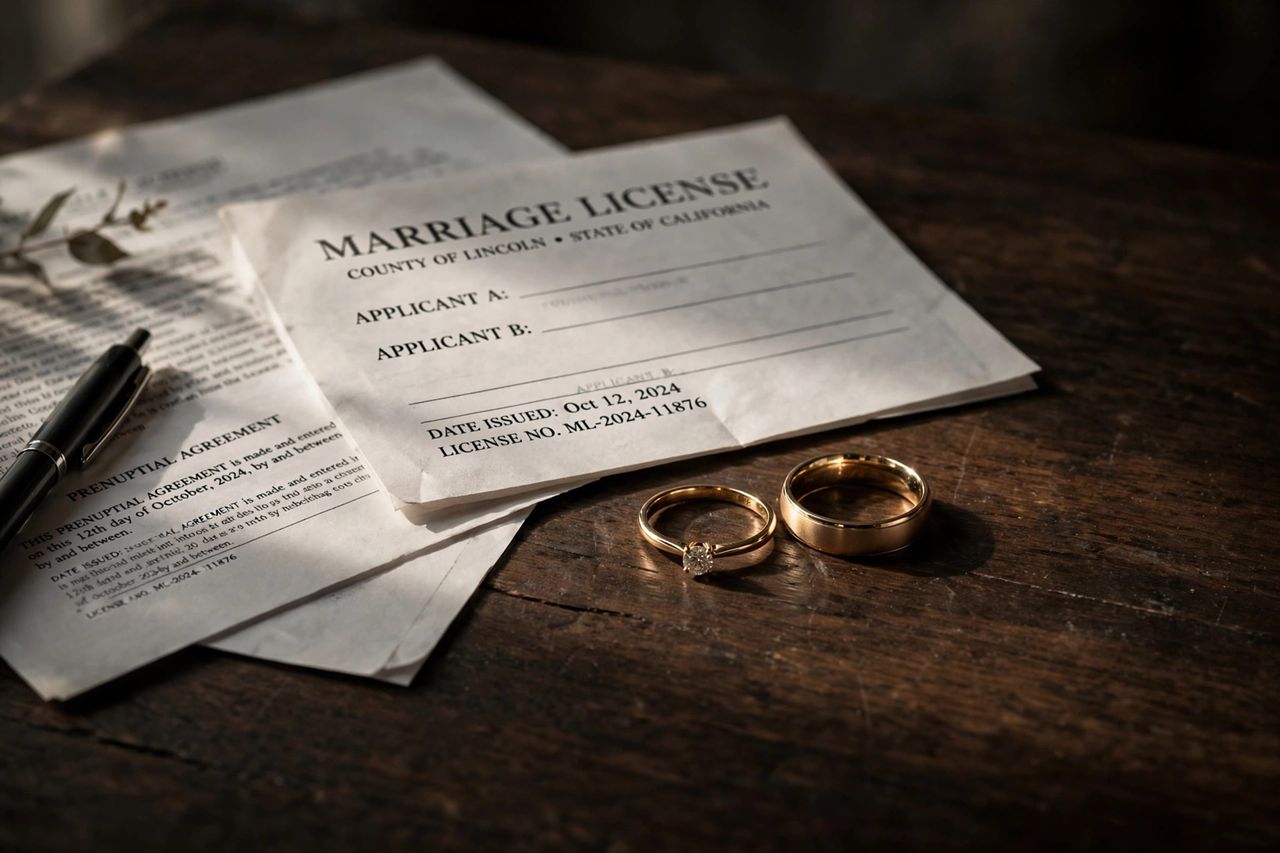
Strip away the mystique and a no-fault filing is mostly paperwork. The petition itself is a standardized court form: names, dates, the statutory ground (usually a checkbox for irreconcilable differences), and preliminary requests about property, support, and custody. Filing fees vary by county but are typically a few hundred dollars, with fee waivers available for those who cannot pay. After filing comes service of process — formally delivering the papers, which can be done by a process server, sheriff, or sometimes certified mail.
The other spouse’s response determines everything that follows. An uncontested response — agreement on all terms — can move to a final decree in as little as one court appearance, sometimes handled entirely on paper. A contested response triggers the longer machinery: temporary orders (who lives where, who pays what, during the case), discovery (exchanging financial documents), mediation, and, if necessary, trial. The “no-fault” label simplifies only the grounds; the human complexity of untangling two lives remains fully intact.

No-Fault Divorce and Children: What Parents Should Know
Children change the calculus of every divorce, but no-fault grounds do not change how courts treat children. Custody is decided under the best interests of the child standard — evaluating parental fitness, stability, the child’s relationship with each parent, and (depending on age) the child’s preferences. Child support follows state formula guidelines based on income and custody time. Neither parent’s “fault” in the marriage’s breakdown enters these calculations.
Many states require divorcing parents to complete a parenting class before the decree issues, and courts routinely order mediation for custody disputes before allowing a trial. Parents who shield children from conflict and cooperate on logistics — school pickups, holidays, medical decisions — achieve better outcomes for everyone, including themselves: judges notice cooperation, and children remember it far longer than any court order.
Common Myths About No-Fault Divorce
Myth: No-fault means instant divorce. Reality: waiting periods apply in most states, and contested issues take as long as they take.
Myth: No-fault caused the divorce rate to explode. Reality: divorce rates were already rising before no-fault laws; researchers debate how much the laws themselves contributed versus broader social change.
Myth: You don’t need a lawyer for a no-fault divorce. Reality: uncontested cases with no assets or children can be handled pro se, but anything involving property, support, or custody deserves at least a document review by counsel. The filing may be simple; the settlement terms last for years.
Myth: No-fault means no one pays alimony. Reality: spousal support depends on financial need and earning capacity, not on grounds. Plenty of no-fault divorces include alimony.
Alternatives Worth Considering First
Divorce — even no-fault — is expensive, slow, and emotionally costly. Depending on the situation, alternatives may serve better: mediation can resolve terms privately for a fraction of litigated costs; collaborative divorce uses specially trained attorneys committed to settlement without court; legal separation addresses finances and custody while leaving the marriage legally intact (useful for preserving health insurance or religious reasons); and marriage counseling — obvious but underused — sometimes reveals the marriage is not as over as it felt. No-fault divorce removed the legal barriers to leaving; it did not remove the wisdom of being sure.
No-Fault Divorce Across Different Situations
The basic process adapts to circumstances. Military divorces add federal protections (like the Servicemembers Civil Relief Act, which can delay proceedings during deployment) and divide military pensions under specific rules. High-asset divorces involve business valuations, hidden-asset discovery, and complex property division — the no-fault ground stays simple while the finances get intricate. Gray divorces (couples over fifty) center on retirement accounts, Social Security timing, and healthcare coverage rather than custody. Same-sex divorces follow identical no-fault procedures, though couples married before nationwide marriage equality sometimes face jurisdictional wrinkles about marriage dates. The ground for divorce never changes; everything around it does.
Frequently Asked Questions
Is no-fault divorce available in every state?
Yes. All fifty states now offer no-fault divorce, though the specific grounds, terminology, and waiting periods differ. Some states are pure no-fault; others retain fault grounds as an additional option.
What does “irreconcilable differences” mean?
It is the standard legal phrase meaning the marriage has broken down beyond repair and neither spouse sees a path to reconciliation. No further explanation or evidence is required — the statement itself is the ground.
Does no-fault divorce affect alimony or child custody?
Generally no. Alimony is based on financial factors like need and earning capacity; custody is decided under the child’s best-interests standard. Marital misconduct is not part of either calculation in a no-fault proceeding.
Can you still get a divorce based on fault?
In many states, yes — fault grounds like adultery or cruelty remain on the books as an alternative. But they are rarely used now, since no-fault achieves the same result without the evidentiary battle.
How much does a no-fault divorce cost?
An uncontested no-fault divorce is among the cheapest ways to divorce — court filing fees plus minimal attorney time if the spouses agree on everything. Contested cases cost far more regardless of the grounds cited.
Can my spouse stop a no-fault divorce?
No. A spouse can dispute property, custody, and support terms, but cannot prevent the divorce itself once legal requirements are satisfied. Consent of both parties is not required.
No-fault divorce did not make divorce easy — it made it honest. Couples no longer have to stage misconduct to escape a failed marriage, and courts no longer have to referee the wreckage to grant the exit.