How to Write a Basic Will: A Plain-Language Guide

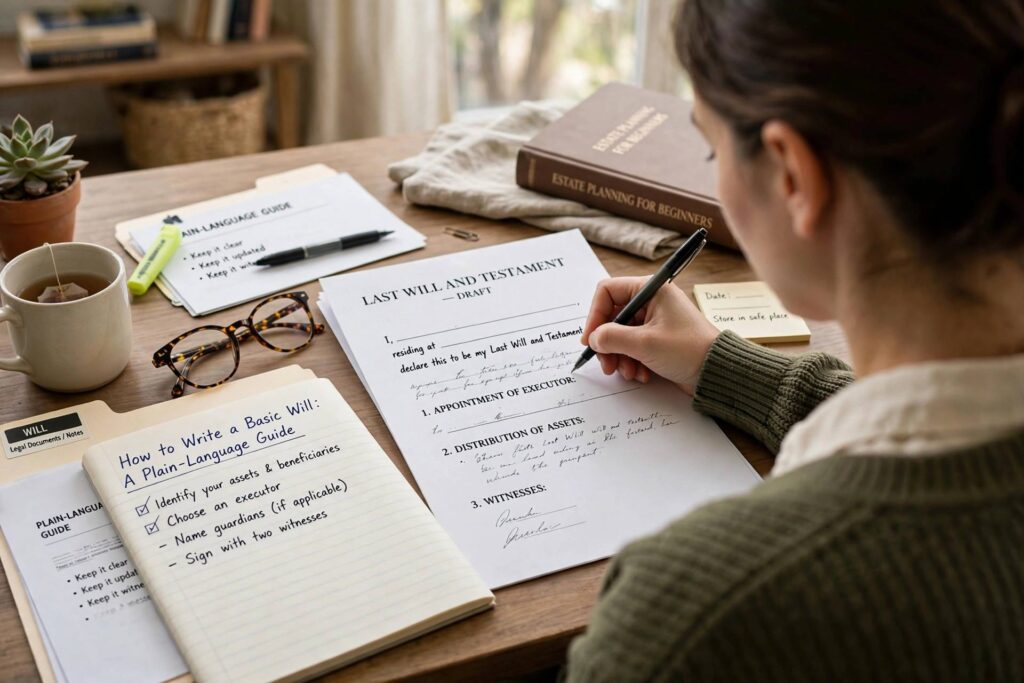
Most adults know they should have a will, and most keep putting it off. If you are wondering how to write a basic will, the reassuring truth is that a straightforward will is not a mysterious legal ritual — it is a clear written document that says who gets what, who is in charge, and who cares for your minor children if you die. For people with uncomplicated estates, the structure of a basic will is remarkably standard, and understanding that structure removes most of the intimidation. This article explains what a basic will contains, the decisions you will need to make, how to make it legally valid, and where the line sits between doing it yourself and hiring a lawyer. One important note before we begin: this is general information, not legal advice. Laws vary by state and country, and an estate attorney is the right call for anything beyond the basics.
What a Basic Will Actually Does
A will is a legal document that takes effect when you die. Its core jobs are naming beneficiaries (who inherits your property), naming an executor (the person who carries out your instructions and handles the paperwork), and — critically for parents — naming a guardian for minor children. Without a will, these decisions fall to state law and a court. That default process, called intestacy, follows a fixed formula that may not match your wishes at all: an unmarried partner typically inherits nothing, a close friend gets nothing, and the court picks a guardian for your kids without your input. A basic will overrides those defaults with your choices. It covers property you own in your name alone — your house, car, bank accounts without beneficiaries, personal belongings. It generally does not control assets that already have their own beneficiary designations, like life insurance policies and retirement accounts, or property owned jointly with right of survivorship. Those pass outside the will regardless of what it says, which is why keeping beneficiary designations current matters as much as the will itself.
The Decisions You Need to Make First
Before writing a word, work through five decisions. First, your beneficiaries: who gets what. Be specific — “my house at 123 Oak Street to my daughter” beats “my property to my family.” Name backup beneficiaries too, in case someone predeceases you. Second, your executor: the person who will gather your assets, pay debts and taxes, and distribute what remains. Choose someone organized, trustworthy, and likely to outlive you; name an alternate. Being an executor is real work, so ask the person first — do not surprise them in the document. Third, a guardian for minor children, plus a backup guardian. This is the decision parents agonize over most, and any thoughtful choice beats leaving it to a court. Consider values, location, age, and willingness — then have the conversation with the people you name. Fourth, how to handle specific items with sentimental value: family heirlooms, jewelry, and keepsakes cause more family friction than money does, so name recipients explicitly. Fifth, your wishes for any charitable giving. Write these decisions down as a simple list before you draft anything. The drafting is easy once the decisions are made; most people stall on the decisions, not the document.
The Standard Parts of a Basic Will
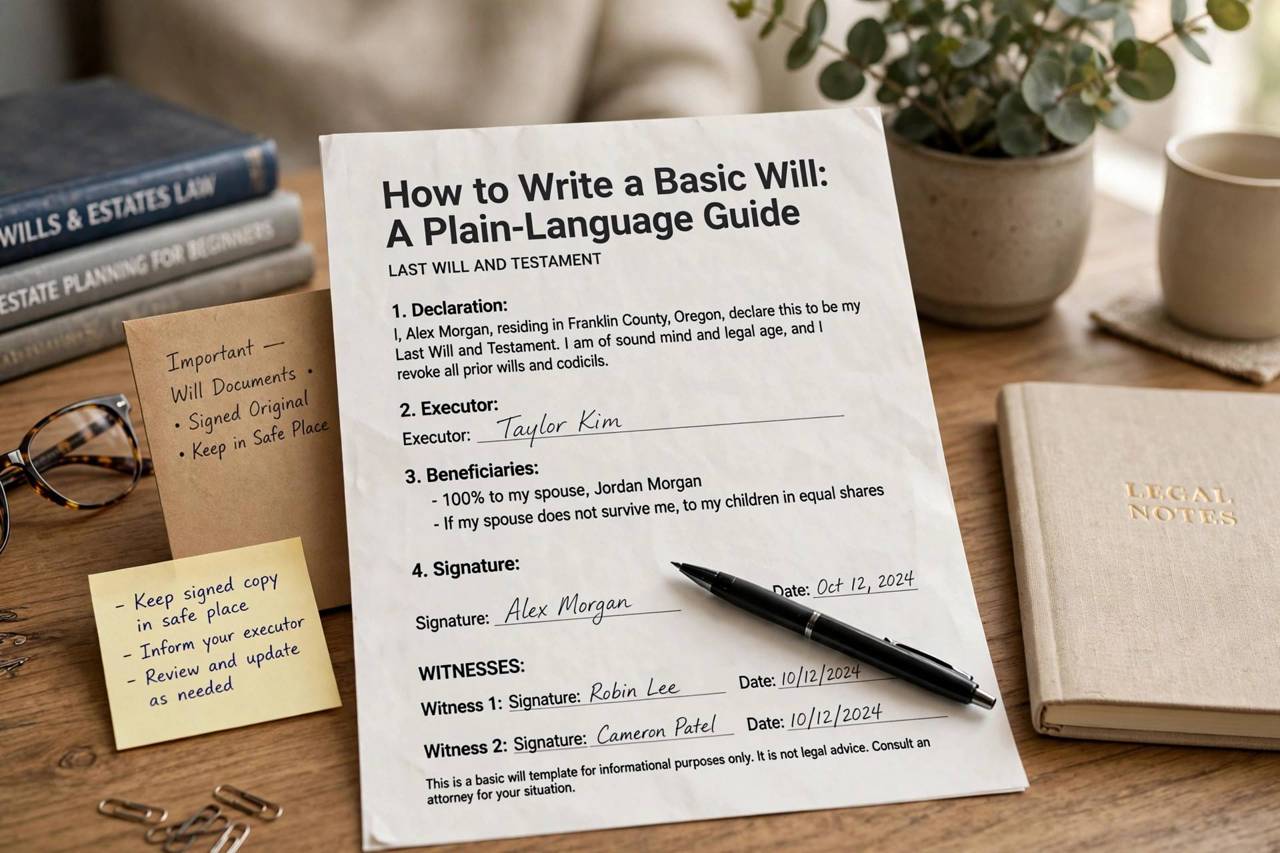
Basic wills follow a predictable structure, and knowing the parts makes the whole thing less daunting. It opens by identifying you — full legal name, address — and declaring that this document is your last will, revoking any earlier wills. Then comes the appointment of your executor and any alternates. Next, the guardian nominations for minor children. Then the heart of the document: the distribution clauses, stating who receives which assets, including a residuary clause covering “everything else” you own — this catch-all is essential because nobody can list every possession. Many wills include a simultaneous-death clause addressing what happens if you and a beneficiary die together, and a no-contest provision discouraging legal challenges, though the enforceability of the latter varies. It closes with your signature and date, plus the signatures of witnesses. Keep the language plain and precise. Flowery or ambiguous wording is where wills get into trouble — “I want my children to share fairly” invites arguments, while “my estate divided equally among my three children” does not. Clarity is kindness to the people you leave behind.
Making It Legally Valid: Signatures and Witnesses
A will with perfect content but improper execution can fail, so this part matters enormously. In most U.S. states, a valid will must be in writing, signed by you (the testator), and signed by at least two adult witnesses who watched you sign. The witnesses generally should not be beneficiaries — in some states a beneficiary-witness can void their own gift. Requirements vary: some states recognize handwritten (holographic) wills without witnesses, others do not; some allow notarization as an extra layer, and a “self-proving” affidavit signed before a notary can simplify probate later by sparing your witnesses a court appearance. A few practical rules apply everywhere: sign every page or initial them, date the document, use your full legal name consistently, and store the original somewhere safe and findable — a fireproof home safe or a lawyer’s office, with your executor told where it is. A will nobody can find might as well not exist. Review it every few years and after major life events — marriage, divorce, births, deaths, big moves, major asset changes. An outdated will can do as much harm as no will when it names an ex-spouse or omits a child.
DIY Will vs. Hiring a Lawyer: Where the Line Is
For a truly basic situation — married or single, modest assets, clear beneficiaries, minor children needing guardians — reputable online will services and statutory fill-in forms produce valid documents in most states at a fraction of a lawyer’s fee. They work because basic wills are, by nature, standard. The line for hiring an attorney sits where complexity begins: blended families with children from multiple relationships, a child with special needs requiring a special-needs trust, significant assets approaching estate-tax thresholds, ownership of a business, property in multiple states or countries, or any desire to disinherit a close relative (which courts scrutinize). Also hire a lawyer if family conflict is likely — a professionally drafted will withstands challenges better. Think of it this way: templates handle the standard case well, but they cannot spot the issue you did not know you had. An attorney’s real value is not the document; it is the half hour of questions that reveals the problem you would have missed. When in doubt, a one-time consultation to review a DIY will is a reasonable middle ground — far cheaper than full drafting, and it catches execution errors.
What a Basic Will Does Not Cover
A will is essential but incomplete on its own, and knowing its limits prevents nasty surprises. It does not avoid probate — the court process that validates the will and oversees distribution. Probate takes months and costs money in many states; people who want to avoid it use tools like living trusts, which are beyond basic-will territory. A will does not control jointly owned property with survivorship rights, retirement accounts, or life insurance — those pass by their own designations, so review those beneficiaries whenever you review the will. It does not cover incapacity: if you become unable to manage your affairs while alive, a will does nothing. That gap is filled by a durable power of attorney (someone to handle finances) and a healthcare directive or living will (your medical wishes plus someone to speak for you). These three companion documents — power of attorney, healthcare directive, HIPAA authorization — are the standard companions to a basic will, and many attorneys bundle them. Finally, a will does not take effect until death, so it cannot help with anything you need handled during your lifetime. The complete basic estate plan is really four documents, not one.
How to Write a Basic Will: Storing, Sharing, and Updating It
Writing the will is half the job; the other half is making sure it works when it is needed. Store the signed original somewhere secure but accessible — a fireproof home safe is the most common choice, and a safe deposit box works only if your executor can access it without court involvement, which is not guaranteed in every state. Tell your executor exactly where the original lives; a will nobody can find might as well not exist. Keep a copy with your other important papers and consider giving a copy to your attorney. Next, have the conversations. Tell your chosen executor you named them and make sure they are willing — this role involves months of paperwork, and a reluctant executor serves everyone poorly. Tell your children’s guardians even more carefully: this is a profound request, and they deserve time to consider it. You do not need to share the full contents with every beneficiary, but the key people should not be surprised. Finally, build a review habit. Revisit the will every three to five years and after every major life event — marriage, divorce, a new child, a death, a move to a new state, buying or selling major property. Outdated beneficiary designations are the classic estate-planning failure: an ex-spouse inheriting a retirement account because the form was never updated, a child omitted because the will predates their birth. Updating is usually simple — a codicil (amendment) for small changes, a fresh will for big ones. The best will is not the most eloquent one; it is the current one.
Frequently Asked Questions
Do I need a lawyer to write a basic will?
Not necessarily. For straightforward estates, reputable online will services and state statutory forms create valid wills when executed correctly — signed, dated, and properly witnessed. Hire a lawyer for blended families, special-needs planning, business ownership, likely family disputes, or assets near estate-tax thresholds.
How many witnesses does a will need?
Most U.S. states require two adult witnesses who watch you sign. Witnesses generally should not be beneficiaries under the will. A few states recognize handwritten wills without witnesses, but the two-witness signed will is the safe universal standard.
Can I just write my will by hand?
A fully handwritten (holographic) will is valid in about half of U.S. states, but requirements and court treatment vary widely. A typed will with proper witnesses is valid everywhere and far less likely to face challenges, so it is the better choice in nearly all cases.
How often should I update my will?
Review it every three to five years and after every major life event: marriage, divorce, births, deaths, moves to a new state, and significant changes in assets. Marriage and divorce in particular can alter or revoke will provisions automatically depending on your state.
What happens if I die without a will?
Your state’s intestacy laws decide who inherits, following a fixed formula that prioritizes spouses, children, parents, and siblings — with no room for unmarried partners, friends, or charities. A court also chooses a guardian for minor children. The process is slower, costlier, and often produces outcomes the person would not have chosen.