How to Unclog a Shower Drain: 5 Methods That Actually Work

Standing in ankle-deep water halfway through a shower is one of life’s small miseries, and knowing how to unclog a shower drain will save you a plumber’s bill nine times out of ten. Shower drains clog differently than sinks: it’s almost always hair matted together with soap scum, which means the fix is usually mechanical, pulling the gunk out, rather than chemical. Here are the methods in the order a plumber would actually try them, from simplest to last resort.
Before You Start: What You’re Dealing With
Shower clogs form right at or just below the drain opening. Hair wraps around the drain crossbars or strainer, soap scum and body oils glue it into a mat, and water starts backing up. Because the blockage is usually shallow, you can almost always reach it with basic tools. Chemical drain cleaners are the worst first move here: they’re harsh on pipes and finishes, dangerous if they splash back, and often unnecessary. Try these methods first.
Method 1: Clear the Drain Cover by Hand
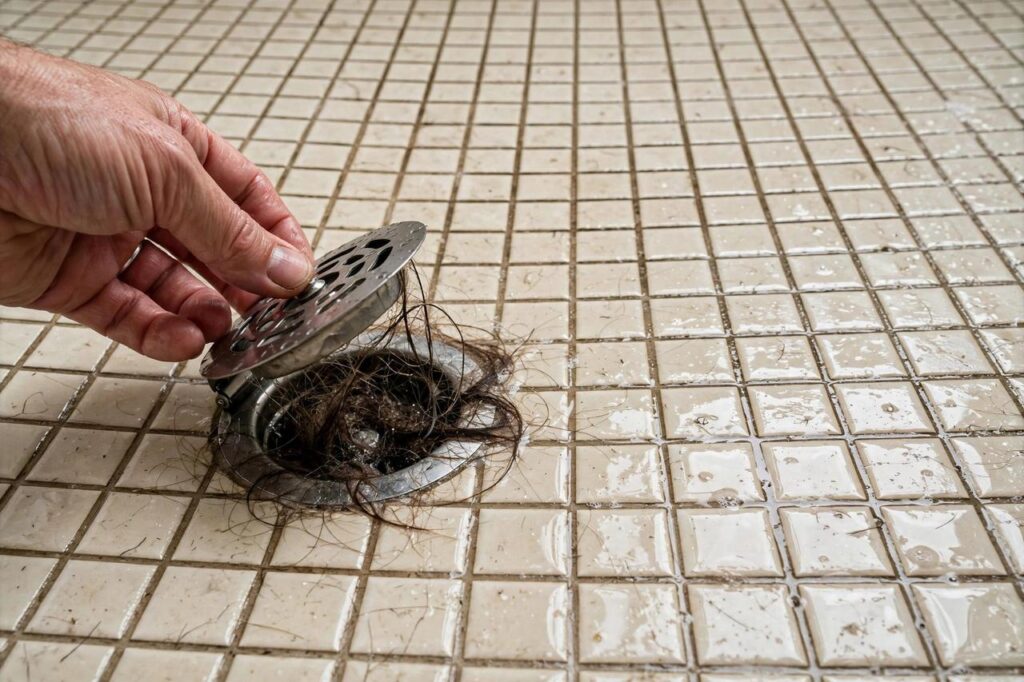
Start with the obvious. Pop off or unscrew the drain cover. Most just lift out; some have a screw in the center. Put on rubber gloves and pull out the hairball sitting right there. You’ll be amazed how often this alone fixes it. Use an old toothbrush or a small bottle brush to scrub the underside of the cover and the visible part of the drain, where soap scum builds up. Run the water and check the flow before moving on.
Method 2: The Plunger (Yes, Really)
A standard cup plunger works on shower drains if you create a seal. Add enough water to the shower floor to cover the plunger’s cup, press it firmly over the drain, and plunge vigorously for 20 to 30 seconds. The pressure can dislodge a clog sitting just below the drain. Pull the plunger away sharply on the last stroke, which sometimes pops the clog right up where you can grab it. This works best on partial clogs, not fully packed ones.
Method 3: A Drain Snake or Hair Removal Tool
This is the method that solves most shower clogs. A plastic hair-removal tool, the cheap barbed zip-strip kind, costs a couple of dollars and slides down the drain to snag hair. Push it in, twist slightly, and pull it out slowly. It will be disgusting. That’s how you know it’s working. Repeat until it comes up clean.
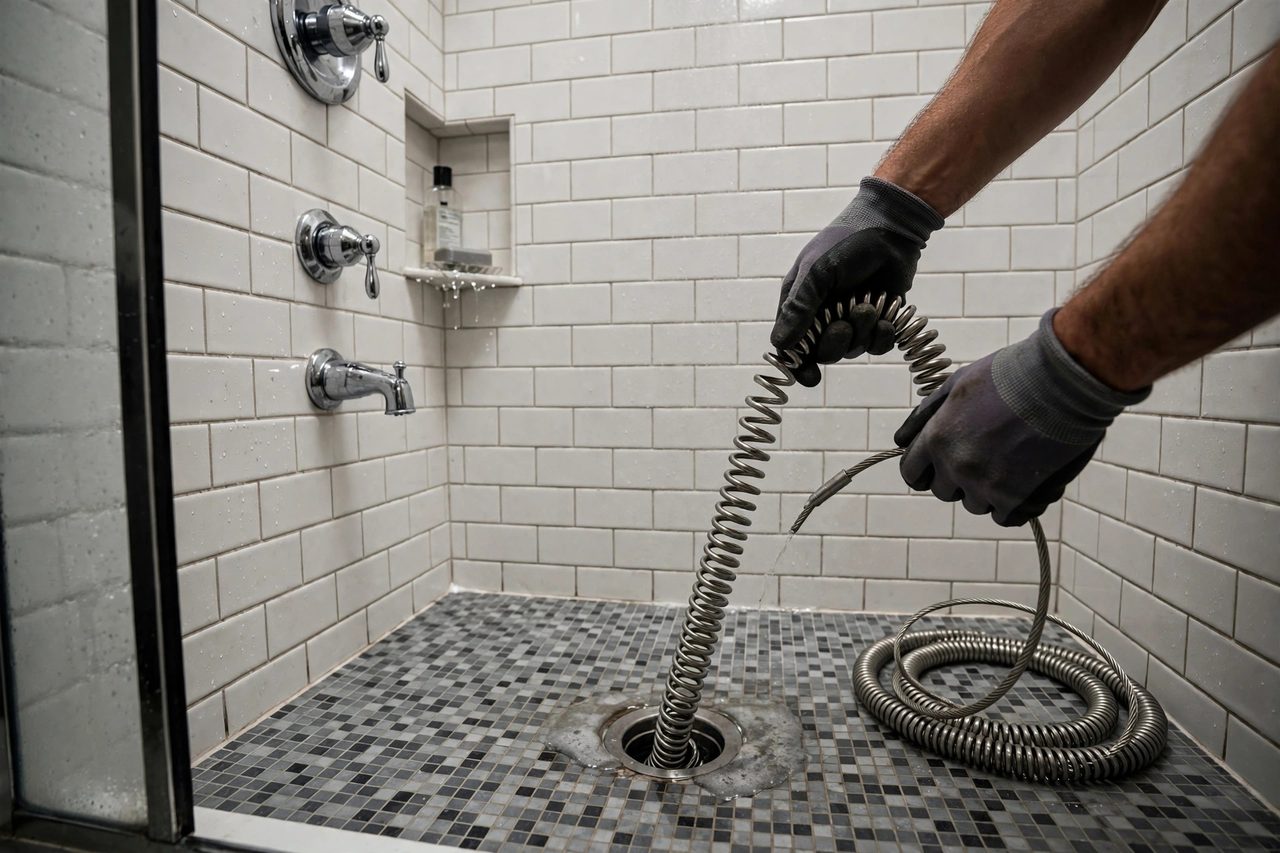
When using a manual drain auger, technique matters more than force. Feed the cable slowly while cranking steadily clockwise; the rotating tip is designed to either bore through the clog or snag it so you can pull it back. If you feel sudden strong resistance that doesn’t give, you may have hit a bend or the trap itself, so pull back slightly and try a different angle rather than muscling through. Never crank counterclockwise while the tip is engaged, which can unscrew the auger head inside your pipes. After breaking through, run the cable in and out a few times to clear the full diameter, then flush with very hot water for a full minute while watching the drain. If water still pools, the clog may be farther down the line than a 25-foot snake reaches, which is useful information to give the plumber you call next.
For deeper clogs, use a manual drain auger (a 25-foot hand-crank snake). Feed the cable into the drain while cranking clockwise. When you feel resistance, you’ve hit the clog; crank through it or hook it and pull back. Don’t force it aggressively, especially with older pipes. After snaking, flush with very hot water for a minute to wash away loosened residue.
Method 4: Baking Soda, Vinegar, and Hot Water
For slow drains with soap-scum buildup rather than a hard hair clog, the classic home remedy helps. Pour about half a cup of baking soda down the drain, follow with half a cup of white vinegar, and cover the drain for 15 to 20 minutes while it fizzes. Then flush with a kettle of hot (not boiling) water. Boiling water can damage PVC pipes and some shower bases, so keep it hot, not rolling. This won’t dissolve a hair mat, but it clears the greasy film that slows drainage.
Method 5: Enzymatic Drain Cleaner
If mechanical methods got you most of the way but drainage is still sluggish, an enzymatic or bacterial drain cleaner is the safe chemical option. These use live bacteria or enzymes to eat organic buildup over several hours, usually overnight. They’re safe for all pipe types and septic systems, unlike caustic chemical cleaners. They won’t fix a solid hair clog, though; they’re maintenance and finishing tools.
What NOT to Do
Avoid caustic chemical drain cleaners as your go-to. They can damage older metal pipes, etch fiberglass and acrylic shower bases, and create a chemical burn hazard if they splash or if a plumber later opens the drain. Never mix different drain chemicals, and never use a chemical cleaner and then plunge, which can splash caustic liquid everywhere. If you’ve already poured chemicals in and they didn’t work, tell your plumber before they start work.
When to Call a Plumber
Call a professional if multiple drains are backing up at once (that signals a main-line problem, not a shower clog), if water is coming up through other fixtures, if you smell sewage, or if snaking 25 feet didn’t reach the blockage. Also call if your home has very old galvanized pipes; aggressive snaking can damage them. A plumber’s visit for a simple shower clog is usually quick and inexpensive compared to the damage from a botched DIY chemical attempt.
Preventing the Next Clog
The best fix is prevention. Install a hair catcher over or in the drain, a few dollars and the single most effective thing you can do. Clean it after every few showers. Once a month, flush the drain with hot water for a minute. If your household has long hair, make the hair catcher non-negotiable. These two habits will keep you from ever needing this guide again.
Understanding Your Shower Drain Assembly
Knowing what’s under the cover makes every method above work better. Most shower drains have a strainer or grate at the surface, a drain body below it, and often a hair-catching crossbar or a removable inner basket designed to trap debris before it reaches the trap. The P-trap, the U-shaped bend that holds water to block sewer gases, sits a few inches below. Hair mats usually form at the strainer or just above the trap, which is why shallow tools reach them.
Some modern showers have linear drains, long narrow channels, often against one wall. These clog the same way but clean differently: the long grate lifts out, giving you full access to the channel, which you can clear with a brush and flush with hot water. If you have a linear drain and it’s slow, check the channel before assuming the pipes are the problem; debris collects along its length.
One more thing worth knowing: shower drains and tub drains share the same principles, but tubs often have a trip-lever or toe-touch stopper mechanism with linkage that catches hair. If your tub is the problem, removing the stopper assembly first gives you the same direct access a shower drain cover does.
The Monthly Routine That Prevents Clogs Forever
The unglamorous truth is that shower drains only clog when they’re neglected, and a tiny maintenance routine eliminates the problem. After every few showers, lift the hair catcher and toss what’s collected; thirty seconds now saves a Saturday later. Monthly, remove the drain cover and scrub the visible surfaces with an old toothbrush and a mild cleaner to stop soap scum from building into a base layer that traps hair. Then flush with very hot water for a full minute.
Quarterly, do a deeper clean: run an enzymatic drain cleaner overnight to eat the organic film inside the pipes, and check that the drain cover itself isn’t corroding or cracking, since damaged covers let more debris through. If your water is hard, mineral scale compounds every other buildup problem; a periodic vinegar soak of the removable parts helps. Households with long hair, pets that get bathed in the shower, or multiple daily users should treat the hair catcher as mandatory equipment, not optional. Nobody enjoys this maintenance, but everyone prefers it to standing in ankle-deep water.
Most shower clogs surrender to the simplest approach: pull the cover, remove the hair, and follow with a plastic hair tool. Save the chemicals for last resort, and skip the caustic stuff entirely unless you know your pipes can take it. Then install a hair catcher and clean it regularly, because the best drain unclogging is the one you never have to do. If multiple drains back up or the snake hits something it can’t clear, that’s your cue to call a plumber rather than escalate the DIY. Know the fix, know the prevention, and know when to hand it off.
Frequently Asked Questions: How to Unclog a Shower Drain
What’s the fastest way to unclog a shower drain?
Remove the drain cover and pull out the hair by hand, then follow with a plastic hair-removal tool. This fixes the majority of shower clogs in under ten minutes with no chemicals.
Can I use Drano or chemical cleaner in a shower drain?
You can, but it’s not recommended as a first step. Caustic cleaners can damage pipes and shower finishes and are dangerous if they splash. Mechanical removal works better on hair clogs, which are the usual cause.
Will baking soda and vinegar unclog a shower drain?
It helps with soap-scum buildup and slow drainage, but it won’t dissolve a solid mat of hair. Use it as a follow-up after mechanically clearing the clog.
How do I unclog a shower drain without removing the cover?
Use a plunger with enough water to cover the cup, or feed a plastic hair tool through the cover’s openings. But removing the cover gives far better access and is worth the 30 seconds.
Why does my shower drain keep clogging?
Recurring clogs usually mean hair is getting past the drain cover or soap scum is building up in the pipe. Install a hair catcher, clean it regularly, and flush monthly with hot water.
Can a drain snake damage my pipes?
A hand-crank auger used gently is safe for modern PVC and copper pipes. The risk is with very old galvanized steel pipes, which can be corroded thin, and with forcing the snake aggressively around tight bends. Steady pressure beats brute force.