How to Make Overnight Oats: The 5-Minute Breakfast You’ll Actually Stick With

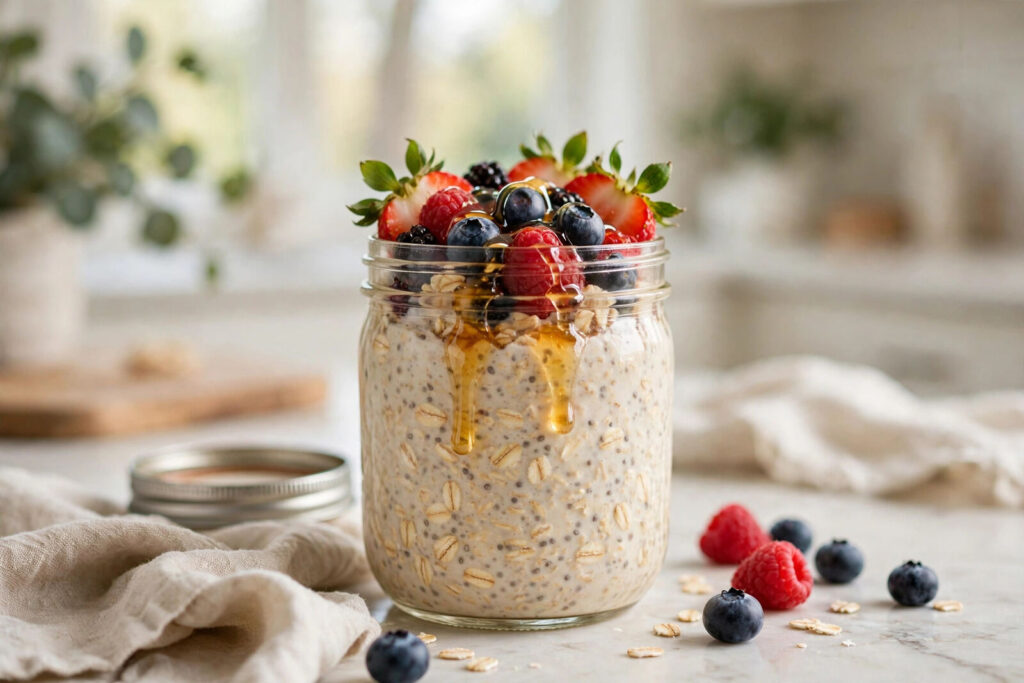
The first time I learned how to make overnight oats, I was skeptical in the way only a woman raised on warm, slow-cooked breakfasts can be. Cold oatmeal? From the fridge? It sounded like giving up on mornings entirely. Then my sister made me a jar — oats, milk, a little yogurt, cinnamon, frozen berries — and I ate it standing at her kitchen counter and immediately asked her for the whole routine. That was six years ago, and I have eaten some version of overnight oats at least four mornings a week ever since. The secret is not talent or fancy ingredients. It is a ratio, a jar, and five unhurried minutes the night before.
The Base Ratio That Never Fails
Every good bowl of overnight oats starts from the same foundation, and once you memorize it you will never measure again. The magic formula is one part rolled oats to one part milk, plus a couple of tablespoons of yogurt. In practical terms, that is half a cup of old-fashioned rolled oats, half a cup of milk, and two tablespoons of Greek yogurt or any plain yogurt you like. Stir it, sweeten it a little, cover the jar, and let the refrigerator do the cooking for you.
The oats soften as they sit, soaking up the liquid and swelling into something creamy rather than crunchy. The yogurt adds body and a gentle tang that keeps the bowl from tasting flat, and it gives you a meaningful amount of protein without any powder or effort. If you like your oats a little looser, add a splash more milk before eating. If you prefer them thick enough to stand a spoon in, cut back the milk by a tablespoon or two. This is forgiving food — the kind that bends to your mood instead of punishing it.
What Kind of Oats Actually Work
Use old-fashioned rolled oats, full stop. Instant oats turn to glue by morning, and steel-cut oats stay stubbornly chewy no matter how long they sit — they need actual heat and time, not just an overnight soak. Rolled oats hit the sweet spot: hearty enough to feel like breakfast, soft enough to eat cold without a fight. If you only have quick oats in the pantry, they will work in a pinch, but expect a softer, more porridge-like texture.
Gluten-free oats behave exactly the same way if that matters to your household, so nobody needs to sit out. And while we are at it: there is no reason to buy a special “overnight oats” blend from the store. A plain bag of rolled oats and your own add-ins cost a fraction of the price and taste better, because you control the sweetness and the flavors.
How to Make Overnight Oats Step by Step
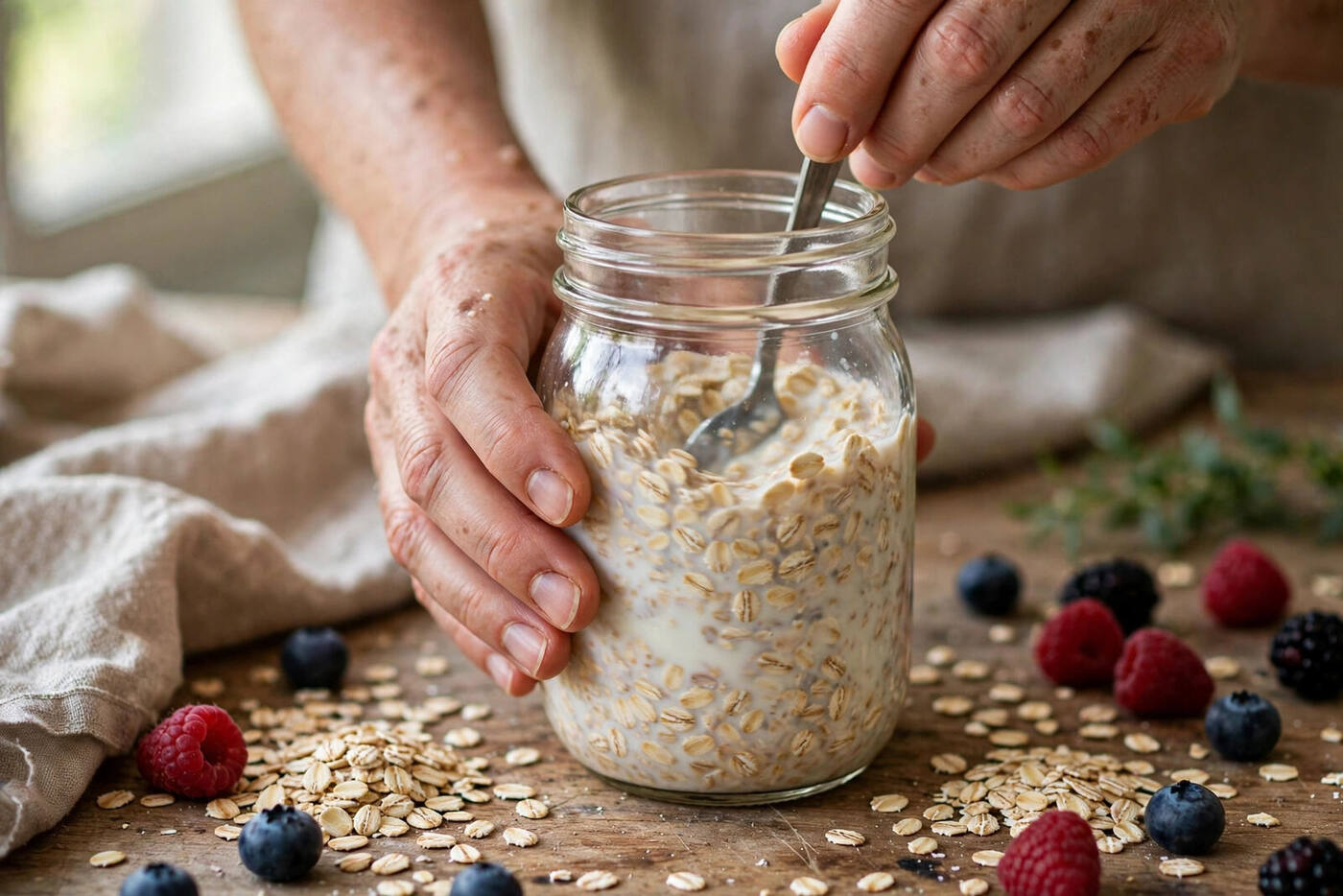
Grab a jar or any container with a lid — a mason jar looks lovely, but a leftover salsa jar works just as well, and I have strong feelings about honoring the leftovers of one’s own kitchen. Add half a cup of rolled oats. Pour in half a cup of milk — dairy, oat, almond, soy, whatever you drink; the recipe truly does not care. Add two tablespoons of yogurt and a sweetener if you like one: a teaspoon or two of honey, maple syrup, or brown sugar.
Stir everything together well, making sure no dry pockets of oats are hiding at the bottom. Then comes the part people skip: the flavor. A quarter teaspoon of vanilla extract and a pinch of cinnamon transform the whole jar. A tablespoon of peanut butter stirred in now will dissolve overnight into something deeply satisfying. Chia seeds — one tablespoon — add thickness and staying power, and the jar will feel more like a full meal. Cover and refrigerate for at least six hours, and overnight is best. In the morning, stir, taste, add toppings, and eat cold or warm it in the microwave for a minute if cold breakfasts are not your love language.
Eight Flavor Combinations Worth Waking Up For
The base is a blank canvas, and this is where overnight oats earn their reputation as the breakfast you never get bored of. Here are the combinations my family rotates through, each one built on the standard half-cup base.
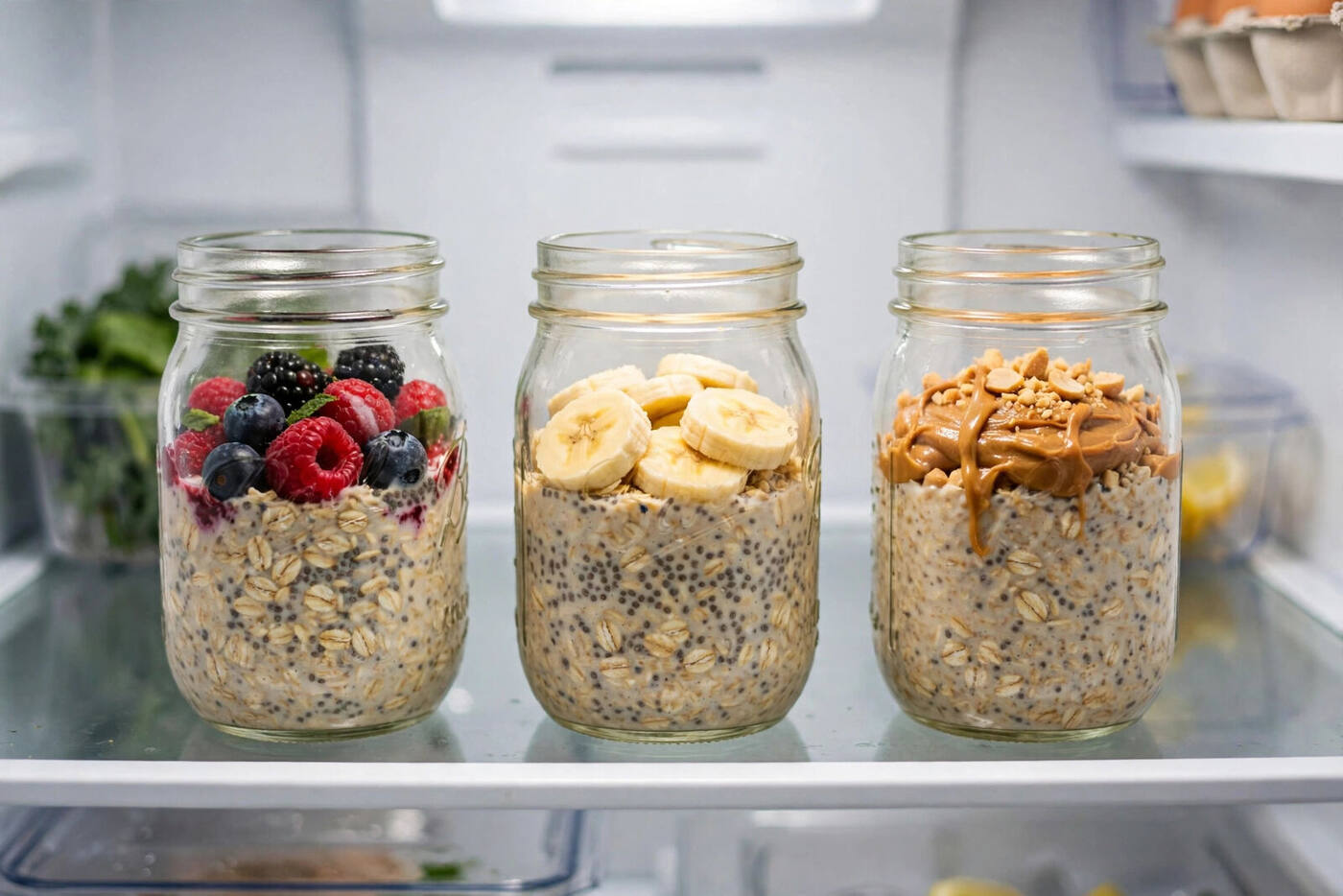
Peanut butter banana: one tablespoon peanut butter, half a sliced banana, a drizzle of honey. The classic for a reason — it tastes like dessert but holds you until lunch.
Berry cheesecake: a quarter cup mixed berries (frozen is fine; they thaw overnight and bleed gorgeous color into the jar), a tablespoon of cream cheese or extra Greek yogurt, a squeeze of lemon zest.
Apple pie: a quarter cup diced apple, a pinch of cinnamon and nutmeg, a tablespoon of chopped walnuts. In fall this tastes like the season decided to be breakfast.
Chocolate overnight oats: one tablespoon cocoa powder and one tablespoon maple syrup in the base, topped with a few dark chocolate chips. My nephew thinks this is cake. I let him.
Mango coconut: a quarter cup diced mango, a tablespoon of shredded coconut, coconut milk as your liquid. Bright, tropical, and oddly energizing.
Carrot cake: two tablespoons finely grated carrot, a tablespoon of raisins, cinnamon, and a sprinkle of walnuts. Sounds strange, tastes like a decision you are proud of.
Almond joy: one tablespoon almond butter, one tablespoon shredded coconut, a few chocolate chips. Do not tell anyone it is healthy.
Pumpkin spice: two tablespoons pumpkin puree, a pinch of pumpkin pie spice, maple syrup. For the three weeks a year when pumpkin is allowed to be everything.
How Long Do Overnight Oats Last?
This is where overnight oats quietly outshine nearly every other breakfast: they are built for batch cooking. A jar kept sealed in the refrigerator stays good for four to five days, though the texture is best in the first three. The oats keep softening over time, so day-four oats are creamier and denser than day-one oats — some people prefer them, some add a splash of milk to loosen things up.
My routine, refined over years: I line up four jars on Sunday night, spend ten minutes assembling them assembly-line style, and breakfasts are handled until Thursday. One rule though — add delicate toppings like sliced banana, fresh berries, or anything crunchy like granola only in the morning. They will get soggy, discolored, or sad overnight, and you deserve better than sad toppings. Heartier additions like frozen berries, chia seeds, and nut butter go in from the start.
Fixing the Five Most Common Problems
Too dry? You either under-measured the milk or used a protein-packed add-in that drinks liquid, like protein powder or extra chia. Add a splash of milk in the morning and stir — crisis over. Next time, add two extra tablespoons of liquid from the start.
Too soupy? You went heavy on the milk, or you used a very thin non-dairy milk. Add a tablespoon of oats or chia seeds in the morning, give it an hour in the fridge, and it will firm up. Or just eat it — soupy oats are still oats.
Gummy or slimy? Usually from instant oats or too many chia seeds. Switch to rolled oats and cap the chia at one tablespoon per jar.
Bland? Almost always a salt and acid problem, not a flavor problem. A tiny pinch of salt in the base and a squeeze of lemon or a handful of berries on top wake everything up. Sweetness alone cannot carry a bland jar.
Separation on top? The liquid rises and the oats sink if you under-stirred. A good stir before refrigerating fixes it, and a stir in the morning fixes whatever remains.
Protein, Nutrition, and the Honest Truth About Health
A standard jar built the way I described — oats, milk, yogurt, fruit — lands roughly around 350 to 400 calories with about 15 grams of protein and a serious amount of fiber. It keeps you full for hours, which is the real headline: fiber and protein together slow everything down, and you will not be raiding the snack drawer at ten. If you train in the morning, you can build the bowl around recovery by choosing foods worth eating after a workout — Greek yogurt instead of regular, peanut butter, a banana.
None of this makes overnight oats a superfood, and I am wary of anyone who promises that language. They are a convenient, balanced, genuinely pleasant breakfast. That is already a lot. The health win is not the jar — it is that the jar replaces the pastry you would have grabbed on the way out the door.
Can You Heat Overnight Oats?
Yes, and nobody is allowed to judge you for it. Some people simply do not enjoy cold breakfasts, and that is a preference, not a failure. Scoop the jar into a bowl, microwave for 60 to 90 seconds, stir, and you have warm oats with the same creamy texture — honestly closer to traditional oatmeal than anything. You can also warm them in a small saucepan over medium-low heat if you want to be fancy about it. The flavor combinations all survive heating; the chocolate and peanut butter versions arguably improve.
Overnight Oats for Kids and Picky Eaters
If you are making breakfast for a household with opinions, overnight oats are secretly the easiest win. Set up a little assembly line: the base jars on the counter, small bowls of toppings — berries, sliced banana, peanut butter, chocolate chips, shredded coconut, a drizzle of honey — and let everyone build their own. Kids who would stage a protest over a bowl of plain oatmeal will happily construct a “sundae” jar and eat the whole thing. The chocolate version with a few dark chocolate chips has converted every skeptical child I have ever served it to, and the peanut butter banana version tastes enough like dessert that nobody asks questions.
For very small children, keep the chia seeds out — the texture confuses toddlers — and go lighter on the sweetener than you would for yourself. Older kids can assemble their own jars the night before, which has the magical side effect of making them excited about breakfast instead of negotiating about it. And if someone in the house genuinely dislikes cold food, remember the microwave trick: sixty seconds turns any jar into warm, creamy oats with the same flavors. There is no wrong way to eat a jar you made yourself.
Frequently Asked Questions
Can I make overnight oats without yogurt?
Absolutely. Replace the yogurt with an extra two tablespoons of milk or a mashed banana for creaminess. The yogurt adds protein and tang, but the oats will soften perfectly well without it.
Do overnight oats need to be refrigerated?
Yes — they must chill for food safety, since milk and yogurt are in the mix. Never leave a jar at room temperature overnight; the fridge is doing the “cooking” and keeping everything safe.
Can I use water instead of milk?
You can, but the result will be noticeably thinner and less satisfying. If you are avoiding dairy, use oat milk or soy milk instead of water — they give you the creaminess water never will.
Why are my overnight oats slimy?
Sliminess almost always comes from instant oats or too many chia seeds. Use old-fashioned rolled oats, keep chia to one tablespoon per jar, and the texture will stay creamy rather than gummy.
How many calories are in overnight oats?
A typical jar with oats, milk, yogurt, and fruit runs 350 to 400 calories, though your number moves with your add-ins. Peanut butter and chocolate chips raise it; sticking to fruit keeps it lower.
Can kids eat overnight oats?
Happily. The chocolate and peanut butter banana versions are usually hits with children, and kids love assembling their own jars. Use a little less sweetener than you would for yourself and skip honey for babies under one year old.