How to Remove Rust From a Cast Iron Skillet (And Reseason It Right)

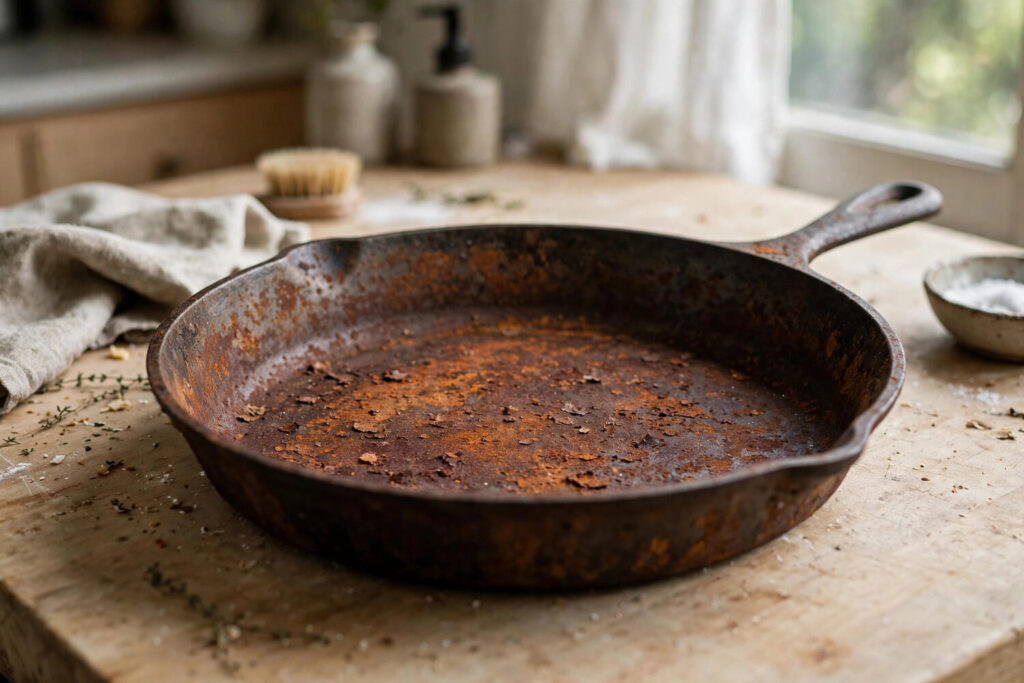
My grandmother’s cast iron skillet came to me with a thin coat of orange rust blooming across the cooking surface. Someone — no names, but it was my brother — had left it to “soak” overnight, which is the one thing you must never do to cast iron. I almost cried, then I fixed it in an afternoon, and that pan now fries eggs better than any nonstick I own. If you are staring at a rusty skillet and wondering whether it is ruined, here is the truth: it is almost certainly not. Learning how to remove rust from a cast iron skillet is a straightforward job, and the pan underneath is tougher than the rust on top of it. Cast iron does not die from rust. It just waits for someone who knows what to do.
First: Assess How Bad the Rust Really Is
Surface rust — orange dust or light speckling that sits on top of the seasoning — is a twenty-minute fix. Deeper rust that has pitted the surface or flaked the seasoning off in patches takes longer but is still entirely fixable. The only skillet I would call truly dead is one rusted clean through, with actual holes, or cracked from thermal shock. Everything short of that comes back.
Run your finger over the rust. If it feels like dust on top of solid metal, you are in easy territory. If it feels rough and cratered, you will need the vinegar soak below. Either way, the process is the same: remove all the rust down to bare metal, then rebuild the seasoning. Do not try to season over rust — the new seasoning will flake off with the rust underneath it, and you will be back where you started.
Method 1: Scrubbing (For Light Surface Rust)
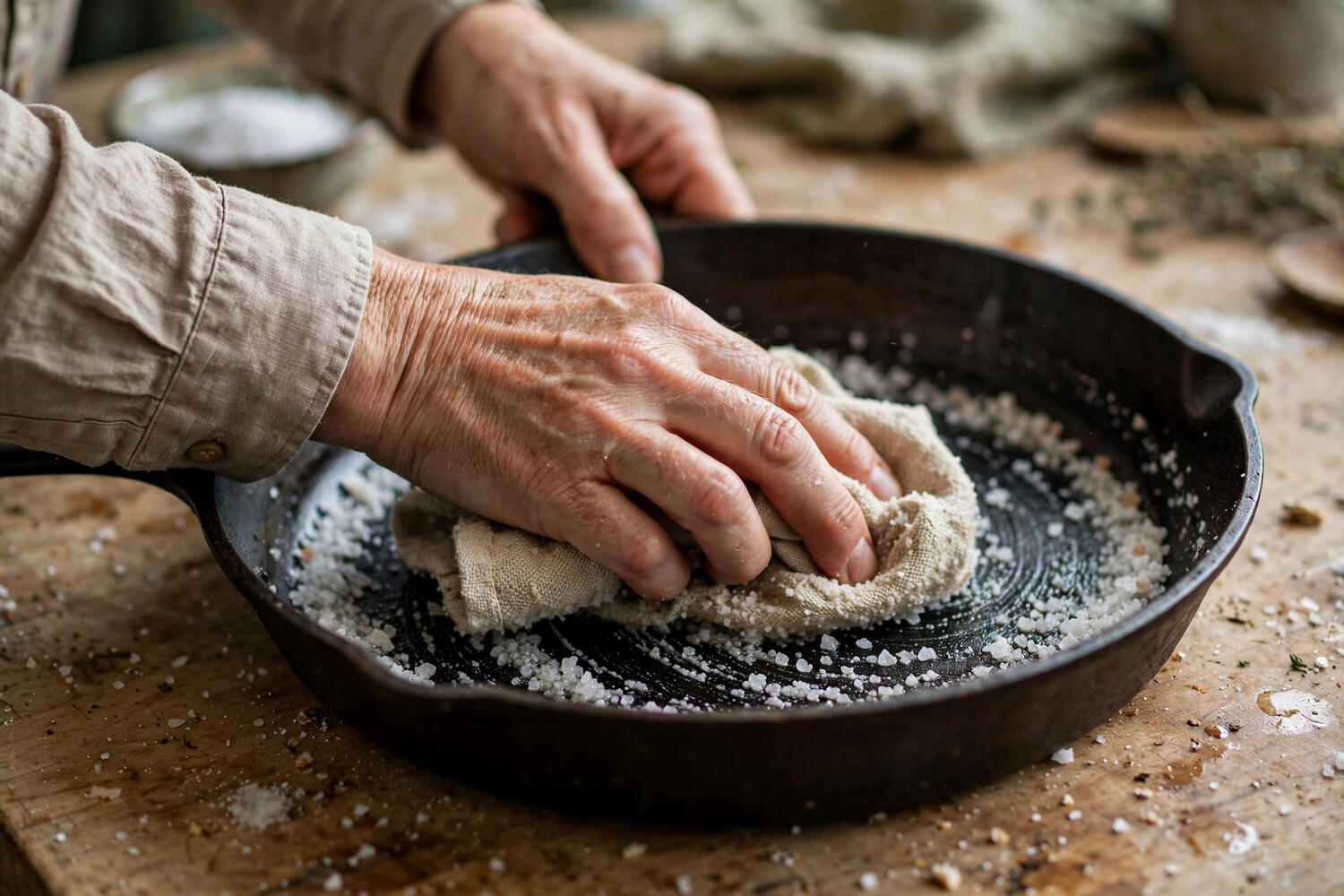
For light rust, start with the gentlest effective abrasive: coarse salt and a halved potato, or coarse salt and a stiff brush. Pour a generous handful of coarse kosher salt into the dry skillet and scrub vigorously — the salt acts as an abrasive that is softer than the iron, so it takes the rust without gouging the metal. Add a tiny splash of water if you need more paste-like action, but work fast and dry the pan immediately after.
For slightly stubborn spots, a stainless steel chainmail scrubber or fine steel wool works. Scrub until you see dull gray bare metal everywhere the rust was. It will not look pretty at this stage — bare cast iron is gray and matte, not black. That is correct and expected. The black comes later, from seasoning.
Method 2: The Vinegar Soak (For Heavy Rust)
When scrubbing alone is not cutting it, chemistry helps. Mix equal parts white vinegar and water in a container large enough to submerge the skillet — a plastic tub or a stopped sink works. Submerge the pan completely and let it soak, checking every hour. Light-to-moderate rust usually dissolves in one to three hours; heavy rust can take up to eight.
Do not walk away for a day. Vinegar dissolves rust, but given enough time it starts eating the iron itself, pitting the surface you are trying to save. Check hourly, pull the pan when the rust is gone, and scrub off any loosened residue with steel wool. Then rinse thoroughly and dry immediately and completely — a vinegar-stripped pan will flash-rust in minutes if left damp, which is exactly the problem you just solved.
Drying: The Step People Skip (Do Not Skip It)
Water is the enemy at every stage of this process. After rinsing, towel-dry the skillet, then put it on a burner over low-medium heat for three to five minutes until every drop of moisture has evaporated. You will see the last wisps of steam disappear. Only then is the pan ready for oil. A pan that looks dry but is not will rust under its new seasoning, and you will be doing this again next month.
How to Reseason: Rebuilding the Nonstick Surface
Seasoning is polymerized oil — oil heated past its smoke point until it bonds to the iron in a hard, slick layer. Here is the reliable method. With the warm, bone-dry skillet, rub a very thin layer of a high-smoke-point oil or fat over every surface: inside, outside, handle, all of it. Flaxseed oil, grapeseed oil, vegetable oil, or Crisco all work; avoid olive oil, whose low smoke point makes gummy seasoning.
Now the critical part: wipe it almost all off. The pan should look dry, with no visible oil pooling or streaking — just the faintest sheen. Too much oil is the number one seasoning mistake; it bakes into a sticky, splotchy mess instead of a smooth layer. Place the pan upside down in a cold oven (upside down so excess oil drips away from the cooking surface), put foil on the rack below to catch drips, heat to 450–500°F, and bake for one hour. Let it cool in the oven. That is one layer. Repeat the oil-wipe-bake cycle two or three more times for a strong foundation. The pan will darken with each round, moving from gray toward that deep black you are aiming for.
The First Cooks: Breaking In the New Seasoning
Fresh seasoning is good but young — it gets better with use. For the first few cooks, favor fatty foods: fry bacon, sear steaks, make cornbread, sauté with generous oil. Avoid long-simmered acidic foods like tomato sauce for the first several uses; acid is seasoning’s nemesis while it is still building up. Cook with it, and within a month of regular use the surface will be genuinely nonstick. My grandmother’s pan, the one my brother nearly killed, now releases fried eggs with a nudge of the spatula. Patience and bacon fat fix almost everything.
Preventing Rust Forever After
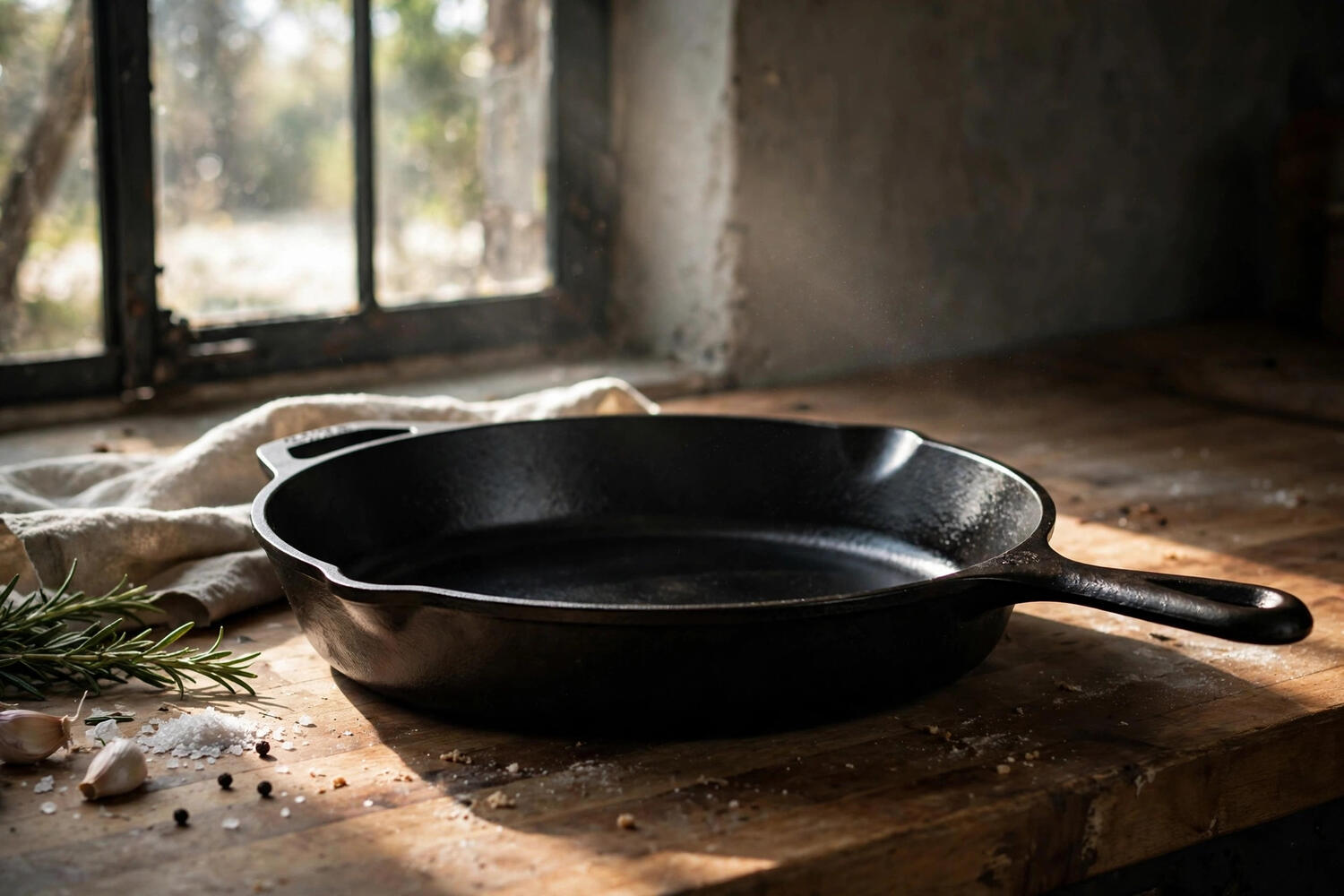
Rust needs moisture and time, so deny it both. Never soak cast iron, never put it in the dishwasher, and never leave it wet. Wash with hot water and a brush — a little soap is fine despite the old legend; modern dish soap will not strip polymerized seasoning — then dry it on heat every single time. While it is still warm, wipe in a whisper-thin layer of oil. Store it dry, with a paper towel or cloth between stacked pans to protect the seasoning. Do these four things and you will never scrub rust again.
How to Remove Rust From a Cast Iron Skillet Without Ruining the Seasoning Around It
Sometimes the rust is just a spot — a small orange patch where the seasoning chipped, while the rest of the pan is beautifully seasoned. Stripping the whole pan for one spot is overkill. For spot treatment, scrub only the rusted area with coarse salt or fine steel wool until you hit bare metal, feathering the edges where the rust meets good seasoning so there is no hard ridge. Wash, dry on heat, then do a stovetop seasoning touch-up: wipe the thinnest film of oil over the bare spot, heat the pan on medium until it just starts to smoke, let it cool, and repeat two or three times.
The patched spot will look slightly different from the surrounding seasoning — lighter, less glossy — and that is fine. It darkens and blends in with cooking. This is maintenance, not restoration, and it takes fifteen minutes. Think of it like touching up paint: you do not repaint the house for one scuffed corner. Catching rust spots early and patching them is how a skillet goes decades without ever needing the full strip-and-reseason treatment.
Electrolysis and Other Extreme Methods (For the Truly Far Gone)
For skillets that look like archaeological finds — thick, flaking, all-over rust — collectors use electrolysis: a tub of washing-soda water, a battery charger, and a sacrificial piece of steel, which lifts rust off without touching the iron underneath. It is remarkably effective and oddly satisfying to watch. It is also more setup than most people need; the vinegar soak handles everything short of museum-piece corrosion.
What about a self-cleaning oven cycle to strip a pan? It works — the extreme heat burns seasoning and rust to ash — but it risks warping or cracking the iron through thermal shock, and the smoke is ferocious. I do not recommend it for pans you care about. Similarly, wire wheels on power drills strip fast but can gouge the surface and overheat the metal. For 99% of rusty skillets, salt, steel wool, vinegar, and patience are the complete toolkit. The pan survived decades of neglect; it can survive an afternoon of your careful attention.
Mistakes That Make Rust Removal Harder (Avoid These)
Cast iron is forgiving, but a few common missteps will turn a weekend restoration into a week-long project. I have made every one of these, so you do not have to.
Do not soak it in bleach. Bleach does not remove rust — it pits the iron and leaves a surface that rusts faster than before. Vinegar works; bleach damages.
Do not run it through the self-cleaning oven cycle. This gets recommended online constantly, and it does strip rust. It also warps pans, cracks older ones, and fills your kitchen with fumes. The vinegar soak achieves the same result without the risk.
Do not leave it to air-dry, even once. This is the single most common cause of flash rust — that thin orange film that appears hours after you thought the pan was clean. Heat-dry the pan on the stove every single time, restoration or routine wash.
Do not use steel wool on a pan that only needs a touch-up. Steel wool is for stripping, not maintaining. On a pan with decent seasoning and a small rust spot, a salt scrub or a vinegar-dampened cloth removes the rust without taking the surrounding seasoning with it.
Do not season a damp pan. Oil traps moisture against the iron. If you are not completely sure the pan is dry, it is not. Put it back on the heat for two more minutes.
The pattern behind every mistake on this list is impatience — the urge to finish the restoration an hour faster. Rust took years to form; it can wait one more afternoon for the right method.
Frequently Asked Questions
Is a rusty cast iron skillet ruined?
Almost never. Surface rust scrubs off in minutes; even heavy rust comes off with a vinegar soak. Only a pan rusted through with holes or cracked from thermal shock is beyond saving.
Can I use vinegar to remove rust from cast iron?
Yes — soak in equal parts white vinegar and water, checking hourly. Don’t exceed about eight hours, since vinegar will eventually pit the iron itself.
How do I reseason cast iron after removing rust?
Rub a very thin layer of high-smoke-point oil over the dry pan, wipe nearly all of it off, and bake upside down at 450–500°F for one hour. Repeat two to three times.
Can I cook on a rusty cast iron skillet?
Light surface rust is not toxic, but it tastes metallic and the food sticks. It’s always worth removing the rust and reseasoning first — the cooking will be dramatically better.
Why does my cast iron keep rusting?
Moisture left on the pan — from soaking, air-drying, dishwashers, or humid storage. Dry it on heat after every wash and keep a thin oil layer on it.
Is it safe to use steel wool on cast iron?
Yes, when you’re stripping rust or old seasoning. It removes material aggressively, so switch to gentler tools for routine cleaning once the pan is restored.