How to Use a Cast Iron Skillet: The Beginner’s System

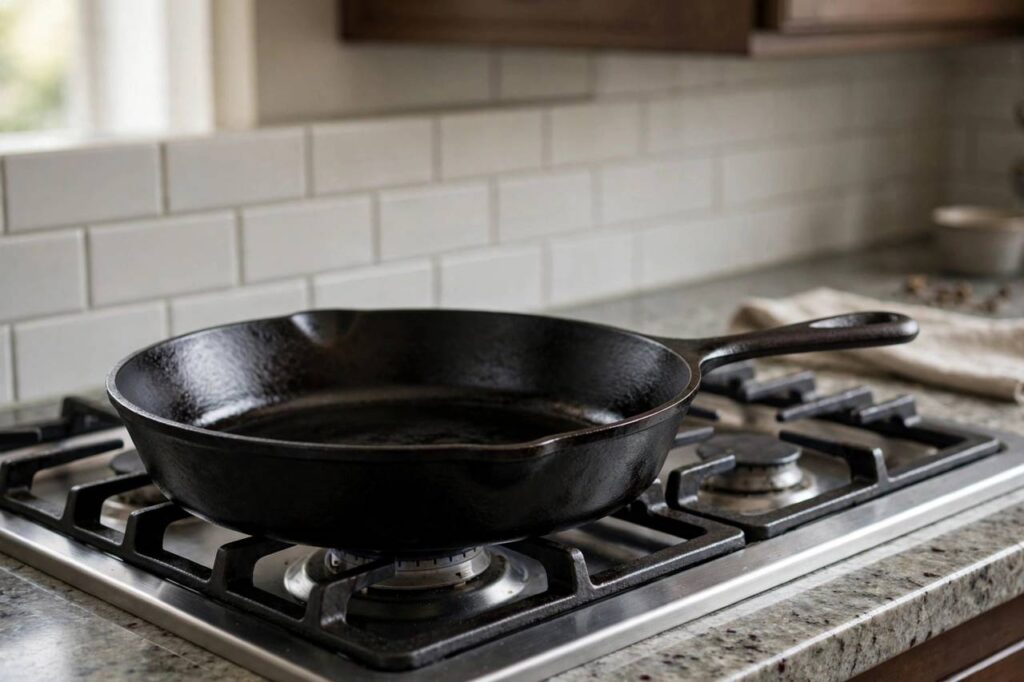
My grandmother cooked everything in the same black skillet for forty years, and I was terrified of it. Everyone said cast iron was fussy — no soap, no soaking, mysterious “seasoning” rituals — so the skillet sat in my cabinet for a year while I used flimsy nonstick pans that died annually. Then I finally learned how to use a cast iron skillet properly, and I have not bought another pan since. Here is the truth: cast iron is not fussy. It is just different. And once you learn the small system — season it, cook in it, clean it right — it becomes the easiest pan you own and the last one you will ever need to buy.
This is the complete starter system for beginners: what seasoning actually is, how to build it, how to clean without fear, and a first-cook routine that sets your skillet up for decades. No myths, no gatekeeping — just what works in a real home kitchen.
What “Seasoning” Actually Means (It Is Not What You Think)
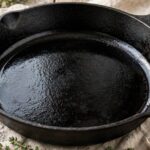
Seasoning is not a coating you paint on. It is a layer of polymerized oil — oil heated past its smoke point until it bonds to the iron at a molecular level, forming a hard, protective, naturally nonstick surface. Every time you cook with fat in a hot cast iron skillet, you add microscopically to this layer. That is why old skillets are so slick: decades of cooking built the seasoning one meal at a time.
This understanding changes everything. You do not need to achieve perfect seasoning before cooking — you build it by cooking. The initial seasoning (which most new skillets come with from the factory these days) is just a starting point. Your job is to protect it while cooking adds to it. Everything below serves that one goal.
Step 1: The First Seasoning (Even on “Pre-Seasoned” Skillets)
Most new skillets arrive pre-seasoned, which means you can cook immediately. But one round of oven seasoning at home gives you a stronger foundation, and it teaches you the process. Here is how: wash the skillet with hot water and a stiff brush, dry it completely — truly completely, even warming it on the stove for a minute to evaporate every drop — then rub a very thin layer of high-smoke-point oil (grapeseed, canola, or vegetable shortening) over the entire skillet, inside and out, including the handle.
Now the critical part: wipe it almost all off. The skillet should look dry, with no visible oil pooling or dripping. Too much oil is the number-one seasoning mistake — it bakes into a sticky, gummy mess instead of a hard layer. Place the skillet upside down in an oven heated past the oil’s smoke point (around 450-500°F for most oils), with foil on the rack below to catch drips, and bake for an hour. Let it cool in the oven. Repeat two or three times for a solid foundation. The skillet will darken and develop a subtle sheen — that is seasoning forming.
How to Use a Cast Iron Skillet: Heat, Fat, and Patience
Cast iron’s superpower is heat retention, and its quirk is slow, uneven heating. Always preheat the skillet gradually — medium heat for several minutes — before adding food. A drop of water flicked in should sizzle and dance when it is ready. Adding food to a cold or unevenly heated skillet is how sticking happens, and it is the source of most “cast iron is hard” complaints.
Use enough fat, especially in the early months while seasoning builds. This is not the pan for fat-free cooking experiments — a slick of oil or butter is part of the system, and it is also what keeps building your seasoning. Metal utensils are fine (the seasoning is tougher than lore suggests), but avoid aggressive scraping with sharp edges in the first few months.
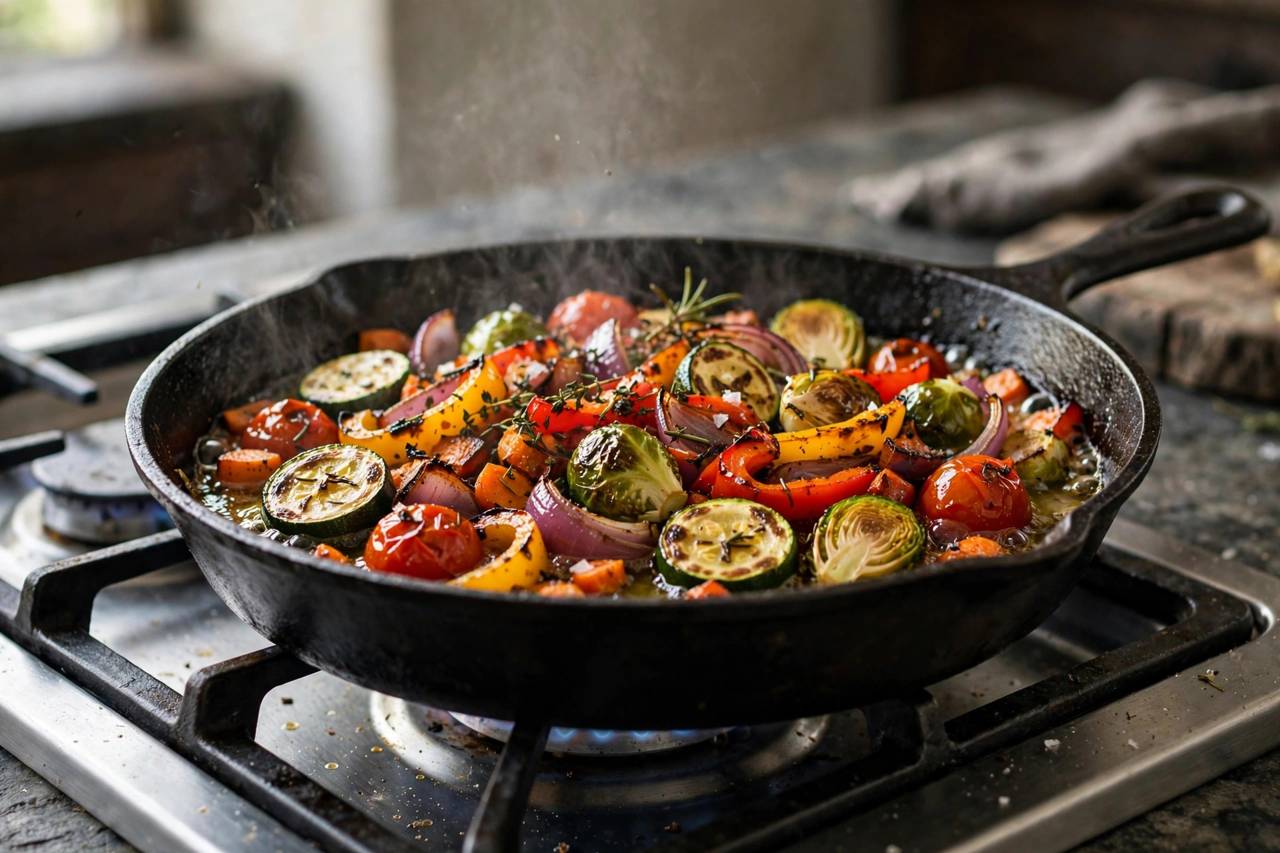
Learn what cast iron does best and lean into it: searing steaks and chops with a deep crust, frying eggs once the seasoning is established, baking cornbread with crackling edges, roasting vegetables that caramelize instead of steaming, and going from stovetop to oven in one pan. What to avoid early on: long-simmered acidic sauces (tomato, vinegar-based) which can strip young seasoning — fine occasionally in a well-established skillet, but not your week-one project. And never, ever plunge a hot skillet into cold water; thermal shock can crack it.
The Cleaning Routine: Yes, You Can Use Soap
Let us kill the biggest myth: modern dish soap will not ruin your seasoning. The “no soap” rule dates to the era of lye-based soaps that genuinely stripped seasoning. Today’s mild dish soaps are fine. Here is the routine: while the skillet is still warm (not screaming hot), rinse with hot water and scrub with a stiff brush or non-metal scouring pad. A drop of dish soap for greasy messes is perfectly fine.
For stuck-on food, the two classic methods both work: simmer a little water in the skillet for a few minutes to loosen the residue, or scrub with coarse salt and a paper towel — the salt acts as a gentle abrasive. What you should not do: soak the skillet (invites rust), put it in the dishwasher (strips seasoning and invites rust), or leave it wet in the dish rack.
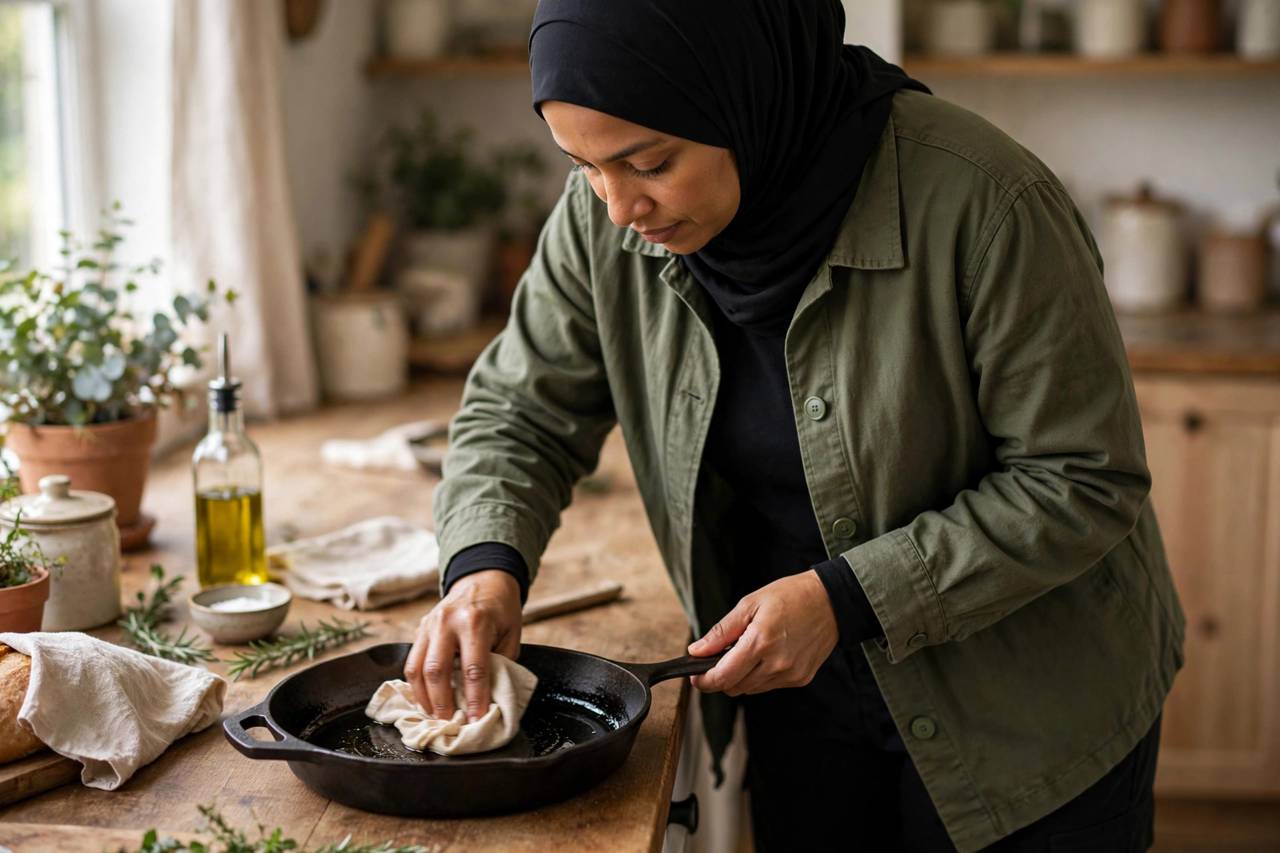
Drying is the step that matters most. Towel-dry immediately, then set the skillet on a warm burner for a minute or two to evaporate every last bit of moisture — water left in the pan is how rust starts. While it is still warm, wipe in a whisper-thin layer of oil with a paper towel. That is the whole routine: wash, dry completely, oil lightly. Two minutes, and the skillet is ready for next time.
Your First-Cook Routine: Building Seasoning From Day One
The best thing you can do for a new skillet is cook the right foods in the right order. Week one: cook fatty foods. Bacon, sausage, fried chicken, grilled cheese with plenty of butter, roasted vegetables tossed in oil — every one of these deposits seasoning. Avoid the temptation to test the skillet with delicate eggs on day one; eggs are the final exam, not the first lesson.
Weeks two to four: expand the repertoire as the surface improves. You will feel it happening — food releases more easily, the surface looks more even. By month two, try the egg test: a properly preheated, lightly oiled skillet with developing seasoning should release a fried egg cleanly. If it sticks a little, no panic — you just need more cooking time, not more products or rituals.
Throughout, follow one rule: cook often. Seasoning builds through use, and a skillet cooked in three times a week for two months will outperform one that got five oven-seasoning sessions and then sat in a cabinet. The skillet wants to work. Let it.
Rust Rescue: When Things Go Wrong
Left the skillet wet? Found rust spots? Do not throw it out — cast iron is nearly indestructible. For light surface rust, scrub with steel wool or a scouring pad until the rust is gone, wash, dry thoroughly, and do a round or two of oven seasoning. The skillet will recover completely.
For heavy rust, the process is the same, just more vigorous: some people use a vinegar soak (half water, half white vinegar, checking every hour or two — do not leave it indefinitely, as vinegar eats good iron too), then scrub, neutralize, dry, and re-season from scratch. A skillet that looks ruined is almost always salvageable. The only true death for cast iron is cracking or warping from thermal shock, which is why the no-cold-water rule exists.
Storing and Maintaining for the Long Haul
Store the skillet dry with the light oil coat from your cleaning routine. If you stack pans, place a paper towel or cloth between them to protect the seasoning from scratches. In humid climates, that thin oil layer is your rust insurance — do not skip it.
Long-term maintenance is just consistency: cook regularly, clean promptly, dry completely, oil lightly. Once or twice a year, you might do a maintenance oven-seasoning round if the surface looks dull — but daily cooking usually makes this unnecessary. After a year of regular use, your skillet will be noticeably more nonstick than the day you bought it, and it will keep improving. That is the whole magic of cast iron: the pan gets better the more you use it, which is the opposite of every nonstick pan ever made.
Frequently Asked Questions (FAQ)
Can you really use soap on cast iron?
Yes. Modern mild dish soap does not harm polymerized seasoning — the “no soap” rule is a leftover from the lye-soap era. Use a small amount for greasy messes, rinse well, dry completely, and apply the light oil coat. What damages seasoning is soaking, dishwashers, and harsh abrasives, not a drop of Dawn.
How do I know when my skillet is properly seasoned?
It looks evenly dark with a subtle sheen (not sticky or gummy), and food releases easily with proper preheating and fat. There is no finish line — seasoning keeps building with use. If eggs slide, you are in great shape; if they stick a little, keep cooking fatty foods and be patient.
Why is my seasoning sticky?
Too much oil during seasoning — the most common mistake. The fix: bake it longer at full temperature to polymerize the excess, or scrub the sticky layer off and re-season with a much thinner oil coat. Remember, the oiled skillet should look nearly dry before it goes in the oven.
Can I cook tomatoes or acidic foods in cast iron?
In a well-established skillet, brief acidic cooking is fine — a quick tomato sauce will not destroy years of seasoning. Avoid long-simmered acidic dishes in new or newly-stripped skillets, where the young seasoning is vulnerable. When in doubt, keep acidic cooks short and re-oil after.
What oil is best for seasoning cast iron?
Any neutral high-smoke-point oil or fat works: grapeseed, canola, vegetable shortening, even flaxseed (though it can flake for some users). The oil matters far less than the technique — thin coat, full polymerization temperature, full hour. Do not overthink the oil; focus on the process.
Is a rusty cast iron skillet ruined?
Almost certainly not. Surface rust scrubs off with steel wool, followed by re-seasoning. Even heavily rusted skillets usually recover fully. Only cracking or warping — from thermal shock or extreme overheating — truly kills cast iron, and both are avoidable.
The Bottom Line
Learning how to use a cast iron skillet comes down to a short loop: preheat patiently, cook with enough fat, clean promptly with hot water, dry completely, and wipe in a whisper of oil. Do that consistently and the skillet builds its own seasoning, gets more nonstick every month, and outlives every other pan in your kitchen. My grandmother’s forty-year skillet started exactly where yours is now.