What Is Perjury? Definition, Penalties, and Famous Cases

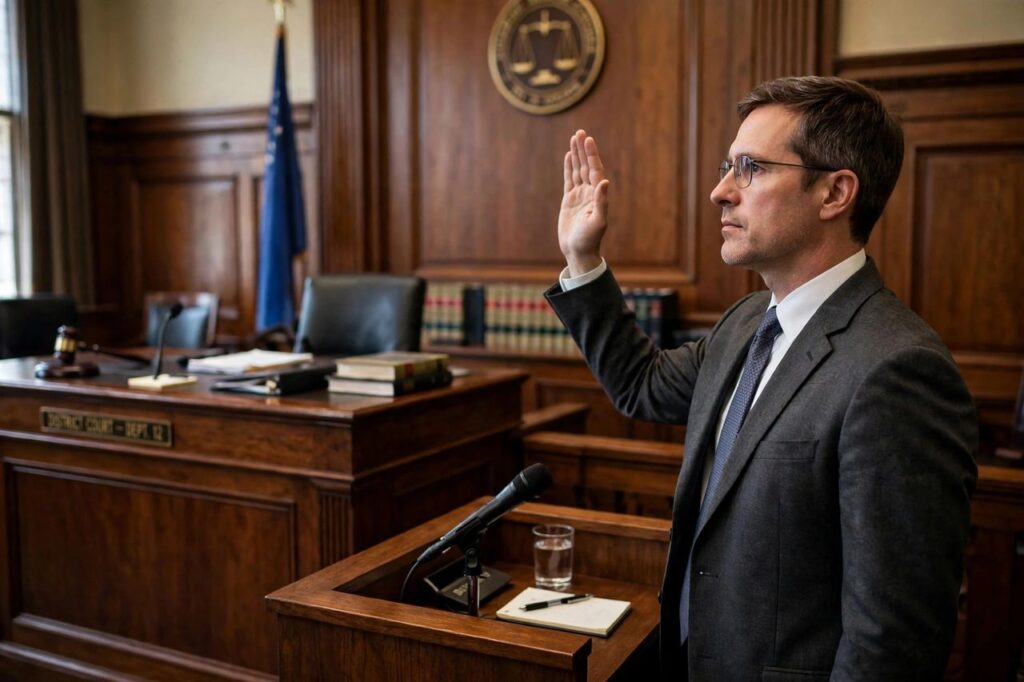
You have heard the phrase in courtroom dramas a hundred times: “Do you swear to tell the truth, the whole truth, and nothing but the truth?” But what is perjury, legally speaking? It is the criminal offense of deliberately lying under oath — treated as an attack on the justice system itself. Yet not every lie told in a legal setting qualifies, and the line between a fib and a felony is more precise than most people think.
What Is Perjury? The Legal Definition
Perjury is the act of knowingly making a false statement while under oath (or affirmation) in an official proceeding. At the federal level and in most states, it is a felony. The key word is knowingly: perjury requires that the person understood they were under oath, knew the statement was false, and made it deliberately. An honest mistake, a faulty memory, or a confusing question does not count.
Four elements generally have to be proven:
1. An oath or affirmation. The person was formally sworn in — in court, in a deposition, before a grand jury, or when signing a sworn affidavit.
2. A false statement. What was said was objectively untrue, not merely misleading or evasive.
3. Materiality. The lie had to matter — it was capable of influencing the proceeding’s outcome. Lying about what you had for breakfast during a murder trial usually is not material; lying about where you were that night is.
4. Intent. The falsehood was deliberate. Perjury is a crime of intent, which is why prosecutors must show the witness knew the truth and chose to hide it.
Perjury vs. Simply Lying
This is where most confusion lives. Lying to a friend is not perjury. Lying on a job application is not perjury. Even lying to a police officer during an investigation is usually charged as something else — such as making false statements or obstruction — because no oath was administered. Perjury specifically requires the formal setting of an oath in an official proceeding. The oath is what transforms a lie into a crime against the court.
Where Perjury Can Happen
People picture a witness stand, but perjury reaches further than the courtroom:
Trial testimony. The classic setting — a sworn witness lying on the stand.
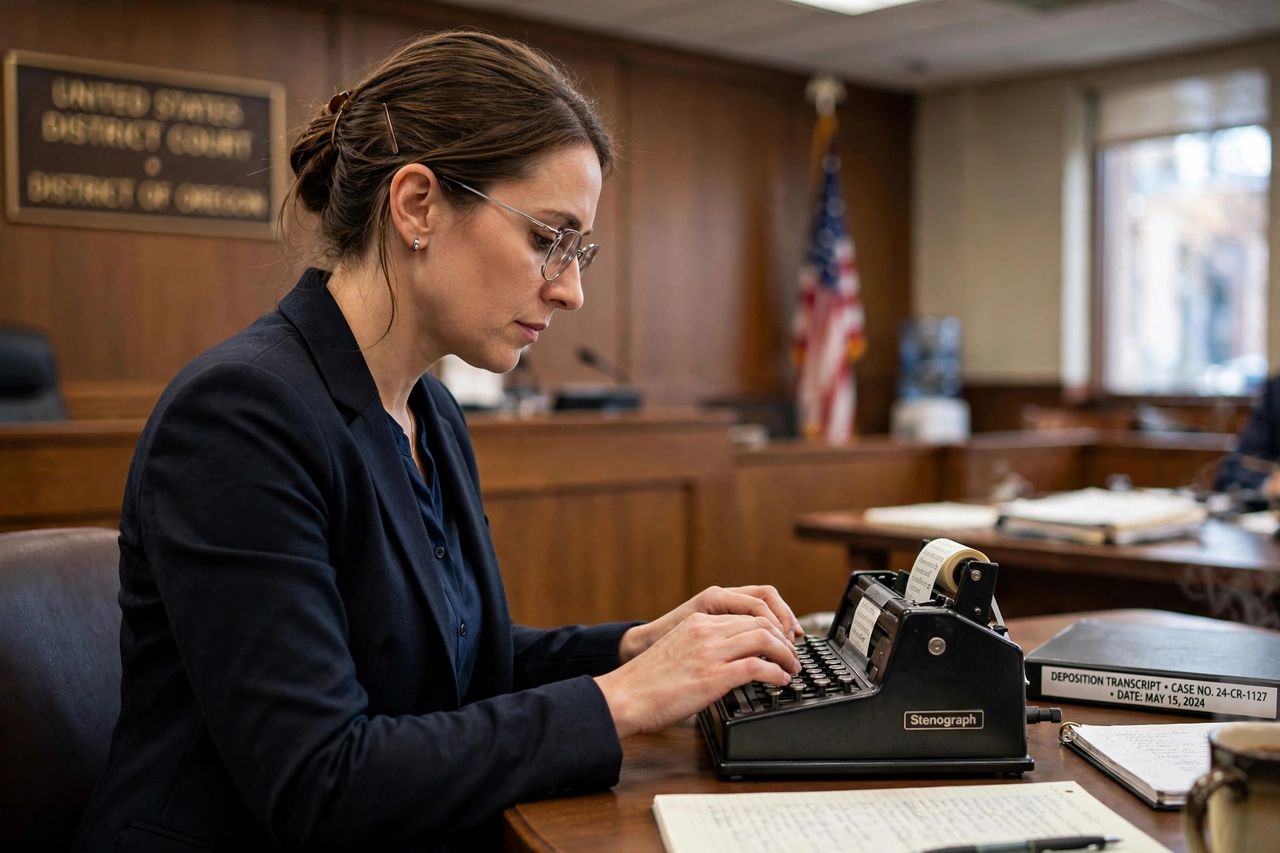
Depositions. Out-of-court sworn testimony taken before trial carries the same oath and the same perjury risk.
Grand jury proceedings. Witnesses testifying before a grand jury are under oath.
Signed affidavits and declarations. Many jurisdictions treat a written statement signed “under penalty of perjury” the same as spoken testimony.
Congressional testimony. Witnesses before Congress are typically sworn in, and false statements there can lead to perjury charges.
What Is the Punishment for Perjury?
Perjury is punished as a serious crime. Under federal law, it is a felony carrying fines and up to five years in prison. State penalties vary but commonly include multi-year prison sentences and substantial fines. Judges weigh factors like whether the lie altered a trial’s outcome — perjury that sends an innocent person to prison, or frees a guilty one, draws the harshest sentences. Beyond criminal punishment, a perjury conviction can end professional licenses, from law to medicine to securities trading.
Famous Perjury Cases
Bill Clinton (1998). The most famous American perjury case: President Clinton was impeached by the House on charges including perjury for false statements made under oath about his relationship with Monica Lewinsky during a deposition in a civil lawsuit. The Senate acquitted him, but he later had his Arkansas law license suspended.
Alger Hiss (1950). A former State Department official convicted of perjury for denying, under oath, that he had passed documents to a Soviet agent. The statute of limitations had expired on espionage itself, so perjury became the vehicle for prosecution — a pattern that repeats in high-profile cases.
Barry Bonds (2011). The baseball star was tried on charges including perjury for testimony before a grand jury investigating performance-enhancing drugs. The jury deadlocked on the perjury counts; he was convicted of obstruction of justice, a conviction later overturned on appeal.
Martha Stewart (2004). Often misremembered as a perjury case, Stewart was actually convicted of conspiracy, obstruction of justice, and making false statements to federal investigators — a reminder that lying to investigators is punished severely even without a formal oath.
What Is a “Perjury Trap”?
You may hear the phrase “perjury trap” in political commentary. It describes a situation where investigators question someone under oath about matters they already know the answers to, hoping the person lies and can then be charged. Whether any particular questioning qualifies as a trap is hotly debated — prosecutors call it legitimate investigation; defense lawyers call it a setup. Either way, the defense against it is simple: tell the truth.

How Is Perjury Proven?
Proving perjury is harder than it sounds. Traditionally, many jurisdictions required the “two-witness rule” — testimony from two witnesses, or one witness plus corroborating evidence, contradicting the false statement — precisely because trials would grind to a halt if every disputed fact became a perjury prosecution. Modern statutes have relaxed this in places, but prosecutors still bring perjury charges selectively, usually when the lie is clear, documented, and consequential.
What Is Perjury vs. Contempt of Court?
Perjury is often confused with contempt of court, but they punish different things. Perjury is the specific crime of knowingly making a false material statement under oath — it requires the lie, the oath, and intent. Contempt of court is disobedience or disrespect toward the court’s authority: refusing to answer questions, disrupting proceedings, violating a court order, or insulting the judge. You can be held in contempt without uttering a single false word, and you can commit perjury while behaving with perfect politeness. The two charges frequently appear together — a witness who lies and refuses to cooperate may face both — but they remain legally distinct.
How Perjury Charges Are Actually Filed
Despite its fearsome reputation, perjury is prosecuted selectively. Prosecutors weigh several practical factors before charging:
Provability. Can the lie be proven false with hard evidence — documents, recordings, contradictory testimony — rather than one person’s word against another’s? Cases built on clear documentary contradiction are the ones that get charged.
Materiality. Did the lie matter to the proceeding’s outcome? Perjury about a trivial detail rarely justifies the resources of a prosecution.
Intent evidence. Is there proof the witness knew the truth? Emails, prior consistent statements, or admissions that contradict the testimony make intent provable.
Prosecutorial priorities. Perjury that corrupted a major trial, a grand jury investigation, or a congressional inquiry draws far more attention than a false statement in a minor civil deposition.
This selectivity explains a paradox the public often notices: witnesses seem to lie under oath frequently, yet perjury charges are rare. The gap is not indifference — it is the difficulty of proving deliberate falsehood beyond a reasonable doubt, the very standard perjury itself must meet.
Perjury and the Fifth Amendment
Witnesses worried about self-incrimination have a constitutional escape hatch: the Fifth Amendment right to refuse to answer questions whose answers might incriminate them. Invoking it is lawful; lying instead is not. This is the trap witnesses fall into — fearing that silence looks guilty, they invent an exculpatory story, converting a lawful invocation into a perjury charge. Defense lawyers drill the lesson relentlessly: if you cannot answer truthfully, do not answer at all. The Fifth Amendment protects silence. Nothing protects a lie.
Correcting the Record: Fixing Testimony Before It’s Too Late
What if you realize after testifying that you said something wrong? The law recognizes a meaningful difference between a lie and a mistake — and between a lie maintained and a lie corrected. Witnesses who promptly notify counsel and correct the record (through deposition errata, supplemental testimony, or informing the court) dramatically reduce their exposure. Prosecutors look for deliberate, maintained falsehood; a witness who catches and fixes an error looks like someone with a faulty memory, not a criminal. The lesson: if you misspoke under oath, fix it fast and fix it formally.
Perjury in Everyday Life: Where Ordinary People Encounter It
You do not need to be a president or a baseball star to face perjury exposure. Ordinary people swear oaths more often than they realize: when signing tax returns (filed under penalty of perjury), loan and mortgage applications, immigration forms, court affidavits in family or civil cases, and voter registrations. False statements on these documents can trigger perjury or related false-statement charges just as surely as lying on a witness stand. The common thread is the oath or the “under penalty of perjury” declaration — that formal moment when the law says: this one counts. Treat every signature under such a declaration with the gravity of sworn testimony, because legally, that is what it is.
Frequently Asked Questions
Is perjury a felony?
In most jurisdictions, yes. Federal perjury is a felony, and the majority of states classify it as one as well, carrying potential prison time rather than just a fine.
What is the punishment for perjury?
Under federal law, up to five years in prison plus fines. State sentences vary but commonly run one to several years. The actual sentence depends on the jurisdiction and how seriously the lie affected the proceeding.
What is the difference between perjury and obstruction of justice?
Perjury is a specific false statement under oath. Obstruction of justice is broader — any act that interferes with an investigation or proceeding, such as destroying documents or intimidating witnesses. The two charges often appear together.
Can you commit perjury in a deposition?
Yes. Deposition testimony is given under oath, and deliberately lying in one carries the same perjury exposure as lying on the witness stand.
What if you honestly misremember something under oath?
That is not perjury. The crime requires deliberate falsehood — knowing the truth and stating otherwise. Faulty memory, confusion, or misunderstanding the question are defenses, though witnesses are still expected to be careful and to correct the record if they realize they misspoke.
Is lying to the police perjury?
Usually not, because no oath is involved. But it is still a crime in most places — typically charged as making false statements or obstructing an investigation — and it can carry serious penalties of its own.
The oath is a promise to the system that makes justice possible. Break it deliberately, and the system treats it as an attack on itself — which is exactly what it is.