Difference Between Lawyer and Attorney: What’s the Real Story?


Here is the short answer to the difference between lawyer and attorney: in everyday American English, there is none. The two words describe the same person — someone trained and licensed in law. But the reason two words exist at all is more interesting than the answer, and in a few specific contexts the distinction genuinely matters.
Lawyer vs. Attorney: The One-Paragraph Answer
A lawyer is anyone who has studied law and is qualified to give legal advice or represent clients. An attorney — short for attorney-at-law — is a lawyer who is authorized to act on a client’s behalf in legal matters, including appearing in court. In the United States, every practicing attorney is a lawyer, and every licensed lawyer can act as an attorney. The terms are used interchangeably by the public, the press, and most professionals.
Why Do Two Words Exist?
The split is a historical accident. “Lawyer” comes from Middle English and simply meant someone learned in the law. “Attorney” comes from Old French atorné — literally, someone “turned to” or appointed to act for another. In medieval England, an attorney was an agent appointed to represent someone in court, and that narrower sense of “one who acts on behalf of another” stuck to the word.
Over centuries of American usage, the technical distinction blurred until the two became practical synonyms. Bar associations, law schools, and courts themselves use both freely — you will see “attorney” on office doors and “lawyer” in casual conversation, describing the exact same professionals.
The One Technical Difference Worth Knowing
There is one context where the words genuinely diverge: attorney-in-fact. An attorney-in-fact is someone authorized under a power of attorney document to make decisions for another person — managing bank accounts, signing documents, handling property. An attorney-in-fact does not need to be a lawyer at all; it is often a spouse, adult child, or trusted friend. Here, “attorney” keeps its old meaning of “appointed agent,” completely separate from the legal profession.
So when someone says “my attorney,” they mean their lawyer. When someone says “I am her attorney-in-fact,” they mean they hold power of attorney — a different concept entirely.
What About “Counselor,” “Advocate,” and “Esquire”?
The legal world loves synonyms. Counselor (or counsellor) is another word for a lawyer, emphasizing the advice-giving role — judges often address lawyers in court as “counsel.” Advocate is common in some countries and in American usage often refers to a lawyer who argues cases. Esquire (abbreviated Esq.) is a courtesy title placed after a lawyer’s name, similar to how “M.D.” follows a doctor’s name. None of these indicate a higher rank or a different license.

Lawyer vs. Attorney Around the World
Outside the United States, the terminology fragments further. In England and Wales, the profession historically split between solicitors (who advised clients and prepared cases) and barristers (who argued in higher courts), though the lines have blurred considerably. In many countries, “advocate” is the standard term. In the U.S., though, lawyer and attorney remain full synonyms — a New York attorney and a California lawyer hold the same kind of license.
Does the Difference Matter When Hiring One?
Not in the slightest. Whether a professional calls herself a lawyer or an attorney tells you nothing about her skill, specialty, or qualifications. What actually matters when you need legal help:
Licensed in your state. A brilliant attorney licensed only in Texas cannot represent you in a Florida courtroom. Bar admission is state-specific.
The right specialty. A lawyer who handles real estate closings is not the person you want for a criminal defense case. Ask what they do most days.
Experience with your kind of matter. Years in practice matter less than years doing your type of case.
Clear fees. Understand whether you are paying hourly, a flat fee, or a contingency percentage before anything is signed.
When People Use Each Word
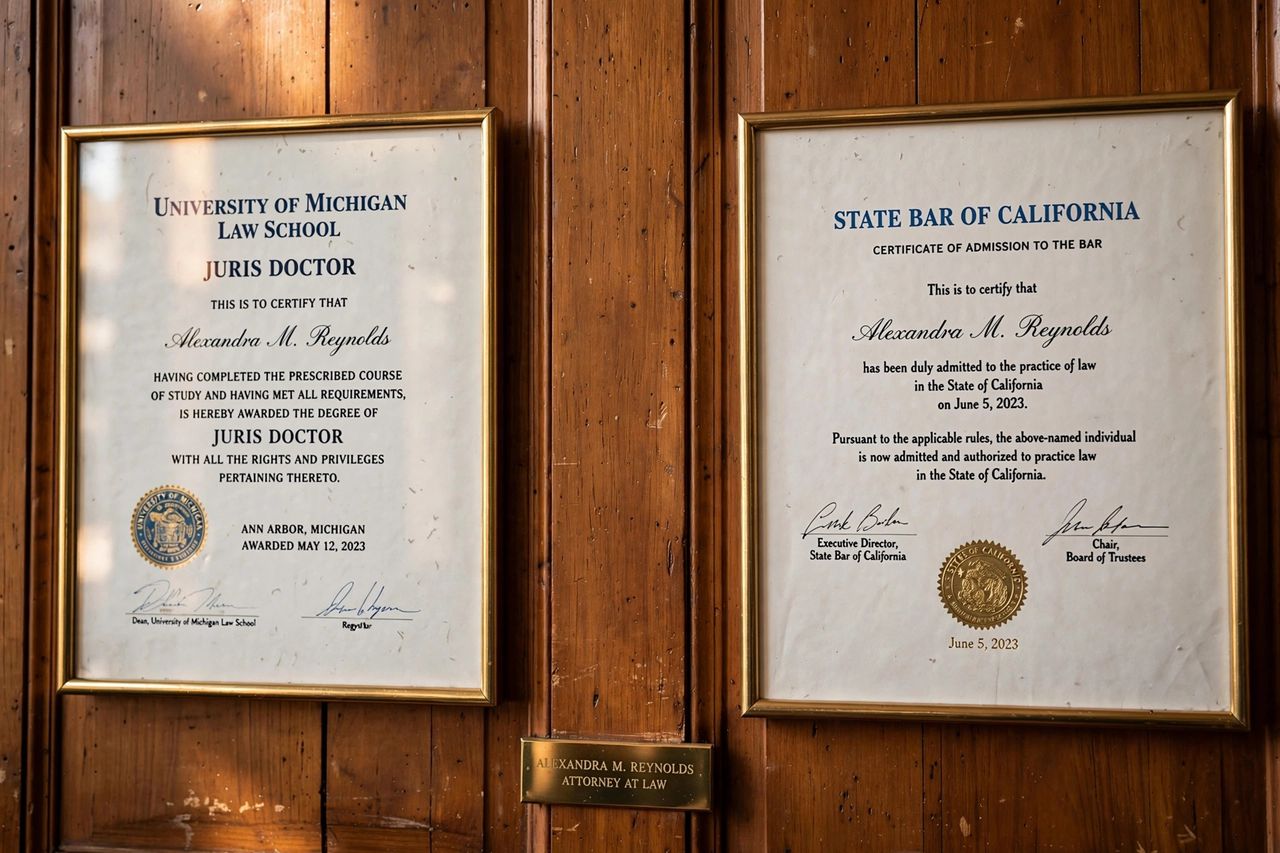
Usage is mostly a matter of habit and formality. “Attorney” tends to appear in formal and official contexts — attorney-client privilege, power of attorney, district attorney, attorney general. “Lawyer” is the everyday word — lawyer jokes, “get a lawyer,” lawyer TV dramas. Some regions lean one way: the Northeast and Midwest favor “attorney” in professional settings, while “lawyer” dominates casual speech everywhere. Neither choice is wrong.
The Difference Between Lawyer and Attorney in Daily Practice
Walk into any American law office and you will hear both words within minutes — often from the same person. A partner introduces herself as “an attorney with the firm”; a client later says “my lawyer told me.” Court filings say “attorney for the plaintiff”; television says “call your lawyer.” This is not sloppiness. The profession itself treats the terms as interchangeable, and no licensing body, court, or bar exam distinguishes between them. If the difference between lawyer and attorney ever mattered operationally, the entire legal system would have noticed by now.
The persistence of both words is mostly a matter of register and rhythm. “Attorney” sounds formal — it fits on letterhead, in statutes, and in phrases like “attorney-client privilege.” “Lawyer” sounds direct — it fits in conversation, headlines, and humor. Writers choose between them the way they choose between “physician” and “doctor”: same job, different temperature.

What Lawyers Actually Do All Day
The public image — dramatic courtroom showdowns — describes a small slice of the profession. Most lawyers, whatever they call themselves, spend their days on far less theatrical work:
Transactional lawyers draft and negotiate contracts, handle mergers, close real estate deals, and structure businesses. They may go years without entering a courtroom.
Litigators handle disputes — but most of that is writing briefs, taking depositions, and negotiating settlements. Fewer than five percent of filed civil cases ever reach trial.
Regulatory and compliance lawyers help companies navigate the maze of government rules.
Advisory lawyers — tax, estate planning, immigration — counsel clients on planning rather than fighting.
When hiring, the relevant question is never “lawyer or attorney?” but “what does this person do every day, and does it match my problem?”
How Lawyers Charge: Fee Structures Explained
Understanding fees matters more than understanding titles. The three common structures:
Hourly billing. The traditional model — you pay for each hour worked, often in six-minute increments. Common for litigation, business matters, and anything unpredictable.
Flat fees. A fixed price for a defined task: drafting a will, handling an uncontested divorce, forming an LLC. You know the cost upfront.
Contingency fees. The lawyer takes a percentage of what you win — standard in personal injury cases. You pay nothing upfront, but the percentage (often around a third) applies only if you recover money.
Many lawyers also offer free or low-cost initial consultations. Whatever the structure, get the fee agreement in writing before work begins — the reputable ones insist on it.
Red Flags When Choosing One
Guarantees of victory (“I never lose these cases”) are a warning sign — ethical rules prohibit guaranteeing outcomes, and no honest lawyer does it. So are vague fee answers, pressure to sign immediately, and reluctance to explain strategy in plain language. Good signs: clear written fee agreements, specific experience with your type of matter, prompt communication, and a willingness to say “that’s outside my area — here’s who I’d call.” The best lawyer for you is rarely the one with the fanciest title. It is the one who has solved your exact problem before.
Attorney vs. Lawyer on Paper: Where You’ll See Each Term
If you read legal documents closely, a pattern emerges. Statutes and court rules overwhelmingly say “attorney” — attorney of record, attorney’s fees, attorney-client privilege. Job postings mix both freely, sometimes in the same paragraph. Law school marketing tends toward “lawyer” when speaking to prospective students (“become a lawyer”) and “attorney” when speaking to employers. Media style guides generally default to “lawyer” as the plain-English choice. None of this reflects a difference in meaning — it reflects institutional habit. The practical upshot for non-lawyers: when a document says “attorney,” read it as “lawyer,” and vice versa, with exactly one exception — the phrase “attorney-in-fact,” which means something entirely different, as explained above.
The Bottom Line on Lawyer vs. Attorney
The debate over lawyer versus attorney is one of those arguments that feels important until you examine it. Etymology gives “attorney” a narrower origin story; centuries of American usage erased the distinction; the profession, the courts, and the dictionaries all agree they are synonyms. The one place the difference bites — attorney-in-fact — is a vocabulary trap, not a professional hierarchy. So use whichever word comes naturally, hire based on specialty and track record rather than title, and save your analytical energy for questions that actually affect your case.
Frequently Asked Questions
Do I need a lawyer or an attorney?
Either — they are the same thing in the United States. Focus on finding a licensed professional with experience in your type of legal matter, not on which word appears on their business card.
Is an attorney higher ranking than a lawyer?
No. There is no hierarchy between the two titles. Seniority in the profession comes from experience, partnership status, or roles like judge — not from choosing “attorney” over “lawyer.”
What does “Esq.” mean after a lawyer’s name?
Esquire is a courtesy title for lawyers in the United States, roughly equivalent to placing a professional credential after a name. It indicates the person is a licensed attorney, but it is a custom rather than a legal requirement.
What is the difference between an attorney and an advocate?
In American usage, very little — “advocate” is often used for lawyers who argue cases or champion causes. In some other countries, “advocate” is the standard professional title, similar to “barrister.”
Can a lawyer represent you in court?
Yes. Any lawyer admitted to the bar of the relevant court can represent clients there. The old idea that only “attorneys” appear in court while “lawyers” merely advise has no basis in modern American practice.
What is an attorney-in-fact?
Someone appointed under a power of attorney to act on another person’s behalf in financial or legal matters. They do not need to be a lawyer — the word “attorney” here uses its original meaning of “appointed agent.”
So the next time someone corrects you for saying “lawyer” instead of “attorney” — or the reverse — you can smile. You were right either way.