How Does a Bill Become a Law? A Step-by-Step Guide


Every law on the books — from speed limits to tax codes — started as nothing more than an idea. But how does a bill become a law, exactly? The journey from idea to enforceable statute runs through committees, debates, two chambers of Congress, and finally the president’s desk. Here is the whole trip, step by step.
Step 1: An Idea Becomes a Bill
Laws begin with ideas from almost anywhere: a citizen’s letter, a news event, an advocacy group, or a president’s policy agenda. But only a member of Congress can formally introduce a bill. A representative or senator who sponsors the legislation has it drafted into precise legal language — usually with help from professional legislative drafters — and then introduces it in their chamber. In the House, the bill is dropped into the “hopper,” a wooden box near the clerk’s desk; in the Senate, it is formally presented on the floor.
Once introduced, the bill gets a number: House bills start with “H.R.” and Senate bills with “S.” From this moment, it is officially a bill — a proposal, not yet a law.
Step 2: Committee Review — Where Most Bills Go to Rest
Every bill is referred to the committee with jurisdiction over its subject — agriculture bills to the Agriculture Committee, tax bills to Ways and Means, and so on. This is the great filter of the legislative process. Committees hold hearings, invite expert witnesses, and debate the bill’s merits. The committee can amend it, rewrite it, or simply ignore it — and most bills die right here, never to be heard from again. Only a small fraction of introduced bills ever make it out of committee.
Step 3: Subcommittee Scrutiny
Many committees send bills to a smaller subcommittee for closer examination. The subcommittee can hold its own hearings, gather testimony from affected industries or citizens, and recommend the bill back to the full committee — favorably, unfavorably, or without recommendation. Think of it as a bill’s job interview before the real interview.
Step 4: Markup and Committee Vote
If the bill survives, the full committee “marks it up” — going through it line by line, debating amendments, and voting on changes. Then the committee votes on whether to report the bill to the full chamber. A favorable report sends the bill forward with the committee’s recommendation; an unfavorable one usually ends its journey.
Step 5: Floor Debate and Vote
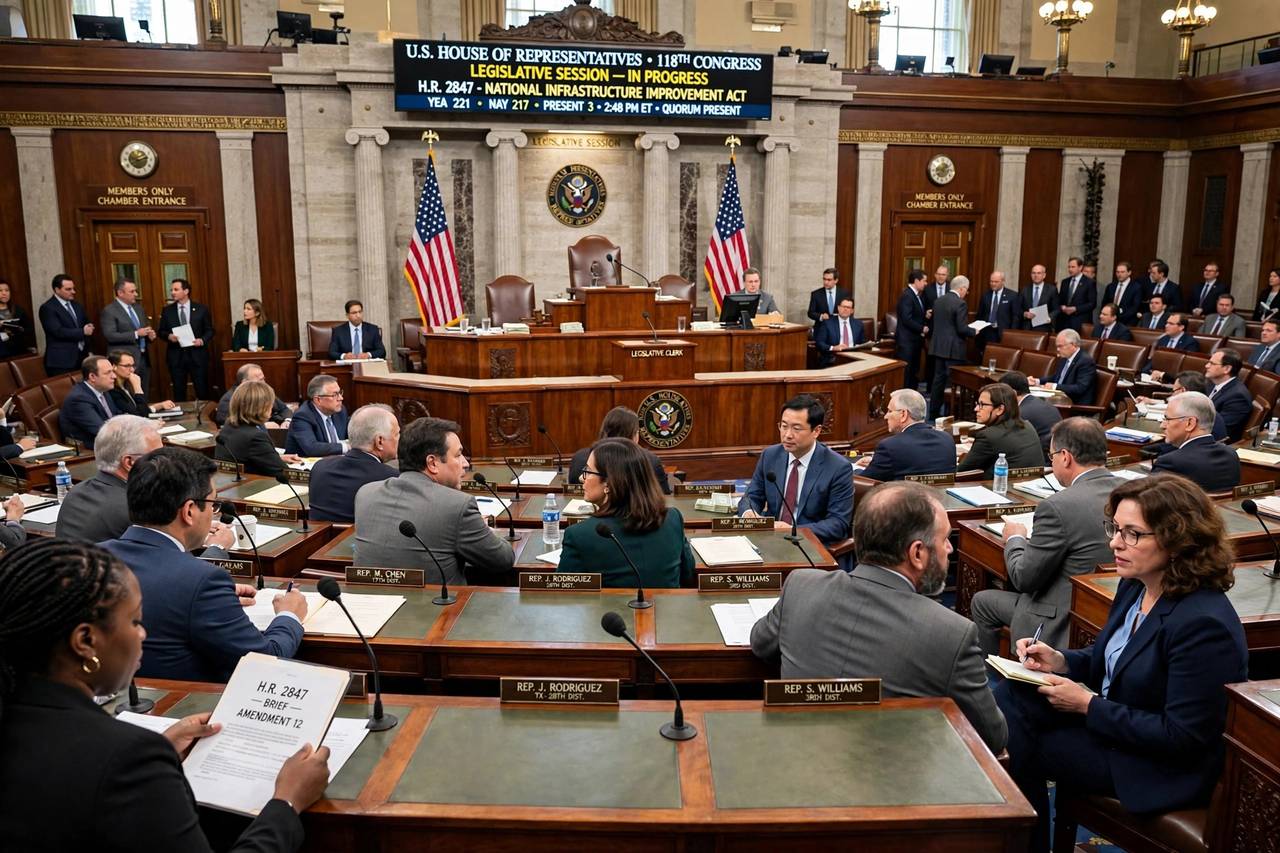
Now the whole House or Senate takes up the bill. In the House, the Rules Committee sets the terms of debate — how long members may speak and which amendments are allowed. In the Senate, debate is traditionally unlimited unless cloture is invoked to end it. Members debate, propose amendments, and finally vote. Passage requires a simple majority in most cases.
Step 6: The Other Chamber Does It All Again
A bill that passes one chamber is sent to the other, where the entire process — committee referral, hearings, markup, floor vote — repeats from scratch. If the second chamber passes the bill in identical form, it goes straight to the president. But that rarely happens on the first try; the Senate version and House version usually differ.
Step 7: Conference Committee Resolves the Differences
When the two chambers pass different versions, a conference committee — members from both the House and Senate — is appointed to hammer out a compromise. The resulting conference report goes back to both chambers for a final up-or-down vote, with no further amendments allowed. Both chambers must approve the identical compromise text.
Step 8: The President’s Desk
Once both chambers pass the identical bill, it is “enrolled” — printed in its final form — and sent to the president, who has four options:
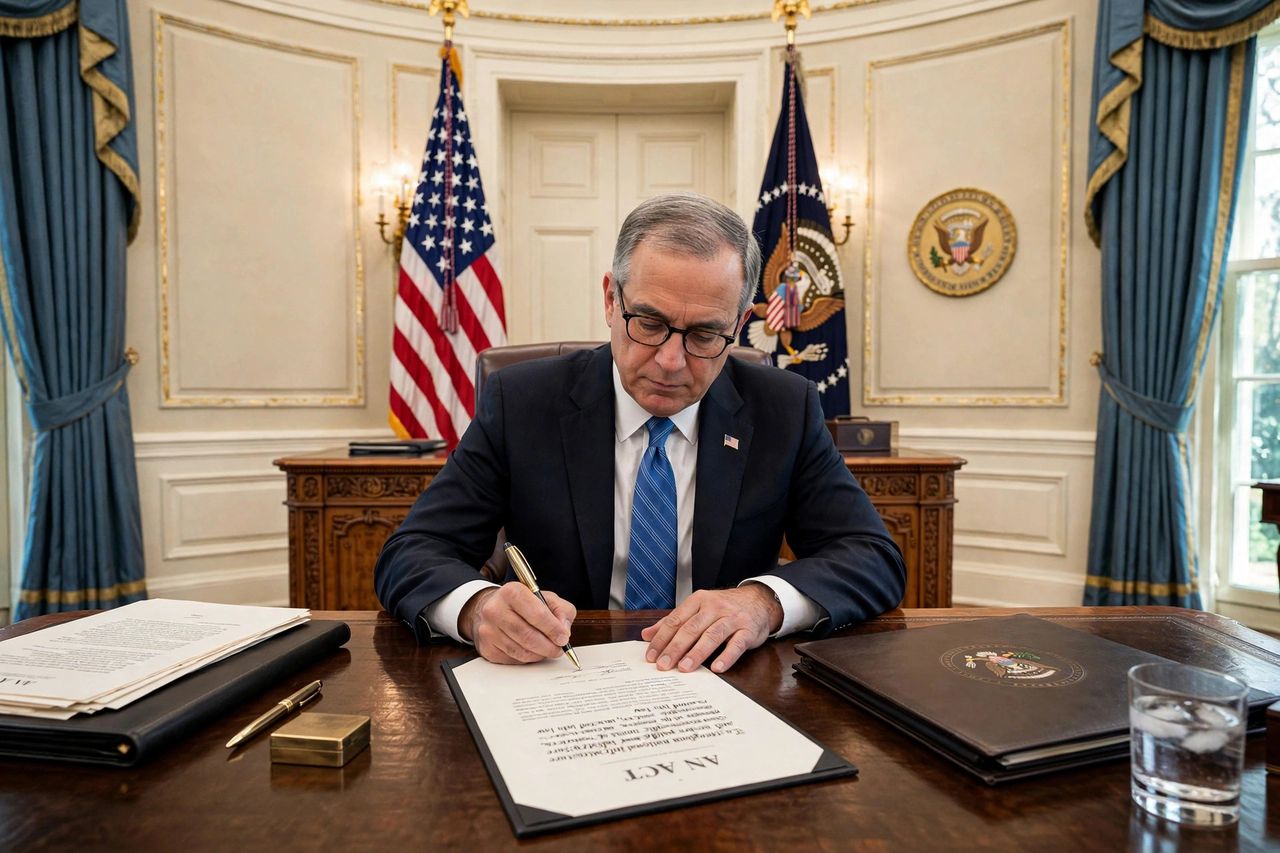
Sign it. The bill becomes law, and the president often holds a signing ceremony.
Veto it. The president rejects the bill and returns it to Congress with objections. A veto is a hard stop — unless Congress overrides it.
Do nothing for ten days while Congress is in session. The bill automatically becomes law without the president’s signature.
Pocket veto. If Congress adjourns within those ten days and the president does nothing, the bill dies. Unlike a regular veto, a pocket veto cannot be overridden.
Step 9: Overriding a Veto
Congress can override a presidential veto, but the bar is high: a two-thirds majority in both the House and the Senate. Veto overrides are rare precisely because mustering two-thirds twice is so difficult. When it happens, the bill becomes law over the president’s objection — one of the clearest expressions of the separation of powers.
How Long Does It Take for a Bill to Become a Law?
There is no fixed timeline. Emergency legislation can race from introduction to signature in days. Most bills that become law take months of committee work, negotiation, and scheduling. And the vast majority of bills — thousands every two-year Congress — never become law at all, dying quietly in committee when the session ends. Persistence matters: many landmark laws were introduced repeatedly over years before finally passing.
How You Can Follow a Bill Yourself
You do not need to be a lobbyist to track legislation. Congress publishes the full text, status, and voting records of every bill online, and you can see exactly which committee holds it, how your representatives voted, and what amendments were adopted. Calling or writing your representative about a bill while it is still in committee — when it is most vulnerable — is when citizen input carries the most weight.
How Does a Bill Become a Law? Why Most Never Make It
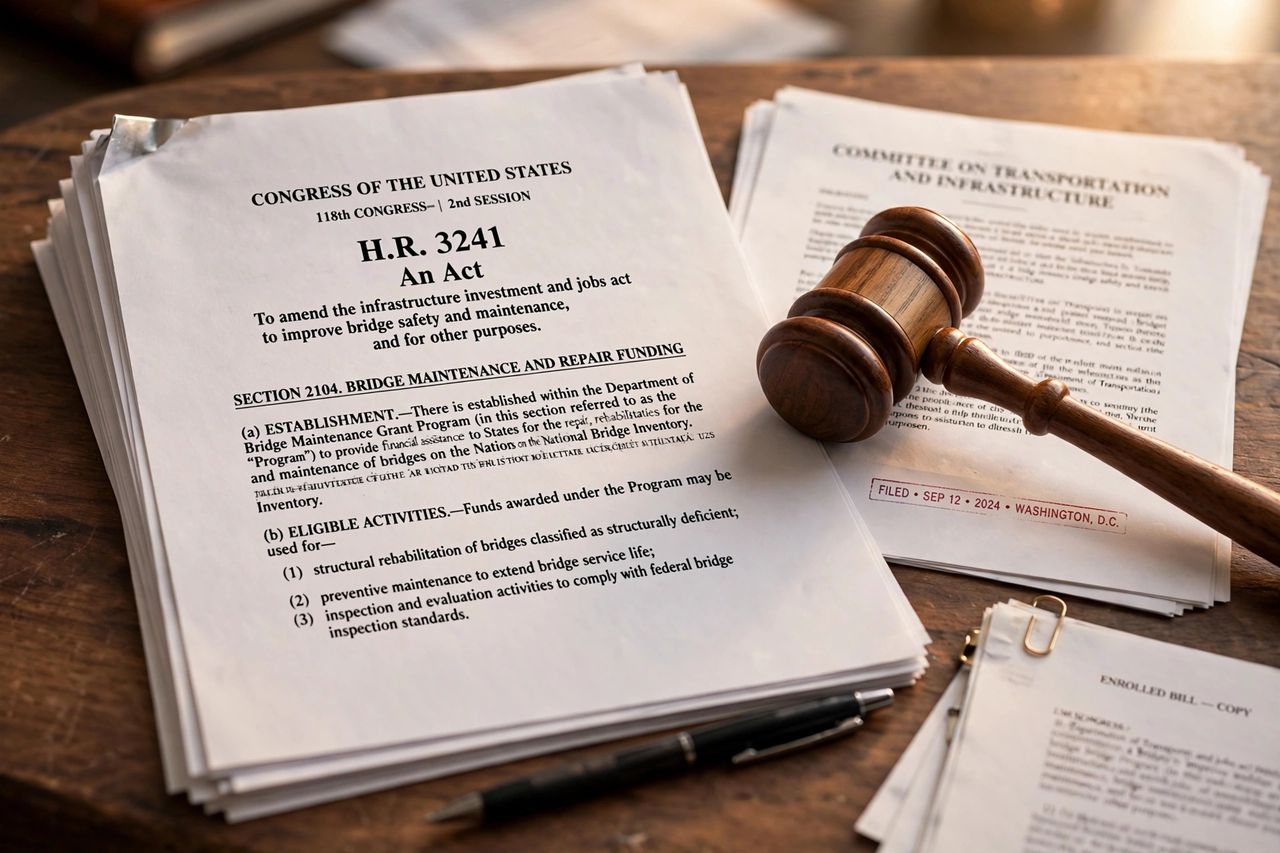
Here is the sobering statistic-shaped truth of the legislative process: in a typical two-year Congress, members introduce well over ten thousand bills, and only a few hundred become law. The system is designed as a gauntlet, not a conveyor belt. Understanding why most bills die makes the survivors more impressive.
Committee burial. The single biggest killer. Committee chairs have enormous discretion over what gets a hearing, and most bills never get one. A bill without a powerful champion or an urgent constituency simply expires when the session ends.
Competing priorities. Floor time is Congress’s scarcest resource. Leadership schedules only the bills that matter most to the majority’s agenda; everything else waits indefinitely.
The Senate’s supermajority hurdle. Most Senate legislation effectively needs sixty votes to overcome a filibuster — a threshold that kills bills with mere majority support.
Presidential opposition. Even bills that survive Congress die with a veto unless supporters can muster the rare two-thirds override.
This winnowing is intentional. The framers feared impulsive lawmaking more than gridlock, so they built a system where stopping a bill is easy and passing one is hard.
State Legislatures: The Same Play, Smaller Stage
Everything described here concerns federal law. But most laws that touch your daily life — speed limits, school funding, property taxes, professional licensing — are state laws, made by state legislatures following the same basic script: introduction, committee, floor votes in two chambers (Nebraska has only one), and the governor’s signature or veto. The timelines are often faster and the politics more accessible — a state representative might genuinely read your email. If you want to see how a bill becomes a law up close, your state capitol is the best classroom.
Landmark Laws and Their Long Roads
History’s most celebrated statutes usually traveled the full gauntlet for years. Civil rights legislation was introduced, debated, filibustered, and reintroduced across multiple Congresses before finally passing. Major healthcare, environmental, and tax reforms each spent months in committee markup and conference negotiation. The pattern is consistent: landmark laws are rarely sudden. They are the survivors of long campaigns — revised, compromised, nearly killed, and revived — which is why studying any famous law’s legislative history reads like a drama in several acts.
After the Signature: What Happens Next
Becoming law is not the end of the story. Most statutes require implementation: executive agencies write detailed regulations interpreting the law, a process that can take years and generate its own controversies. Courts then interpret both the statute and the regulations in real cases. And future Congresses amend, extend, or repeal. A law is less a finished monument than a living document — signed on one day, argued about for decades.
Key Terms to Know
A few pieces of vocabulary will make following legislation much easier. A rider is an unrelated provision attached to a bill, often to a must-pass one. A filibuster is extended Senate debate used to delay or block a vote, endable only by a sixty-vote cloture motion. Cloture is that vote itself. A quorum is the minimum number of members required to conduct business. And an enrolled bill is the final, certified text sent to the president. Learn these five terms and congressional news coverage becomes dramatically more legible.
Frequently Asked Questions
Can an ordinary citizen write a bill?
Anyone can draft the idea behind a bill, and advocacy groups do it routinely — but only a member of Congress can formally introduce it. Citizens influence the process by persuading their representatives to sponsor legislation.
What is the difference between a bill and a law?
A bill is a proposal under consideration. A law (or statute) is what a bill becomes after passing both chambers of Congress and being signed by the president — or passed over a veto. Every law was once a bill; most bills never become laws.
What is a pocket veto?
When the president takes no action on a bill for ten days and Congress has adjourned in the meantime, the bill dies without a formal veto. Because Congress is not in session to override it, a pocket veto is final.
How many votes does it take to override a veto?
Two-thirds of the members voting in both the House and the Senate. That supermajority requirement is why veto overrides are uncommon — they demand broad bipartisan agreement.
Can the president make laws without Congress?
Not statutes. The president can issue executive orders, which direct the executive branch and carry the force of law in many areas, but they can be reversed by the next president and struck down by courts. Only Congress can pass actual legislation.
What happens to bills that do not pass before Congress adjourns?
They die. When a two-year congressional session ends, all pending bills are cleared from the books. Supporters must reintroduce them from scratch in the next Congress.
The process is deliberately slow — the framers designed it that way, so that laws emerge from deliberation rather than impulse. Slow, but when it works, remarkably thorough.