What Is Arbitration? How It Works and When to Use It

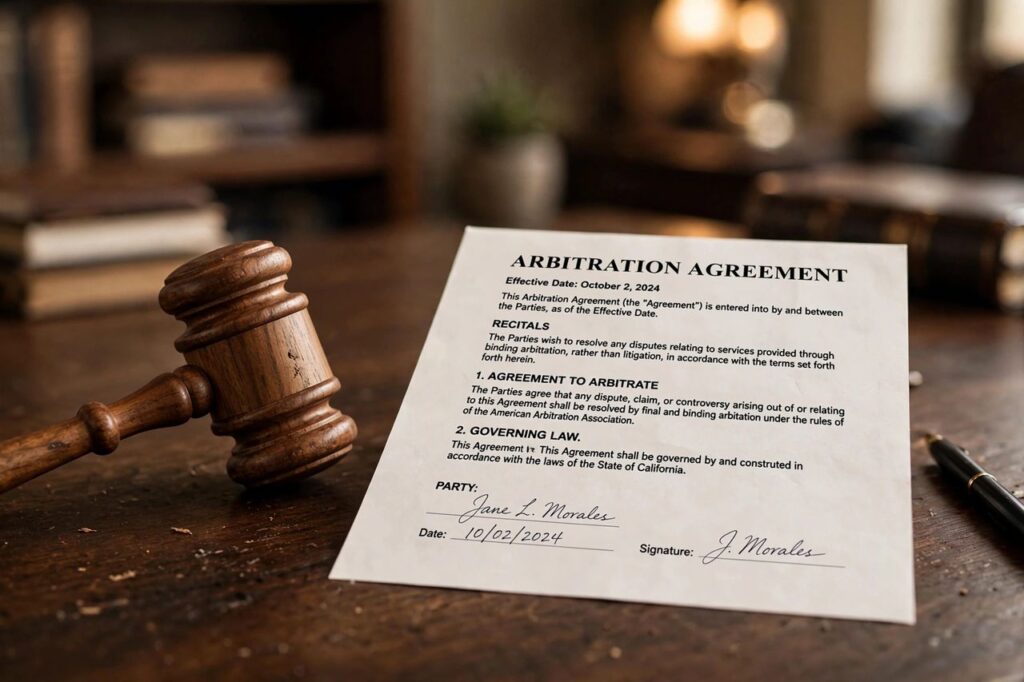
If you have ever wondered what is arbitration and why it keeps appearing in the contracts you sign, here is the plain-English answer: most legal disputes never see the inside of a courtroom. Instead, they get resolved around a conference table, in front of a single decision-maker, in a process called arbitration — and if you have ever signed an employment contract, a credit card agreement, or clicked “agree” on a software license, you have probably already consented to it.
What Is Arbitration? The Simple Definition
Arbitration is a private method of resolving disputes outside of court. The two sides agree (or have previously agreed in a contract) to submit their disagreement to one or more neutral third parties called arbitrators, who listen to both sides and then issue a decision known as an award. That award resolves the dispute much like a judge’s ruling would, but the process is faster, more informal, and usually confidential.
Think of it as a halfway point between negotiating a settlement yourselves and going to trial. You still present evidence and make arguments, but there is no jury, no crowded courtroom gallery, and no judge appointed by the government — the decision-maker is someone the parties chose, typically a retired judge or an experienced attorney with expertise in the subject matter.
How Arbitration Works, Step by Step
While procedures vary, most arbitrations follow a familiar rhythm:
1. The dispute triggers the clause. One party sends a written demand for arbitration, invoking the arbitration clause in their contract or a separate agreement to arbitrate made after the dispute arose.
2. An arbitrator is selected. The parties either agree on one together or each picks one and those two choose a third. Organizations like the American Arbitration Association and JAMS maintain rosters of qualified neutrals and provide selection procedures.
3. A preliminary hearing sets the ground rules. The arbitrator holds a short scheduling conference to decide the exchange of documents, whether witnesses will be heard, and the date of the main hearing.
4. Discovery is limited. Unlike litigation, where months of depositions and document requests are normal, arbitration typically involves a narrower exchange of relevant documents. This is one of the biggest reasons it is faster and cheaper.
5. The hearing. Each side presents its case — opening statements, evidence, witness testimony, cross-examination — but in a conference room rather than a courtroom, and with looser rules of evidence.
6. The award. The arbitrator issues a written decision, usually within 30 days of the hearing. In most cases, that award is final.
Binding vs. Non-Binding Arbitration
Not all arbitration carries the same weight. In binding arbitration, the arbitrator’s decision is final and enforceable in court — the losing party generally cannot appeal just because they disagree with the outcome. Almost all contract-based arbitration in the United States is binding.
In non-binding arbitration, the award is more like an expert recommendation. Either side can reject it and proceed to court. Non-binding arbitration is sometimes used voluntarily to get a realistic preview of how a dispute might resolve, which often pushes the parties toward settlement.

Arbitration vs. Going to Court
The trade-offs between arbitration and traditional litigation are real, and neither is always better:
Speed. Court cases can drag on for years; arbitration often concludes in months. There is no waiting for a slot on an overcrowded court calendar.
Cost. Limited discovery and shorter proceedings usually mean lower total costs, though arbitrators’ hourly fees can be substantial — the parties split them.
Privacy. Court filings are public records. Arbitration proceedings and awards are generally confidential, which is why companies favor them for sensitive disputes.
Expertise. You can choose an arbitrator who actually understands construction, finance, or technology — something a randomly assigned judge may not.
Finality. This cuts both ways. Courts review arbitration awards only on narrow grounds, such as fraud or the arbitrator exceeding their authority. If the arbitrator simply gets the law wrong, you are usually stuck with it.
Where You Will Encounter Arbitration Clauses
Arbitration clauses show up in far more places than most people realize: employment contracts, consumer credit agreements, nursing home admissions, car purchases, cell phone plans, and software terms of service. These mandatory or pre-dispute arbitration clauses mean you agree to arbitrate future disputes before any disagreement exists — usually as a take-it-or-leave-it term.
Critics argue these clauses favor the companies that write them, since the company picks the arbitration provider and repeats the process often. Supporters say they keep small disputes affordable to resolve and keep courts from being overwhelmed. Either way, it pays to notice the clause before you sign.
Arbitration vs. Mediation
People frequently confuse the two, but the difference is fundamental. In mediation, a neutral mediator helps the parties negotiate their own settlement — the mediator has no power to impose a decision. In arbitration, the arbitrator decides the case. Mediation is a facilitated conversation; arbitration is a private trial.
Can You Appeal an Arbitration Award?
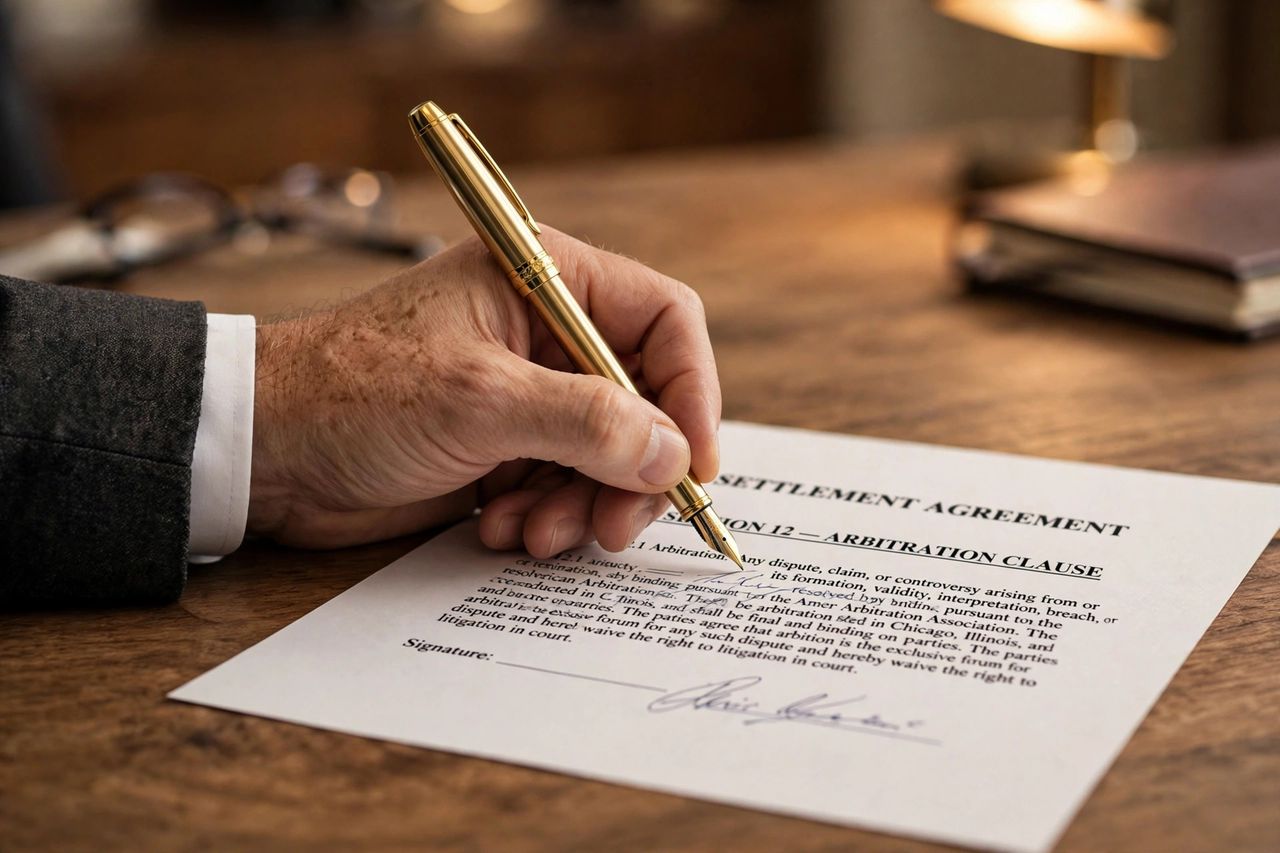
Generally, no — and that is by design. Courts can vacate an arbitration award only in limited circumstances, such as corruption, fraud, evident partiality of the arbitrator, or the arbitrator deciding issues never submitted to them. Disagreeing with the arbitrator’s interpretation of the facts or the law is not enough. This finality is a feature for people who want closure, and a risk for anyone who fears getting it wrong.
Should You Agree to Arbitration?
For businesses and sophisticated parties, arbitration often makes practical sense: faster resolution, subject-matter experts, and confidentiality. For consumers and employees, the answer depends on the fairness of the specific clause — a fair process with a neutral arbitrator can be genuinely better than small-claims court, while a one-sided clause with a company-chosen arbitrator deserves a second look. When the stakes are high, having a lawyer review the clause before you sign is money well spent.

What Is Arbitration Used For? The Common Types
Arbitration is not one-size-fits-all. Different disputes use recognizably different flavors of the process:
Commercial arbitration. Business-to-business disputes over contracts, partnerships, and supply chains. These are the heavyweight cases — often with three-arbitrator panels and detailed written awards.
Consumer arbitration. Disputes between customers and companies, governed by the arbitration clause buried in the terms of service. Providers publish special consumer rules designed to keep these accessible, including caps on consumer fees.
Employment arbitration. Workplace disputes — wrongful termination, discrimination claims, wage issues — routed to arbitration by employment agreements. This category generates the most public controversy, since employees rarely negotiate the clause.
Construction arbitration. A longtime stronghold of arbitration, because building disputes turn on technical questions (delays, defects, change orders) that benefit enormously from an arbitrator who actually understands construction.
International arbitration. Cross-border commercial disputes, often administered under rules from bodies like the ICC or LCIA, with awards enforceable across countries under the New York Convention — a treaty with over 170 signatories.
The Arbitration Hearing: What to Expect on the Day
For all its informality relative to court, an arbitration hearing is still a serious proceeding. Each side typically opens with a brief statement of its case, then presents documents and witness testimony — including cross-examination by the other side. The arbitrator may ask questions directly, something judges do less often. Rules of evidence are relaxed: hearsay that a court might exclude can come in, with the arbitrator deciding what weight to give it.
Hearings usually run one to five days for typical cases. Witnesses testify under oath. A court reporter is often present, creating a transcript. And unlike a trial, there is no audience — just the parties, their lawyers, the arbitrator, and the reporter. Many participants find the setting less intimidating than a courtroom, which can actually improve the quality of testimony.
How Arbitration Awards Are Enforced
An award is not self-executing — if the losing party pays voluntarily, the matter ends there, and most do. If not, the winner petitions a court to confirm the award, converting it into a court judgment enforceable through liens, garnishment, and asset seizure. Courts confirm the overwhelming majority of awards; challenges succeed only on the narrow statutory grounds like fraud or arbitrator misconduct. Internationally, the New York Convention makes arbitration awards enforceable across borders more reliably than court judgments — one reason global businesses prefer arbitration for cross-border deals.
The Debate Over Mandatory Arbitration
No honest explainer can skip the controversy. Critics argue that pre-dispute mandatory clauses — especially in employment and consumer contracts — create a “repeat player” problem: companies that arbitrate constantly may benefit from arbitrators who want future appointments, while one-time individual claimants navigate the system once. Studies of outcomes have fueled this debate for years. Defenders counter that arbitration gives ordinary people a realistic forum for small claims that no lawyer would take to court, and that class-action waivers aside, the alternative for many disputes is not a jury trial but no remedy at all. Wherever you land, the practical advice is the same: read the clause before the dispute, not after.
Frequently Asked Questions
Is arbitration legally binding?
Most arbitration is binding, meaning the arbitrator’s award is final and enforceable in court like a judgment. Non-binding arbitration exists too, but it is far less common — usually only when the parties voluntarily agree to it after a dispute arises.
Can you refuse to go to arbitration?
If you signed a valid arbitration agreement, a court will generally enforce it and send you to arbitration. You can challenge the clause itself — for example, if it was hidden, unconscionable, or signed under duress — but courts uphold most of them.
How long does arbitration take?
A straightforward arbitration can conclude in three to six months from demand to award. Complex commercial cases can take a year or more, but that is still typically faster than the same dispute would take in court.
Who pays for arbitration?
The parties usually split the arbitrator’s fees and the administrative costs of the arbitration provider. Each side pays its own lawyers. Some consumer clauses require the company to cover most of the costs.
Do you need a lawyer for arbitration?
You are not required to have one, but for anything beyond a small claim, legal representation is strongly advisable. The other side will almost certainly have counsel, and the procedures — while simpler than court — still reward preparation.
What happens if someone ignores an arbitration award?
The winning party can take the award to court and have it confirmed as a judgment, which can then be enforced through wage garnishment, liens, and other collection tools, just like any court judgment.
Arbitration is neither a magic shortcut nor a trap — it is simply a different forum for resolving conflict, with its own rules, costs, and consequences. The key is knowing which one you signed up for before the dispute begins.