The Best Way to Reheat Fried Chicken (Crispy, Never Soggy)

Day-old fried chicken is a tragedy of physics: the crust that was shatteringly crisp last night has gone soft and sad, because moisture from the meat migrates outward into the coating as it sits. Most people accept this as the price of leftovers, or worse, they microwave it and produce something rubbery enough to bounce. But the best way to reheat fried chicken is not a secret — it is just thermodynamics applied with a little patience. I have tested every method side by side, and the ranking is clear. Here is how to get yesterday’s chicken crackling again.
Why the Microwave Is the Enemy
Let us get this out of the way first. A microwave heats by exciting water molecules, which means it pumps steam directly into the crust from the inside out. The coating — which needs dry heat to stay crisp — turns gummy and chewy, and the meat goes rubbery from overheating. Microwaved fried chicken is edible the way a wet newspaper is readable: technically true, spiritually wrong. If the microwave is your only option, use it at reduced power just to take the chill off, then finish in a hot dry skillet — but know you are compromising.
Method 1: The Oven (Best Overall)
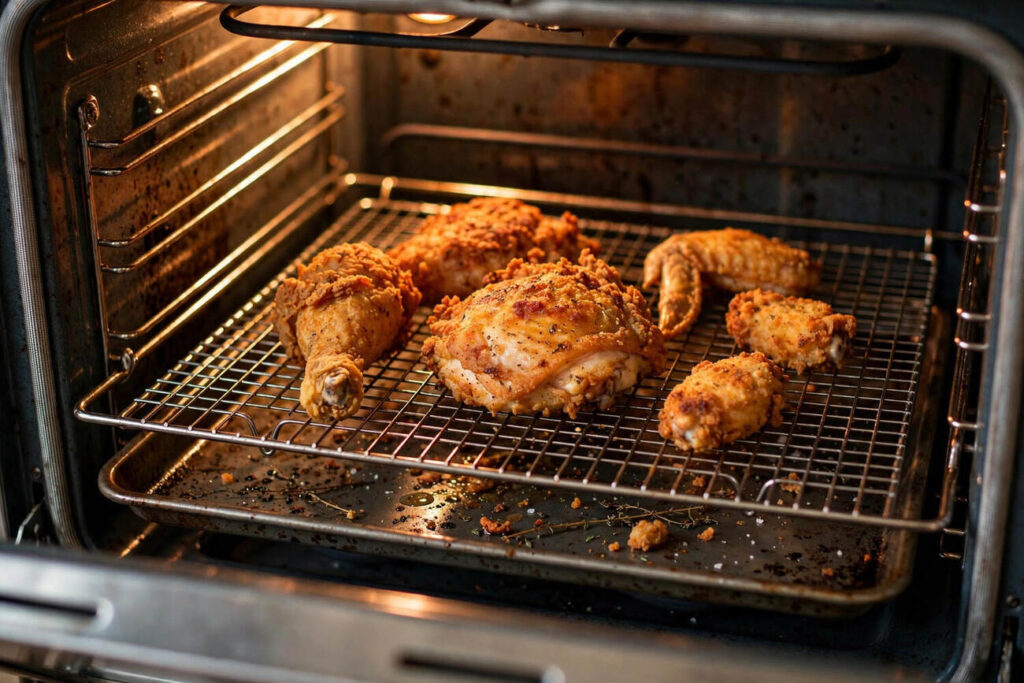
The oven wins because it surrounds the chicken with even, dry heat and gives you room to elevate the pieces so hot air circulates underneath. Here is the exact method. Take the chicken out of the refrigerator 20 to 30 minutes before reheating — cold chicken in a hot oven steams before it crisps, and room-temperature chicken reheats more evenly.
Preheat to 400°F (200°C). Set a wire rack inside a rimmed baking sheet and arrange the chicken pieces on the rack with space between them — crowding traps steam, and steam is the enemy. If you do not have a wire rack, crumple foil into loose ropes and rest the chicken on them; anything that lifts the pieces off the pan helps. Heat for 15 to 20 minutes for bone-in pieces, 10 to 15 for boneless, flipping once halfway. The chicken is done when the coating looks dry and crisp again and the internal temperature hits 165°F. Let it rest two minutes — the crust sets as it cools slightly, the same way it did when it was first fried.
Method 2: The Air Fryer (Fastest Good Result)
The air fryer is essentially a small, violent convection oven, and it is superb at this job. Preheat to 375°F for three minutes — a hot basket matters. Arrange pieces in a single layer without touching, and cook bone-in pieces for about 8 minutes, boneless for 5 to 6, flipping halfway. The circulating air re-crisps the coating beautifully, arguably even better than the oven for small batches, and it is faster.
The limitation is capacity: cramming pieces together defeats the airflow that makes the method work. For more than a few pieces, the oven wins on practicality. But for two drumsticks at lunch? The air fryer is unbeatable.
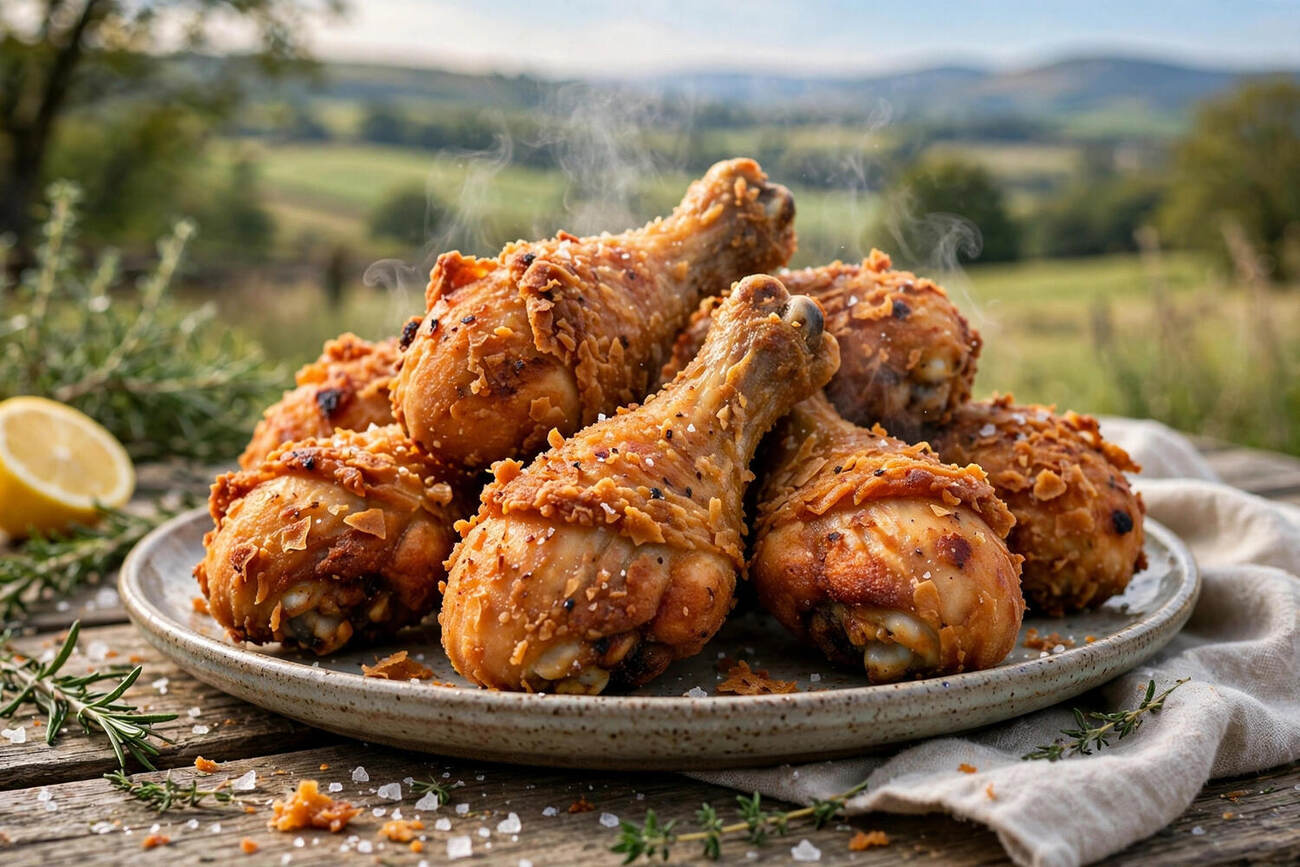
Method 3: The Skillet (Best Crust, Most Attention)
A cast iron or heavy skillet over medium heat with a thin film of oil gives you the crispiest crust of any method — direct conductive heat re-fries the coating’s exterior. Heat the skillet, add just enough oil to film the bottom, and place the chicken in without crowding. Cook three to four minutes per side, turning, until the coating is deeply crisp and the center is hot.
The tradeoff is attention and evenness: the parts touching the pan get very crisp while the tops rely on ambient heat, and bone-in pieces need lower heat and longer time so the center warms through without burning the crust. For boneless pieces and tenders, though, the skillet is magnificent — nearly indistinguishable from fresh.
The Ranking, Honestly
For pure crispness on bone-in chicken, the oven edges out the air fryer on evenness, the air fryer wins on speed, and the skillet wins on crust intensity for boneless pieces. All three are legitimate; the microwave is not in the ranking. What matters more than the method is the setup: room-temperature chicken going in, pieces elevated or spaced for airflow, and heat that is dry rather than steamy. Get those right and any of the three methods delivers.
Storing Fried Chicken So It Reheats Well
Reheating starts at storage. Cool leftover chicken completely before refrigerating — putting it away hot traps steam in the container and pre-soggifies the crust. Store uncovered or loosely covered for the first hour in the fridge if you can, then seal. Eat within three to four days. And whatever you do, do not wrap hot chicken tightly in foil and leave it on the counter for hours; that is a food safety problem before it is a texture problem. Two hours at room temperature is the limit — after that, refrigerate.
What About the Sides?
Cold fried chicken has its devotees — picnic chicken eaten cold, straight from the fridge, is a legitimate pleasure, especially in summer. But if you are reheating, do the sides justice too. Biscuits revive in a 350°F oven for five minutes wrapped in foil. Mashed potatoes reheat best with a splash of milk stirred in over low heat. Coleslaw, of course, is served cold and smug about it. A reheated meal where everything is at its best temperature feels like cooking, not leftovers.
The Best Way to Reheat Fried Chicken in an Air Fryer, Step by Step
Since the air fryer is what most people actually own now, here is the detailed version. Preheat the air fryer to 375°F for a full three minutes — a cold basket steams the crust before the hot air can crisp it. While it heats, let the chicken sit out for fifteen to twenty minutes; fridge-cold chicken is the number one cause of “the outside burned before the inside warmed.” Pat the pieces very lightly with a paper towel if there is surface moisture — dry crust crisps, damp crust steams.
Arrange in a single layer with space between pieces; cook in batches rather than stacking. Bone-in thighs and drumsticks: eight to ten minutes, flipping at the halfway mark. Boneless tenders and nuggets: five to six minutes. Wings: six to eight. The coating should look dry and audibly crisp — tap it with a tong and listen. If your air fryer runs hot (many do), drop to 360°F and add a minute. Every model has its own personality; the first batch is always a calibration run.
Reheating Fried Chicken Sandwiches and Tenders
Assembled sandwiches need disassembly — there is no way around it. Pull the chicken out of the bun, reheat the chicken by your preferred method, and warm the bun separately: thirty seconds in a dry skillet, cut side down, gives you a toasted surface that holds up to sauce. Reassemble with fresh cold toppings. A rebuilt sandwich eats like it was just made, because the chicken effectively was.
Tenders and nuggets, being all surface area, re-crisp faster than any other cut — five minutes in the air fryer and they are often better than fresh, because the coating has had time to set. Popcorn chicken goes in a single layer in a hot skillet with the tiniest film of oil, tossed frequently for three to four minutes. The small pieces go from soggy to shattering fast, so watch them; the line between crisp and burnt is thin at that size.
Food Safety: The Non-Negotiables
Reheated chicken must reach 165°F internally — no exceptions, no “it feels hot.” A fifteen-dollar instant-read thermometer removes all guesswork and is the single most useful tool in any kitchen. Refrigerate leftovers within two hours of cooking; the danger zone between 40°F and 140°F is where bacteria multiply, and fried chicken sitting on the counter all evening is not a tomorrow-lunch plan, it is a gamble.
Reheat only what you will eat. Every cool-reheat cycle degrades texture and spends some of your safety margin, so portion before storing: tonight’s dinner in one container, tomorrow’s lunch in another. And the microwave, used at full power on a dense thigh, heats the outside while the center lingers in the danger zone — another reason the oven and air fryer win. Crispy chicken is the goal; safe chicken is the requirement.
The 30-Second Recap
Oven at 400°F on a wire rack, 15 to 20 minutes, flip once — best overall. Air fryer at 375°F, 5 to 10 minutes depending on cut — fastest. Hot skillet with a film of oil — crispiest crust on boneless pieces. Room-temperature chicken going in, space between pieces, 165°F internal coming out. Microwave only in emergencies. Store cooled leftovers sealed, eat within four days, reheat only what you will eat. That is the entire playbook on one mental index card.
Frequently Asked Questions
What is the best way to reheat fried chicken?
The oven at 400°F on a wire rack for 15 to 20 minutes gives the most even, crispy result. The air fryer at 375°F is faster for small batches; a hot skillet gives the crispiest crust on boneless pieces.
How long do you reheat fried chicken in the oven?
Bone-in pieces need 15 to 20 minutes at 400°F; boneless pieces need 10 to 15. Flip once halfway and check that the internal temperature reaches 165°F.
Can you reheat fried chicken in the microwave?
You can, but you shouldn’t expect crispness — microwaves steam the coating soft and make the meat rubbery. If you must, use reduced power briefly, then crisp in a hot skillet.
Should fried chicken be room temperature before reheating?
Yes — 20 to 30 minutes on the counter before reheating helps it warm evenly without steaming the crust. Don’t leave it out longer than two hours total.
How do you keep reheated fried chicken crispy?
Elevate pieces on a wire rack so hot air circulates underneath, don’t crowd them, use dry heat (oven, air fryer, or skillet), and rest two minutes after reheating so the crust sets.
How long does leftover fried chicken last?
Three to four days refrigerated in a sealed container. Cool it completely before refrigerating, and reheat to 165°F internal temperature.