How to Stop a Squeaky Door Hinge: The Fix That Actually Lasts

If you’ve been living with that nails-on-chalkboard creak every time someone opens the bathroom door, learning how to stop a squeaky door hinge is one of the most satisfying little repairs you can knock out in a single afternoon. I’ve fixed hundreds of these over the years — in my own house, in rentals, on job sites — and I can tell you the truth most people won’t: spraying something at it while the door is closed almost never lasts. The real fix takes about ten minutes, one or two tools you already own, and a lubricant that won’t turn into sticky goo by next month.
In this guide I’ll walk you through exactly how I do it: what makes hinges squeak in the first place, the quick method that works most of the time, and the deeper fix for the stubborn ones. No special parts to order, no trip to the hardware store unless you want one.
Why Door Hinges Squeak in the First Place
A hinge is just a pin sliding inside a barrel, but that tiny bit of metal-on-metal contact carries the full weight of the door every time it swings. Over the years, the original factory lubricant dries out or gets wiped away, dust works its way in, and a little rust forms on the pin. Then you get the squeak — friction vibrating the thin metal of the hinge leaves.
The other common culprit is a pin that’s slightly bent or has developed a rough spot from years of wear. That’s why a simple spray often only helps for a week or two: you’re quieting the symptom without fixing the metal. Knowing this matters, because the method I’m about to show you addresses both problems at once.
How to Stop a Squeaky Door Hinge in 10 Minutes
Here’s my go-to method. It has worked on nearly every squeaky hinge I’ve ever met, and it lasts for years instead of days.
Step 1: Close the door and knock out the hinge pin
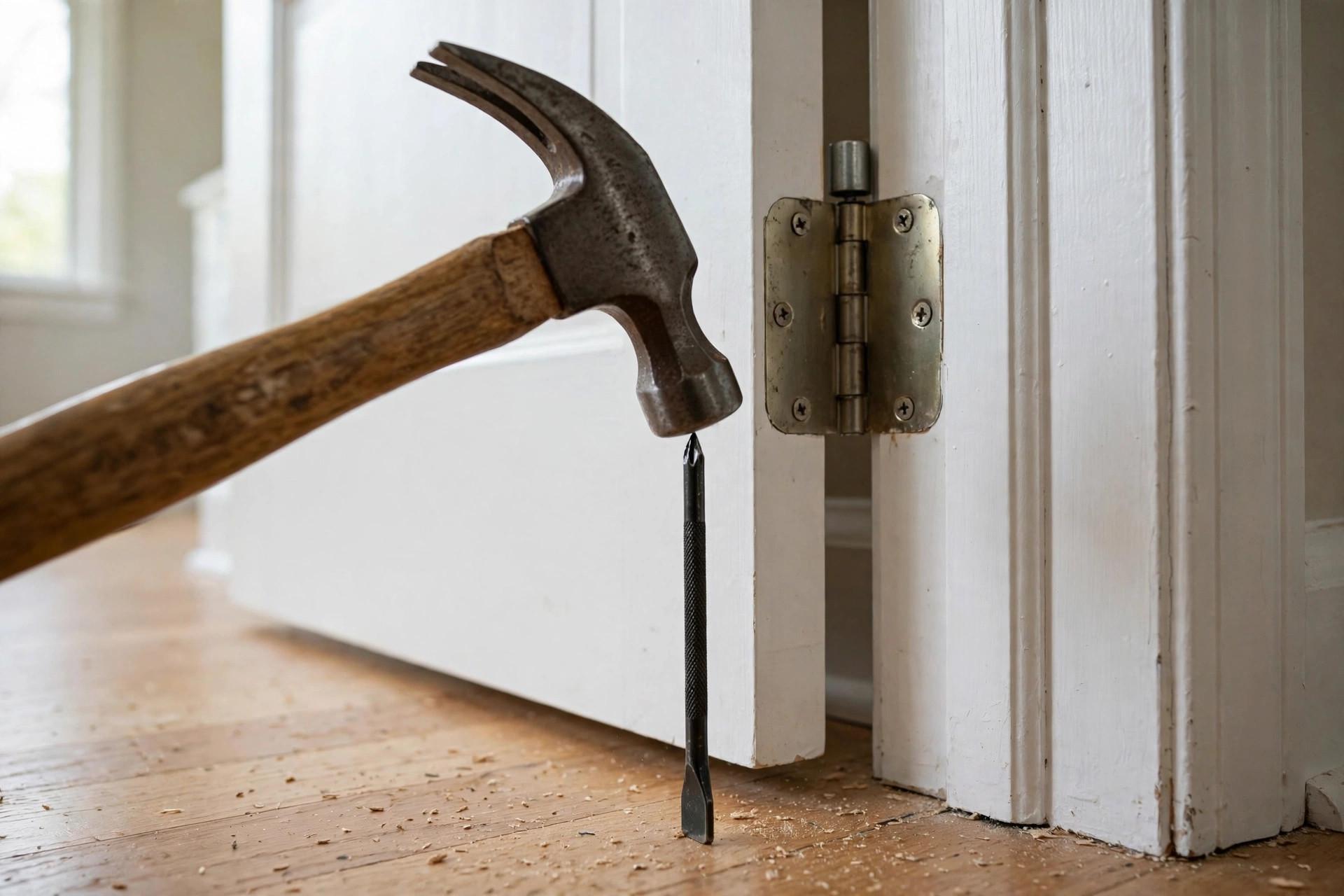
Close the door so the weight sits on the hinges. Put a nail set (or an old nail) under the bottom of the hinge pin — the little rod sticking out at the bottom of the barrel — and tap it upward with a hammer until it slides free. You don’t have to remove all the hinges; just do the one squeaking. If the pin is stubborn, a drop of penetrating oil around the top of the pin and a few minutes of patience usually frees it.
Step 2: Clean the pin and the barrel
Wipe the pin with a rag. You’ll usually see a dark film of old grease and dust — that’s your squeak. For a really crusty pin, rub it with fine steel wool or a bit of 220-grit sandpaper until it’s smooth and bright again. Then take a thin rag or pipe cleaner and twist it inside the hinge barrel to pull out the gunk. This part takes sixty seconds and it’s what most people skip.
Step 3: Apply the right lubricant
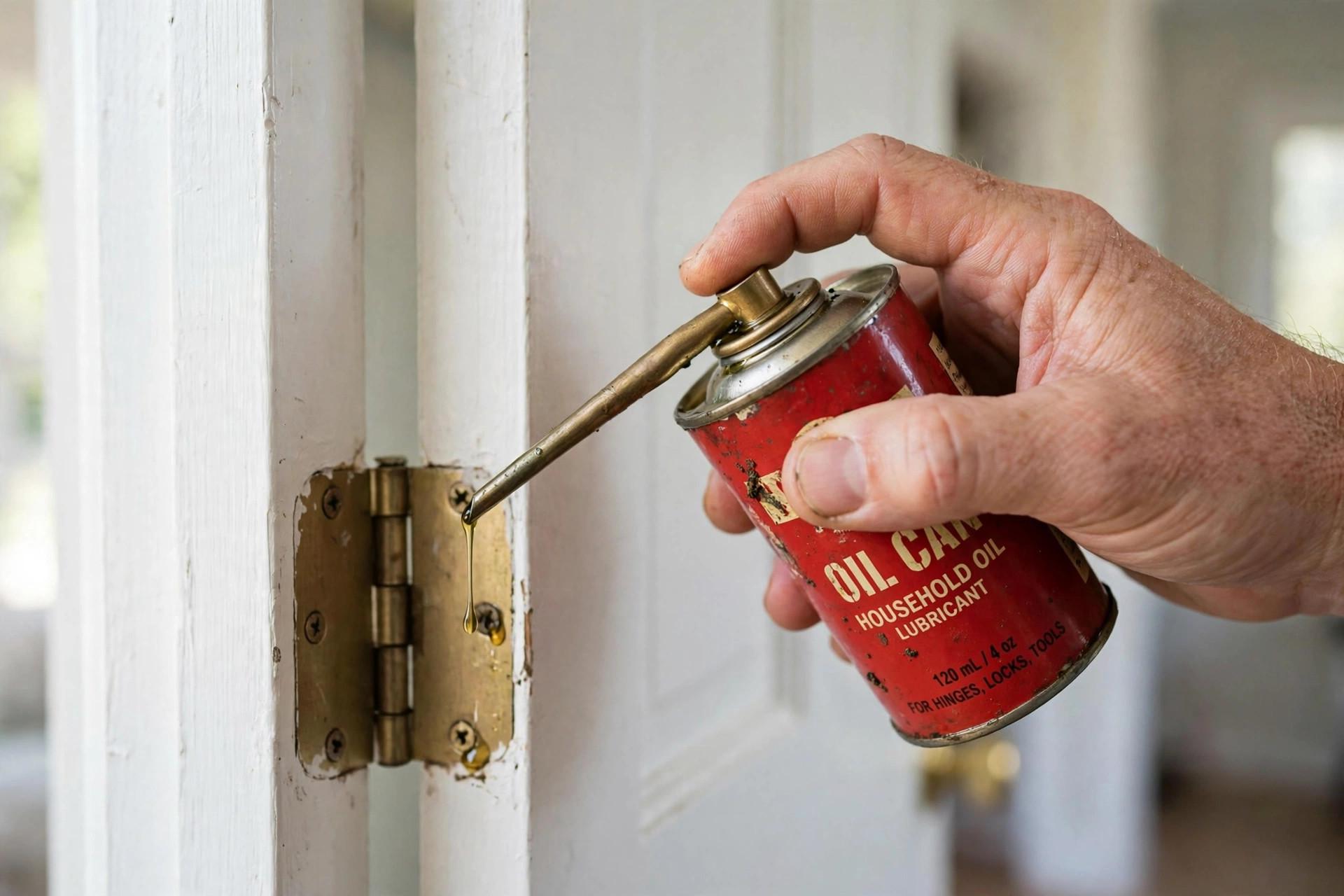
Now the important part: use the right stuff. White lithium grease is my first choice for hinges — it stays put, doesn’t run, and keeps things quiet for years. A silicone-based lubricant works well too, especially on exterior doors. Petroleum jelly in a pinch. What I don’t recommend for a lasting fix: standard WD-40. It’s a solvent and water displacer, not a long-term lubricant, and it will evaporate and leave you squeaking again.
Coat the pin lightly but completely, slide it back into the barrel, and work the door back and forth a few times to spread it around.
Step 4: Test and repeat on the other hinges
Swing the door slowly and listen. Nine times out of ten, silence. If there’s still a faint squeak, you may have a second hinge starting to go — repeat the process on it. And wipe off any excess lubricant from the barrel with a rag so it doesn’t drip on the trim.
The Stubborn Ones: When the Basic Fix Isn’t Enough
Once in a while you’ll hit a hinge that still complains after cleaning and lubing. In my experience it comes down to one of three things.
- A bent pin. Roll the pin on a flat table — if it wobbles, it’s bent. You can straighten a mild bend by rolling it under a hard flat object, or just replace the pin. Loose pins from a big-box hardware store cost almost nothing and come in standard sizes.
- A worn-out hinge. If the barrel is visibly loose or the door sags, lubrication can’t save it. Replacing a residential hinge is a twenty-minute job with a screwdriver, and matching the size is the only thing that matters.
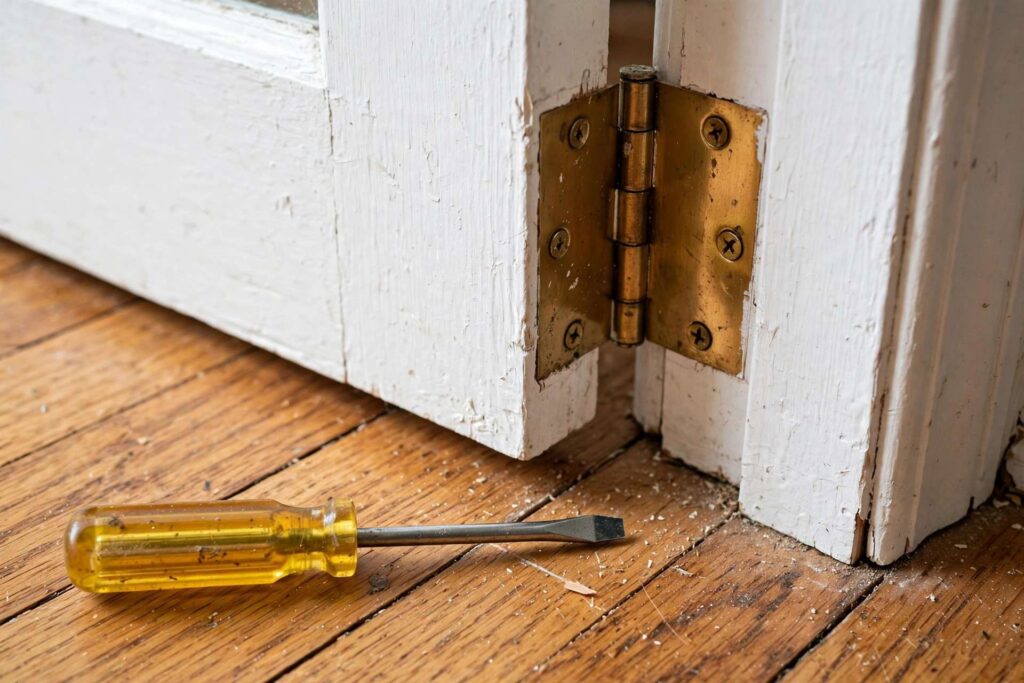
- Paint in the barrel. Someone painted over the hinge and the paint is now flaking inside the barrel. Scrape it out with an old screwdriver, clean, and lube. Problem solved.
Keeping Hinges Quiet for Years
Once you’ve done the real fix, maintenance is easy. Every year or two, when you’re doing other small jobs around the house, put a drop of silicone lubricant on the top of each hinge pin and work the door. That thirty seconds of prevention keeps you from ever hearing the squeak again.
On exterior doors, check a little more often — weather and humidity chew through lubricant faster, and a little surface rust on the barrel is your early warning sign. Catch it early with a quick clean and re-lube and you’ll never need a replacement.

Choosing a Lubricant: What Works and What’s Hype
Walk down the lubricant aisle and you’ll face a wall of cans all promising silence. Here’s my honest ranking from years of actually using this stuff on hinges.
- White lithium grease — my top pick. Thick, stays where you put it, doesn’t run in summer heat, and keeps hinges quiet for years. The spray can version with the little straw gets it right into the barrel. This is what I use on my own doors.
- Silicone spray — excellent runner-up. Clean, doesn’t attract dust the way petroleum products can, and safe on every finish. Slightly less long-lasting than lithium grease, but great for exterior doors where you reapply more often anyway.
- Dry graphite — good for locks, okay for hinges. It’s a dry powder, so it never gets gummy, but it’s messy to apply and doesn’t last as long in a hinge barrel that sees constant motion.
- Petroleum jelly — the decent pantry option. If you have nothing else, a dab on the pin works fine for a year or more. It’s just a little messier to apply neatly.
- WD-40 — the most misunderstood can in the house. It’s a water displacer and light solvent, not a lasting lubricant. It will absolutely silence a hinge today, and the squeak will be back within weeks because the product evaporates. Use it to free a stuck pin, then follow with real lubricant.
- Cooking oils — just don’t. Olive oil, coconut oil, vegetable oil: they oxidize and turn gummy and rancid over time. You’ll trade a squeak for a sticky, smelly hinge.
The pattern is simple: you want something designed to stay slippery for a long time, not something designed to penetrate or cook with. When in doubt, white lithium grease.
When the Squeak Isn’t Coming From the Hinge
Every so often I get called about a “squeaky hinge” that turns out to be something else entirely. Before you pull pins, make sure the hinge is actually guilty.
- The door edge rubbing the frame. A door that’s shifted slightly can drag against the jamb as it swings, making a creak that sounds exactly like a hinge. Look for a shiny worn spot or paint rubbed off along the door edge or frame.
- Weatherstripping drag. On exterior doors, dry or swollen weatherstripping can squeak against the door face. A thin wipe of silicone lubricant on the stripping itself fixes it.
- Loose hinge screws creaking in the wood. Sometimes the squeak is the whole hinge plate shifting microscopically against the door or frame as it swings. Tighten every screw on every hinge before you do anything else — this alone fixes a surprising number of “squeaky hinges.”
To isolate the culprit, open the door halfway and lift it gently by the knob while swinging it. If the sound changes or stops when you take the weight off, it’s the hinges. If it doesn’t, look at the door edge and the weatherstripping. Two minutes of diagnosis saves you from fixing the wrong thing.
FAQ: Squeaky Door Hinges
Can I fix a squeaky hinge without removing the pin?
You can, and sometimes it’s enough: drip a silicone lubricant down into the top of the barrel while slowly working the door back and forth. It’ll quiet things down for a while. But because you can’t clean out the old gunk, it won’t last as long as pulling the pin and doing it properly.
Is olive oil or cooking oil okay for hinges?
It’ll stop the squeak today, but I don’t recommend it. Cooking oils go rancid and gummy over time, and then you’re dealing with a sticky hinge instead of a squeaky one. Use white lithium grease, silicone lubricant, or even petroleum jelly instead.
Why did my hinge start squeaking right after I painted?
Paint almost certainly got into the barrel or between the pin and the knuckles. The fix is the same: pull the pin, clean everything out, lube it, and put it back. Next time, pop the pins out and mask the hinges before you paint.
The squeak is coming from a door that barely gets used. Why?
Ironically, unused doors squeak more. A door that swings every day keeps its thin film of lubricant spread around. A door that sits still for months lets that film dry out and lets corrosion start. The ten-minute fix works exactly the same.
Should I replace the hinge or just the pin?
Just the pin if the hinge itself is solid and the door hangs straight. If the hinge leaves are loose, the screw holes are stripped, or the barrel is sloppy, replace the whole hinge — it’s cheap and you’ll spend less time than fiddling with a worn-out one.