How to Write a Haiku Poem: Rules, Examples, and First Tries


Seventeen syllables. Three lines. No title needed. Of all the poems in the world, the haiku might be the most inviting — and the most deceptive. Learning how to write a haiku poem takes about five minutes; learning to write a good one takes considerably longer, and that’s exactly the pleasure of it. The form is small enough that anyone can try, and strict enough that every word has to earn its place.
In this guide, I’ll walk you through the traditional rules (and which ones modern poets happily bend), the two images that make a haiku work, and a simple five-step process to write your first one today. Grab a notebook. This is more fun than it looks.
How to Write a Haiku Poem: The Traditional Rules
The classic haiku comes from Japan, where poets like Bashō refined it centuries ago. The traditional form has three ingredients:
- Three lines of 5-7-5 syllables. Five syllables in the first line, seven in the second, five in the third. Seventeen total.
- A seasonal reference (kigo). Traditional haiku anchors itself in a season — cherry blossoms for spring, cicadas for summer, the harvest moon for autumn, snow for winter. It roots the poem in the real, turning world.
- A “cut” (kireji). Somewhere in the poem, there’s a turn — a juxtaposition between two images. The first two lines set up one image, the third line cuts to another, and the spark jumps between them.
Here’s Bashō’s most famous haiku, in translation:
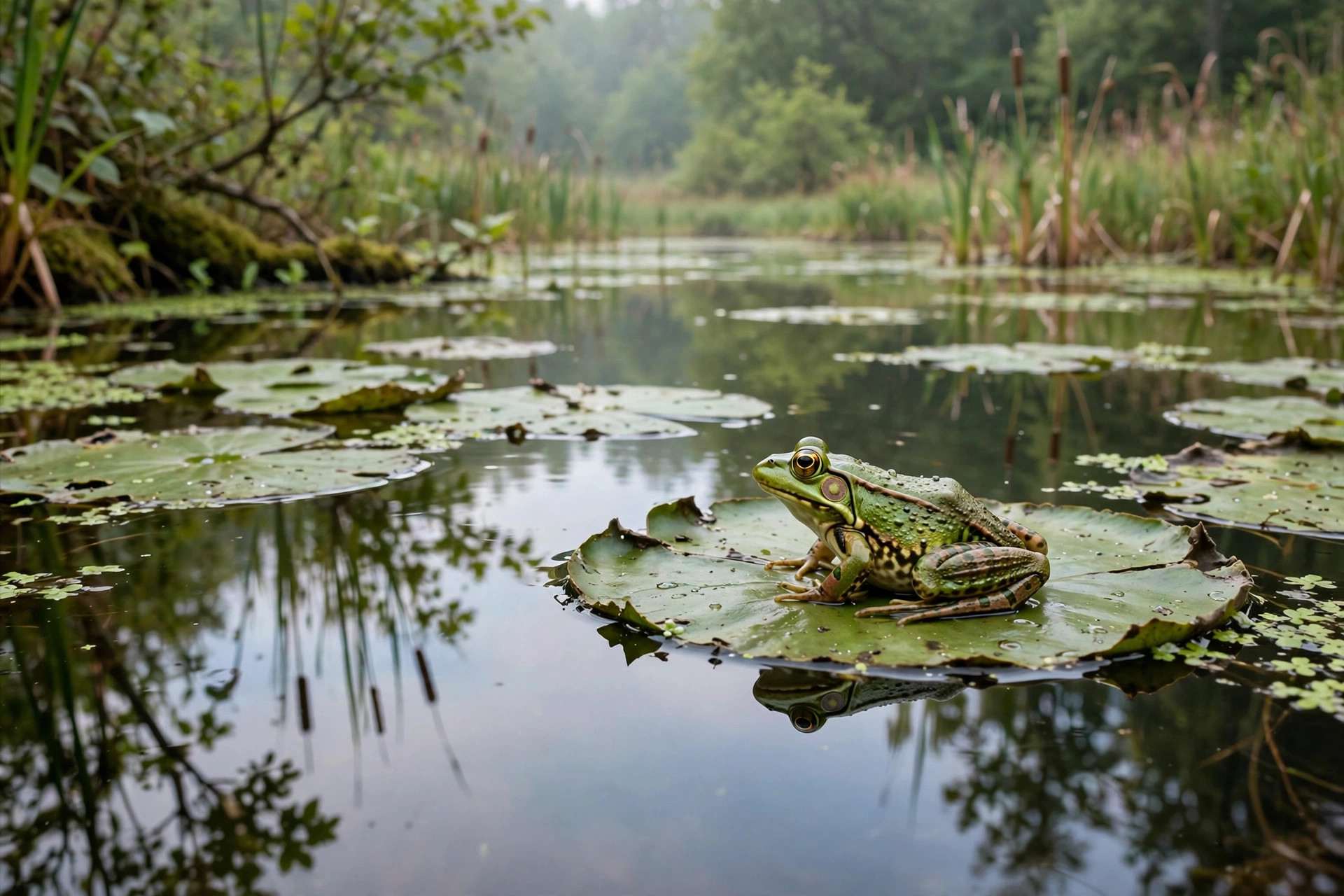
An old silent pond…
A frog jumps into the pond —
splash! Silence again.
Count it: the stillness, the sudden frog, the return to stillness. Two images, one cut, and a whole world in seventeen syllables.
The 5-7-5 Rule: Strict or Flexible?
Here’s something the textbooks sometimes skip: the 5-7-5 count works beautifully in Japanese, where syllables (technically “sound units”) are short and uniform. In English, our syllables are lumpy — some are long, some are short — so a strict 5-7-5 in English often feels padded or stiff.
Many contemporary English-language haiku poets aim for something shorter — often around 10 to 14 syllables total — while keeping the three-line shape and the two-image structure. My advice for beginners: start with 5-7-5 because the constraint forces you to choose words carefully, which is the whole lesson. Once you’ve written a dozen, you’ll feel when the form wants to breathe a little.

The Two Images: Where the Magic Happens
If you take one thing from this guide, take this: a haiku is not a tiny description of one thing. It’s two images placed side by side, with the meaning living in the gap between them. One image is usually wide or timeless (the sky, the season, the landscape); the other is small and specific (a frog, a dropped leaf, a kettle’s whistle).
The “cut” between them can be marked with a dash, an ellipsis, or just a line break. You don’t explain the connection — you trust the reader to feel it. That’s what makes haiku feel so much bigger than its word count: the poem is finished in the reader’s mind.
Write Your First Haiku in 5 Steps
Step 1: Pick a real moment
Don’t start with an idea — start with something you actually saw. The steam off your morning coffee. Rain starting on a hot sidewalk. A cat watching birds from the windowsill. Haiku is a poetry of attention, and it works best on moments you’ve genuinely noticed.
Step 2: Find your two images
Take your moment and find its partner. If your small image is the cat at the window, your wide image might be the gray October sky. If it’s the coffee steam, the partner might be the cold kitchen around it. Write both down plainly, no poetry yet.
Step 3: Draft three lines
Put one image in the first two lines and the second image in the third — or the reverse. Aim for 5-7-5 as training wheels. Don’t worry about beauty yet; get the images down.
Step 4: Cut every word that isn’t working
Now the real work. Remove adjectives that don’t change the picture. Replace vague words with specific ones — not “bird” but “sparrow,” not “flower” but “dandelion.” Read it aloud. If a syllable feels stuffed in just to hit the count, find a better line.
Step 5: Let it sit, then read it cold
Come back in an hour. Read it as if someone else wrote it. Does the cut land? Do the two images spark? If yes, you’ve written a haiku. If not, you still did the exercise — and the next one will be easier. Haiku is a practice, not a performance.
Common Beginner Mistakes
- Rhyming. Haiku doesn’t rhyme, and forcing a rhyme usually wrecks the imagery. Let the images do the work.
- Explaining the feeling. “I felt so peaceful” tells; “evening — / the heron’s shadow / crosses the pond” shows. Haiku shows.
- One image instead of two. “The red sunset over the hills was beautiful” is a nice sentence, not a haiku. Add the cut: what small, specific thing belongs beside that sunset?
- Title-ing it. Traditional haiku doesn’t take a title — the poem is complete as three lines. (Modern journals sometimes add them, but you don’t need one.)
If you enjoy working with words in tight forms, you might also like our guide on how to write lyrics — songwriting is haiku’s unruly cousin, with rhythm doing what the cut does here.
A Very Short History of Haiku
Haiku didn’t start as a standalone poem. It began as the hokku — the opening stanza of a longer collaborative linked-verse form called renga, where poets took turns adding verses at gatherings. The hokku had a special job: it set the season, the setting, and the tone for everything that followed, which is why the seasonal reference became baked into the form.
In the 1600s, the poet Matsuo Bashō elevated the hokku into something that could stand alone, writing verses of startling simplicity and depth during his famous travels across Japan. His work established the tone we still associate with haiku: quiet observation, nature, and a sense of fleetingness. Two centuries later, Masaoka Shiki — writing while seriously ill — championed the form as an independent genre and gave it the name we use today: haiku.
Haiku reached the West in the early 1900s through translations, and it landed like a revelation. Imagist poets were electrified by its compression; the Beat writers of the 1950s adopted it as a spiritual practice. Today it’s written in dozens of languages, with thriving journals and societies worldwide — a 17-syllable Japanese form that somehow belongs to everyone now.
Two Classics to Study
Reading great haiku teaches more than any guide. Here are two famous ones (in translation) worth sitting with:
On a withered branch
a crow has settled —
autumn nightfall. — Bashō
Notice how spare it is. Branch, crow, nightfall. No adjectives doing heavy lifting, no explanation of mood — yet the loneliness of the scene is unmistakable. The cut falls between the crow settling and the night falling: two images, one stillness.
The morning glory!
It has taken the well bucket —
I must ask for water elsewhere. — attributed to Chiyo-ni
This one is gently funny and deeply respectful: the poet finds a vine wrapped around her bucket and chooses to go thirsty rather than disturb the flower. It shows haiku’s other register — not just solemn nature observation, but humility and humor.
Study how both poems trust the reader. Neither tells you what to feel. That’s the skill you’re building.
Where to Share Your Haiku
Haiku has one of the most welcoming literary communities you’ll find, partly because the form is so short that sharing feels low-stakes. Dedicated haiku journals — many publishing online — accept submissions from beginners. Local poetry groups and workshops often have haiku nights. There are annual contests with real prestige in the haiku world, and social media has thriving haiku communities where poets share daily work and give gentle feedback.
My suggestion: read contemporary haiku journals for a month before submitting anywhere. You’ll absorb the current standards — which lean shorter and more image-driven than the textbook 5-7-5 — and you’ll start recognizing what separates a good haiku from a merely correct one. Then send your three best. The worst that happens is a polite no, and the practice of choosing your three best is itself excellent training.
Haiku vs. Other Short Forms
It helps to know what haiku isn’t, because beginners often blur it with other short poems:
- Tanka: haiku’s older sibling — five lines in a 5-7-5-7-7 pattern. Where haiku is pure image, tanka adds two lines that often turn personal or emotional. If your haiku keeps wanting to explain how you feel, you might be writing a tanka.
- Cinquain: a five-line syllabic poem (2-4-6-8-2). A fun constraint exercise, but without haiku’s seasonal root or the two-image cut.
- Limerick: five lines, bouncy rhythm, usually comic. The opposite of haiku in spirit — limericks perform, haiku observes.
- Senryu: same 5-7-5-ish shape as haiku, but about human nature — often wry or satirical — rather than the natural world. Many “haiku” about office life or relationships are technically senryu, and that’s fine.
Knowing the neighbors keeps your haiku honest. When someone says “nice haiku” about your three-line joke about Mondays, you can smile and say “thanks — it’s actually a senryu.”
FAQ: Writing Haiku
Does a haiku have to be exactly 5-7-5?
Traditionally, yes — that’s the classical form. But many modern English-language haiku poets write shorter, since English syllables carry more weight than Japanese sound units. Start strict to learn the discipline, then follow your ear.
Does a haiku need a seasonal word?
Classical haiku does — the kigo anchors the poem in nature’s calendar. Modern haiku in English often keeps the nature focus but relaxes the strict seasonal-word requirement. A concrete natural image does most of the same work.
Can haiku be about anything, or only nature?
The tradition is nature-focused, but contemporary poets write haiku about city life, technology, relationships — anything observed closely. The form’s spirit is attention, not just landscapes.
What’s the difference between haiku and senryu?
Senryu uses the same 5-7-5-ish three-line form but is about human nature, often with humor or irony, rather than the natural world. Think of haiku as nature’s poem and senryu as people-watching in verse.
How do I count syllables correctly?
Clap them out, or say the word slowly and count the vowel sounds — each distinct vowel sound is usually a syllable. “Pond” is one, “si-lent” is two, “morn-ing” is two. Dictionaries mark syllable breaks if you’re unsure.