How Do Air Fryers Work? Crisp Without the Deep Fryer

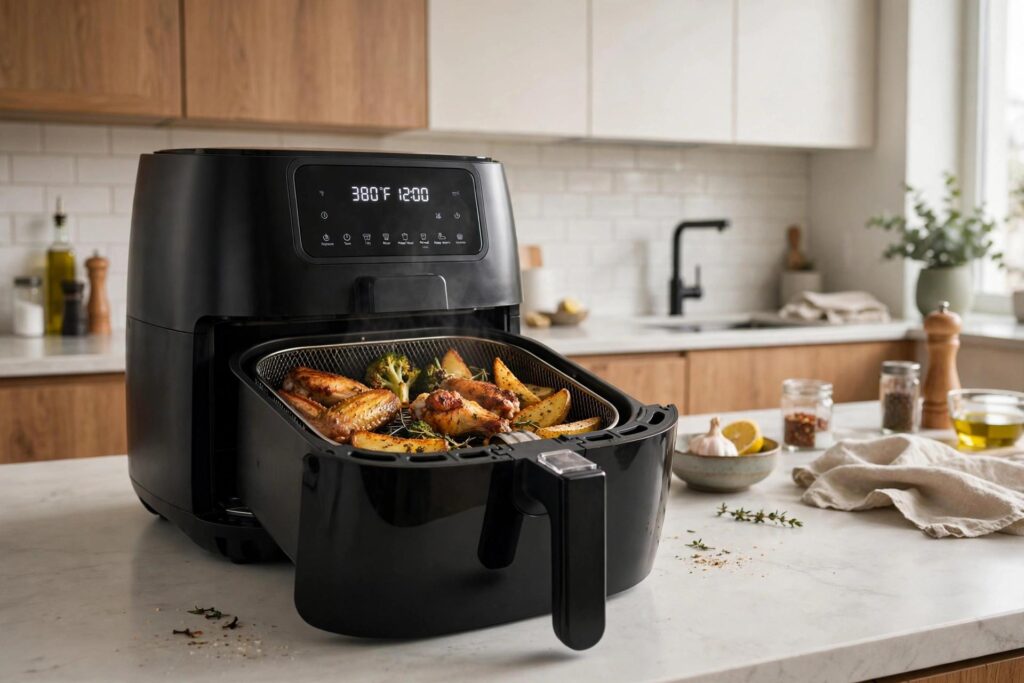
They went from infomercial curiosity to kitchen staple in just a few years, and the name has confused everyone from day one: there’s no frying involved. So how do air fryers work? At heart, an air fryer is a small, powerful convection oven — a heating element plus a fan that blasts super-hot air around your food at high speed. That fast-moving air does something remarkable: it crisps the outside of food the way hot oil does, using only a fraction of the fat. Understanding the trick explains everything — what air fryers do brilliantly, what they can’t do, and why your fries sometimes come out uneven.
Let’s break down the physics, the chemistry of crispiness, and the practical tips that separate great air fryer results from disappointing ones.
How Do Air Fryers Work? The Core Mechanism
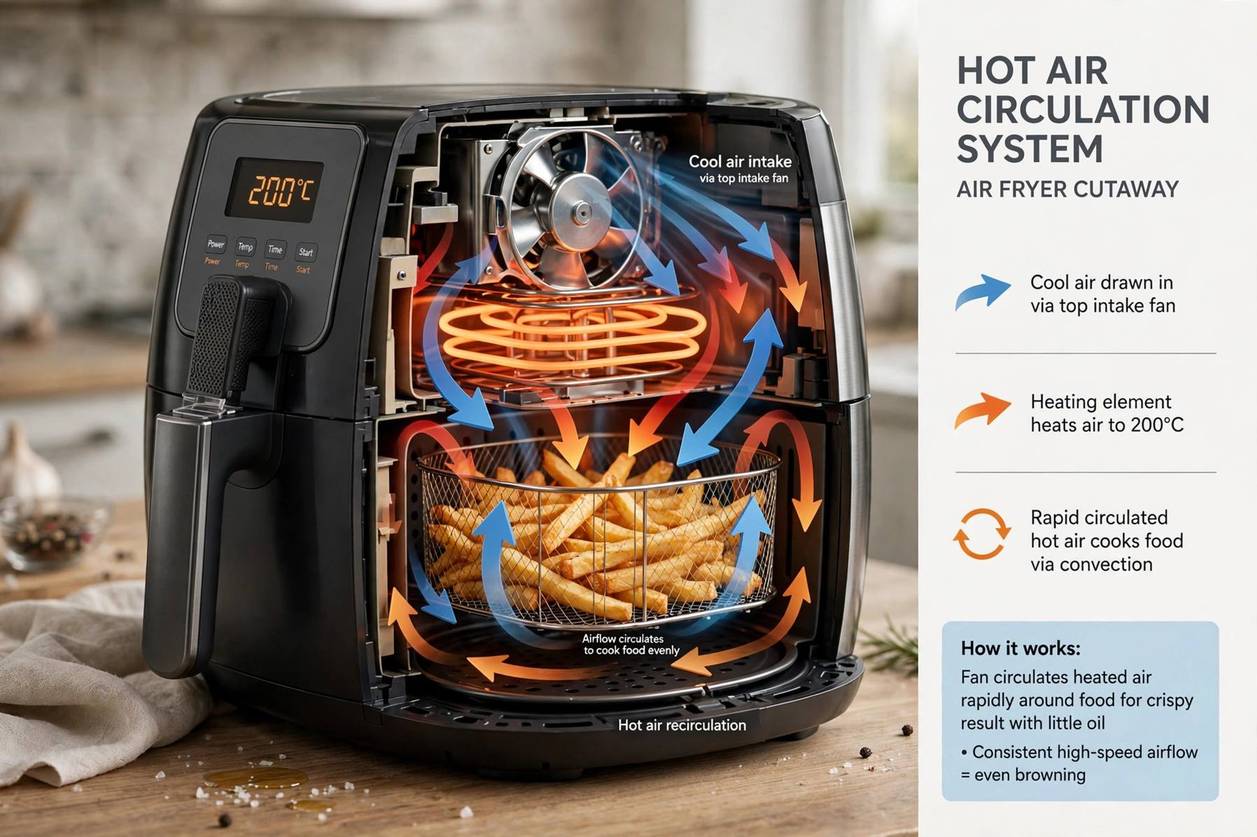
Every air fryer has the same three parts: a heating element at the top, a powerful fan, and a compact cooking chamber with a perforated basket. The element heats the air to high temperatures — typically up to around 200°C (400°F) — and the fan drives that hot air down and around the food at speed, then recirculates it back up. Engineers call this rapid air circulation; marketers called it “air frying,” and the name stuck.
The key is the combination of small space and fast air. In a regular oven, hot air rises lazily and a cool, humid layer clings to the food’s surface, slowing cooking. In an air fryer, the fan strips that layer away constantly, so heat transfers to the food much faster and moisture evaporates off the surface quickly. Fast heat plus a dry surface is the recipe for crispiness.
The Chemistry of Crisp: The Maillard Reaction
That golden-brown crust on your fries isn’t just dried-out surface — it’s chemistry. When proteins and sugars in food hit high heat with low moisture, they undergo the Maillard reaction, a cascade of chemical changes that creates hundreds of new flavor compounds and that characteristic browned color. It’s the same reaction behind seared steak, toasted bread, and roasted coffee.
The Maillard reaction needs temperatures well above boiling — roughly 140°C (280°F) and up — which is why boiled food never browns and why the air fryer’s intense, dry heat is so good at triggering it. A thin coating of oil helps enormously here: oil conducts heat to the food’s surface far better than air alone, so even a light spritz dramatically improves browning. That’s the real role of the “little bit of oil” in air frying — it’s a heat-transfer helper, not the cooking medium.
Air Fryer vs. Deep Fryer vs. Oven: What’s Actually Different?
It helps to see the air fryer between its two cousins. A deep fryer submerges food in hot oil, which transfers heat extremely efficiently and dehydrates the surface fast — maximum crisp, maximum fat absorption. An oven surrounds food with hot air that moves slowly — gentle, even, but sluggish at crisping. The air fryer sits in the middle: air as the medium like an oven, but moving fast enough to approximate some of what oil does.
The result: food with a genuinely crispy exterior and far less absorbed fat than deep frying — but not identical to deep-fried. A deep fryer’s oil bath cooks from all sides simultaneously and hits temperatures air can’t match at the surface. Air-fried food is its own delicious thing, not a perfect replica. Anyone promising otherwise is selling something.
What Air Fryers Do Brilliantly (and What They Don’t)
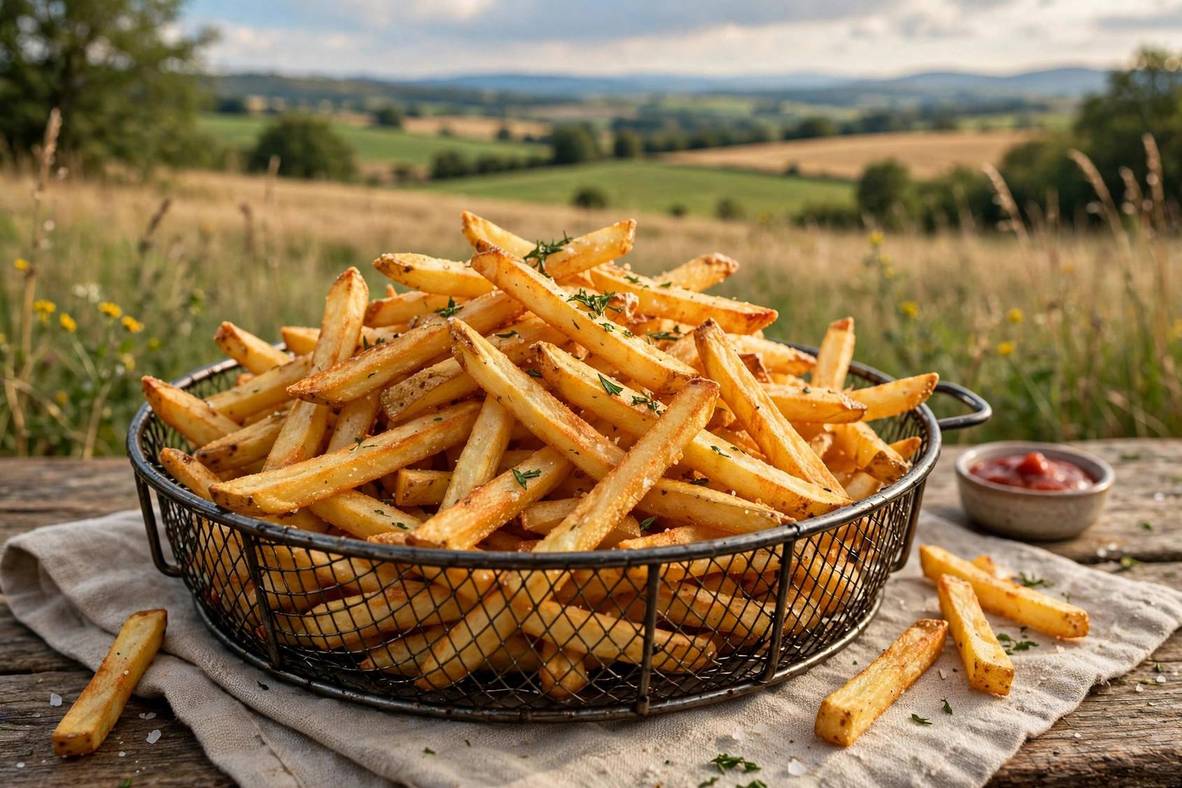
Where they shine: frozen foods (fries, nuggets, spring rolls) — the fast dry heat is ideal; reheating pizza and fried leftovers — far better than a microwave for anything that should be crisp; small-batch roasting of vegetables; and anything breaded or coated, where the coating sets quickly into a crunchy shell.
Where they struggle: wet batters, which drip through the basket before they set (breaded coatings work; tempura-style batter doesn’t); large items that don’t fit without crowding; foods that need gentle, slow cooking; and anything where you want serious char or smoke. And crowding is the number-one sin: pile food up and the air can’t circulate, the surface stays steamy, and you get sad, soggy results. Cook in a single layer, in batches if needed.
Tips for Better Air Fryer Results
- Preheat it. Three to five minutes of preheating means food starts crisping immediately instead of steaming while the chamber warms up.
- A light oil mist matters. Especially on fresh (not frozen) foods — it jump-starts the Maillard reaction and prevents sticking.
- Shake the basket halfway. It redistributes food through the hot spots, the same principle as stirring in a pan.
- Pat food dry first. Surface moisture is the enemy of crispiness; it has to evaporate before browning can begin.
- Don’t overcrowd. Air needs to reach every surface. Two small batches beat one packed basket every time.
- Lower the temp for sugary coatings. Sugars brown — then burn — faster than the inside cooks. Drop 10-15 degrees for glazed or honey-coated foods.
Where Did the Air Fryer Come From?
Given how fast they conquered kitchens, you’d think air fryers were ancient — but the modern air fryer only dates to around 2010, when a major appliance maker introduced it as a new category. The underlying idea, though, is much older: it’s rapid-air convection, a principle commercial kitchens had used for years in high-speed ovens. The innovation was shrinking it, simplifying it, and marketing it brilliantly.
The timing was perfect. Home cooks were looking for healthier versions of fried favorites, countertop appliances were booming, and social media was about to turn every kitchen gadget into content. The air fryer rode all three waves at once, going from novelty to wedding-registry staple in under a decade — one of the fastest appliance success stories ever. Dozens of brands now compete in the space, but the core mechanism in every one of them is the same: small chamber, heating element, powerful fan.
Do You Even Need One? Air Fryer vs. Convection Oven
Here’s the question nobody at the appliance store wants you to ask: if your oven already has a convection (fan) setting, do you need an air fryer? Honestly? The physics is nearly identical — both are hot air moved by a fan.
The air fryer still wins in specific situations. Its chamber is tiny, so it preheats in minutes and the air moves faster relative to the food — meaning crispier results, faster, for small batches. For one or two people reheating fries or roasting a tray of vegetables, it’s genuinely more effective and uses less energy per meal than heating a full-size oven. Where the oven wins: capacity (feeding a family), evenness across large trays, and versatility (you can’t bake a cake in most air fryers, and shouldn’t try).
My take: if you cook for one or two and your oven lacks convection, an air fryer earns its counter space. If you have a good convection oven and usually cook in volume, it’s a nice-to-have, not a need. The marketing says revolution; the physics says “small, fast convection oven” — which, to be fair, is still pretty useful.
Cleaning Without the Headache
Air fryers have a reputation for being annoying to clean, and it’s mostly earned — baked-on grease in a small chamber with a fan is nobody’s idea of fun. But it’s manageable with routine:
- Clean while warm, not hot. Let it cool enough to handle, then wash the basket and tray before residue hardens. Dried-on grease is ten times the work.
- Soak, don’t scour. Hot soapy water and a soak loosen almost everything. Avoid harsh scouring pads on nonstick coatings — once the coating is scratched, everything sticks worse forever.
- Degrease the chamber occasionally. A paste of baking soda and water on the interior walls (avoiding the heating element), left for a while then wiped, handles buildup.
- Don’t forget the fan and element area. Grease mist reaches everywhere. Wipe down the top interior periodically — with the unit unplugged and fully cool.
- Empty the drip. If your model collects drippings below the basket, empty it every use. Old drippings are what cause the dreaded white smoke.
Ten minutes of cleaning after the grease is the difference between an appliance you love and one that slowly becomes a greasy monument on your counter.
Accessories Actually Worth Buying
The accessory market for air fryers is mostly clutter, but a few items genuinely help:
- Perforated parchment liners: the single best purchase. They prevent sticking, make cleanup trivial, and the perforations keep air circulating — unlike regular foil, which blocks airflow. Get the size made for your basket.
- An instant-read thermometer: air fryers cook fast, and fast cooking overshoots easily. A thermometer is the difference between juicy chicken and dry chicken, and it matters more here than in a slow oven.
- A small rack or trivet: raises food so air circulates underneath too — useful for anything you want crisp on all sides without flipping.
- Oil mister: a refillable pump mister gives you the light, even oil coating that matters for browning, without the additives and cost of aerosol cooking sprays (which can also damage nonstick coatings over time).
Skip the rest — the multi-piece “gadget kits” mostly duplicate what your kitchen already does. The air fryer itself plus parchment, a thermometer, and a mister covers nearly everything.
FAQ: How Air Fryers Work
Is air-fried food actually healthier than deep-fried?
It typically contains significantly less fat, since the food isn’t submerged in oil — and less fat usually means fewer calories. But “healthier” still depends on what you’re cooking: air-fried vegetables are a different proposition from air-fried frozen nuggets. The cooking method helps; the food itself matters more.
Why do my air fryer fries come out soggy?
Almost always one of three things: the basket was overcrowded, the food went in wet, or the fryer wasn’t preheated. Fix those and most sogginess disappears. For fresh-cut fries, soaking them in water first (then drying thoroughly) removes surface starch and helps a lot.
Can I put foil or parchment in an air fryer?
Yes, with care: it must be weighed down by food and not block all airflow, and it should never touch the heating element. Perforated parchment liners made for air fryers are the safest option. Never preheat with loose foil or paper inside — the fan can blow it into the element.
Do air fryers use a lot of electricity?
They draw substantial power while running — similar to other countertop heating appliances — but they cook much faster than a full-size oven and don’t need preheating a huge cavity, so per-meal energy use is typically lower than heating the big oven.
What’s the white smoke some people report?
Usually grease: fatty foods drip fat that hits the hot chamber floor and smokes. A little water or a slice of bread in the drip area catches it. If there’s a lot of smoke, stop and clean — built-up grease is a fire risk in any cooking appliance.