How to Remove Sticker Residue From Glass (3 Methods That Work)

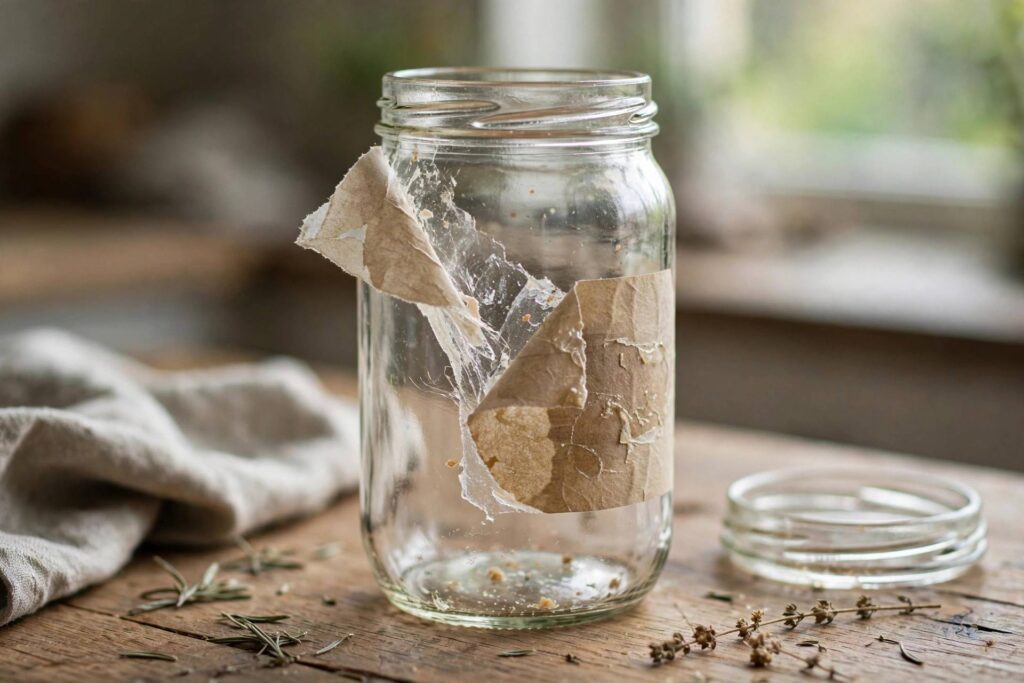
There is a special kind of frustration reserved for peeling a price sticker off a glass jar or a window decal off your car, only to be left with a cloudy, sticky ghost that refuses to budge. I have fought this battle more times than I can count, and here is what I have learned about how to remove sticker residue from glass: the trick is not scrubbing harder. It is matching the method to the situation.
Glass is forgiving compared to wood or plastic because it is hard and non-porous, which means you can use techniques that would ruin other surfaces. But glass has its own weak spots: tinted windows, mirrors, and coated glass can be damaged by the wrong approach. This guide gives you three glass-specific methods, ranked from gentlest to strongest, plus the warnings that keep you from turning a small job into an expensive repair.
How to Remove Sticker Residue From Glass: The Hot Soapy Soak
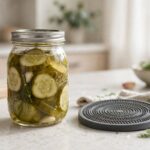
For jars, bottles, drinking glasses, and anything that fits in the sink, a hot soapy soak does most of the work for you. Fill a basin with the hottest water your tap produces, add a generous squirt of dish soap, and submerge the glass for 15 to 30 minutes. The heat softens the adhesive while the soap breaks the bond between glue and glass.
After soaking, most stickers slide off with a fingernail or a plastic scraper. For the remaining residue, rub with a paste of baking soda and a little cooking oil. The baking soda gives gentle abrasion, the oil dissolves the adhesive, and the combination rinses clean with more dish soap. I use this method on nearly every jar I reuse for pantry storage, and it works about eight times out of ten.
This is the method to start with because it cannot damage the glass. No scratches, no chemicals, no risk. If the residue survives the soak, move to method two.
Method 2: Rubbing Alcohol or Nail Polish Remover
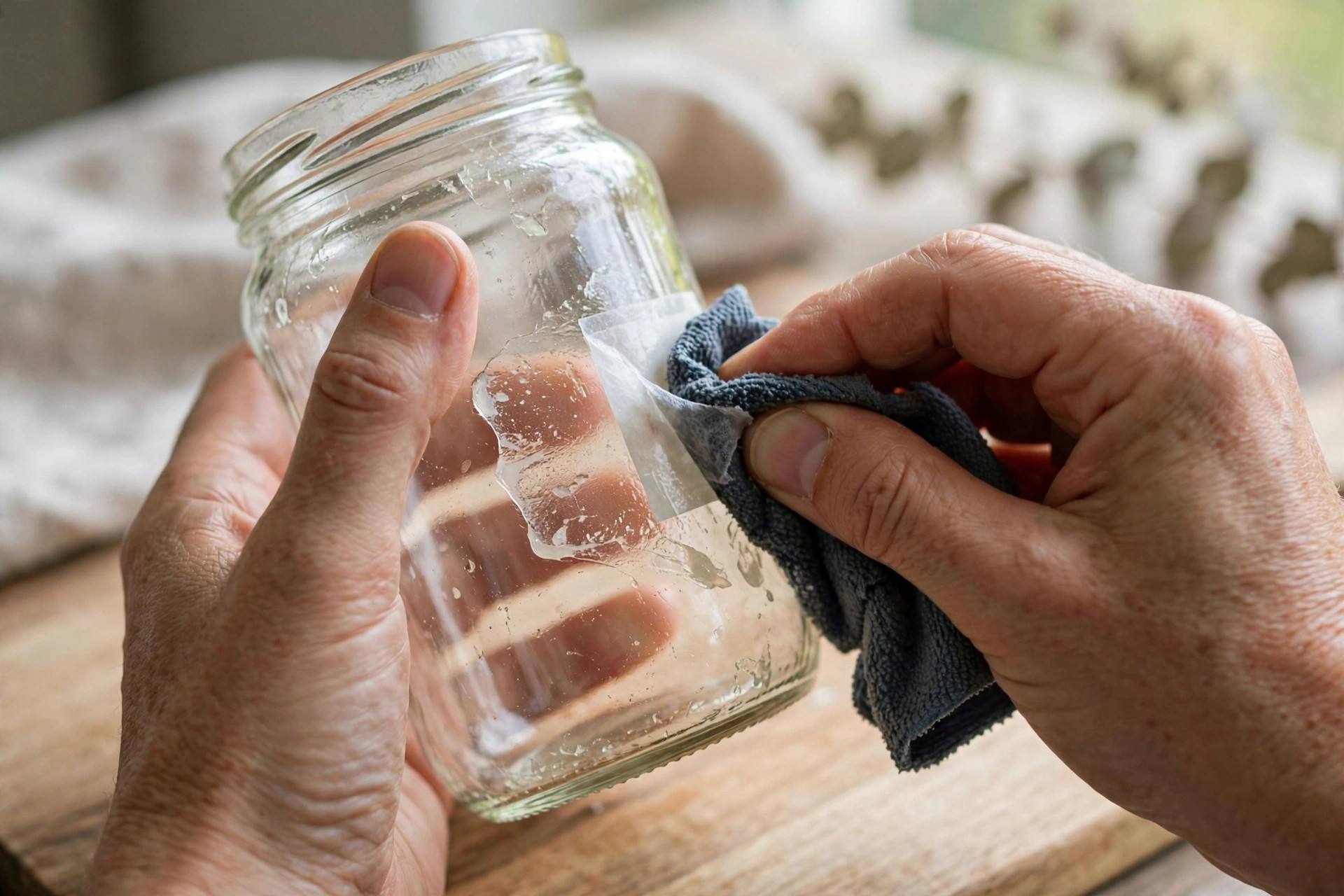
When soaking isn’t possible, like a sticker on a window or a mirror, rubbing alcohol is your best friend. Dampen a cotton ball or soft cloth with isopropyl alcohol and hold it on the residue for a minute, then rub in small circles. Adhesive dissolves on contact with alcohol, and it evaporates cleanly without leaving a film.
Nail polish remover (the acetone kind, not the “natural” kind) works the same way and is slightly stronger. But keep both away from window tint film, painted frames, and plastic trim, because alcohol and acetone can cloud or discolor those materials. Work on the glass only, and wipe the area with a damp cloth afterward.
For really stubborn spots, the combo move is alcohol first to dissolve the bulk, then the baking-soda-and-oil paste to finish. Between the two, I have never met a sticker that survived.
Method 3: Razor Blade at an Angle (For Flat Glass)
A single-edge razor blade is the nuclear option for flat glass like windows, and it is safer than it sounds if you respect one rule: keep the blade nearly flat against the glass, at about a 30-degree angle, and always push forward. Never scrape sideways, and never use a blade that has nicks or rust.
Wet the glass first with soapy water. The lubrication is what prevents scratching. Then make slow, overlapping passes, lifting the blade between strokes. Wipe the residue away with a damp cloth as you go. This method removes even ancient, sun-baked decals that chemicals barely touch.
The razor method is strictly for bare flat glass. Do not use it on mirrors (you can scratch the reflective backing), tempered glass with coatings, or anything curved where the blade can’t sit flat. When in doubt, stick with alcohol.
Warnings: Tinted Windows, Mirrors, and Coated Glass
This is the part most guides skip, and it is the part that saves you money. Tinted car windows have the tint film on the inside surface. Razors, ammonia-based cleaners, and aggressive scrubbing will destroy that film, and re-tinting a window costs far more than any sticker was worth. On tinted windows, use only warm soapy water and gentle rubbing, and test any chemical in a corner first.
Mirrors are glass with a reflective coating on the back. The front surface is fine to clean normally, but never let solvents seep behind the mirror or around the edges, and skip the razor entirely. Coated glass, like low-E energy-efficient windows or anti-glare picture frame glass, can lose its coating to abrasives and strong solvents. If you are not sure whether your glass is coated, treat it as coated.
On car glass specifically, stickers and decals have their own quirks, so it is worth checking how to remove stickers from a car for paint-safe techniques that complement what you learned here.
What Not to Do
A few common mistakes make the job worse. Do not use steel wool or abrasive scouring pads on glass; they leave micro-scratches that catch light and look permanently dirty. Do not use a heat gun or hair dryer on high near window seals, because concentrated heat can crack glass or melt seals. And do not mix chemicals, especially anything containing bleach with anything containing ammonia, which is a safety issue far beyond sticker removal.
Also, resist the urge to pick at residue with your fingernails for ten minutes. It is slow, it hurts, and it leaves oils from your skin on the glass that attract more dust. Use a tool, even a plastic gift card, and finish the job in a fraction of the time.
Removing Old, Sun-Baked Residue
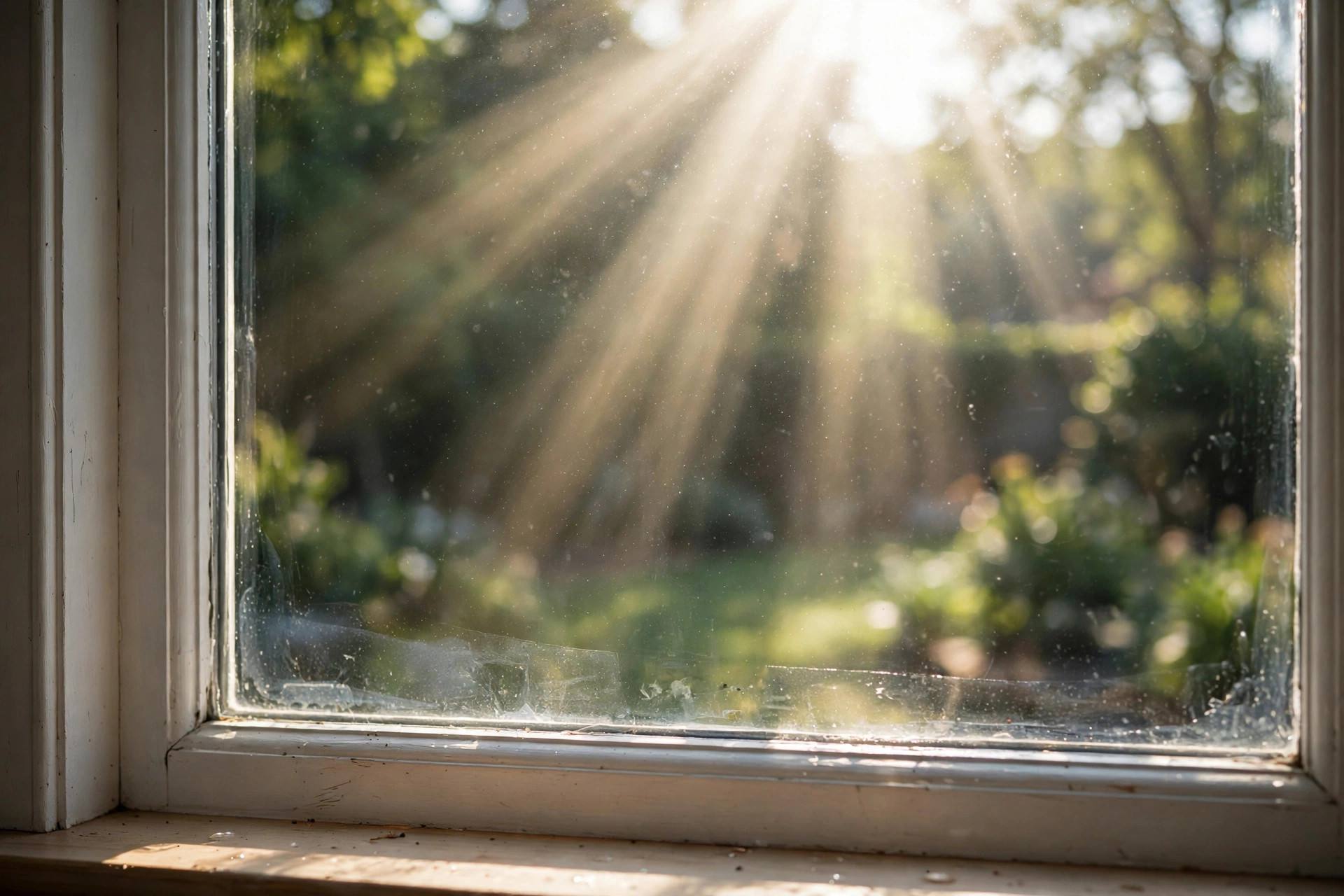
Fresh residue is easy; sun-baked residue is a different animal. Years of UV exposure harden adhesive into something closer to varnish. For these cases, extend the soak time dramatically (an hour or more for jars) and give solvents longer dwell time on windows. Apply rubbing alcohol, cover the spot with plastic wrap to prevent evaporation, and wait fifteen minutes before scrubbing. The plastic-wrap trick is the single biggest upgrade for stubborn old adhesive.
For truly ancient decals on car windows, alternate between the razor method and alcohol: scrape the bulk, dissolve the film, scrape again. Patience beats pressure here. Attacking sun-baked residue aggressively is how glass gets scratched, so slow down and let chemistry do the heavy lifting.
Finishing Touches: Getting Glass Crystal Clear
After the residue is gone, the job isn’t quite done. Adhesive removers and oils leave invisible films that attract dust and show up in sunlight. Finish with a proper glass cleaner and a microfiber cloth, wiping in an S-pattern rather than circles to avoid streaks. For jars going into pantry service, a final wash in hot soapy water removes any chemical taste or residue.
Inspect your work in angled sunlight or with a flashlight held low across the surface. This reveals the faint haze that overhead lighting hides. One more alcohol wipe on any hazy spots, and the glass is genuinely clean, not just clean-looking.
Sticker Residue on Glass Cooktops and Oven Doors
Glass cooktops and oven doors deserve special mention because they’re glass you cook on, which changes the rules. Never use a razor blade on a glass cooktop; the surface has coatings and a single scratch can become a crack under heat cycling. Stick to cooktop-specific scrapers (plastic or the manufacturer-approved type), baking soda paste, and patience.
Oven door glass, especially the inside, collects baked-on residue from spills and cleaning-product labels. A paste of baking soda and water, left for an hour, then wiped with a damp cloth, handles most of it. For the space between double-pane oven door glass, that’s a disassembly job; if residue or fog is trapped between panes, check your oven’s manual before attempting anything, because the clips and screws vary wildly.
Frequently Asked Questions
Will rubbing alcohol damage glass?
No, rubbing alcohol is safe on bare glass and evaporates without residue. The risk is to surrounding materials like window tint film, painted frames, and rubber seals, so keep the alcohol on the glass surface only.
Can I use Goo Gone on glass?
Yes, citrus-based adhesive removers work well on glass. Apply it to the residue, wait a few minutes, and wipe clean. Follow up with glass cleaner, because oil-based removers leave a film if you skip that step.
How do I remove sticker residue from a mirror without scratching it?
Use warm soapy water and a soft cloth first, then rubbing alcohol on a cotton ball for what remains. Never use a razor blade on a mirror, and keep solvents away from the mirror’s edges and backing.
Why does residue come back after I clean it?
It doesn’t come back; you never fully removed it. A thin layer of adhesive remains invisible until dust sticks to it. The fix is a final wipe with alcohol or glass cleaner after the main cleaning, which removes the invisible film.
Can I put the glass in the dishwasher to remove stickers?
Sometimes. Hot dishwasher cycles loosen many labels, but adhesive residue often survives and can redeposit on other dishes. Soak and hand-clean first, then run the dishwasher as a finishing step, not the main method.
How do I remove sticker residue from glass without chemicals?
A hot soapy soak plus a baking-soda-and-oil paste handles most residue with no harsh chemicals. For windows, soapy water and a plastic scraper work; save the razor for flat bare glass only.
Can I use a melamine sponge (magic eraser) on glass?
Yes, melamine sponges are safe on bare glass and effective on residue, since they’re a micro-abrasive. Avoid them on coated, tinted, or mirrored glass, where the abrasion can damage the coating. Test in a corner first.
Will a hair dryer help remove sticker residue from glass?
Yes, gentle heat softens adhesive and makes it easier to peel. Use low or medium heat held several inches away, warming the sticker for 30-60 seconds before peeling slowly. Avoid high heat on windows, which can stress the glass or damage seals, and never use a heat gun on high near any glass.
The Bottom Line
Start gentle with a hot soapy soak, escalate to rubbing alcohol for what remains, and save the razor blade for flat bare glass only. Respect the warnings for tinted windows, mirrors, and coated glass, and you will get a perfectly clean surface every time without a single scratch.