What Is Synthetic vs Conventional Oil? The Complete Car Owner’s Guide


Walk into any auto parts store and you’ll face a wall of motor oil with prices ranging from budget to eye-watering, and the biggest price jump sits between conventional and synthetic. Every car owner eventually asks: what is synthetic vs conventional oil, really, and does my car actually need the expensive stuff? I’ve worked on enough engines to give you the straight answer: they’re genuinely different products, the difference matters more for some cars than others, and most of the marketing around them is noise.
This guide cuts through that noise. What each oil actually is, how they compare on cost and change intervals, which cars genuinely require synthetic, and how to make the call for your specific vehicle.
What Conventional Oil Actually Is
Conventional oil is refined directly from crude oil. Refineries distill crude and clean it up, but the resulting base oil contains molecules of varying sizes and shapes, plus trace impurities that refining doesn’t fully remove. Think of it like whole-grain flour versus sifted: it works fine, but it’s less uniform.
This matters because engines are precision machines operating under heat and pressure. The inconsistent molecules in conventional oil break down faster under high temperatures, form sludge more readily, and lose their protective properties sooner. That’s not a flaw in the product; it’s the nature of the refining process. Conventional oil with modern additive packages is far better than what your grandfather used, but it has inherent limits.
What Is Synthetic vs Conventional Oil at the Molecular Level
Synthetic oil is chemically engineered rather than simply refined. Manufacturers build the base oil molecules to be uniform in size and shape, with impurities designed out from the start. The result flows better in cold weather, resists breakdown at high temperatures, and keeps engines cleaner over time.
The practical differences are measurable. Synthetic maintains its viscosity across a wider temperature range, which means better cold-start protection in winter and better high-heat stability in summer or under load. It resists sludge formation significantly better, and it allows longer intervals between changes. These aren’t marketing claims; they’re the direct consequences of molecular uniformity.
There’s also a middle category worth knowing: synthetic blend, which mixes conventional and synthetic base stocks. It’s a genuine compromise, better than conventional, not as good as full synthetic, priced in between. For many drivers it’s the sensible middle ground.
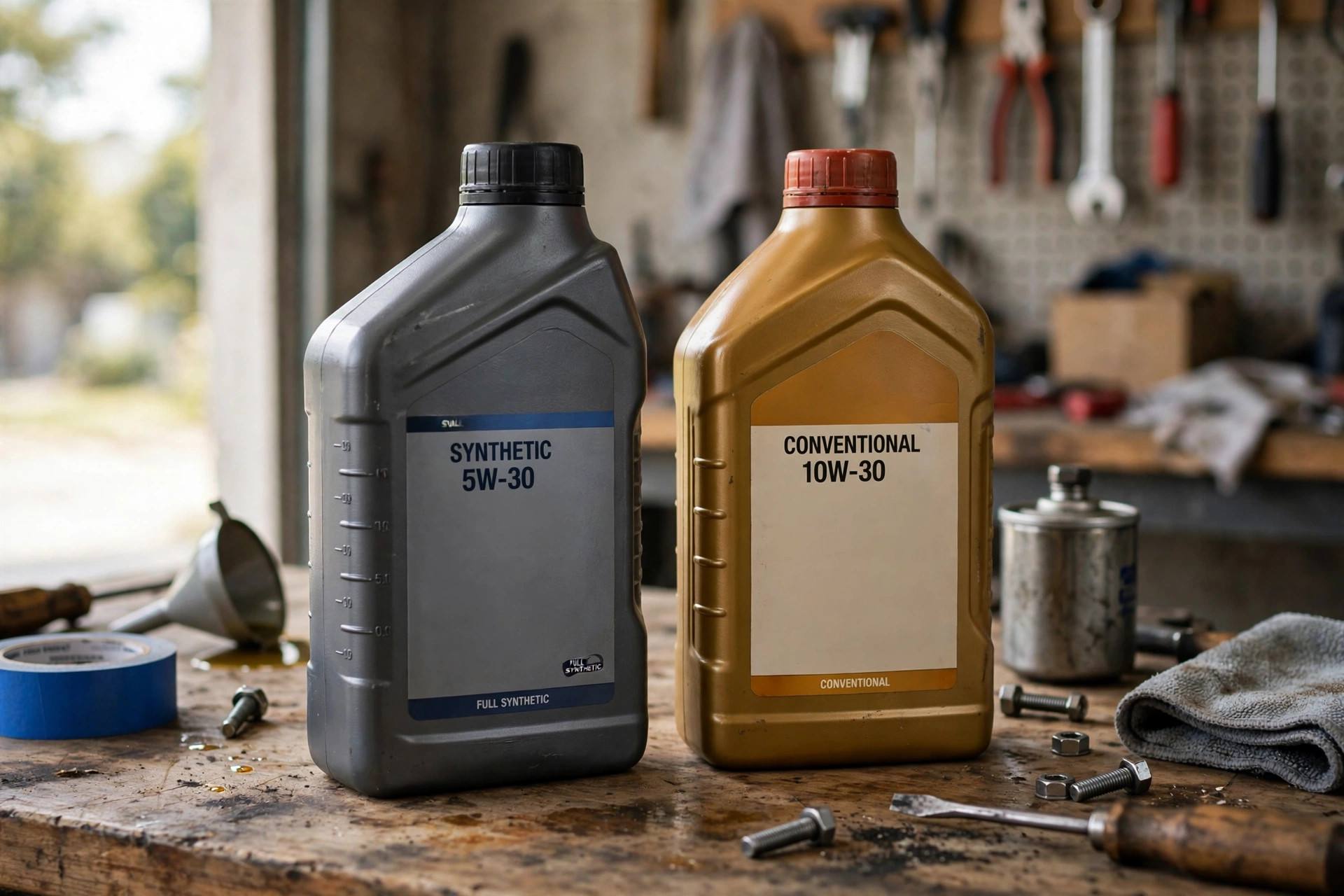
Head-to-Head Comparison
| Factor | Conventional | Full Synthetic |
|---|---|---|
| Typical cost (5 quarts) | $20-30 | $35-60 |
| Change interval | 3,000-5,000 miles | 7,500-15,000 miles |
| Cold-weather flow | Adequate | Excellent |
| High-heat stability | Moderate | Excellent |
| Sludge resistance | Moderate | High |
| Engine cleanliness | Good | Better |
Notice something important in that table: synthetic costs roughly twice as much but lasts roughly twice as long. On a per-mile basis, the cost difference is much smaller than the shelf price suggests. When people tell you synthetic is a ripoff, they’re usually comparing bottle prices instead of cost per mile driven.
Which Cars Actually Need Synthetic?
Here’s where the marketing ends and the owner’s manual begins. Some cars genuinely require synthetic oil, and this isn’t upselling: it’s engineering.
Turbocharged engines run hotter, and the turbo bearings spin at extreme speeds on a film of oil. Conventional oil cokes and breaks down under those conditions. If your car has a turbo, use synthetic. Full stop.
High-performance and luxury vehicles are typically spec’d for synthetic from the factory, with tighter tolerances that assume synthetic’s stability. Using conventional in these engines risks premature wear and can void warranty coverage.
Vehicles with extended oil-change intervals built into their maintenance systems assume synthetic. If your dashboard says 10,000 miles between changes, that number was calculated for synthetic oil. Running conventional on that schedule is asking for sludge.
Severe driving conditions push any engine toward synthetic: frequent short trips where the engine never fully warms up, extreme cold, towing, or dusty environments. Check your engine oil change intervals against your actual driving, not the ideal case.
When Conventional Is Perfectly Fine
Let’s be fair to conventional oil. If you drive an older, naturally aspirated car with no turbo, change your oil on schedule, and drive mostly normal highway and city miles, conventional oil protects your engine just fine. Millions of engines have lived long lives on it.
The key phrase is “on schedule.” Conventional’s shorter effective life means the interval matters more. Stretch conventional oil to 8,000 miles and you’re running unprotected; change it at 4,000 and your engine is happy. The people who get burned by conventional are the ones who treat it like synthetic and extend their intervals.
For high-mileage older cars that burn or leak a little oil, conventional is often the economical choice. You’re topping off between changes anyway, and the cost savings are real when you’re buying oil frequently.
Making the Decision for Your Car
The decision tree is simple. First, check your owner’s manual: if it specifies synthetic, use synthetic. That’s not a suggestion. Second, consider your engine: turbocharged, high-performance, or extended-interval systems all point to synthetic. Third, consider your habits: if you’re diligent about changes, conventional works in a basic engine; if you tend to stretch intervals, synthetic’s margin of safety is worth the price.
Whatever you choose, check your oil level regularly between changes. Low oil kills engines faster than the wrong oil type ever will. Learning how to check your oil level takes two minutes and is the single highest-value maintenance habit you can build.

Synthetic Oil Myths Worth Debunking
Myth: synthetic causes leaks. It doesn’t create them; it can reveal existing worn seals because it flows more readily. Modern high-mileage synthetics include seal conditioners that actually help aging seals.
Myth: you can’t switch back to conventional. You can switch freely in either direction at any oil change. Oils are compatible; only the change interval needs to match what’s currently in the engine.
Myth: synthetic is too slippery for engine break-in. Many new cars ship from the factory with synthetic fill. This myth dates to an era of different manufacturing tolerances and no longer applies.
Myth: dark oil means the oil is worn out. Oil darkens as it does its job suspending contaminants; color alone says little about remaining life. Follow mileage and time intervals, not the dipstick’s shade.
The Environmental and Practical Footnotes
Longer change intervals mean fewer oil changes per year, which means less waste oil to dispose of and fewer filters in landfills. If you drive 15,000 miles a year, synthetic at 10,000-mile intervals means roughly half the oil changes of conventional at 5,000. That’s a real environmental difference beyond the engine benefits.
On the practical side, keep a quart of whatever’s in your engine in the trunk for top-offs between changes, and write the oil type and date on the filter or a sticker under the hood. Future you, or your mechanic, will appreciate knowing exactly what’s in there. Consistency matters more than brand loyalty.
Reading an Oil Label: What the Numbers Mean
That “5W-30” on the bottle is a viscosity grade, and it’s worth understanding. The number before the W (winter) describes cold-weather flow: lower means thinner when cold, which means faster protection on cold starts. The number after describes viscosity at operating temperature: higher means thicker when hot. Your owner’s manual specifies the grade your engine was designed for; use it.
Beyond the grade, look for the API service rating (currently SP for gasoline engines) and any manufacturer-specific approvals your car requires. These certifications mean the oil passed standardized tests for your engine type. An oil meeting your car’s spec from any reputable brand protects your engine; the spec matters more than the marketing.
Frequently Asked Questions
Can I switch from conventional to synthetic?
Yes. The old myth that switching causes leaks has been debunked for modern oils and engines. You can switch in either direction at any oil change. Just don’t mix the change-interval expectations: follow the interval appropriate to what’s currently in the engine.
Is synthetic blend worth it?
It’s a reasonable middle ground: better protection than conventional at a moderate price premium. If full synthetic feels like overkill for your car but you want more margin than conventional offers, blends make sense.
Does synthetic oil cause leaks in old engines?
Synthetic doesn’t create leaks, but its better flow characteristics can reveal existing ones. If your seals are already worn, thinner-flowing synthetic may seep where thicker conventional didn’t. High-mileage synthetic formulations include seal conditioners specifically for this.
How often should I really change synthetic oil?
Follow your owner’s manual, typically 7,500 to 10,000 miles for modern cars on synthetic. Severe conditions shorten this. Time matters too: change at least once a year even if you haven’t hit the mileage.
Is expensive synthetic better than cheap synthetic?
Any oil meeting your car’s required specification (like API SP or the manufacturer’s standard) provides the certified baseline protection. Premium brands may offer marginally better additive packages, but specification compliance matters far more than brand prestige.
Can I mix synthetic and conventional oil?
Yes, they’re compatible, and synthetic blends are literally this mixture sold intentionally. Mixing in an emergency top-off is fine. Just follow the change interval of the lesser oil (conventional’s shorter interval) afterward.
What does 5W-30 actually mean?
It’s a viscosity grade: 5W describes how the oil flows when cold (lower is thinner, better for cold starts), and 30 describes its thickness at full operating temperature. Always use the grade your owner’s manual specifies.
Does synthetic oil last longer in a car that’s rarely driven?
Somewhat, but time still degrades oil through moisture accumulation and additive breakdown. Even with synthetic, change at least once a year on a low-mileage car. Short trips that never fully warm the engine are actually harder on oil than highway miles.
Will using the wrong oil void my warranty?
Using oil that doesn’t meet your manufacturer’s specification can give them grounds to deny an engine warranty claim. Always use oil meeting the spec in your owner’s manual during the warranty period. After warranty, the same advice still protects your engine.
The Bottom Line
Synthetic is genuinely better oil: more stable, longer-lasting, cleaner-running. Whether your car needs it depends on the engine and your habits. Check the manual, be honest about your change discipline, and remember that the right oil changed on time beats the perfect oil changed late.