How to Get a Restraining Order: A Step-by-Step U.S. Guide

If you’re researching how to get a restraining order, you’re likely in a frightening situation, and I want to be direct with you: this article explains the process, but it is general information, not legal advice, and not a substitute for an attorney. Laws vary significantly by state — what’s called a restraining order in California is a protective order in Texas and an order of protection in New York — but the underlying process follows a similar shape everywhere in the United States. I’ve spent years helping people understand court procedures, and the single most important thing to know up front is this: the system is designed so you can start it yourself, without a lawyer, and emergency protection can be granted the same day you file.
A restraining order is a court order that legally requires someone to stop certain behaviors — contacting you, coming near you, coming to your home or workplace — and violating it is a crime that can lead to arrest. It is a civil court process, which means you don’t need a prosecutor and you don’t need to press criminal charges first, though the two can run in parallel.
The Types: Emergency Orders vs. Longer-Term Orders
Nearly every state offers two tiers of protection, and understanding the difference shapes your whole approach:
- Emergency / temporary restraining order (TRO): Granted quickly — often the same day — based only on your written statement, without the other person present. A judge reviews your paperwork and decides whether the situation looks urgent enough for immediate, short-term protection. These typically last 1–3 weeks, until a full hearing can be held.
- Permanent / extended order: Despite the name, “permanent” usually means 1–5 years depending on the state, renewable in most jurisdictions. This is granted only after a hearing where both sides can present their case. The judge needs a higher level of proof than for the emergency order.
Some states add specialized categories: domestic violence protective orders (for current or former intimate partners and family), stalking protective orders, sexual assault protective orders, and workplace violence restraining orders (which an employer files on behalf of an employee). The courthouse self-help center or a local domestic violence hotline can tell you which category fits your situation — and that call is free and confidential.
Step-by-Step: How to Get a Restraining Order
The process below reflects the general U.S. pattern. Your county courthouse website will have the exact local forms.
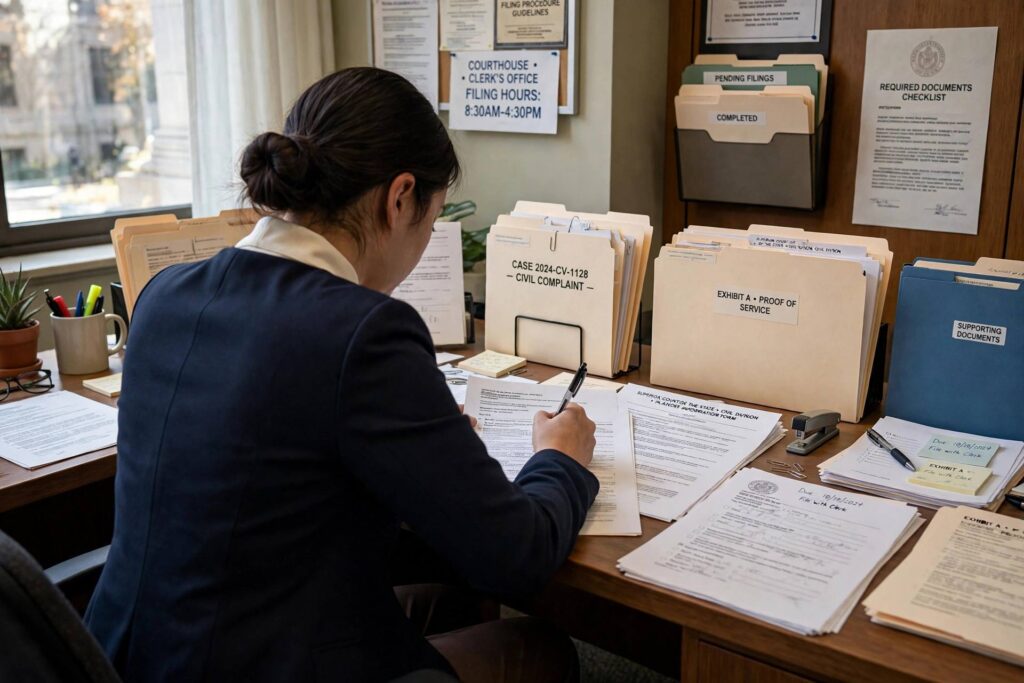
- Get the forms. Most courthouses have a self-help center with the petition packet, and many counties offer the forms online. The main document is usually called a petition or request for protective order. There is typically no filing fee for domestic violence or stalking petitions; some civil harassment filings have a small fee with waivers available.
- Write your declaration. This is the heart of your case. Describe specific incidents with dates, times, locations, and exactly what happened and what was said — quotes are powerful. “He threatened me” is weak; “On October 3 at 8pm he stood on my porch and said ‘I’ll make you regret leaving'” is strong. List every incident, most recent first. Attach copies of texts, emails, photos of injuries or damage, and police report numbers if they exist.
- File with the court clerk. Bring your completed forms to the courthouse (many allow e-filing). The clerk stamps them and routes them to a judge for the emergency review. Ask the clerk about the timeline — in most counties, emergency review happens the same day.
- Receive the temporary order (if granted). If the judge grants the TRO, you’ll get certified copies. The order only takes effect once the other party is formally served — more on that below.
- Arrange service of process. The other person must be legally notified of the order and the hearing date. You cannot serve them yourself — service must be done by someone over 18 who isn’t a party to the case, or by law enforcement. Many sheriff’s departments serve protective orders for free. This step is critical: without proper service, the hearing may be postponed.
- Attend the hearing. This is where the judge decides on the longer-term order. Bring everything: your evidence organized chronologically, witnesses if you have them, and copies for the judge. Dress respectfully, address the judge as “Your Honor,” and stick to facts. The other party has the right to be there and to respond — this is often the most stressful part, and bringing a support person or advocate is both allowed and wise.
- Get your final order and keep copies. If granted, keep certified copies with you, at work, and with your children’s school if the order covers them. Give a copy to local law enforcement so it’s in their system.

The Evidence Checklist: What Strengthens Your Case
Judges decide based on evidence of specific threatening behavior, so documentation is everything. Gather what you can, but don’t delay filing because your file is incomplete — safety first, paperwork second.
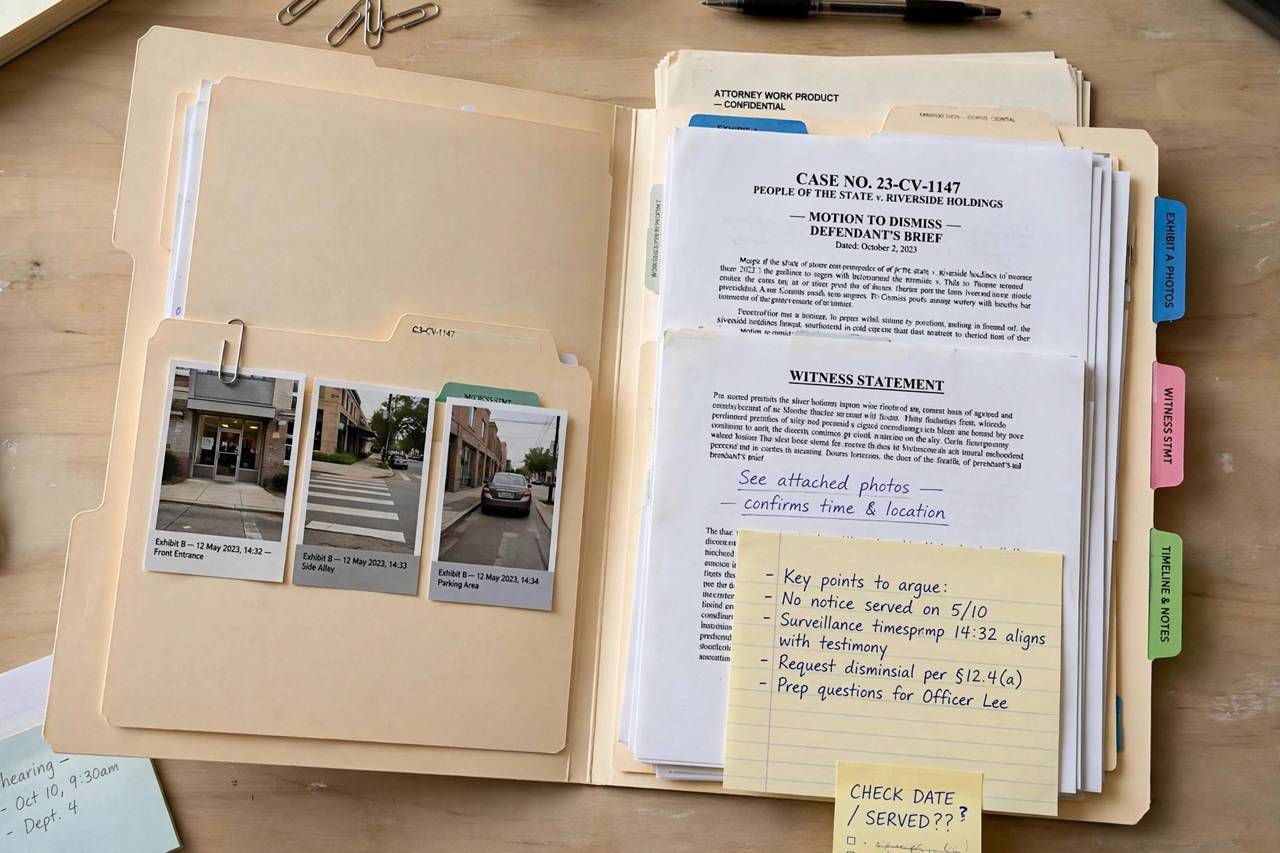
- Written communications: Screenshots of threatening texts, emails, DMs, and voicemails (save the audio). Include dates and full context, not just the worst line.
- Photos: Injuries, property damage, or the person at your home or workplace. Timestamped photos are best.
- Police reports: Report numbers and copies of any reports filed, even if no arrest was made.
- Medical records: ER visits or doctor’s notes documenting injuries.
- Witnesses: Names and contact information for anyone who saw or heard incidents — neighbors, coworkers, family.
- Your written timeline: A chronological account with dates. Memory fades; write it down now, even roughly.
One practical tip: back up your evidence in two places — a cloud account the other person can’t access and a trusted friend’s keeping. Phones get broken or taken in exactly these situations.
What Happens at the Hearing
Knowing how to get a restraining order means knowing what the hearing actually looks like, because fear of the unknown stops people from filing. The reality is less dramatic than television: it’s usually a courtroom or hearing room, not a full trial. The judge will have read your paperwork, will ask you to describe what happened, and will let the other party respond. Each side may bring witnesses. The judge may ask questions of both sides.
The standard of proof in most states is “preponderance of the evidence” — meaning the judge must find it more likely than not that the abuse or threats occurred. That’s a lower bar than criminal court’s “beyond a reasonable doubt,” which is precisely why this civil process exists: to provide protection even when a criminal case can’t be proven or hasn’t been filed.
Hearings typically last 30 minutes to a few hours. Bring an advocate if you can — domestic violence organizations often provide free court accompaniment, and having someone beside you changes the experience completely.
After the Order: Enforcement and Renewal
Once granted, violating the order is a criminal offense — the restrained person can be arrested for contact the order prohibits, even if the contact seems minor to them. If a violation happens, call the police immediately and show them your copy of the order. Document every violation; repeated violations strengthen renewal requests and can lead to jail time.
Before the order expires, you can usually request a renewal or extension by filing a short motion and showing that you still have reason to fear. Start this process a month or two before expiration — don’t let protection lapse because of paperwork timing.
Safety Planning Beyond the Court Order
A restraining order is a powerful legal tool, but it’s one tool — and safety planning works best in layers. Advocates at domestic violence organizations do safety planning as a structured process: thinking through daily routines, identifying safe places and people, and planning for different scenarios. You don’t need a court date to start; hotlines help with this whether or not you ever file.
A few elements advocates emphasize: digital safety — the other person may know your passwords, have location sharing enabled, or monitor your devices. Change passwords from a safe device, review location-sharing settings, and consider a new email account for legal correspondence. Documentation habits — keep recording incidents even after the order is granted; violations need evidence to be enforced. Tell the right people — employers, schools, childcare providers, and trusted neighbors should know the order exists and what the restrained person looks like. An order nobody knows about protects no one.
And a hard truth worth stating: the period right after leaving or filing can be the most dangerous. That’s not a reason to avoid action — it’s a reason to plan it with an advocate rather than alone. The hotline call is free, confidential, and staffed by people who do this every day. Use them.
Frequently Asked Questions
How long does it take to get a restraining order?
Emergency temporary orders are often granted the same day you file. The full hearing for a longer-term order is typically scheduled within 1–3 weeks. The order takes legal effect once the other party is formally served.
Do I need a lawyer to get a restraining order?
No — the process is designed for self-filing, and courthouse self-help centers assist with forms for free. That said, having an attorney or a victim advocate, especially at the hearing, significantly helps. Many legal aid organizations handle these cases at no cost.
How much does it cost to file for a restraining order?
In most states there is no filing fee for domestic violence, stalking, or sexual assault protective orders. Some civil harassment petitions carry a small fee, with fee waivers available for those who can’t afford it.
What proof do I need for a restraining order?
Specific, dated accounts of threats, violence, or harassment, supported by texts, photos, police reports, medical records, or witnesses. The standard is generally “more likely than not” — you don’t need proof beyond a reasonable doubt.
Can a restraining order be dropped or dismissed?
You can ask the court to dismiss your own order, but the judge decides — courts are cautious about dismissals in case of coercion. The restrained person can also request modification, but the burden is on them to show changed circumstances.
What happens if someone violates a restraining order?
Violation is a criminal offense. Call the police, show them your copy of the order, and document the violation. Consequences range from arrest to jail time, and documented violations support extending the order.
If you’re in immediate danger, call emergency services first — paperwork comes second. For confidential help planning your safety, the National Domestic Violence Hotline (1-800-799-7233) operates 24/7. Understanding how to get a restraining order is about knowing the system exists for you, works without a lawyer, and can start protecting you today.