How Many Rest Days Per Week When Working Out: A Coach’s Guide


Ask the internet how many rest days per week when working out and you’ll get everything from “never rest” to “lift twice a week max.” Both extremes are wrong, and I’ve coached enough people through both mistakes to know the damage each one does. Too little rest and you plateau, get injured, or just feel permanently wrecked. Too much and you leave gains on the table. The real answer depends on how you train — your split determines your rest — and on the signals your body sends when the plan needs adjusting. Here’s the framework I use with clients, including the rest-days-by-split table and the warning signs that mean you need more recovery, not more workouts.
First, the principle: muscles don’t grow in the gym. Training is the stimulus; growth happens during recovery, when your body repairs the micro-damage and comes back stronger. Rest days aren’t days off from progress — they’re when progress happens. Skip them and you’re sending the stimulus without allowing the adaptation. That’s not hardcore; it’s just inefficient.
Rest Days by Training Split: The Table
Your split — how you divide training across the week — is what determines sensible rest. If you haven’t chosen one yet, compare the best workout splits. Here’s the standard guidance:
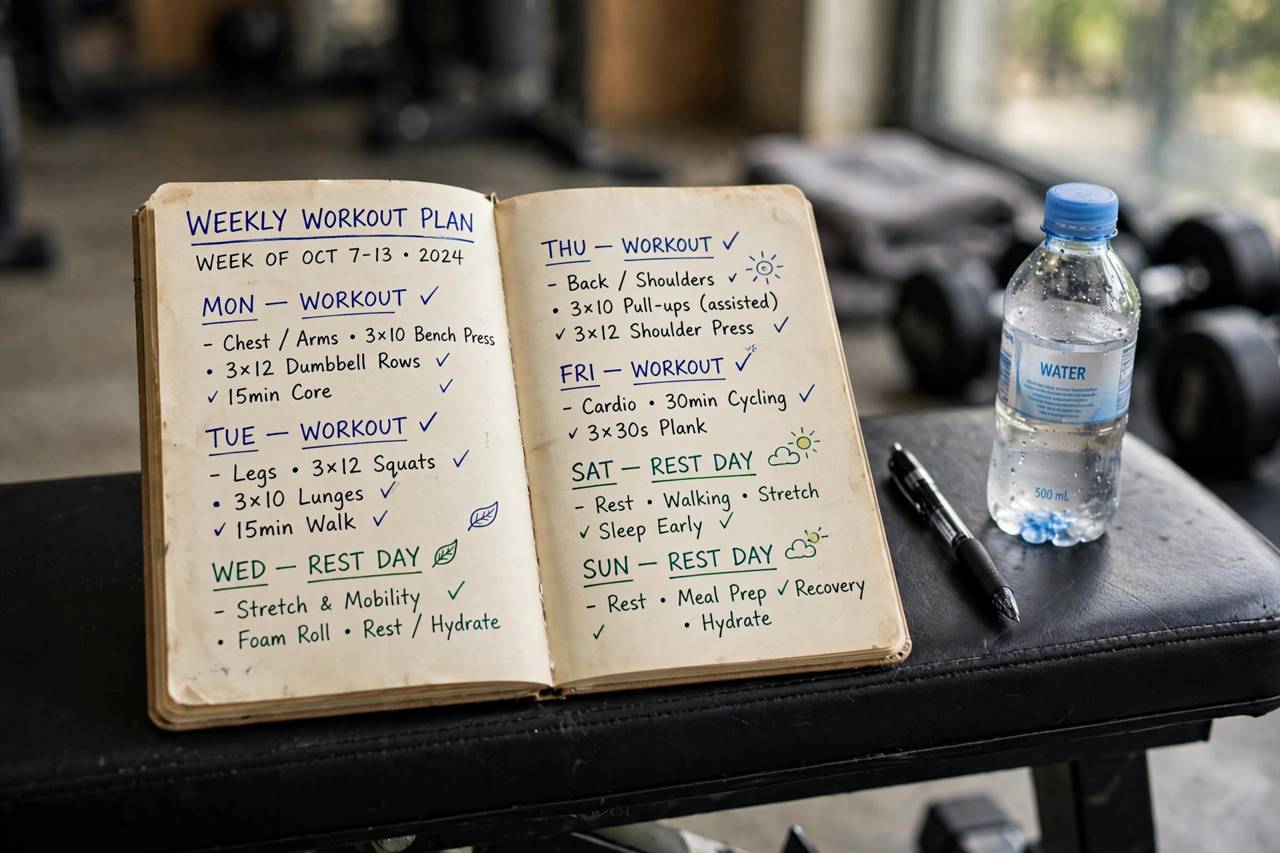
- Full-body 3x/week (e.g., Mon/Wed/Fri): 4 rest days. Each session hits everything, so muscles need 48 hours between sessions. This is the best setup for beginners — maximum recovery, plenty of growth. Start with workout routines for beginners if you’re new to training.
- Upper/lower 4x/week (e.g., Mon/Tue/Thu/Fri): 3 rest days. Each muscle group trains twice weekly with 48–72 hours between same-muscle sessions. The sweet spot for intermediates.
- Push/pull/legs 5–6x/week: 1–2 rest days. Each muscle group gets hit roughly twice a week with rest days between rotations. Works, but demands good sleep and nutrition — there’s little margin for error. Our push pull legs routine is the PPL setup I recommend most.
- Bro split 5x/week (one muscle group per day): 2 rest days. Each muscle rests ~6 days between sessions, which is plenty — arguably more than needed, which is why bro splits underperform for naturals despite feeling productive.
- Daily training / 6–7x/week: 0–1 rest days. Only sustainable with careful programming — varying intensity, rotating muscle groups, and at least one genuinely easy or full rest day. Most people who try this burn out within two months.
The pattern: the more frequently you hit the same muscles, the more total rest days you need placed strategically. Beginners need more rest (3–4 days) because everything is novel stress; advanced lifters can handle more frequency because their bodies are adapted — but even pros schedule deload weeks.
What Counts as Rest (It’s Not Just the Couch)
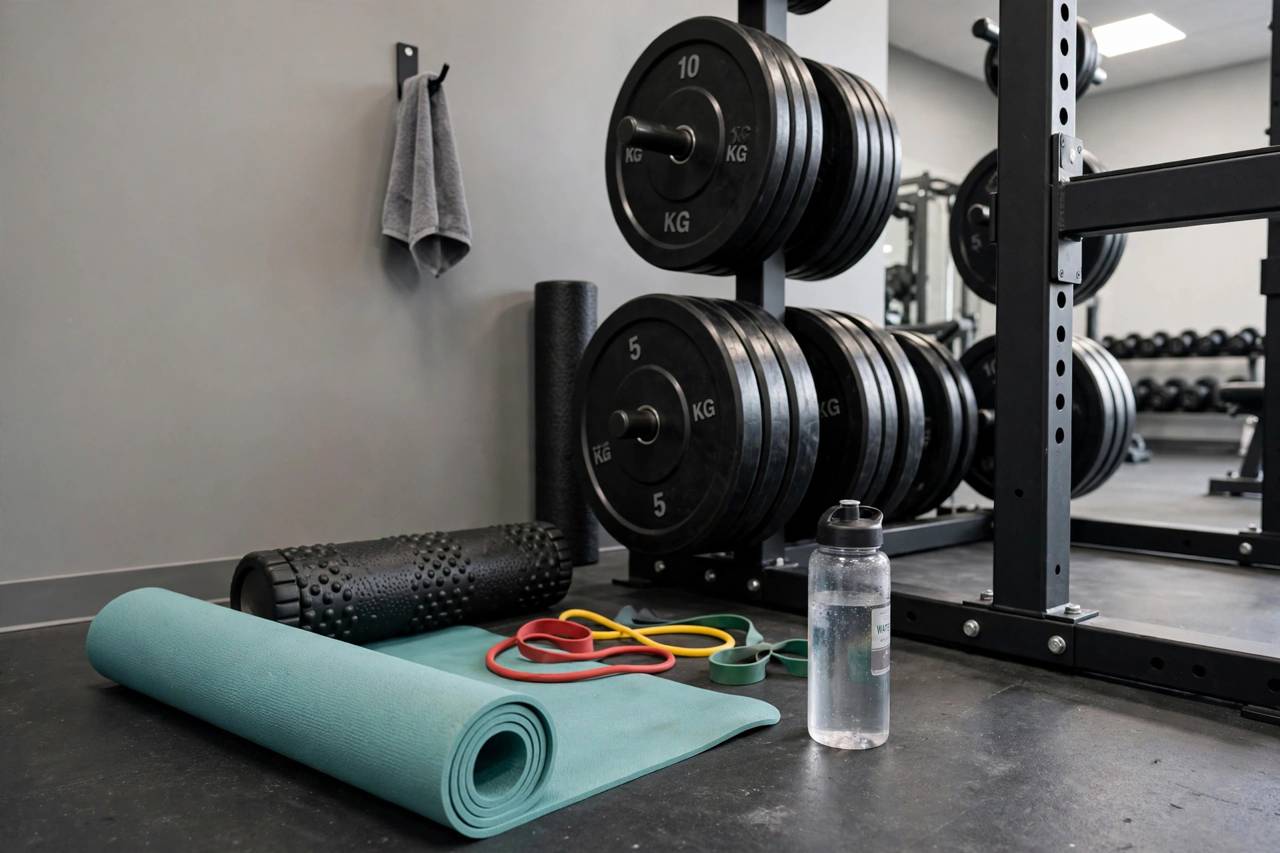
Not all rest is equal. Full rest — no training at all — is necessary at least once a week for most people. Active recovery — walking, easy cycling, mobility work, light swimming — promotes blood flow and actually speeds recovery versus total stillness. I program active recovery for most clients on at least one “rest” day.
What doesn’t count as rest: a “light” workout that creeps into moderate intensity, playing intense pickup sports, or doing a hard conditioning session “since it’s not lifting.” Your body doesn’t categorize stress by activity type. Stress is stress. If your rest day leaves you tired, it wasn’t rest.
Signs You Need More Rest (The Overtraining Checklist)
Your body sends invoices for under-recovery. Watch for these:
- Performance dropping: Weights that felt easy two weeks ago feel heavy. This is the most objective signal — track your lifts.
- Persistent soreness: Normal soreness fades in 48–72 hours. Soreness that never fully clears between sessions means you’re outpacing recovery.
- Sleep disruption: Overtraining elevates cortisol and resting heart rate, wrecking sleep quality — which further wrecks recovery. A vicious cycle.
- Mood and motivation crash: Dreading workouts you used to enjoy, irritability, low energy. The nervous system fatigues too, not just muscles.
- Getting sick often: Heavy training suppresses immune function temporarily; chronically under-recovered people catch everything.
- Nagging joint pain: Muscles recover faster than tendons and joints. Persistent aches in elbows, knees, or shoulders are the body asking for a deload.
If you check three or more boxes, take a deload week: cut volume and intensity roughly in half for a week, keep moving, sleep more. You’ll almost always come back stronger — which surprises people every single time.
Rest-Day Nutrition and Sleep: The Multipliers
Rest days aren’t nutrition days off. Protein intake matters more on rest days, not less — that’s when the repair work happens. Keep protein consistent daily (around 0.7–1g per pound of bodyweight for active people), don’t slash calories just because you didn’t train, and hydrate normally.
Sleep is the single biggest recovery lever and the most neglected. One bad night measurably hurts next-day performance; chronic short sleep blunts muscle growth and fat loss alike. Seven to nine hours isn’t a luxury for people who train hard — it’s part of the program. No supplement compensates for five-hour nights.
How Many Rest Days Per Week When Working Out as a Beginner
Beginners get a special section because the standard advice often overshoots. If you’re new to training, your body is hyper-responsive — you don’t need much stimulus to grow, and you need more recovery than you think because everything is novel stress. The prescription: 3 full-body sessions per week, 4 rest days. Monday, Wednesday, Friday. That’s it. This isn’t the cautious option; it’s the optimal one — studies consistently show beginners gain as much on 3x full-body as on higher-frequency splits, because recovery is the limiting factor, not stimulus.
On rest days, walk. Seriously — 20–30 minutes of easy walking is the perfect beginner active recovery: it promotes blood flow, builds the exercise habit, and doesn’t meaningfully fatigue anything. Save the intense cardio for later; right now, consistency beats intensity by a mile.
When to add a fourth day: after 3–6 months, when recovery between sessions feels easy and progress stalls. Move to an upper/lower 4x split — not because 3x stopped working, but because you’ve earned the capacity for more. The most common beginner mistake isn’t training too little; it’s adding volume before the base is built, then wondering why everything hurts and nothing improves.
Deload Weeks: The Planned Rest You’re Probably Skipping
Here’s the advanced concept most lifters ignore until they learn it the hard way: the deload week. Every 4–8 weeks of hard training, take one week at roughly half the volume and intensity. Same exercises, same schedule — just lighter and shorter. It feels like slacking. It’s actually when accumulated fatigue dissipates and your body consolidates weeks of gains.
Signs you’re overdue: weights feeling heavier than they should for two weeks running, persistent joint aches, sleep getting worse, motivation evaporating. Most lifters interpret these as “train harder” signals. They’re “rest smarter” signals. A proper deload almost always produces a rebound — lifters routinely hit PRs the week after a deload, which surprises everyone the first time and no one after.
Programming it is simple: keep frequency (don’t skip the gym — routine matters), cut sets roughly in half, use 50–60% of normal weights, and skip the grinding final reps. One week. Then return to full training and watch what happens. The deload is the closest thing training has to a cheat code, and it’s just… planned rest.
Active Recovery Ideas Worth Trying
“Active recovery” gets thrown around vaguely, so here’s what it actually looks like in practice. Walking is the king — 20–40 minutes at a conversational pace, ideally outdoors. It promotes blood flow without meaningful fatigue, and it’s the one recovery modality with essentially no downside. Easy cycling or swimming: 20–30 minutes at an effort where you could hold a conversation the whole time. If you’re breathing hard, it’s not recovery — it’s training.
Mobility work: 10–15 minutes of controlled joint circles, hip openers, thoracic rotations — the unglamorous stuff that keeps lifters lifting. Yoga (the easy kind): a gentle flow class, not power yoga. The distinction matters: power yoga on a rest day is just another workout wearing stretchy pants.
What doesn’t count: pickup basketball, a “light” run that turns into a tempo run, or helping a friend move furniture. If it elevates your heart rate significantly or leaves you sore, it’s stress, not recovery. The test is simple: after active recovery, you should feel better than before — looser, calmer, more energetic. If you feel worked, you worked.
Frequently Asked Questions
How many rest days per week when working out?
It depends on your split: full-body 3x/week needs 4 rest days; upper/lower 4x/week needs 3; push/pull/legs 5–6x/week needs 1–2; beginners generally need 3–4 rest days weekly. At least one full rest day per week is wise for almost everyone.
Is it okay to work out every day?
It can work with smart programming — rotating muscle groups, varying intensity, and including easy active-recovery days. But most people burn out or get injured training hard daily. One genuine rest day per week is the safer default.
Should you take rest days when trying to lose weight?
Yes — recovery doesn’t pause fat loss, and under-recovered training leads to worse workouts, more hunger, and burnout. Keep nutrition consistent on rest days; the calorie difference of one skipped workout is minor.
What should you do on rest days?
Either full rest or active recovery: walking, easy cycling, mobility work, light swimming. Keep protein intake up, hydrate, and prioritize sleep. Avoid anything that leaves you tired — that wasn’t rest.
How do I know if I’m overtraining?
Dropping performance, persistent soreness beyond 72 hours, disrupted sleep, motivation crashes, frequent illness, and nagging joint pain. Three or more signs means you need a deload week, not tougher workouts.
Do muscles grow on rest days?
Yes — that’s exactly when growth happens. Training provides the stimulus; recovery is when your body repairs micro-damage and builds back stronger. Rest days aren’t time off from progress; they’re when progress is built.
How many rest days per week when working out? Enough that every session is high quality — usually 1–4 depending on your split, with at least one full rest day. Train hard, rest harder, and let the recovery do what the workouts started.