What Is Probate and How Long Does It Take? A Timeline-First Explainer


When someone passes away owning property in their name alone, that property does not automatically transfer to their family. It goes through a court-supervised legal process, and that process has a name that confuses almost everyone who encounters it for the first time. So what is probate and how long does it take? Probate is the court process of validating a will (if there is one), paying the deceased person’s debts and taxes, and distributing what remains to heirs or beneficiaries. As for how long it takes: in straightforward cases, roughly 6 to 12 months; in complicated ones, a year or more.
I am a legal writer, not your lawyer, and nothing here is legal advice for your specific situation; estate laws vary significantly by state and country. But the general shape of probate is remarkably consistent, and understanding its timeline will help you know what to expect, what it costs, and, importantly, how much of it can be avoided with planning. Let us walk through it phase by phase.
What Probate Actually Does (In Plain English)
Strip away the legal language and probate does four things. First, it proves the will is valid, or, if there is no will, it applies the state’s default inheritance rules (called intestacy). Second, it appoints someone to be in charge, the executor named in the will, or an administrator appointed by the court if there is no will. Third, it gives creditors a window to make claims against the estate and ensures debts and taxes get paid. Fourth, it authorizes the transfer of whatever is left to the rightful heirs.
Why does any of this need a court? Because property titles, bank accounts, and debts are legal facts, and changing them requires legal authority. Probate is the mechanism that gives the executor the authority to act: to sell the house, close the accounts, pay the bills, and hand out inheritances. Without it, institutions like banks and land registries will not release or retitle assets.
One common misconception: probate is not only for people with wills. Estates without wills go through probate too; the court just follows intestacy law instead of the deceased’s wishes. Another: not everything a person owns goes through probate. Assets with named beneficiaries (life insurance, retirement accounts), jointly owned property with survivorship rights, and assets held in a living trust typically transfer outside probate entirely.
What Is Probate and How Long Does It Take? The Phase-by-Phase Timeline
Here is how long each phase typically takes in a straightforward estate. Complex estates, contested wills, and hard-to-sell property can extend every phase.
Phase 1: Filing and Appointment (1–3 months)
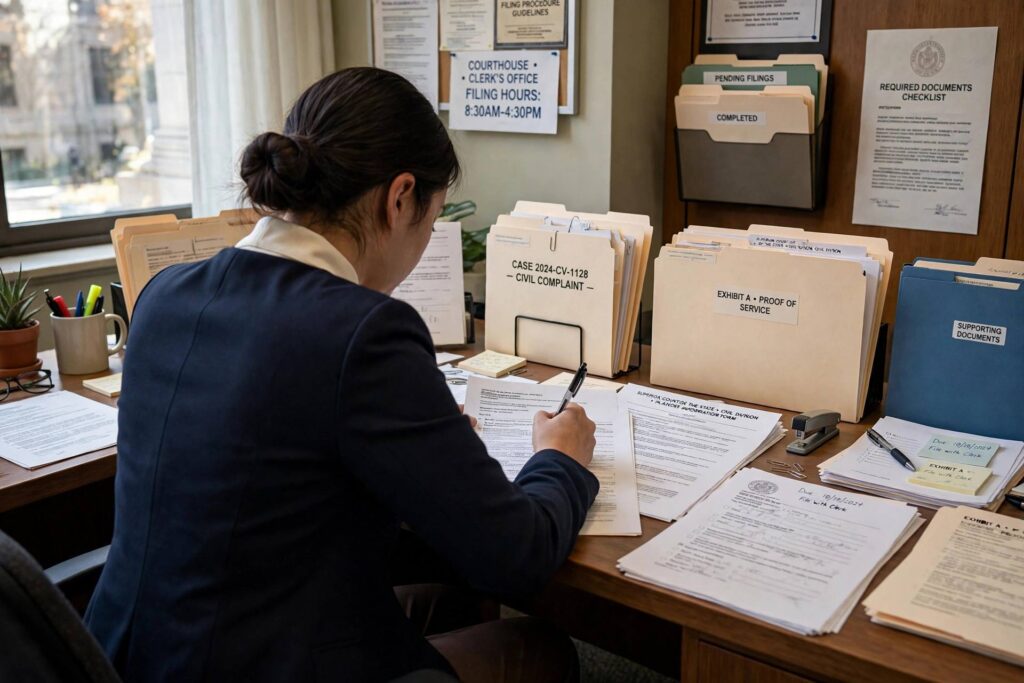
The process starts when someone, usually the named executor or a close family member, files a petition with the probate court along with the death certificate and the will. The court schedules a hearing, validates the will, and issues “letters testamentary” (or “letters of administration” if there is no will), the documents that give the executor legal authority to act. This phase also includes notifying heirs and beneficiaries. In efficient courts with uncontested filings, this can take a few weeks; in backlogged courts, a few months.
Phase 2: Inventory and Appraisal (2–4 months)
The executor identifies, locates, and values all probate assets: real estate, bank accounts, investments, vehicles, business interests, personal property. Real estate usually needs a professional appraisal. This phase often runs in parallel with the next one. Delays here usually come from hard-to-value assets (a family business, unusual collectibles) or assets nobody knew existed (an old investment account discovered months in).
Phase 3: Debts, Taxes, and Creditor Claims (3–6 months)
Creditors must be notified, typically through a published notice, and given a fixed window to file claims; that window is commonly 3 to 6 months depending on the jurisdiction, and the estate generally cannot close until it expires. The executor pays valid debts, files the deceased’s final income tax return, and handles any estate or inheritance taxes due. This creditor waiting period is the single biggest reason probate has a minimum duration; the clock simply has to run.
Phase 4: Distribution and Closing (1–3 months)
Once debts and taxes are settled, the executor distributes the remaining assets according to the will or intestacy law, files a final accounting with the court, and the court formally closes the estate. If property needs to be sold first, add the time that takes, which in a slow market can be months on its own.
The Total: What “How Long” Really Means
Add it up and a simple, uncontested estate with cooperative heirs typically takes 6 to 12 months. Estates with complications, contested wills, missing heirs, business assets, property in multiple states, routinely take 12 to 24 months, and genuinely contentious estates can drag on for years. When lawyers quote timelines, ask whether they mean best case or typical; the gap between the two is where frustration lives. If the estate includes property in more than one state, expect a separate ancillary probate proceeding in each additional state, each with its own filing, timeline, and costs, which is one more reason multi-state property owners plan with trusts. For most families, the practical takeaway is simple: the 6 to 12 month range assumes one state, cooperative heirs, and no contested claims, and every complication added moves the finish line further out.
What Probate Costs
Probate is not free, and the costs come in several layers. Court filing fees are usually modest, a few hundred dollars in most jurisdictions. Attorney fees are the big variable: some states set statutory fee schedules based on a percentage of the estate’s value, others leave it to hourly billing or negotiation. Executor fees may also apply, either set by the will, by statute, or by court approval. Add appraisal fees, accounting fees, and publication costs for creditor notices.
As a rough rule of thumb, total probate costs often land between 3% and 7% of the estate’s value, though small estates can see higher percentages because fixed costs do not scale down. These are general ranges, not quotes; your jurisdiction and your estate’s complexity decide the real number.

How to Avoid Probate (Or Shrink It Dramatically)
Here is the part most guides bury: much of probate is optional if you plan ahead. These are the standard tools, and they work by moving assets outside the probate estate.
Living trusts. A revocable living trust holds your assets during your lifetime and transfers them to beneficiaries without court involvement when you die. It is the most comprehensive probate-avoidance tool, though it requires actually retitling assets into the trust, the step people most often skip.
Beneficiary designations. Life insurance, retirement accounts, and many bank and investment accounts let you name beneficiaries directly. Those assets transfer by contract, bypassing probate entirely. Review these designations regularly; an ex-spouse still listed as beneficiary overrides what your will says.
Joint ownership with survivorship rights. Property owned jointly with right of survivorship passes automatically to the surviving owner. This is simple and effective for married couples, though it has trade-offs worth discussing with an attorney.
Transfer-on-death and payable-on-death designations. Many states allow TOD designations on real estate, vehicles, and securities, and POD designations on bank accounts. They function like beneficiary designations for assets that do not otherwise have them.
Small-estate procedures. Most jurisdictions offer simplified processes, affidavits or summary proceedings, for estates below a certain value threshold. If the estate is small, full probate may never be necessary.
Gifting during life. Assets you give away before death are not in your estate at all. This has tax implications to consider, but as a probate-reduction strategy it is straightforward.
Probate With a Will vs Without a Will
Having a will does not avoid probate; it directs probate. The will tells the court who you want in charge and who gets what, which makes the process smoother and faster. Without a will, the court appoints an administrator and distributes assets according to intestacy statutes, which follow a default hierarchy (spouse, children, parents, siblings, and so on) that may not match what the deceased would have wanted. Intestate estates also tend to take longer, because the court must verify heirship, which can mean tracking down relatives and resolving disputes about who counts as an heir.
Frequently Asked Questions
What is probate in simple terms?
Probate is the court-supervised process of settling a deceased person’s affairs: validating their will, paying their debts and taxes, and distributing remaining assets to heirs. It gives the executor legal authority to transfer property that was in the deceased’s name alone.
How long does probate take on average?
A straightforward, uncontested estate typically takes 6 to 12 months. Complicated estates with contested wills, business assets, or property in multiple states often take 12 to 24 months or longer. The creditor claim waiting period, usually 3 to 6 months, sets a practical minimum.
Do all estates have to go through probate?
No. Assets with named beneficiaries, jointly owned property with survivorship rights, and assets in a living trust transfer outside probate. Many jurisdictions also offer simplified procedures for small estates below a value threshold.
How much does probate cost?
Total costs commonly range from 3% to 7% of the estate’s value, including court fees, attorney fees, executor fees, and appraisal and accounting costs. Small estates may see higher percentages since some costs are fixed.
Can probate be avoided if there is a will?
A will does not avoid probate; it guides it. To avoid probate, assets must transfer by other mechanisms: living trusts, beneficiary designations, joint ownership with survivorship rights, or transfer-on-death designations.
What happens if someone dies without a will?
The estate goes through probate under intestacy law. The court appoints an administrator and distributes assets according to the state’s default hierarchy of heirs. This usually takes longer than probate with a will and may not reflect the deceased’s wishes.
Final Thoughts
Probate is slower and more expensive than most people expect, but it is also more predictable than it feels from the outside. Know the phases, know the timeline, and if you are planning your own estate, know that the best probate strategy is the one that keeps your family out of probate court in the first place. For anything beyond general understanding, talk to an estate attorney in your jurisdiction; this is one area where professional advice pays for itself.