How Does the Olympic Torch Relay Work? The Journey, Step by Step

Every two years, a flame lit by the sun in ancient Olympia travels thousands of miles to light a cauldron at the Olympic opening ceremony. It is one of sport’s most beautiful traditions, and also one of its most logistically insane. So how does the Olympic torch relay work, exactly? It works through a choreographed chain of torchbearers carrying the flame, in a specially designed torch, across the host country (and sometimes beyond), with backup flames, security details, and contingency plans for everything from rainstorms to the flame going out mid-run.
I have always been fascinated by the relay because it sits at the intersection of ancient ritual and modern event management. In this guide: the flame’s journey step by step, the surprisingly serious logistics of keeping a flame alive for months, how torchbearers get selected, and the moments when it all went sideways.
It Starts With the Sun in Olympia
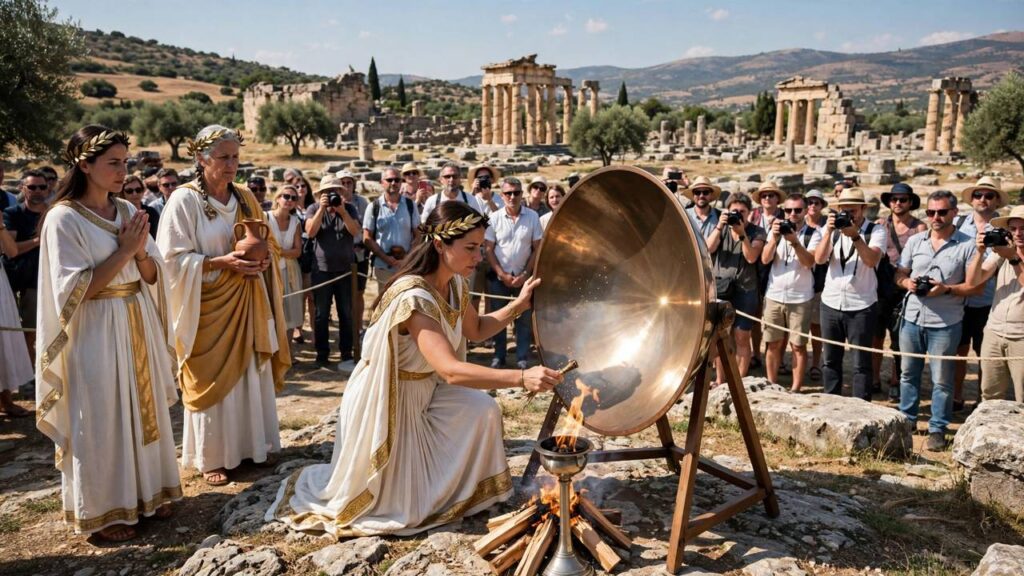
The relay begins months before the Games at the Temple of Hera in Olympia, Greece, the ancient birthplace of the Olympics. In a ceremony blending history and theater, an actress playing a high priestess uses a parabolic mirror to focus the sun’s rays and ignite the flame. No matches, no lighters; the tradition demands solar ignition.
What happens when it is cloudy? The organizers light a backup flame in rehearsals days earlier using the same mirror method, kept burning in reserve. The ceremony proceeds with the backup if the sun does not cooperate, and nobody in the audience can tell the difference. Practicality quietly underwrites the ritual, as it does throughout the relay.
The flame is placed in a ceremonial urn, and the first torchbearer, traditionally a Greek athlete, begins the relay. For the Winter Games, the flame then travels to the host country; for the Summer Games, same, via a carefully staged handover ceremony in Athens’ Panathenaic Stadium, where the flame is formally transferred to the host nation’s delegation.
How Does the Olympic Torch Relay Work? The Journey Step by Step
Planning the route. The host organizing committee designs a route that typically lasts 2-3 months and covers the host nation extensively, sometimes tens of thousands of kilometers. Route planning balances symbolism (historic sites, diverse regions), logistics (roads that can handle the convoy), and politics (every region wants its moment). The route is announced in stages to build anticipation.
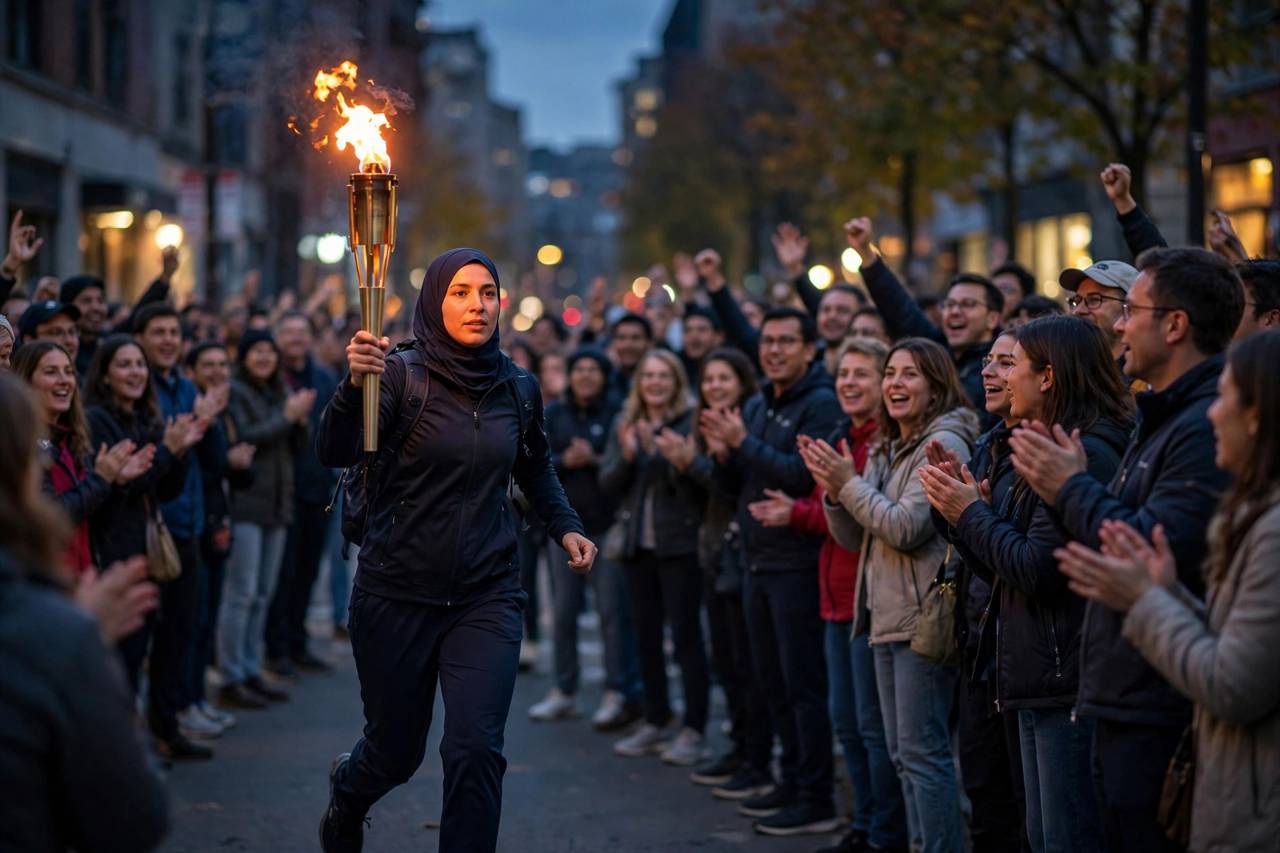
The daily rhythm. Each day, the flame travels a planned segment. Torchbearers run (or walk, or occasionally use other transport for long rural stretches) short legs, usually 200-400 meters each, passing the flame from torch to torch. Between bearer segments, the flame travels in a security convoy, and overnight it rests in a ceremonial lantern at a designated location, guarded, because the flame must never go out.
The torch-to-torch transfer. Each torch has its own fuel supply, so the “passing” of the flame is really an ignition: the incoming bearer’s torch lights the next bearer’s torch, often with a ceremonial kiss of the torches that makes for great photographs. The exchange is choreographed and rehearsed; it looks spontaneous and is anything but.
Special transport. The flame does not only travel by foot. Past relays have carried it by plane, boat, train, camel, and even underwater by scuba diver and into space. Long-distance transfers between cities happen in secured lanterns aboard aircraft, with the flame’s continuity carefully maintained. The rule is simple: the flame that lights the cauldron must be traceable back to Olympia, transfers and transport included.
The Flame Logistics: Backup Flames and What Happens When It Goes Out
Here is the part that fascinates engineers: keeping a flame alive, continuously, for months, across continents, in all weather.
The mother flame. From the lighting ceremony, multiple “mother flames” are kept burning in miners’ lanterns, secure, windproof containers. These travel with the relay as the ultimate backup. If every torch went out simultaneously, the mother flame relights them, preserving the unbroken chain back to Olympia.
When torches go out. It happens more often than organizers admit: strong wind, rain, a faulty fuel canister. The protocol is well-rehearsed: the bearer stops, security produces a backup flame from a lantern in the convoy, and the torch is relit within seconds. Spectators rarely notice. The show continues because the contingency was planned, not because of luck.
The torches themselves. Each Games designs a custom torch, and the engineering is serious: fuel systems that burn reliably in wind and rain, ergonomic grips for hundreds of different bearers, and designs that photograph well. Torches are typically fueled by propane or a propane-butane mix in later Games, replacing older liquid fuels. Bearers usually get to keep their torch as a memento, which is why Olympic torches are prized collectibles.
How Torchbearers Are Selected
Carrying the torch is a genuine honor, and selection is a structured process, not a lottery (though public nomination programs play a big role).
Public nominations. Each Games runs a public program inviting nominations of community heroes: teachers, volunteers, local athletes, people with inspiring stories. A significant share of torchbearer slots, often the majority, goes to these nominees. This is the democratic heart of the relay.
Sponsors and partners. Olympic sponsors receive torchbearer allocations as part of their partnerships, which they typically distribute through their own contests and employee programs. This is the commercial reality funding the spectacle.
Athletes and dignitaries. A smaller share goes to Olympians (past and present), local sports figures, and ceremonial figures. The final torchbearer, the one who lights the cauldron at the opening ceremony, is the most closely guarded secret in the Games, often revealed only in the moment, and chosen for maximum symbolic impact.
Selection criteria generally emphasize community contribution and inspirational stories over fame, though the final legs skew toward recognizable figures for the television audience. If you have ever wondered how to become one, watch for the host committee’s public nomination program, usually opening about a year before the Games.
The Finale: Lighting the Cauldron
The relay’s final leg happens inside the Olympic stadium during the opening ceremony. The last torchbearer (or bearers) enters the stadium, and in the ceremony’s climactic moment, lights the Olympic cauldron, a large ceremonial vessel that will burn for the duration of the Games. The cauldron lighting is traditionally the ceremony’s best-kept secret, with past editions featuring archers firing flaming arrows, athletes ascending on wires, and other theatrical reveals.
The cauldron flame burns continuously until the closing ceremony, when it is extinguished, marking the Games’ end. The relay flame’s journey, from a parabolic mirror in Olympia to a stadium cauldron watched by billions, is complete.
When the Relay Made Headlines (For the Wrong Reasons)
The relay has not always been smooth pageantry. Protests have targeted the relay route at multiple Games, turning torch segments into security operations. Weather has forced cancellations and reroutes. And the COVID-era Tokyo relay ran under extraordinary restrictions, with public legs cancelled and the flame carried through empty streets in some segments, a surreal chapter in the tradition’s history.
These disruptions underscore something important: the relay is not just ceremony; it is a massive, months-long public event touching thousands of communities, which makes it a natural focal point for whatever the world is arguing about. The flame keeps moving anyway. That resilience is arguably the point.
Famous Torch Relay Moments
A few relays earned their place in history. The 1936 Berlin relay was the first ever, invented for those Games, which surprises people who assume the tradition is ancient; the ancient Olympics had no torch relay, though they did keep a sacred flame burning. The 2000 Sydney relay took the flame underwater across the Great Barrier Reef with a specially engineered flare. The 2004 Athens relay went global, carrying the flame to every continent before returning home, the first truly worldwide relay. And the 2012 London relay featured 8,000 torchbearers over 70 days, one of the most inclusive selections ever. Each relay reflects its era, and together they tell the story of how a 1936 invention became timeless tradition. The cauldron lightings are legend in their own right, from the archer’s flaming arrow in Barcelona 1992 to the wire-suspended athletes of more recent ceremonies.
Frequently Asked Questions
How long does the Olympic torch relay last?
Typically 2-3 months for the Summer Games, covering the host country extensively. The Winter relay is often shorter. The flame is lit in Olympia months before the opening ceremony to allow time for the full journey.
How is the Olympic flame lit?
By focusing the sun’s rays with a parabolic mirror at the Temple of Hera in Olympia, Greece, in a ceremony performed by an actress as high priestess. A backup flame lit the same way in rehearsals covers cloudy days.
What happens if the Olympic torch goes out?
Backup flames carried in secure lanterns within the relay convoy relight it within seconds. Multiple “mother flames” travel with the relay precisely for this purpose, preserving the unbroken chain back to Olympia.
How are Olympic torchbearers chosen?
Through public nomination programs (community heroes), sponsor allocations, and selections of athletes and dignitaries. The final cauldron-lighter is chosen for symbolic impact and kept secret until the opening ceremony.
Do torchbearers get to keep the torch?
Usually, yes. Bearers typically purchase or are gifted their torch as a memento, which is why Olympic torches become valued collectibles. Policies vary slightly by Games.
Has the Olympic flame ever gone out for good?
Individual torches go out regularly due to weather and are relit from backups. The ceremonial continuity, the unbroken chain back to the Olympia lighting, has been maintained through the backup-flame system even when individual torches fail.
Final Thoughts
The torch relay is ancient ritual performed with modern logistics: a flame lit by the sun, carried by thousands of ordinary heroes, protected by backup flames and security convoys, ending in a stadium before billions. Understanding how it works only makes it more impressive, not less. The magic was never that the flame is mystical; it is that so many people work so hard to keep it burning. Watch for the relay route announcement before the next Games; the flame may be coming through a town near you.