How Does the NFL Draft Work? A Beginner’s Plain-English Guide

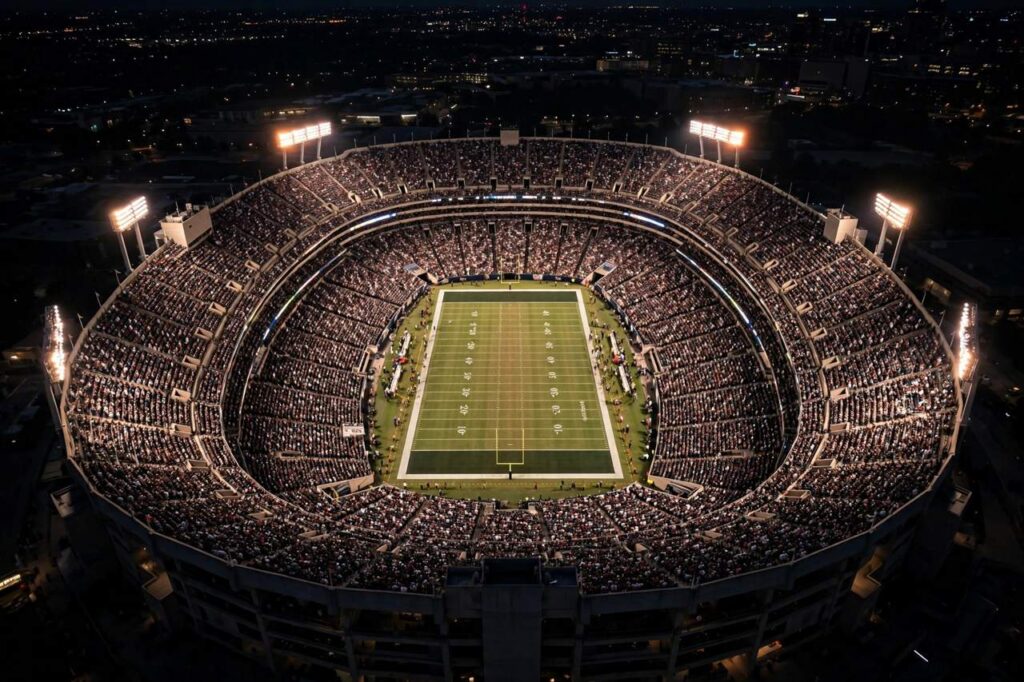
Every spring, the NFL draft turns college football players into professionals in a three-day televised event full of trades, surprises, and war-room drama. If you’ve ever watched and wondered what’s actually happening, you’re not alone. The question of how does the NFL draft work comes up every year from new fans, because the system has real complexity underneath the spectacle. This guide explains it all in plain English: the seven rounds, why the worst teams pick first, how pick trading works, and what compensatory picks are.
No prior football knowledge required. By the end, you’ll understand the draft better than half the people arguing about it on sports radio.
How Does the NFL Draft Work: The Worst-Team-First Logic
The draft’s core logic is competitive balance. The team with the worst record from the previous season picks first in each round, and the Super Bowl champion picks last. This gives struggling teams first access to the best young talent, which is how bad teams get better over time.
It’s a simple idea with a profound effect: it’s the main reason the NFL has more parity than leagues without drafts. A terrible season isn’t just failure; it’s the currency that buys the next franchise quarterback. Fans of bad teams even have a phrase for it: “tanking for” whichever prospect is supposed to save them, though teams officially never admit to losing on purpose.
The Structure: 7 Rounds, 3 Days
The draft has seven rounds, with each of the 32 teams getting one pick per round, for 256 total picks before trades and compensatory selections shuffle the math. The event runs over three days.
- Day 1 (Thursday night): Round 1 only. This is the primetime spectacle, each pick getting up to ten minutes, with the biggest names and the biggest drama.
- Day 2 (Friday night): Rounds 2 and 3. Still televised, still important; many starters come from these rounds.
- Day 3 (Saturday): Rounds 4 through 7. Faster pace, five minutes per pick, where teams find role players, specialists, and the occasional hidden star.
When a team is “on the clock,” they have a set time to make their pick: ten minutes in round one, seven in round two, five in rounds three through six, and four in round seven. If time expires, the next team can pick, though the skipped team can still submit their pick whenever ready.
How the Draft Order Is Set
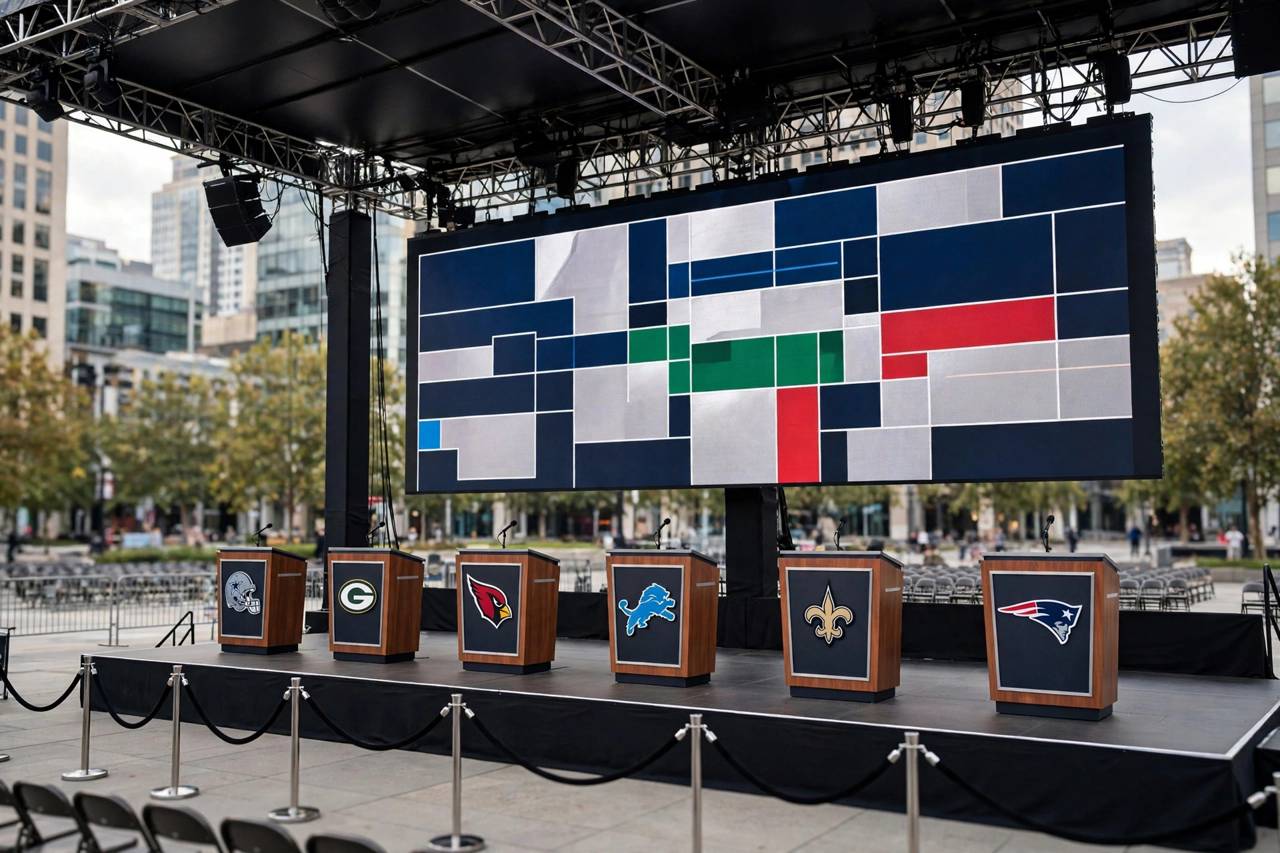
The base order is reverse standings: worst record picks first. Teams with identical records are ordered by strength of schedule, with the team that faced weaker opponents picking earlier. Playoff teams pick after non-playoff teams, ordered by how far they advanced, with the Super Bowl winner last and the loser second-to-last.
This base order is then modified by trades, which is where things get interesting. Teams trade picks the way other assets get traded: a team wanting a specific player trades up, giving away current and future picks to move higher; a team happy to wait trades down, collecting extra picks. Future picks are routinely included, which means teams are betting on where they’ll finish next season.
The value of picks isn’t random. Teams use draft value charts that assign point values to each pick, so trades can be evaluated as roughly fair. A top-five pick is worth a fortune in these charts; a seventh-rounder is nearly free. Understanding this is the key to understanding why teams make the trades they do.
Pick Trading: The Draft’s Chess Game
Trading is where general managers earn their reputations. The classic move is trading up for a quarterback: a team in love with a prospect surrenders multiple picks, sometimes across multiple years, to jump ahead of competitors. When it works, it’s franchise-altering. When it doesn’t, it’s the kind of mistake that gets people fired.
Trading down is the quieter, often smarter play. A team with no urgent need at the top collects extra picks from a desperate trade partner, then uses the volume to build depth. Championship rosters are frequently built more on accumulated mid-round picks than on single stars.
Draft-day trades happen live, under time pressure, with phones ringing across thirty-two war rooms. The ten-minute clock in round one isn’t just for drama; it’s the window for last-second negotiations. Some of the draft’s most memorable moments are trades announced seconds before a pick.
Compensatory Picks: The Bonus Round Explained
Compensatory picks are extra selections awarded to teams that lost more free-agent talent than they gained the previous year. The league awards up to 32 of them, slotted at the ends of rounds three through seven. They’re the draft’s way of softening the blow of losing good players to free agency.
The formula is secret, but it’s based on the value of players lost versus gained: salary, playing time, and postseason honors factor in. Teams that develop talent and lose it to big contracts elsewhere get rewarded; teams that spend big in free agency get nothing. Savvy front offices manage their free-agent moves partly to maximize these picks.
Since a recent rule change, compensatory picks can be traded like normal picks, which added a whole new layer of draft strategy. What was once a consolation prize is now a trade asset.

What Happens After the Pick
Being drafted is the start, not the finish. Drafted players sign four-year rookie contracts with salaries set by a wage scale tied to draft position; first-round picks get a fifth-year team option. Then comes rookie minicamp, training camp, and the fight to make the roster. Roughly speaking, early picks are expected to contribute immediately while late picks fight for special-teams roles and practice squad spots.
And the draft isn’t the only door. Every year, undrafted free agents, players no team picked, sign with teams after the draft and some become stars. The draft gets the television coverage, but talent evaluation continues long after the seventh round ends.
The NBA runs a similar system with its own twists, so if this clicked for you, how the NBA draft works makes a great next read for comparing the two leagues’ approaches.
Draft Steals and Busts: Why Evaluation Is So Hard
Every draft produces steals, late-round picks who become stars, and busts, top picks who flame out. The history is humbling for everyone who claims certainty about prospects. Quarterbacks drafted in the sixth round have won Super Bowls; first-overall picks have been out of the league in four years. This isn’t incompetence; it’s the genuine difficulty of projecting 21-year-olds.
What separates good drafting teams isn’t perfect prediction but process: valuing the right traits, accumulating picks to survive misses, and developing players after drafting them. A team that drafts well in rounds three through five consistently outperforms a team that nails one first-rounder and whiffs the rest. Volume plus development beats individual genius.
Draft Grades: Should You Believe Them?
Every outlet publishes draft grades within hours of the draft ending, and they’re nearly meaningless. Nobody knows how a draft class performs for three years, and instant grades mostly measure whether teams picked the players the media expected, not whether the picks were good. Teams routinely get “C” grades for drafts that produce multiple starters.
Enjoy draft grades as entertainment, which is what they are. The real evaluation happens on the field, years later. If you want to judge a front office, look at their three-year hit rate on starters and contributors, not the letter grade a website assigned on Saturday night.
Undrafted Free Agency: The Draft After the Draft
When the seventh round ends, a second draft begins immediately: undrafted free agency. Teams race to sign the best remaining players, often within minutes, and the competition is fierce because every team knows the draft is an imperfect filter. Players choose based on roster opportunity, scheme fit, and signing bonuses that can reach six figures for priority free agents.
This frenzy produces real NFL contributors every year, including occasional stars. Teams with strong developmental reputations recruit undrafted players the way colleges recruit high schoolers. If the draft is the main event, undrafted free agency is the savvy fan’s undercard, and following which undrafted players make rosters in August is one of the draft season’s best stories.
Frequently Asked Questions
How many picks are in the NFL draft?
256 base picks: 32 teams times 7 rounds, plus up to 32 compensatory picks. Trades redistribute them, so individual teams may hold anywhere from a handful to a dozen-plus selections.
Can teams trade players for draft picks?
Yes. Player-for-pick trades happen, though pick-for-pick trades are more common on draft day itself. Veteran players are sometimes dealt for draft capital during the draft weekend.
What is the draft lottery? Does the NFL have one?
The NFL has no lottery; the order is strictly by record (then playoff results), unlike the NBA, which lotteries its top picks. The worst NFL team is guaranteed the first pick, barring trades.
Do drafted players have to sign with the team that picked them?
Essentially yes, if they want to play in the NFL that season. A drafted player’s rights belong to the team; holding out is possible but rare under the modern rookie wage scale, which fixed most of the old contract disputes.
What happens to players who don’t get drafted?
They become undrafted free agents and can sign with any team immediately after the draft. Many make rosters and some become stars; the draft evaluates talent imperfectly, and teams know it.
What is the draft combine?
The NFL Scouting Combine is a pre-draft event where invited prospects perform standardized athletic tests (40-yard dash, bench press, agility drills) and interview with teams. It provides comparable measurements across players but doesn’t replace game film; teams that overvalue combine numbers over college production get burned regularly.
When is the NFL draft held each year?
The draft takes place in late April, running Thursday through Saturday. The exact dates shift slightly each year, but it’s consistently the last weekend of April, about three months after the Super Bowl.
The Bottom Line
Seven rounds, worst team first, three days, constant trading, and compensatory picks as a bonus layer. The draft is the NFL’s engine of parity and its best offseason theater. Now when someone yells about their team trading up, you’ll know exactly what it cost.