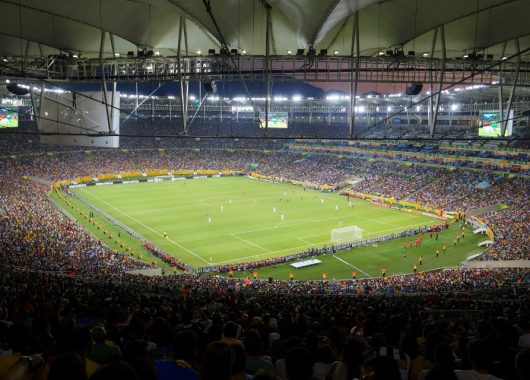

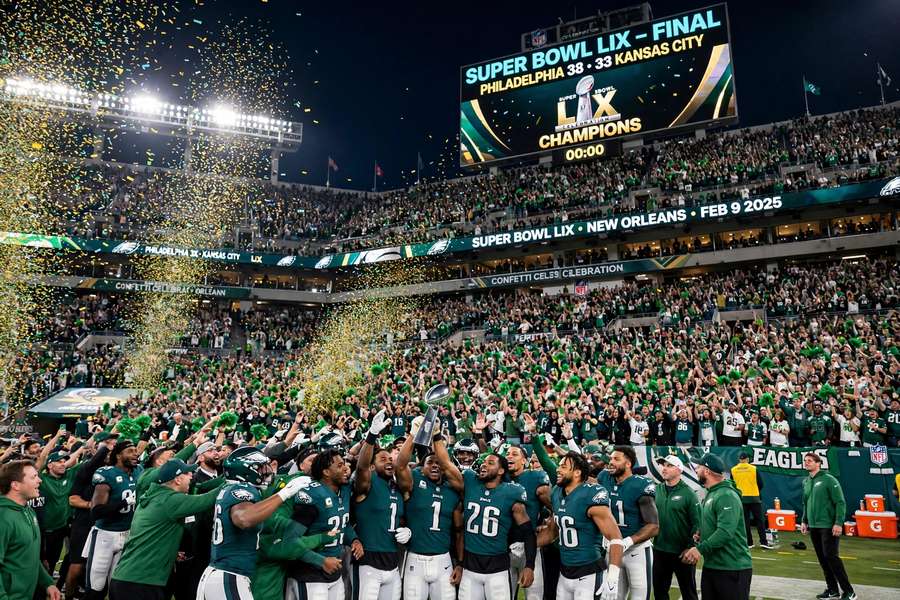
The Super Bowl is the biggest single-day sporting event in America — over 110 million viewers, the most expensive ads on television, and a halftime show that sometimes outdraws the game itself. But if you’re new to football, the whole production can feel like an elaborate ritual you weren’t invited to learn.
I’m Ryan, and I’ve watched every Super Bowl since I was old enough to stay up for one. Here’s how the whole thing works — from how teams get there to what happens if the game is tied at the end.
Table of Contents
- What the Super Bowl Is
- How Teams Qualify: The Road to the Super Bowl
- The Playoff Format
- Game Rules: Same as Any NFL Game
- Overtime Rules
- The Halftime Show
- Why It’s Such a Cultural Event
- Legendary Super Bowl Moments
- Frequently Asked Questions
What the Super Bowl Is
The Super Bowl is the NFL championship game, played once a year — currently on the second Sunday in February. It pits the champion of the AFC (American Football Conference) against the champion of the NFC (National Football Conference).
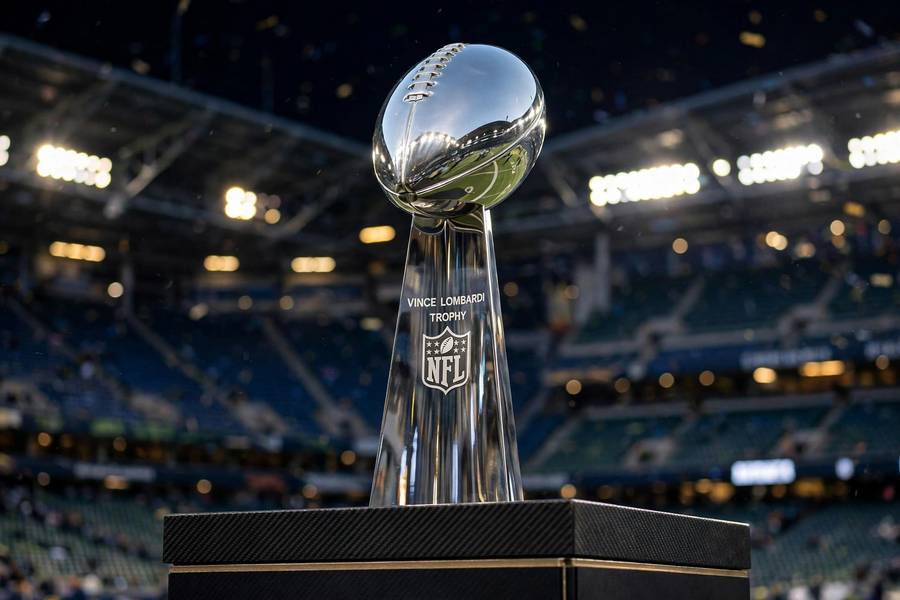
The winner receives the Vince Lombardi Trophy (named after the legendary Packers coach) and, just as importantly, eternal bragging rights. Players get championship rings — increasingly enormous, increasingly diamond-encrusted.
The game is always held at a neutral site, chosen years in advance — usually a warm-weather city or a domed stadium. Recent hosts include Las Vegas, New Orleans, and Los Angeles.
How Teams Qualify: The Road to the Super Bowl
The NFL has 32 teams split into two conferences (AFC and NFC), each with four divisions of four teams.
The regular season: Each team plays 17 games over 18 weeks. The goal is to finish with one of the best records in your conference.
Playoff qualification: 7 teams per conference make the playoffs:
– The 4 division winners (best record in each division)
– 3 wild card teams (the next-best records in the conference)
The #1 seed in each conference gets a first-round bye — a massive advantage.
The playoffs: Single elimination. Lose once and you’re done. Three rounds per conference:
1. Wild Card Round (seeds 2–7 play; #1 seed rests)
2. Divisional Round (winners join the #1 seed)
3. Conference Championships — the AFC Championship and NFC Championship games. Winners go to the Super Bowl.
So a team must win 3 (or 2, with a bye) consecutive do-or-die games just to reach the Super Bowl. It’s a gauntlet — which is why Cinderella runs (like a 6th seed winning it all) become instant legend.
The Playoff Format
The NFL playoffs are the purest “win or go home” tournament in American sports — no best-of-seven series like basketball or baseball. One bad quarter ends your season. This single-elimination brutality is a big part of why NFL playoff games feel so intense: there’s no tomorrow to fix today’s mistakes.
Seeding matters enormously: higher seeds host games, and in January, home-field advantage in a freezing outdoor stadium is a real weapon. (Compare this to soccer’s biggest tournament, which uses groups before knockouts — here’s how the World Cup works if you’re curious about the contrast.)
Game Rules: Same as Any NFL Game
The Super Bowl itself is played under standard NFL rules — four 15-minute quarters, the same officiating, the same everything. There’s no special “championship rules” variant. The differences are all around the game, not in it:
- Longer pregame: Extended ceremonies, the national anthem (a whole event in itself), and a longer player introduction.
- Longer halftime: About 30 minutes instead of the usual 12–13, to accommodate the halftime show and stage setup/teardown.
- More commercial breaks: The most expensive ad slots in television mean the broadcast stretches to about 4 hours.
Overtime Rules
If the Super Bowl is tied after four quarters, it goes to overtime — and yes, it has happened (Super Bowl LI, Patriots vs. Falcons, 2017 — the famous 28-3 comeback).
Current NFL overtime rules (postseason):
– Each team is guaranteed at least one possession, even if the first team scores a touchdown. (This changed after the 2021 Bills-Chiefs playoff game, where Buffalo never touched the ball in OT.)
– If the score is still tied after both possessions, it becomes sudden death — next score wins.
– In the regular season, overtime is 10 minutes and games can end in a tie. In the playoffs and Super Bowl, overtime periods are 15 minutes and play continues until someone wins — no ties.
The Halftime Show
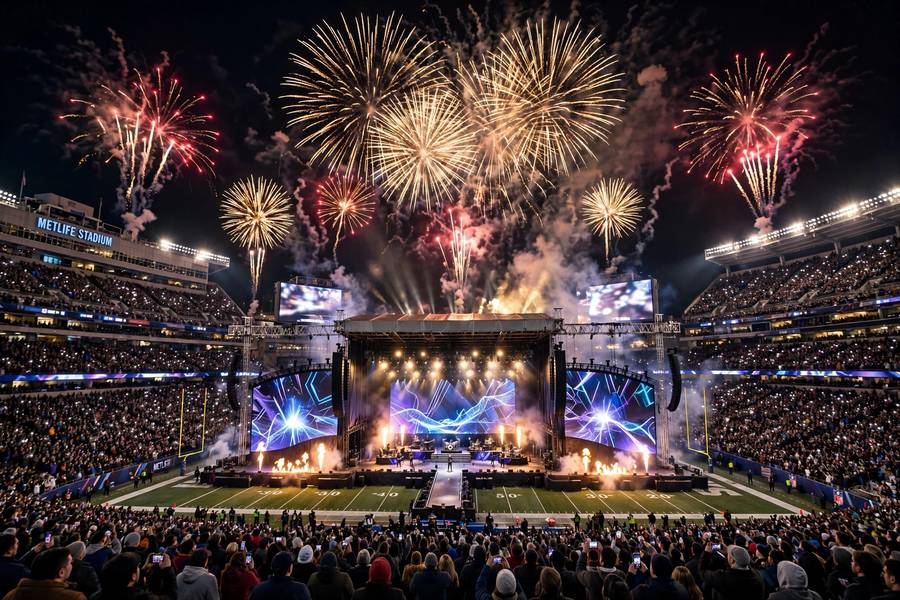
The Super Bowl halftime show has grown from a marching-band interlude into one of the biggest music performances of the year — regularly drawing 100+ million viewers on its own.
How it works logistically is genuinely impressive: a crew of hundreds assembles a full concert stage on the field in about 6 minutes, the artist performs for roughly 13–15 minutes, and then the whole thing is torn down in another 6 minutes so the second half can start. It’s a military operation with choreography.
Past headliners read like a music hall of fame: Michael Jackson, Prince (in the rain — legendary), Beyoncé, Madonna, Dr. Dre and Snoop Dogg, Rihanna, Usher. The halftime show announcement is itself a major news event every year.
Why It’s Such a Cultural Event
The Super Bowl transcends sports in a way no other American event does:
- The ads: Companies pay $7+ million for 30 seconds. The commercials are premiered like movie trailers, ranked the next day, and discussed at work on Monday by people who didn’t watch a single play.
- The food: It’s America’s second-biggest food consumption day after Thanksgiving. Chicken wings alone: over a billion consumed.
- The parties: More people attend Super Bowl parties than watch alone. It’s a social event that happens to have a football game in the middle.
- The betting: Legal sports betting has made the Super Bowl America’s biggest betting event — including prop bets on the coin toss, the anthem length, and the halftime show.
Legendary Super Bowl Moments
A few games every new fan should know — they’re referenced constantly:
Super Bowl III (1969): Joe Namath guaranteed victory for the underdog Jets over the heavily favored Colts — and delivered. The birth of the Super Bowl as a cultural event, not just a championship.
Super Bowl XXV (1991): The Bills’ Scott Norwood missed a 47-yard field goal “wide right” in the final seconds. Giants won 20-19. The cruelest finish in Super Bowl history, and the start of Buffalo’s four straight Super Bowl losses.
Super Bowl XLII (2008): The undefeated Patriots (18-0) vs. the underdog Giants. David Tyree’s “helmet catch” — pinning the ball to his helmet while being dragged down — set up the game-winning touchdown. The greatest upset ever.
Super Bowl XLIX (2015): The Seahawks, at the 1-yard line, trailing by 4, with the best power running back in football — threw a pass. Intercepted. The most second-guessed play call in sports history.
Super Bowl LI (2017): Patriots down 28-3 late in the third quarter. The largest comeback in Super Bowl history, won in the first-ever Super Bowl overtime. If someone says “28-3,” this is what they mean.
Super Bowl LVII (2023): Chiefs vs. Eagles — a 38-35 shootout decided by a last-minute field goal, widely called one of the best-played Super Bowls ever.
Keep reading: if this helped, you’ll also like golf scoring — I wrote them in the same plain-English style.
Frequently Asked Questions
Seven teams per conference make the NFL playoffs (4 division winners + 3 wild cards). They play single-elimination rounds — Wild Card, Divisional, then the Conference Championship. The AFC and NFC champions meet in the Super Bowl.
The Super Bowl is played on the second Sunday in February at a neutral-site stadium chosen years in advance, usually in a warm-weather city or domed stadium.
In the postseason, both teams are guaranteed at least one possession in overtime, even if the first team scores a touchdown. If still tied after both possessions, it becomes sudden death — next score wins. Playoff overtime has no ties.
The performance itself runs about 13–15 minutes, but halftime is extended to roughly 30 minutes total to allow a crew of hundreds to assemble and tear down the stage in about 6 minutes each way.
The winning team receives the Vince Lombardi Trophy, and each player and coach gets a Super Bowl championship ring. The victory also cements legacies — quarterbacks especially are judged by Super Bowl wins.
Yes — Super Bowl LI in 2017 (Patriots vs. Falcons) was the first, famous for New England’s comeback from 28-3 down to win 34-28 in overtime.