How to Clean Suede Shoes at Home: A Stain-by-Stain Diagnostic Guide

Suede is the drama queen of shoe materials: gorgeous, soft, and completely unforgiving if you treat it wrong. I learned this the hard way when I “cleaned” a pair of suede boots with a wet cloth and turned a small scuff into a permanent water stain. Here is the thing most generic guides get wrong about how to clean suede shoes at home: there is no single method, because different stains need completely different fixes. Water stains, salt lines, oil spots, and scuffs each demand their own treatment, and using the wrong one makes things worse.
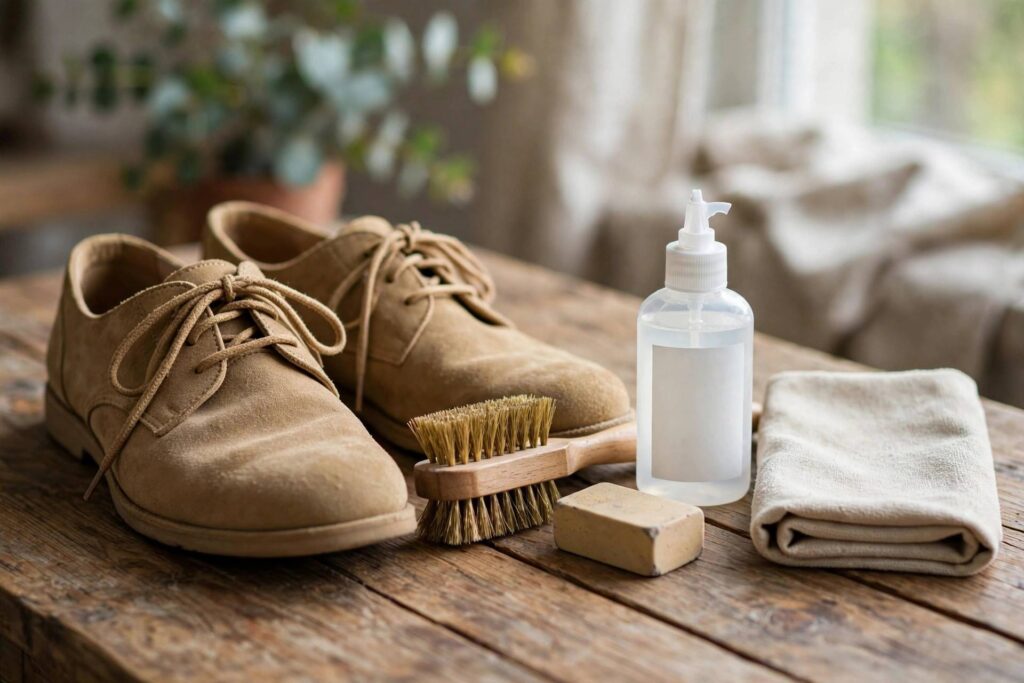
This guide is diagnostic. Find your stain type below, follow its specific fix, and your suede will come through looking better than it has in months. You will need a suede brush (a clean, dry toothbrush works in a pinch), a suede eraser (a plain white pencil eraser works), white vinegar, cornstarch or talcum powder, and clean cloths. That is the whole kit.
Golden Rule: Never Use Water First
Before we get to the stain types, burn this into your memory: water is suede’s enemy during cleaning. Suede is leather with a napped, fuzzy surface, and water flattens the nap and leaves tide marks as it dries. Every method below is dry-first. Water appears only in controlled, minimal amounts for specific stains, and always followed by proper drying. If you remember nothing else from this article, remember that.
Stain Type 1: Scuffs and Surface Dirt
What it looks like: light marks, dull patches, or a general dusty appearance, usually on the toe and heel.
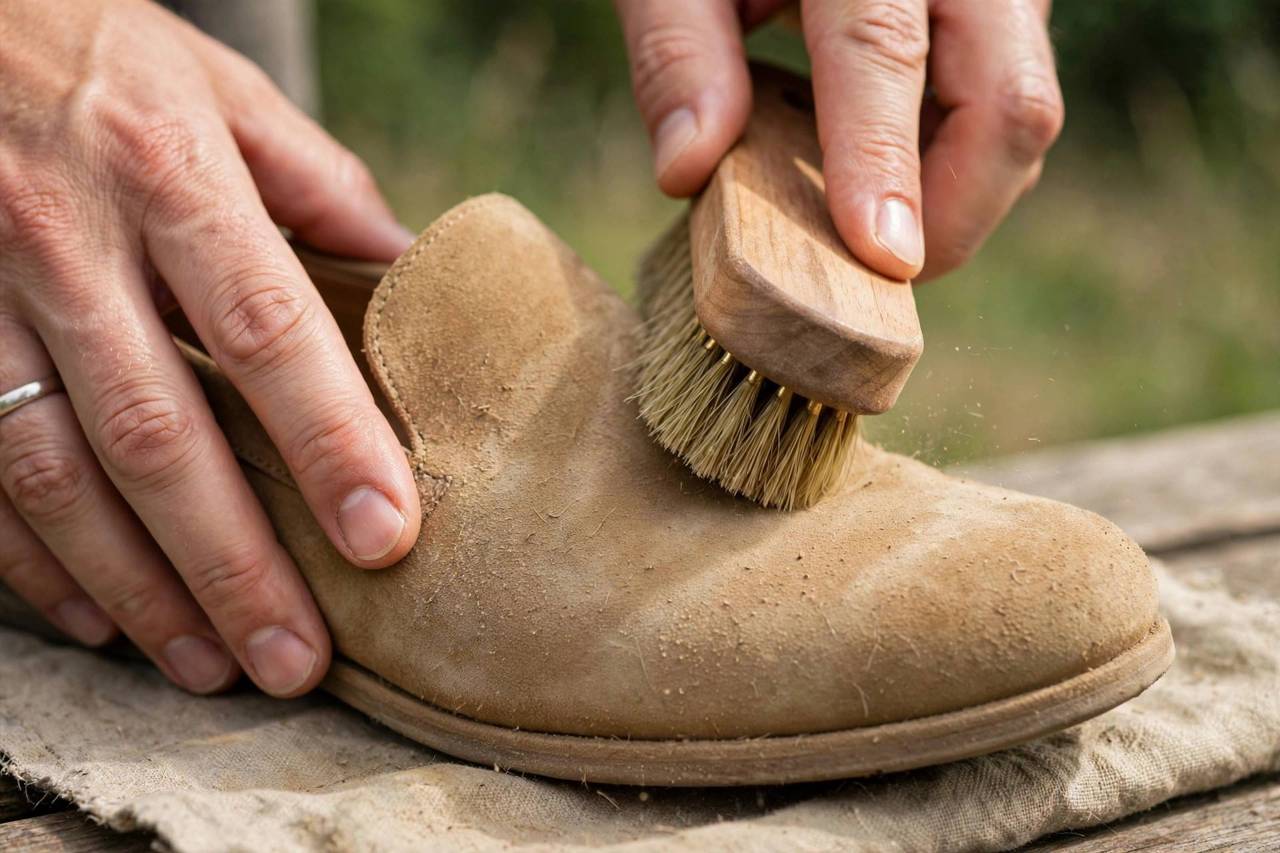
The fix: This is the easiest one. Brush the dry shoe with a suede brush using firm, single-direction strokes, always brushing with the nap (the direction the fibers naturally lie). For stubborn scuffs, use a suede eraser or white pencil eraser with gentle pressure, the friction lifts the mark and the eraser crumbles take the dirt with them. Brush again afterward to restore the nap. Nine times out of ten, this is all the shoe needs.
If the nap looks flattened in one direction, brush against the nap briefly to lift the fibers, then finish with the nap to smooth them. Think of it like petting a cat: with the fur for the final pass.
Stain Type 2: Water Spots
What it looks like: darker rings or blotches with defined edges, exactly where water dried. Rain is the usual culprit.
The fix: This one is counterintuitive: you fix a water stain with a tiny, controlled amount of water. Lightly dampen the entire shoe (or the entire panel) with a fine mist of water, not a soak, just enough to dampen the nap evenly. The goal is to erase the tide line by making the whole area dry uniformly. Then stuff the shoes with newspaper or shoe trees to hold their shape and let them dry naturally, away from heat, for at least 24 hours. Once fully dry, brush the nap back up.
Why the whole panel? Because spot-wetting creates a new tide line right where you stopped. Evening out the moisture is the entire trick. And “away from heat” is non-negotiable: radiators and hair dryers cook suede stiff and can shrink it.
Stain Type 3: Salt Stains (Winter’s Revenge)
What it looks like: white, crusty rings and lines, usually around the sole line after walking on salted sidewalks.
The fix: Let the shoes dry completely first; never work on damp salt stains. Brush off all loose salt with a dry brush. Then mix equal parts white vinegar and water, dampen a clean cloth with the mixture (wring it nearly dry), and gently dab the salt lines. The mild acid dissolves the salt residue. Follow with a barely damp clean cloth to remove the vinegar, stuff with newspaper, and air-dry for 24 hours. Brush when dry.
For heavy salt damage that has been sitting all winter, you may need two rounds. Patience beats pressure here; aggressive rubbing on salt-damaged suede can tear the weakened nap right off.
Stain Type 4: Oil and Grease Spots
What it looks like: dark, translucent-looking spots that do not brush out. Food splashes, leather conditioner from another pair, hand lotion transferred by touch.
The fix: Oil needs an absorbent, not a solvent, as the first move. Cover the spot generously with cornstarch, talcum powder, or baking soda and leave it for at least 8 hours, overnight is better. The powder draws the oil out of the fibers. Brush the powder away, then repeat if a shadow remains. For fresh oil, this often works completely.
For old, set-in grease, after the powder treatment, try a tiny amount of white vinegar on a cloth, dabbed gently, then air-dry and brush. If the spot survives all of that, a professional suede cleaner is the next step, because aggressive home solvents risk stripping the suede’s color.
Stain Type 5: Mud and Dried Dirt
What it looks like: caked or dried muddy patches.
The fix: Let it dry completely, I know it is tempting, but wet mud smears into the nap permanently. Once dry, brush vigorously with the suede brush to break up the dirt, then use the eraser on anything remaining. For fine dust left behind, a strip of masking tape pressed gently onto the suede and lifted away pulls out embedded particles. Finish by brushing the nap up.
What Ruins Suede (Please Avoid These)
Machine washing. Suede should never go in a washing machine. The agitation, water, and detergent destroy the nap and can shrink the leather.
Direct heat. Radiators, hair dryers on hot, and direct sunlight while drying all stiffen and discolor suede. Always air-dry at room temperature.
Colored cloths and dyed erasers. Use white cloths and white erasers only. A pink eraser or a dyed rag can transfer color into damp suede, creating a brand-new stain.
Household cleaners. Bleach, all-purpose sprays, and harsh detergents strip suede’s finish and color. If a product does not say it is for suede, keep it away.
Waterproofing sprays meant for other materials. Only use protectors specifically labeled for suede and nubuck. Silicone sprays meant for boots can darken and stiffen suede.
Protecting Suede After Cleaning
Once your shoes are clean and dry, protect the work. Apply a suede protector spray (labeled for suede/nubuck) in light, even coats, holding the can about six inches away. Let each coat dry before adding another; two light coats beat one heavy one. Reapply every few months, or after any deep cleaning. Store suede shoes with shoe trees or stuffed with acid-free tissue, in breathable bags rather than sealed plastic, which traps moisture.
And the simplest protection of all: check the weather. Suede and surprise rainstorms are a bad combination, and no protector makes suede truly waterproof. When the forecast looks threatening, wear something else.
How to Clean Suede Shoes at Home: The 10-Minute Maintenance Routine
Deep cleaning gets the attention, but a simple maintenance routine prevents most stains from ever needing it. Once a month, or after every few wears, run through this ten-minute reset. First, knock the soles together outside and dry-brush the entire shoe with a suede brush, working with the nap, to lift dust before it embeds. Second, hit any fresh scuffs with the suede eraser while they are still surface-level; a scuff treated today takes ten seconds, while the same scuff ignored for a month bonds with the fibers and needs real work. Third, check the nap direction under good light: if any area looks flattened or shiny, brush against the nap briefly to lift the fibers, then smooth with the nap for the finish.
Fourth, reapply suede protector spray if water no longer beads on the surface. The bead test is the honest indicator: flick a few drops of water onto the toe, and if they sit as beads, your protection is intact; if they soak in immediately, it is time for a fresh coat. Two light coats, dried between applications, beat one heavy coat every time. Finally, store the shoes properly: shoe trees or tissue stuffing to hold the shape, in a breathable dust bag, away from direct sunlight and damp closets. This routine takes less time than brewing coffee, and it is the difference between suede that looks tired after one season and suede that looks good for years.
Frequently Asked Questions
Can you clean suede shoes with dish soap and water?
Not recommended. Dish soap and water flatten suede’s nap and leave tide marks. Suede needs dry methods first (brushing, erasers, absorbent powders), with only tiny controlled amounts of moisture for specific stains like salt.
How do you get water stains out of suede shoes?
Lightly mist the entire shoe or panel with water to even out the moisture, then let it air-dry naturally for 24 hours away from heat. Once fully dry, brush the nap back up with a suede brush. The even drying erases the tide line.
Can you use a toothbrush to clean suede?
Yes, a clean, dry, soft-bristled toothbrush works as a substitute for a suede brush for light brushing and nap restoration. It is less effective than a proper suede brush with its rubber and brass bristles, but it is fine in a pinch.
How do you remove oil stains from suede shoes?
Cover the spot with cornstarch or talcum powder, leave it overnight to absorb the oil, then brush the powder away. Repeat if needed. Avoid liquid cleaners on oil spots, as they can spread the grease deeper into the nap.
Can suede shoes be machine washed?
No. Machine washing destroys suede’s nap, can shrink the leather, and the detergent strips its finish. Always clean suede by hand using dry methods.
How often should you brush suede shoes?
A quick brush after every few wears keeps the nap healthy and prevents dirt from embedding. A deeper clean with the eraser is only needed when stains appear. Regular light brushing is the single best habit for suede longevity.
Final Thoughts
Suede care is really stain diagnosis: identify what you are dealing with, use the matching fix, and keep water and heat away unless the specific treatment calls for them. Do that, and suede stops being the fragile drama queen of your closet and becomes what it should be, the pair you reach for because it always looks good.