How to Get Candle Wax Out of Fabric: The Wax-Type x Fabric-Type Guide

A romantic dinner, a power outage, a holiday centerpiece, and suddenly there is wax all over the tablecloth. I have been there more times than I care to admit, and here is the good news: learning how to get candle wax out of fabric is easier than most people think, as long as you match the method to the wax and the fabric. The wrong method on the wrong fabric can set the stain permanently, so let us do this right the first time.
I have tested every method in this guide on real wax spills, from plain paraffin drips on cotton napkins to red candle wax on a silk blouse (that one made me sweat). The core principle never changes: remove the solid wax mechanically, melt out what remains with heat and an absorbent layer, then treat any leftover dye stain. The details, though, depend entirely on what kind of wax you are dealing with and what kind of fabric it landed on.
Step Zero: Identify Your Wax Type
Not all candle wax behaves the same, and the wax type decides how stubborn the stain will be. Most household candles are one of these:
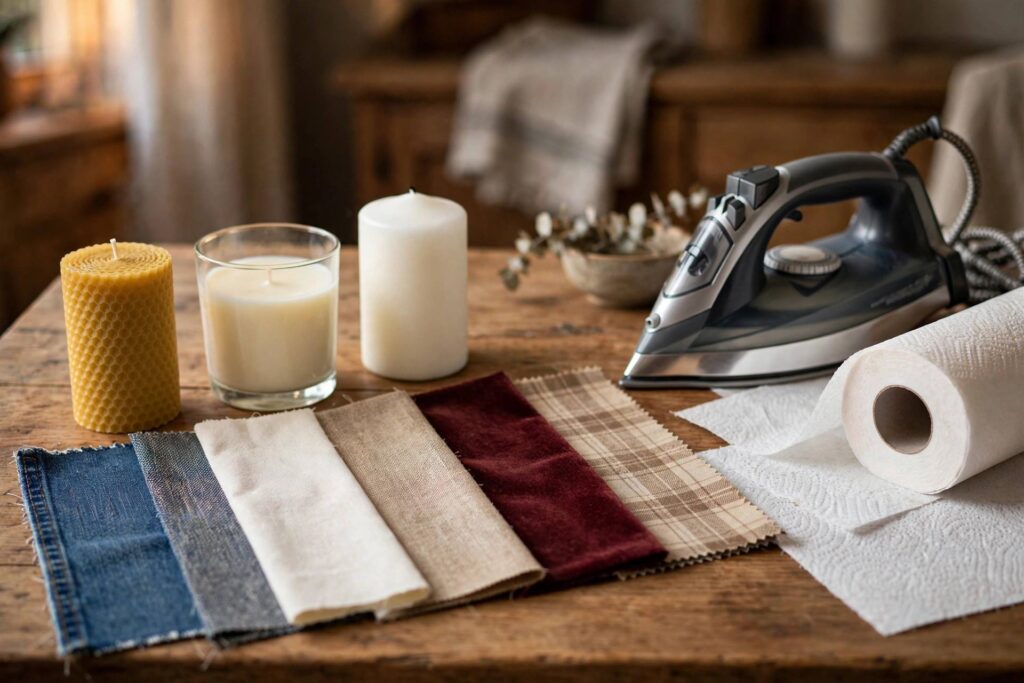
Paraffin wax is the most common. It is petroleum-based, melts at a relatively low temperature, and usually lifts out easily with the iron-and-paper method below. Most tealights, jar candles, and cheap taper candles are paraffin.
Soy wax is softer and oilier. It melts easily but leaves a greasier residue, which means you will almost always need a grease-fighting step (dish soap) after the wax is gone.
Beeswax melts at a higher temperature and is stickier. It needs more heat and more patience, but it responds to the same basic method.
Colored or scented wax is the real troublemaker. The wax itself usually comes out fine; it is the dye that stays behind as a stain. Red, dark blue, and deep purple dyes are the worst offenders. Plan for a dye-treatment step whenever the wax was colored.
If you are not sure what kind of wax it is, assume the worst: treat it as colored wax and do the full method. You will not hurt anything by being thorough.
How to Get Candle Wax Out of Fabric: The Method Matrix
Here is the shortcut. Find your fabric in the list below and follow the matched method.
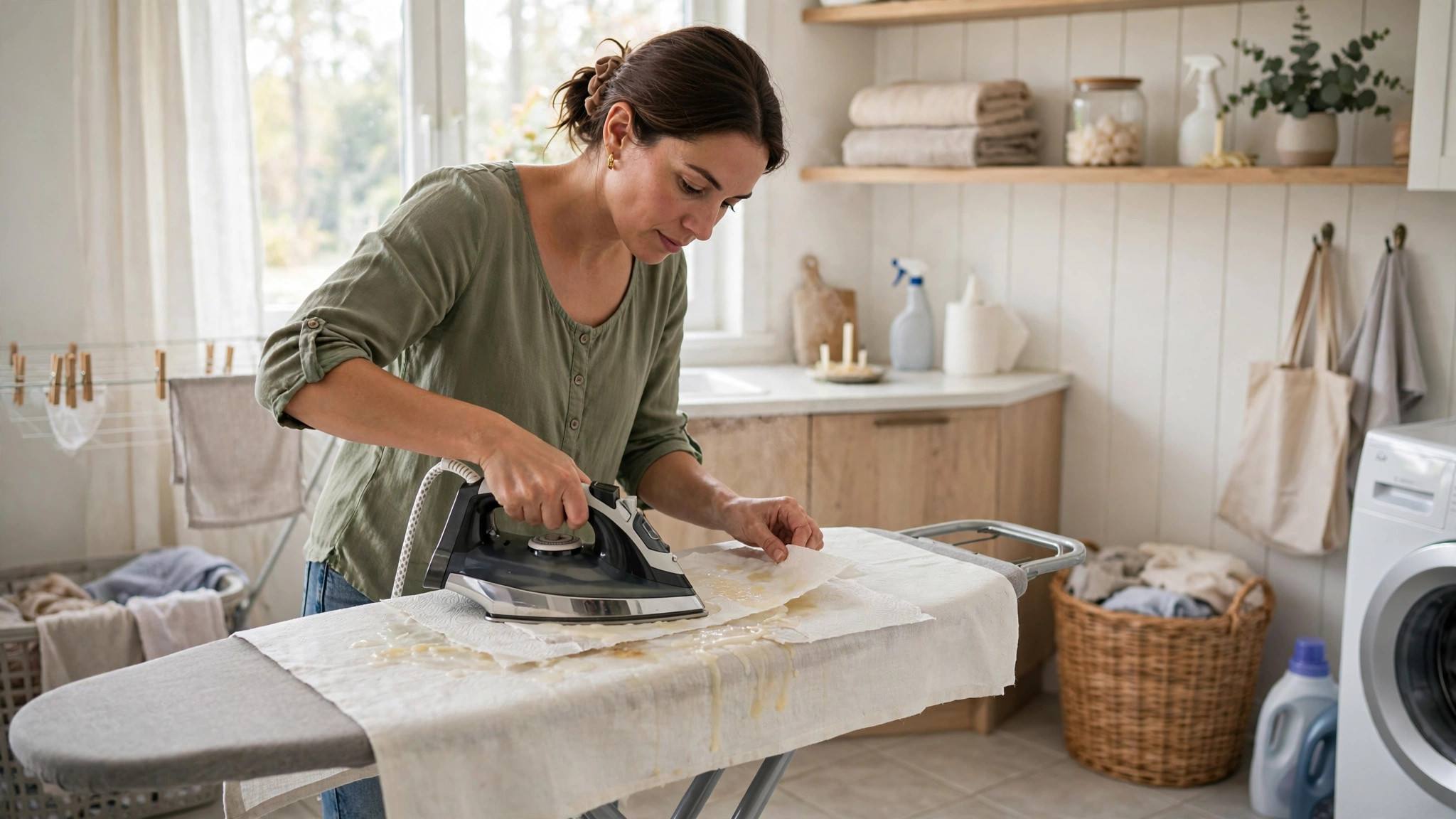
Sturdy washable fabrics (cotton, linen, polyester, denim, tablecloths, napkins): Use the iron-and-paper-towel method. This is the gold standard and works on the vast majority of spills. Scrape off the excess, sandwich the fabric between paper towels or brown paper bags, and press with a warm iron. The heat melts the wax, and the paper absorbs it. Keep moving to a clean section of paper and repeat until no more wax transfers.
Upholstery and carpet: Use the same iron method, but skip the iron’s steam and keep the heat moderate. For delicate upholstery, a hair dryer on medium heat works as a gentler substitute. Always test on a hidden spot first. If the fabric cannot take heat at all, use the freezer method: press an ice cube in a plastic bag against the wax until it hardens and crumbles, then pick and vacuum the pieces away.
Silk, wool, and other delicates: Do NOT iron directly. Place the garment in the freezer for a few hours until the wax is brittle, then gently flake it off with a dull knife or your fingernail. For residue, press with a barely warm iron through several layers of paper, checking constantly. If the item is labeled dry-clean-only, your safest move is to take it to the dry cleaner and tell them exactly what the stain is; they have solvents for this.
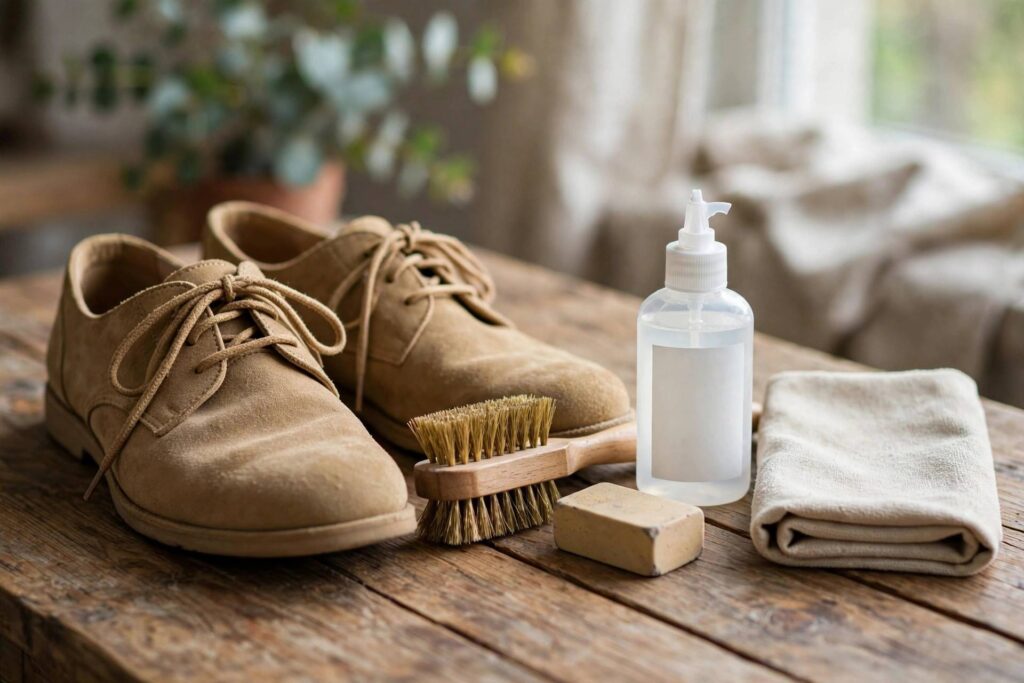
Leather and suede: Freeze first, flake gently, and never use high heat. For leather, any remaining residue can often be lifted with a tiny amount of leather cleaner on a soft cloth. For suede, skip heat entirely and see a professional if freezing does not get it all.
The Full Step-by-Step Method (Sturdy Fabrics)
Here is the detailed process I use for the common case: paraffin or soy wax on a washable fabric.
1. Let it harden completely. Do not touch wet wax. You will push it deeper into the fibers and spread it around. Walk away, make tea, come back when it is fully cool and solid.
2. Scrape off the excess. Use a dull butter knife, an old credit card, or your fingernail to lift away as much solid wax as possible. Work from the outside of the stain inward so you do not spread it. Be gentle on delicates; be firm on denim and canvas.
3. Sandwich and iron. Lay the fabric stain-side down on a stack of paper towels (or inside a folded brown paper grocery bag, ink-side away from the fabric). Place another layer of paper on top. Set your iron to a low-medium heat with NO steam, and press the paper over the stain. Check every 15 to 20 seconds. The wax melts and wicks into the paper. Shift to a clean area of paper and repeat until nothing more transfers.
4. Treat the residue. Even when the wax is gone, an oily shadow often remains, especially with soy wax. Rub a small drop of clear dish soap (the grease-cutting kind) into the spot, let it sit for 10 to 15 minutes, then rinse with warm water.
5. Treat dye stains. If the wax was colored and a tint remains, apply a stain remover or a paste of oxygen-based bleach and water (not chlorine bleach, unless the fabric is white cotton and the label allows it). Let it sit, then wash as usual.
6. Wash and check before drying. Launder the item at the warmest temperature the fabric allows. Crucially, check the stain BEFORE it goes in the dryer. Dryer heat sets any remaining stain permanently. If a shadow remains, repeat the treatment rather than drying.
What NOT to Do (Mistakes That Set the Stain)
I have watched people make every one of these mistakes, so let me save you the trouble.
Do not use hot water first. Pouring hot or boiling water on wax melts it and drives it deeper into the fibers. Heat is your friend only when paired with something absorbent to pull the wax out.
Do not rub. Rubbing grinds wax particles deeper and spreads the stain outward. Always scrape, blot, and press, never scrub.
Do not use the dryer until the stain is fully gone. This is the number-one way people turn a fixable stain into a permanent one. Air-dry or check carefully first.
Do not use chlorine bleach on colored fabrics. It will take the dye stain out along with the fabric’s own color. Oxygen bleach is the safer choice.
Do not iron synthetics on high heat. Polyester and nylon can melt or develop a shine under a hot iron. Keep the iron on low and use extra paper layers as a buffer.
Do not assume one pass is enough. Wax wicks out gradually. If you stop at the first clean-looking paper, you will likely find a shadow after washing. Keep going until the paper stays clean.
Special Cases
Wax on a tablecloth with a large spill: Work in sections. Trying to iron a dinner-plate-sized spill all at once just moves wax around. Divide and conquer.
Wax mixed with food or drink stains: Treat the non-wax stain first with its normal method, then do the wax removal. The iron step can set protein stains, so order matters.
Old, set-in wax stains: They are harder but not hopeless. The iron method still works; it just takes more repetitions. A longer soak in dish soap solution before washing helps with the aged oily residue.
Wax on a garment you cannot wash: After the mechanical removal, blot the residue with a cloth dampened with a small amount of rubbing alcohol, testing in a hidden area first. Then take it to a dry cleaner and point out the spot.
Frequently Asked Questions
Can you get candle wax out of fabric without an iron?
Yes. A hair dryer on medium heat works as a gentler substitute; hold it a few inches away and blot the melting wax with paper towels. For hard, brittle wax, the freezer method (freeze, then flake off) needs no heat at all.
Does candle wax come out of clothes in the washing machine?
Not on its own. The washing machine cannot melt and extract solid wax effectively, and hot wash water can spread it. Always do the scrape-and-iron (or freeze) steps first, then wash to remove residue.
How do you get red candle wax out of fabric?
Remove the wax with the standard method, then treat the red dye stain with oxygen bleach or a color-safe stain remover before washing. Red dye is the most stubborn; you may need two or three treatment rounds, and never machine-dry until the tint is completely gone.
Will Goo Gone or WD-40 remove candle wax from fabric?
They can dissolve waxy residue, but they are oil-based solvents that can leave their own stains and damage delicate fabrics. Stick with the mechanical and heat method for the wax itself, and use dish soap for the oily residue. Save the solvents as a last resort on sturdy fabrics only.
Can dry cleaning remove candle wax?
Yes, dry cleaners deal with wax regularly and have the right solvents. Tell them it is candle wax (and the color, if dyed) when you drop it off. This is the safest option for silk, wool, and anything labeled dry-clean-only.
How do you get wax out of upholstery without damaging it?
Use moderate heat through paper towels or a brown paper bag, testing first in a hidden spot. Keep the iron moving and never use steam. For heat-sensitive upholstery, freeze the wax with ice in a bag until brittle, then crumble and vacuum it away.
Final Thoughts
Candle wax looks like a disaster and behaves like a minor inconvenience once you know the method. Scrape, melt into paper, treat the shadow, wash, and check before drying. That is the whole secret. The candles can stay; just keep a brown paper bag in the laundry room, and you will never fear a spill again.