How Do Airplanes Stay in the Air? Simple Science

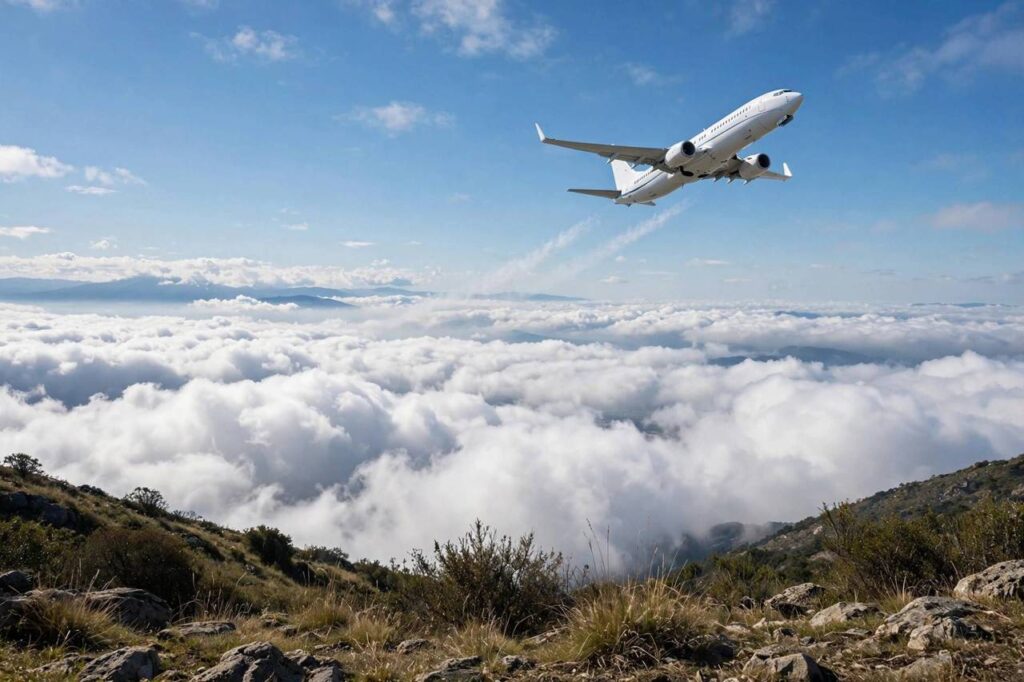
Watch a fully loaded jumbo jet, heavier than a dozen elephants, lift gently off the runway and climb into the sky, and it never quite stops feeling impossible. how do airplanes stay in the air? The short answer is lift: the wings are shaped so that air flowing over them creates an upward force strong enough to overcome the plane’s weight, while the engines provide the forward speed that makes it all work.
I remember asking a pilot this exact question on a long flight, expecting a one-sentence answer. He laughed and said the full explanation takes a semester of physics, but the intuitive version takes about five minutes. This article is that five-minute version, plus the fascinating details that make it click.
How Do Airplanes Stay in the Air? The Four Forces
Every airplane in flight is a tug-of-war between four forces. Lift pushes up, gravity (weight) pulls down, thrust pushes forward, and drag pulls backward. When lift equals weight and thrust equals drag, the plane flies straight and level. Climb when lift exceeds weight; descend when it does not.
The engines handle thrust and, indirectly, everything else. They push the plane forward through the air, and that airflow over the wings is what generates lift. No forward speed, no lift. This is why planes need long runways: they must reach flying speed before the wings can do their job.
It helps to think of the wing as a device that trades speed for lift. The faster the air flows over it, the more lift it produces. Pilots control this trade constantly, adjusting speed and wing angle to climb, cruise, or descend.
Lift: What the Wing Actually Does
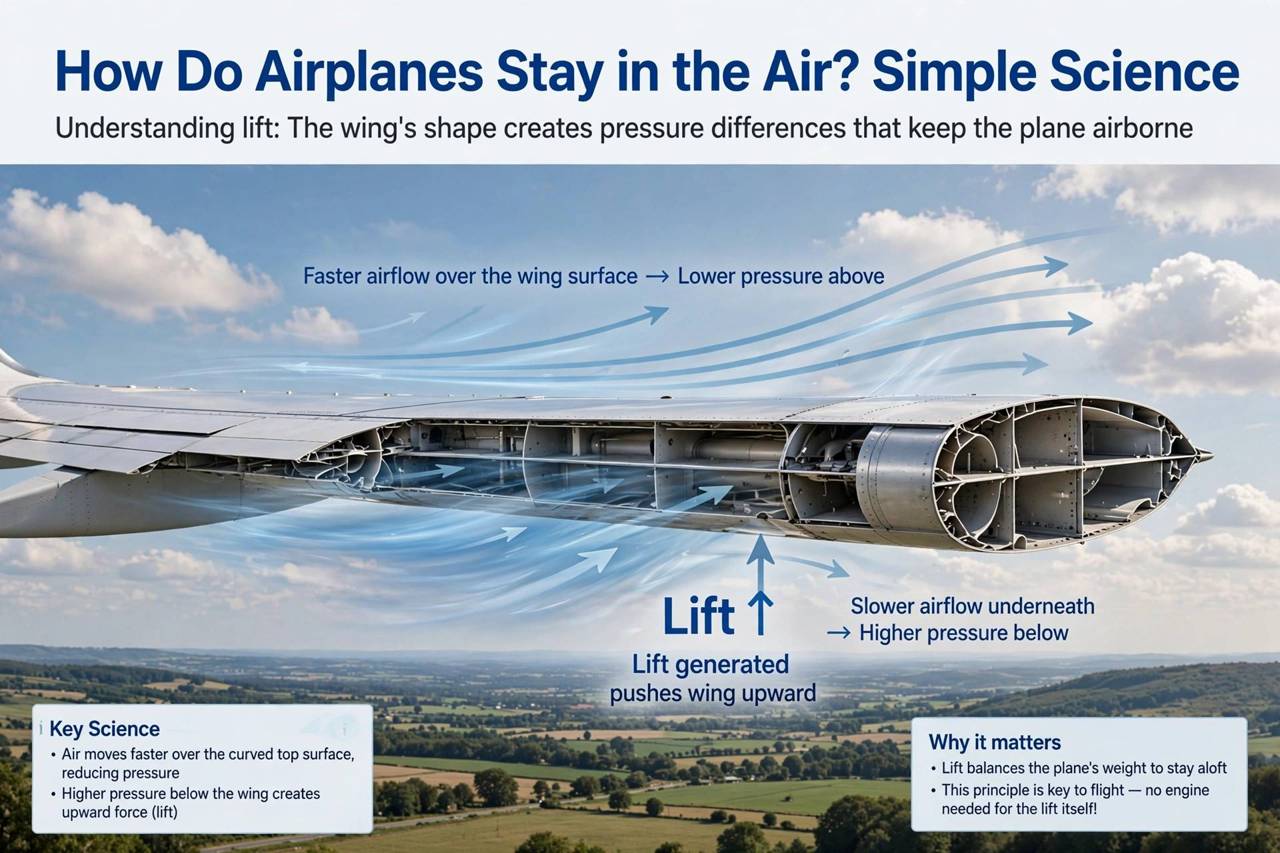
A wing’s cross-section, called an airfoil, is curved on top and flatter underneath. As air flows over it, the wing deflects air downward. Newton told us every action has an equal and opposite reaction: push air down, and the air pushes the wing up. That downward deflection of air is the real engine of lift.
You have probably heard the older explanation about air traveling faster over the curved top and creating low pressure. That is part of the story, and pressure differences do contribute, but physicists will tell you the “equal transit time” version taught in many classrooms is oversimplified. The downward turning of airflow, called downwash, is the more complete picture.
Wings also meet the air at a slight angle, the angle of attack, which increases lift. Too much angle and the smooth airflow breaks apart, the wing stalls, and lift collapses. Pilots train extensively to recognize and recover from stalls, which is one reason modern airliners are so safe.
Why Such Heavy Things Can Fly
The numbers help the intuition. A large airliner at takeoff can weigh around 400 tons, yet its wings generate enough lift because they are enormous and the plane moves fast. Lift grows with the square of speed: double the speed, quadruple the lift. That is why takeoff feels like a gradual, powerful acceleration rather than a sudden leap.
Wing design is a careful compromise. Long, slender wings like a glider’s are efficient for cruising; shorter, broader wings handle the stresses of maneuvering. Airliners split the difference, and add flaps and slats, movable sections that extend during takeoff and landing to create more lift at lower speeds.
Weight matters enormously, which is why airlines obsess over fuel load and baggage. Every extra ton needs extra lift, which needs extra speed, which burns extra fuel. The economics of flight are the physics of flight with a price tag.
What Keeps a Plane Stable Up There?
Generating lift is only half the job; the plane must also fly straight without constant wrestling. The tail does most of this work. The horizontal stabilizer acts like the feathers on an arrow, keeping the nose pointed in the right direction, while the vertical fin prevents the plane from yawing side to side.
Modern airliners add layers of automation. Fly-by-wire systems interpret the pilots’ inputs and make thousands of tiny corrections per second, keeping the ride smooth through turbulence that would exhaust a human. The pilots remain firmly in charge, but the computers handle the tedious stabilization work.
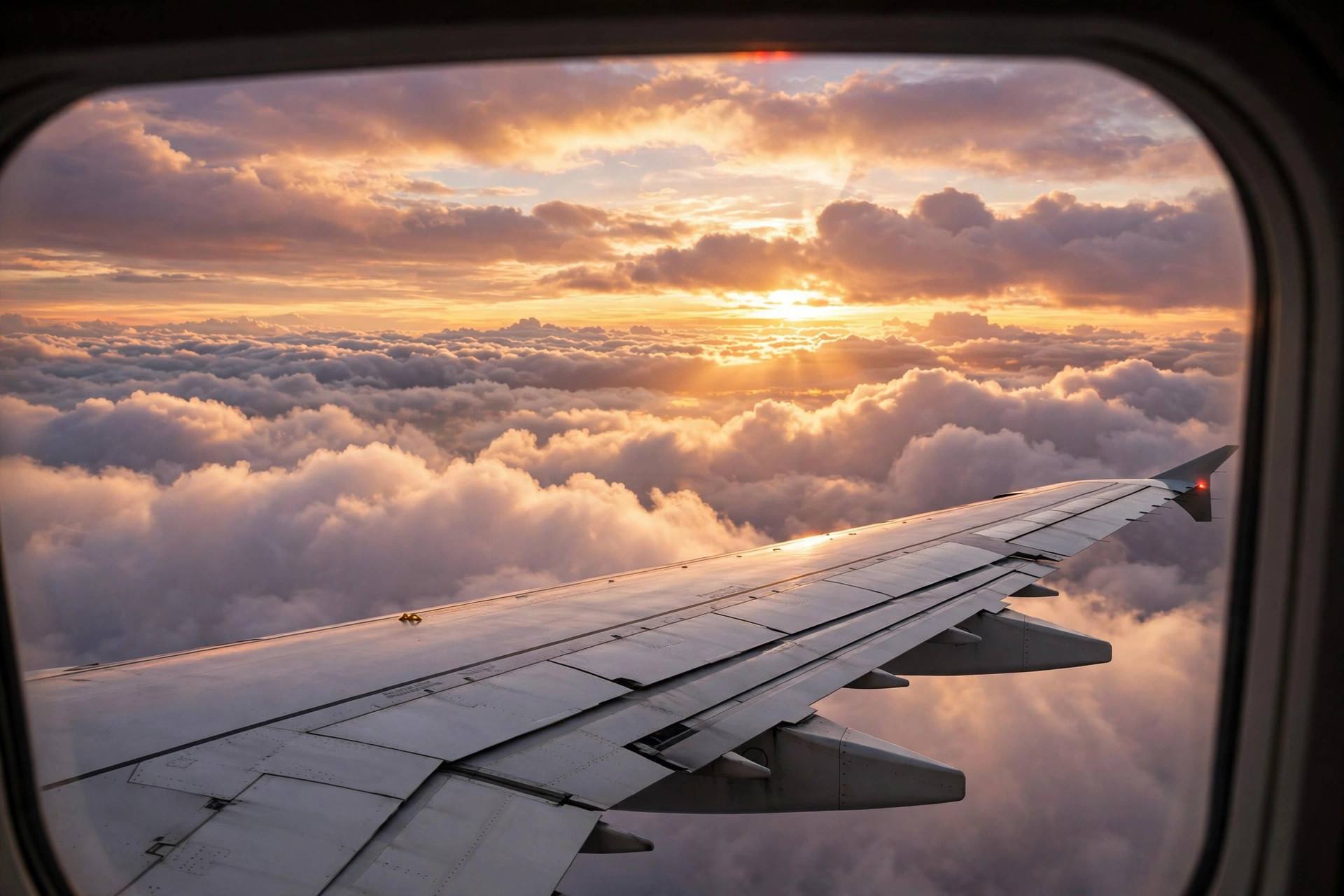
Turbulence itself, the bumps that make passengers grip armrests, is just the plane moving through uneven air. It is uncomfortable but the aircraft is built to handle forces far beyond anything turbulence produces. The wings flexing you see from the window is by design: rigid wings would snap, flexible wings absorb.
Takeoff, Cruising, and Landing in Brief
Takeoff is a choreographed sequence. The plane accelerates down the runway, flaps extended for extra lift at moderate speed. At rotation speed, the pilot gently raises the nose, the angle of attack increases, and lift exceeds weight. The ground falls away.
Cruising altitude, typically 30,000 to 40,000 feet, is where the magic of efficiency happens. The air is thin, so drag is low, and the engines sip fuel compared to climbing. The plane covers ground at around 550 miles per hour while the cabin stays pressurized and comfortable.
Landing reverses the process. The plane descends, slows, extends flaps and landing gear, and touches down at the lowest speed that still provides enough lift. Spoilers on the wings then deliberately kill the lift so the plane’s full weight settles onto the wheels for braking. Every landing is a controlled, precise surrender of the sky.
From the Wright Brothers to the Jet Age
The principles above were proven in 1903 on a beach in North Carolina, when the Wright brothers’ Flyer stayed aloft for twelve seconds. They succeeded where others failed partly because they understood control: their wing-warping system let the pilot balance the aircraft, solving stability alongside lift. Power alone was never enough.
The decades after brought rapid evolution. World War I accelerated engine and airframe design. The 1930s introduced the modern airliner shape with the Douglas DC-3. The jet engine, arriving in the 1940s and 50s, multiplied speeds and altitudes, shrinking the world. Each leap was the same four forces, managed with better technology.
The Boeing 747, the jumbo jet that made mass air travel affordable, is essentially a triumph of scaling lift. Its wing is a carefully engineered compromise that generates enough lift for 400 tons while staying efficient at cruise. The physics never changed; our mastery of it did.
Gliders, Helicopters, and Other Ways to Fly
Airplanes are not the only answer to staying aloft. Gliders have no engines at all: they trade altitude for speed, riding rising air currents to stay up for hours. A skilled glider pilot can travel hundreds of miles on nothing but knowledge of the sky.
Helicopters generate lift differently, with rotating wings, rotor blades, that create lift by moving through the air even when the aircraft hovers. This gives them unmatched maneuverability at the cost of speed and efficiency. Same goal, completely different engineering.
Even birds follow the same rules. A soaring eagle rides thermals like a glider; a hummingbird hovers like a helicopter, beating its wings in a figure-eight. Nature solved flight millions of years before we did, and every aircraft design is, in a sense, a homage.
What Pilots Actually Do Up There
Modern cruising is highly automated, but pilots remain essential managers of the flight. They monitor systems, manage fuel, communicate with air traffic control, and make the judgment calls automation cannot: weather diversions, passenger medical issues, and the thousand small decisions of airmanship.
Takeoff and landing are the hands-on phases, demanding precise speed and configuration management. This is where training matters most, and where pilots earn their keep. The automation handles the cruise; the humans handle the complexity.
It is a partnership that works remarkably well. Commercial aviation is the safest form of long-distance travel ever devised, a record built on understanding exactly how airplanes stay in the air and engineering every phase of flight around that knowledge.
Supersonic Dreams and the Future of Flight
The Concorde proved supersonic passenger flight was possible and that the economics were brutal. It flew for decades as a prestige service, but fuel costs, noise restrictions, and limited routes kept it a niche. Its retirement in 2003 ended the supersonic era, but not the dream.
New companies are trying again with quieter supersonic designs that might satisfy modern noise regulations. Whether they succeed depends on the same equation that governs everything in aviation: lift, drag, and cost. Physics allows it; the market will decide.
The nearer future is quieter but significant: more efficient engines, lighter composite airframes, and sustainable aviation fuels that cut emissions without changing the fundamental design. The airplanes of 2040 will look familiar and fly cleaner, which is its own kind of progress.
Electric flight is coming to short routes first, where battery weight is manageable. For long-haul, the energy density of jet fuel remains unmatched. The four forces do not care about our timelines; they reward whatever technology masters them best.
Frequently Asked Questions
How do airplanes stay in the air if they are so heavy?
Wings generate lift by deflecting air downward as the plane moves forward at high speed. Lift increases with the square of speed, so fast-moving wings can support enormous weight.
What would happen if the engines stopped?
The plane would not fall out of the sky. It becomes a glider: pilots trade altitude for speed to keep airflow over the wings, and airliners can glide for over a hundred miles from cruising altitude to reach a runway.
Why do planes fly so high?
High altitude means thinner air and less drag, which makes cruising far more fuel-efficient. It also keeps airliners above most weather.
Can turbulence bring a plane down?
Essentially no. Aircraft are engineered to withstand forces far greater than turbulence produces. It is uncomfortable for passengers but not dangerous to the plane.
How fast does a plane need to go to take off?
It depends on the aircraft’s weight and wing design, but large airliners typically rotate at around 150 to 180 miles per hour.
Why do airplane wings have those little vertical tips?
Those are winglets, and they reduce wingtip vortices, the spiraling airflows that spill off wingtips and create drag. Less drag means better fuel efficiency, which is why nearly every modern airliner has them. They are a small, elegant fix to a real aerodynamic problem.