Why Do Leaves Change Color in Autumn? The Real Science

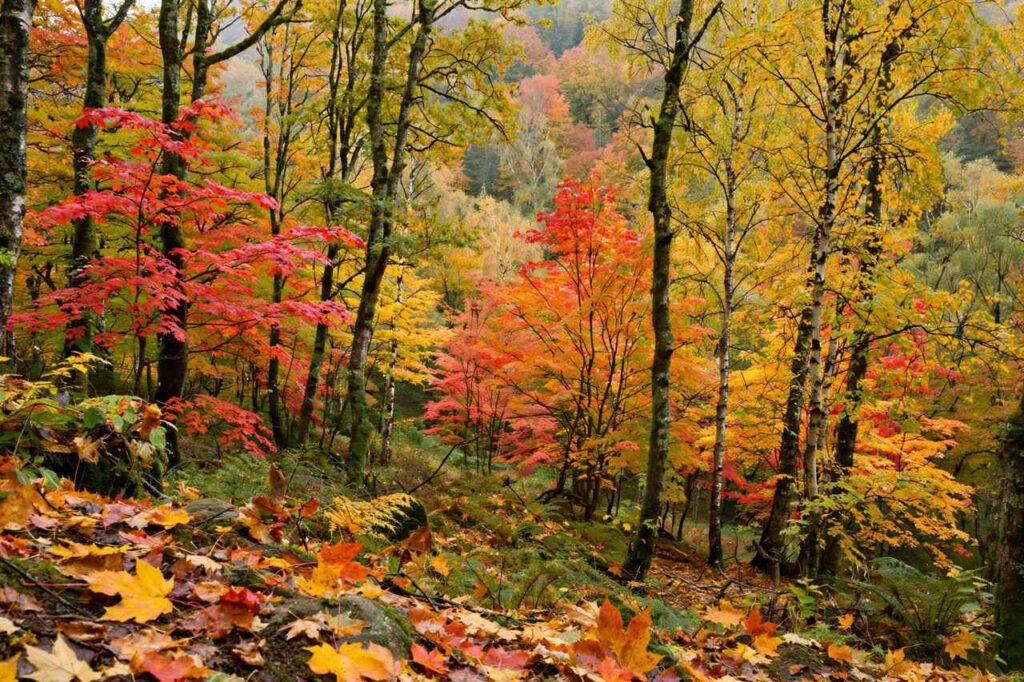
Every October, the same question comes up on every scenic drive: why do leaves change color in autumn? The short answer is that the colors were there all along — hidden. The green of summer isn’t the leaf’s “real” color; it’s a mask. When days shorten and temperatures drop, trees dismantle that green mask to reclaim valuable nutrients before winter, and the yellows, oranges, and reds underneath finally get their moment. The longer answer involves chemistry, weather, and a bit of tree economics — and it’s more interesting than you might expect.
Let’s start with the green itself. Chlorophyll is the pigment that makes photosynthesis work — it captures sunlight and it’s green because it reflects green light. All summer, leaves are chlorophyll factories, and the sheer abundance of it drowns out every other pigment in the leaf. The fall show begins when the factory shuts down.
Why Do Leaves Change Color in Autumn? The Full Mechanism
Trees sense autumn coming through daylight, not temperature. As nights lengthen past a critical threshold, a layer of cells called the abscission layer forms at the base of each leaf stem, slowly cutting off the leaf’s connection to the tree. Chlorophyll, which is expensive for the tree to maintain, gets broken down first — and its building blocks (especially nitrogen) are pulled back into the twigs for winter storage. Think of it as the tree moving its valuables indoors before a storm.
As the green drains away, two other pigment groups — which were in the leaf all summer, masked by chlorophyll — become visible. Carotenoids produce the yellows and oranges (the same pigments that color carrots and egg yolks). These are always present in the leaf, doing quiet work protecting it from sun damage. Then there are the anthocyanins, which make the reds and purples — and these are different, because the tree manufactures them fresh in autumn. More on why in a moment.
Yellows and Oranges: The Colors That Were Always There
Carotenoids are the reliable part of the fall palette. They’re stable, they’re always in the leaf, and they show up dependably every year once chlorophyll fades. Trees like birches, aspens, hickories, and many oaks lean heavily on carotenoids, which is why whole mountainsides turn that classic golden-yellow. If fall color were only carotenoids, every autumn would look roughly the same — pleasant, predictable, golden.
But it’s the reds that make people drive three hours on a Saturday, and reds are where things get interesting.
Reds and Purples: The Tree’s Autumn Project
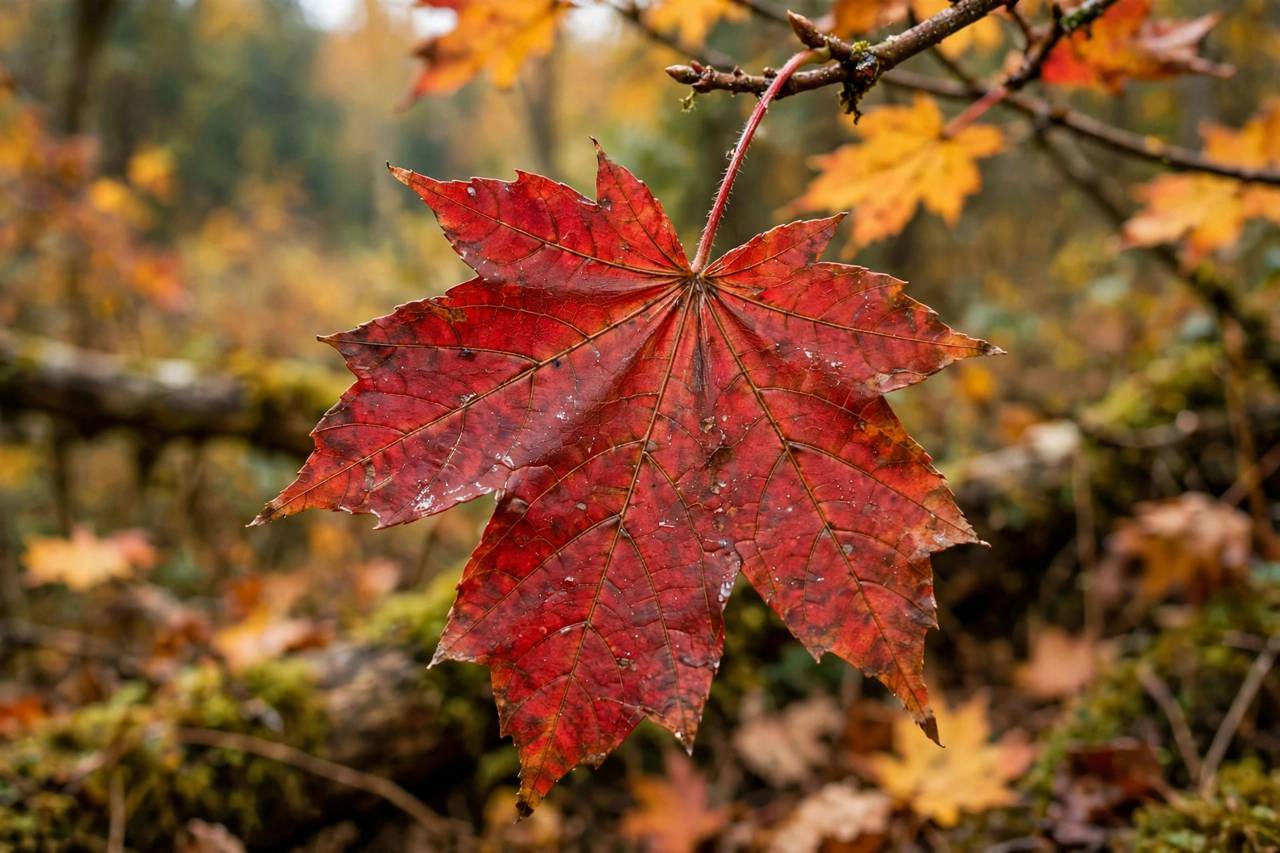
Anthocyanins — the red and purple pigments — aren’t leftovers. The tree actively builds them in autumn, spending energy to do so, which puzzled scientists for a long time. Why invest in color for leaves you’re about to drop? The leading explanations: anthocyanins act as sunscreen, shielding the leaf while it finishes exporting nutrients back into the tree (bright autumn sun on a leaf with failing chlorophyll can cause damage that interrupts the salvage operation). They may also deter insects — aphids looking for a winter host may read red as “this tree is well-defended, move along.”
Maples, dogwoods, sumacs, and sweetgums are the great red producers. And here’s the thing that makes fall color forecasting possible: anthocyanin production depends on weather. Sunny autumn days plus cool (but not freezing) nights maximize reds — sunlight fuels the pigment-making, cold nights trap sugars in the leaf that feed it. That’s why some years blaze crimson and others just go politely yellow.
What Makes Some Autumns More Brilliant Than Others
The best fall color recipe: a warm, wet spring (healthy leaves), a mild summer (no drought stress), and then an autumn with warm sunny days and crisp cool nights. Drought is the great spoiler — stressed trees drop leaves early, sometimes without coloring at all. An early hard freeze is worse: it kills the leaves before the chemistry finishes, and they go straight to brown.
This is why fall color varies so much year to year and place to place, and why the famous foliage regions — New England, the Blue Ridge, Japan’s temple gardens — have reputations built on reliably good combinations of tree species and autumn weather. If you’re planning a leaf-peeping trip, watch the forecasts, not just the calendar: a week of sunny 60s days and 40s nights is what you’re hoping for. Our roundup of fun fall activities has more ways to make the most of the season, and Japan in autumn is unforgettable if you want the world’s most deliberate foliage culture.
Why Do Some Trees Stay Green?
Evergreens — pines, spruces, firs — keep their needles through winter instead of doing the whole color-and-drop routine. Their strategy is different: needles are tough, waxy, and cheap enough to maintain through cold, so the tree keeps photosynthesizing (slowly) all winter instead of rebuilding a canopy every spring. It’s a trade-off. Deciduous trees gamble on a fresh start each year; evergreens pay steady maintenance. Both work — that’s why forests mix them.
Some broadleaf trees are in-between: beeches and young oaks often hold dead brown leaves all winter (a habit called marcescence), rattling in the wind until spring growth pushes them off. Nobody fully knows why — protection for buds from deer browsing is one theory. Trees keep a few mysteries for themselves.
Why Leaves Fall at All
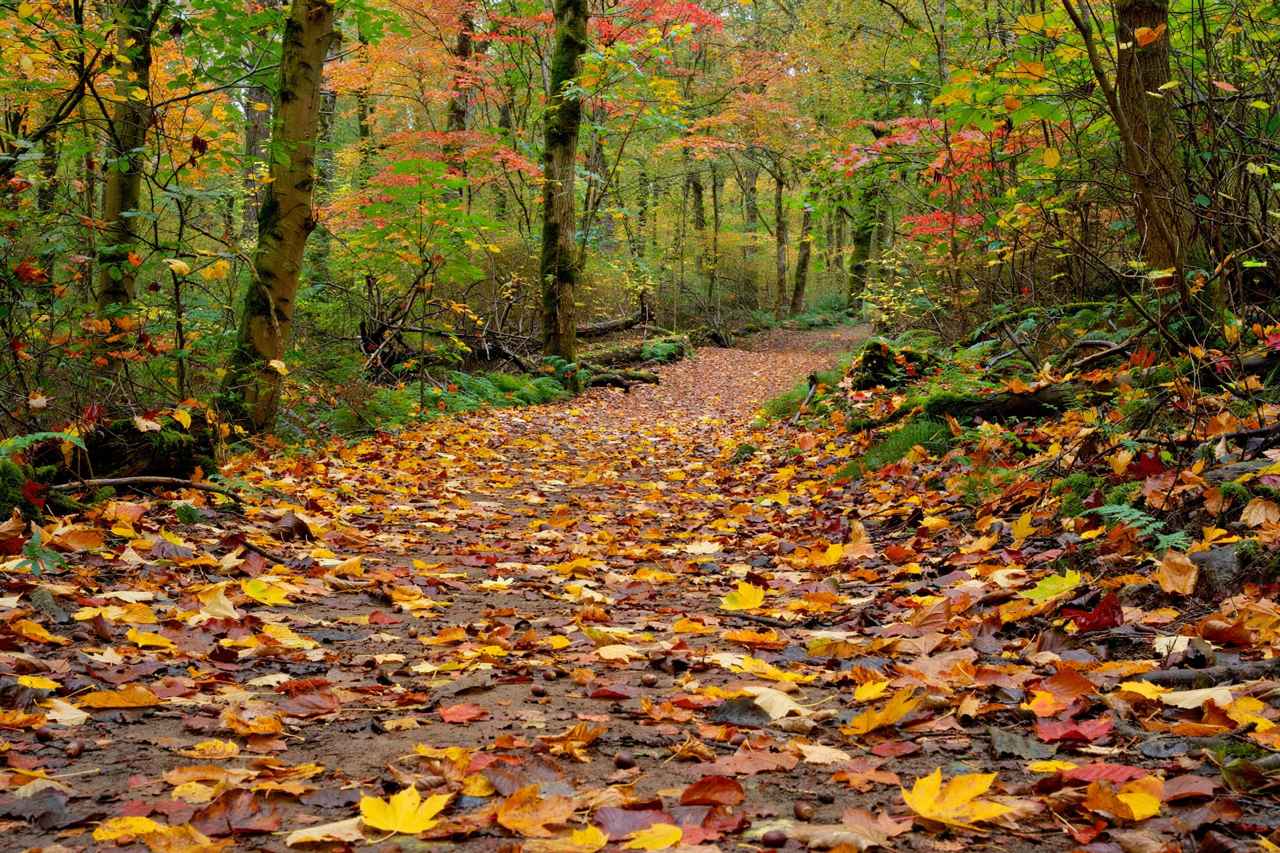
The color is the pretty part; the falling is the practical part. Broad leaves are wonderful solar panels and terrible winter equipment — they’d lose water all winter and catch snow until branches snapped. Dropping them is the tree going dormant efficiently. The abscission layer mentioned earlier finishes sealing the stem, the leaf lets go, and the tree settles in with its stored nutrients to wait for spring.
And those fallen leaves aren’t waste. They’re next year’s soil — decomposing into the rich layer that feeds the forest floor. Raking them into garden beds instead of bagging them is one of the easiest good deeds in yard care: free mulch, free fertilizer, and habitat for the insects and amphibians that overwinter in leaf litter.
The World’s Great Foliage Destinations
Some places have turned fall color into an art form. New England’s mix of maples, birches, and oaks is the classic — the Kancamagus Highway in New Hampshire in mid-October is the postcard made real. The Blue Ridge Parkway runs the color show southward through the Appalachians for weeks. Out west, Colorado’s aspens turn entire mountainsides gold in late September, earlier than most eastern color.
Internationally, Japan treats autumn foliage (koyo) with the same reverence as cherry blossoms — Kyoto’s temple gardens with maples lit up at night are genuinely otherworldly. Korea’s Naejangsan, Canada’s Laurentians, and the Lake District in England all have devoted followings. Wherever you go, the strategy is the same: aim for the week after the first cool nights, go on a weekday if you can, and get out early — the famous overlooks fill by mid-morning.
Fall Color and a Changing Climate
Here’s the less cheerful part: fall color is shifting. Warmer autumns delay the onset of color and mute the reds (remember, anthocyanins need those cool nights). Drought-stressed summers — increasingly common — produce duller, shorter displays. Researchers tracking foliage timing have documented the peak creeping later in many regions, and the brilliant-red years getting rarer where nights stay warm.
None of this means the show is ending; it means it’s moving and changing. Higher elevations and more northern latitudes still deliver reliably, and the variability is itself a reason to pay attention now. If you’ve been meaning to take the big foliage trip, take it — the forests aren’t going anywhere, but the calendar of color is being rewritten in real time.
Photographing Fall Foliage
A few field notes for the camera crowd: overcast days are secretly the best — clouds act as a giant softbox, saturating colors without harsh shadows. Shoot in the morning after rain when leaves are wet and vivid. For phone photographers, tap to expose for the brightest leaves (not the sky), and don’t overdo the saturation slider later — real fall color needs no help. And the oldest advice is the truest: put the camera down for ten minutes and just look. The photo is the souvenir; the looking is the experience.
Fall Color Indoors: Bringing Autumn Inside
You don’t need a mountain to enjoy the season. A walk with a bag for collecting — interesting leaves, acorns, seed pods — becomes raw material for the easiest autumn decorating there is: a bowl of mixed foliage on the table, a few branches in a tall vase, pressed leaves in simple frames. Kids love the collecting part as much as the result, and a nature table that changes with the season beats any store-bought decoration.
Preserving leaves is simple: press them between book pages for a week for flat keepsakes, or dip them in melted beeswax for glossy, flexible leaves that keep their color for months. The waxed ones make beautiful garlands strung on twine — a ten-minute craft with a genuinely lovely result. It’s the indoor echo of the whole phenomenon: color, briefly held, before winter.
Frequently Asked Questions
Why do leaves change color in autumn?
As daylight shortens, trees break down green chlorophyll to reclaim its nutrients before winter. This reveals yellow and orange carotenoids that were in the leaf all along, while red and purple anthocyanins are newly produced as a kind of sunscreen during the nutrient-salvage process.
What causes red leaves in fall?
Red comes from anthocyanins, pigments the tree actively manufactures in autumn. Sunny days and cool (not freezing) nights maximize their production — which is why some autumns blaze red and others stay mostly yellow.
Why do some trees stay green in winter?
Evergreens like pines and spruces keep tough, waxy needles year-round and photosynthesize slowly through winter, instead of dropping leaves and regrowing them. It’s a different survival strategy — steady maintenance versus an annual fresh start.
What weather makes the best fall colors?
A wet spring, a mild summer, then an autumn with sunny days and cool nights. Drought causes early, dull leaf drop; an early hard freeze kills leaves before they color. The reds especially depend on that sunny-day/cool-night combination.
Do leaves change color because of cold weather?
Not primarily — the trigger is shortening daylight, which trees detect reliably. Temperature affects the brilliance of the display (cool nights boost reds; freezes ruin it), but the process starts with the light, which is why timing is consistent year to year.
Why do leaves fall off trees?
Broad leaves would lose water and catch damaging snow all winter, so deciduous trees seal off each leaf stem with an abscission layer and drop them after reclaiming valuable nutrients. The fallen leaves then decompose into soil nutrients for the following year.