12 Best Places to Visit in Japan in Autumn (Fall Foliage Guide)

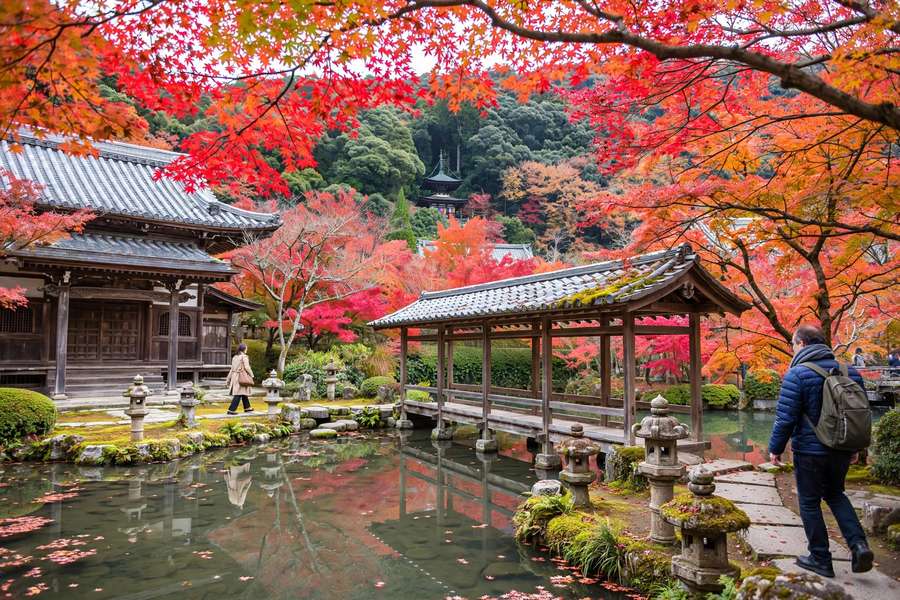
Japan in autumn is the country’s best-kept seasonal secret — everyone knows about cherry blossom spring, but the fall foliage (kōyō) is equally spectacular and half as crowded. I’ve done Japan in both seasons, and autumn wins for me: the maples turn temples into paintings, the air is crisp, the food shifts to chestnuts and mushrooms, and the crowds thin to something civilized.
The koyo front sweeps from north to south over two months (late September in Hokkaido, early December in Kyushu), so ‘when’ determines ‘where.’ This guide maps the twelve best autumn destinations to the foliage calendar.
For the spring version, see our Japan in spring guide. For general planning, best places to visit in Japan.
The Foliage Calendar: When and Where
The koyo front moves south like a slow wave: Hokkaido peaks late September–mid-October, Tohoku mid–late October, Kyoto/Tokyo mid-November–early December, Kyushu late November–early December. The Japan Meteorological Corporation publishes forecasts from September — check them, but build flexibility into your itinerary; a week of rain or wind can shift peak by days.
Elevation matters as much as latitude: mountain areas (the Japan Alps, Nikko’s highlands) peak 2–3 weeks before nearby lowlands. The classic strategy: start north/high, end south/low, chasing the color down the archipelago. Two weeks in November can hit peak in three different regions if you move with the front.
Night illuminations (light-ups) run at major temples mid-November–early December — Kyoto’s Kiyomizu-dera, Eikando, and Tofuku-ji lit up at night with the maples glowing is the single most beautiful sight in autumn Japan. These events draw crowds; go on weeknights.
Kyoto: The Autumn Capital (Mid-November–Early December)
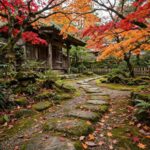
Kyoto in autumn is the reason the season has a reputation. Eikando (the ‘temple of maples’ — 3,000 maples, the most famous koyo spot in Japan), Tofuku-ji’s Tsutenkyo Bridge (a valley of maples viewed from above), Kiyomizu-dera’s stage (the city + foliage panorama), and Arashiyama (the bamboo grove plus the riverside maples). Each is a different kind of beautiful.
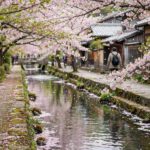
The strategy: arrive at temples at opening (many open at 9, some at 6 for special viewings) — the 9 a.m. Eikando has 50 people; the 11 a.m. Eikando has 5,000. The Philosopher’s Path in late November (canal lined with maples and cherry trees, both colorful) is the best free walk in the city. And the evening light-ups: Eikando and Kiyomizu after dark are worth the crowds.
Stay 4–5 days minimum — Kyoto rewards slowness, and the foliage spots are spread out. The Guest House or machiya (townhouse) stays in the Higashiyama district put you walking distance from the eastern temples. Book 3–4 months ahead for late November; it’s the busiest autumn window.
Beyond Kyoto: Nikko, the Alps, and Tohoku
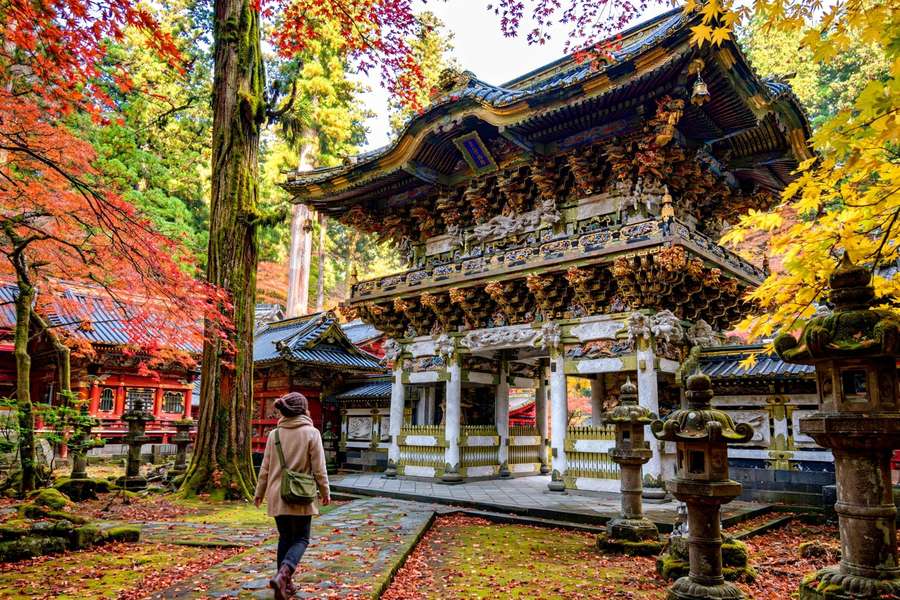
Nikko (late October–early November): the shrines and temples of this mountain town, set among ancient cedars, turn the autumn color into a religious experience — the UNESCO shrines with maple backgrounds, Lake Chuzenji’s shores, and the Kegon Falls framed in red and gold. 2 hours from Tokyo by train; doable as a day trip, better overnight.
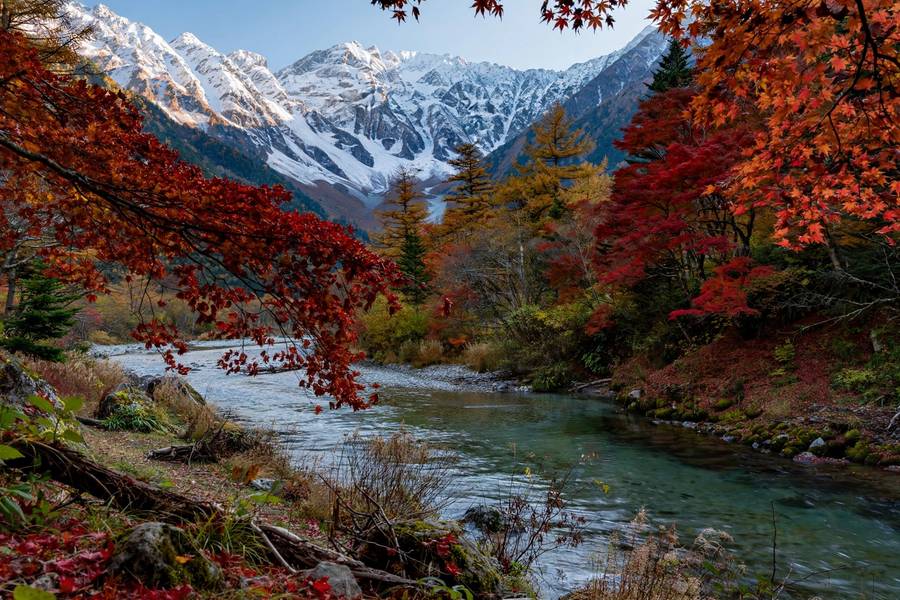
Japanese Alps — Kamikochi (late September–mid-October): the earliest accessible peak color — alpine valley, crystal river, the Hotaka peaks dusted with snow above the red maples. It’s hiking country (the trails are well-maintained, the views are absurd), and the mountain huts serve curry rice at 1,500 meters. Closed mid-November–April; autumn is the farewell season.
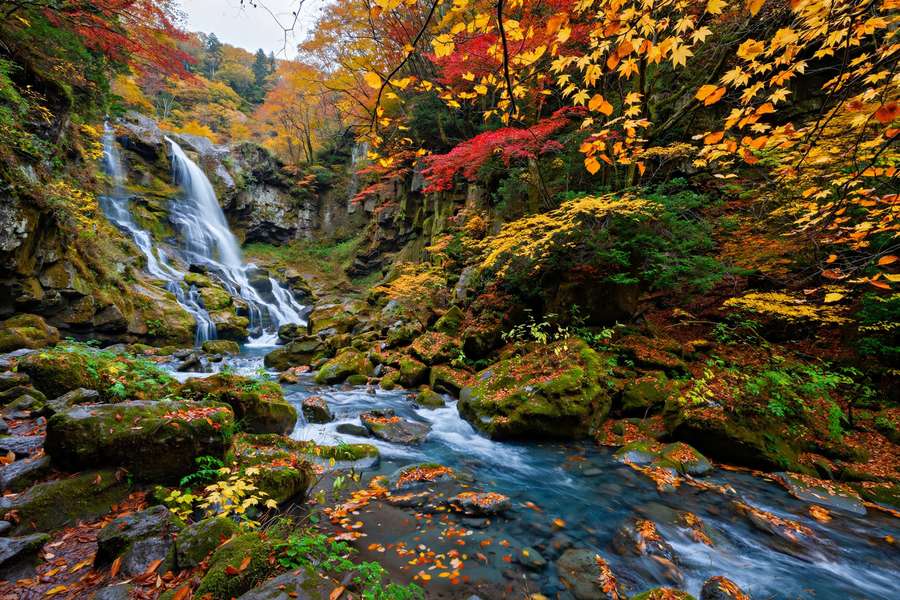
Tohoku — Hirosaki and the Oirase Gorge (mid–late October): the region tourists skip, which is exactly why it’s magical — Hirosaki Castle’s 2,600 maples reflected in the moat, the Oirase Gorge’s 14km of waterfalls through old-growth forest in full color, and Lake Towada’s shores. The Shinkansen makes it easy; the lack of crowds makes it special.
Hokkaido and Kyushu: The Bookends
Hokkaido (late September–mid-October): the first color in Japan — Daisetsuzan National Park’s alpine tundra turns crimson in late September (the earliest koyo in the country), the Blue Pond at Biei with larches, and Sapporo’s parks in October. It’s also soup curry season and the start of crab season. The trade-off: it’s cold (pack winter layers), and some mountain roads close by mid-October. carry-on vs checked baggage
Kyushu (late November–early December): the last color — the volcanic landscapes around Mt. Aso framed in autumn gold, the 2,000 maples of Tatsuno Park, and the onsen towns (Kurokawa, Yufuin) where you soak outdoors surrounded by colored leaves. Kyushu in December is mild (10–15°C), uncrowded, and the food (tonkotsu ramen’s homeland) is the trip’s bonus.
Autumn Food and Festivals
Autumn is Japan’s food season: matsutake mushrooms (the $50-per-mushroom delicacy — try the affordable dobin mushi soup version), chestnuts (kuri gohan — chestnut rice, mont blanc desserts everywhere), sanma (Pacific saury, grilled with salt), and shinmai (new-harvest rice). The department store food halls (depachika) become autumn exhibitions; budget an hour and an appetite.
Festivals: the Takayama Autumn Festival (October 9–10, one of Japan’s three most beautiful festivals — floats, lanterns, the old town), Kawagoe’s festival (October, Edo-period floats), and Kyoto’s Jidai Matsuri (October 22, the Festival of Ages — 2,000 people in historical costume parading). These are worth planning around; they’re the cultural layer on top of the natural one.
And the onsen factor: autumn is the best onsen season — the contrast of hot spring water and cold air, with colored leaves overhead, is the quintessential Japanese autumn experience. The outdoor baths (rotenburo) at mountain ryokans in November are worth the trip alone. Tattoo policies are relaxing but check ahead.
Practical Autumn Planning
Booking: autumn is Japan’s second peak season (after cherry blossom) — book flights 4–5 months ahead, Kyoto hotels 3–4 months ahead for late November. The JR Pass math: a 7-day pass ($280) pays off with Tokyo–Kyoto–Hiroshima routing; for slower trips, regional passes (Kansai, Tohoku) are better value. Luggage forwarding (takkyubin, $20/bag) lets you travel light between cities.
Packing: November Kyoto is 8–15°C — layers, a warm coat, comfortable walking shoes (temples mean stairs and gravel). Hokkaido in October needs winter gear. The packing light system works; just calibrate the layers to the region and month.
Crowd strategy: the famous spots (Eikando, Kiyomizu) are crowded 10 a.m.–4 p.m. in peak season — go at opening or for the evening illuminations. Weekdays beat weekends dramatically. And the secret: the second-tier temples (Hon’en-in, Shinnyo-do, Komyo-ji) have 90% of the beauty with 10% of the people.
The Hidden Koyo Spots (Beyond the Famous Temples)
The famous spots are famous for a reason, but autumn Japan’s deepest magic is in the places with 10 people instead of 10,000: Komyo-ji in Nagaokakyo (a temple with a maple tunnel approach, 20 minutes from Kyoto, nearly empty on weekdays), the Okutama valleys west of Tokyo (day-trip mountain color without the Nikko crowds), and the Shirakami-Sanchi beech forests in Tohoku (UNESCO wilderness, primeval forest in full autumn dress — the most pristine koyo in Japan).
My personal favorite: the Kurobe Gorge in Toyama (late October–early November) — a narrow gorge railway through 20km of autumn forest, with the trolley train winding past orange cliffs and red maples. It’s the journey and the destination; the open-air cars in cold mountain air with the color rushing past is pure cinema. Book the reserved cars ahead — the unreserved ones sell out by 9 a.m.
Photographing Autumn Japan
The light is the subject: autumn’s low, golden light through maple leaves (momiji) creates the backlit glow that defines koyo photography. Shoot early (the 7–9 a.m. light through morning mist at temples) and late (the 3–5 p.m. golden hour on the west-facing gardens). Overcast days are actually ideal for foliage close-ups — the diffused light saturates the reds without harsh shadows.
The etiquette: tripods are banned at most temples (and should be — the crowds), so embrace high ISO and the phone camera (modern phones handle temple interiors beautifully). The reflection shots (temple ponds, the Philosopher’s Path canal) double the color — get low. And the night illuminations: arrive at opening of the light-up (usually 5:30–6 p.m.) for the blue-hour overlap — the sky, the lit maples, and the temple roofs in one frame.
Late November–early December for Kyoto/Tokyo (peak koyo), mid–late October for Tohoku and the Alps, late September–mid-October for Hokkaido. The color sweeps north to south over two months — time your region to the front.
Kyoto (Eikando, Tofuku-ji, Kiyomizu-dera) for temples + maples; Nikko for shrines in mountain color; Kamikochi for alpine foliage; Oirase Gorge for forest waterfalls; Hokkaido’s Daisetsuzan for the earliest color. Kyoto is the essential one.
Excellent — crisp weather, spectacular foliage, autumn food (matsutake, chestnuts), festivals, and thinner crowds than cherry-blossom spring. November is the sweet spot for most of Honshu. It’s the second peak season, so book ahead.
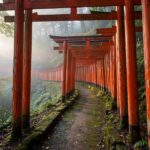
10–14 days: 4–5 in Kyoto (the autumn base), 3 in Tokyo, 2–3 for a foliage excursion (Nikko, Alps, or Tohoku), 1–2 for Hiroshima/Miyajima (the floating torii with autumn color). Two weeks lets you chase the koyo front across regions.
November Honshu: layers, warm coat, walking shoes (8–15°C). Hokkaido October: winter gear. Temples mean stairs and gravel — comfort over style. A portable umbrella (autumn rain) and a small daypack for temple-hopping days.