How to Address Wedding Invitations to Married Couples

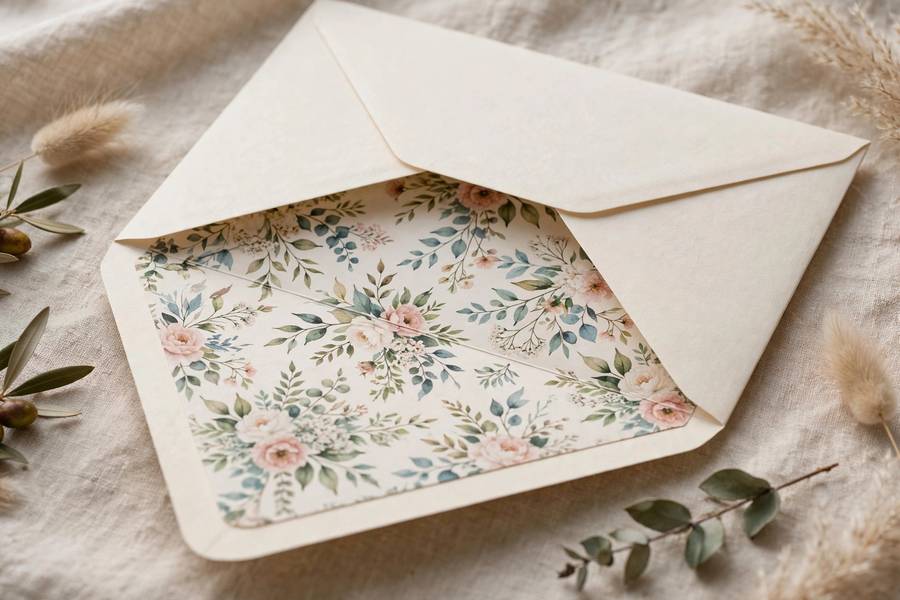
Married couples seem straightforward — until you hit the wife who kept her name, the hyphenated couple, or the question of whose name goes first. Here’s every married-couple scenario with the exact format.
Traditional: Same Last Name
Outer envelope:
Mr. and Mrs. James Carter
Inner envelope:
James and Sarah
This is the classic format. Use it when the wife uses her husband’s surname socially — still the most common scenario.
Wife Kept Her Name
Outer envelope:
Mr. James Carter and Ms. Sarah Mitchell
Inner envelope:
James and Sarah
List alphabetically by last name (Carter before Mitchell). Never assume — if you’re not sure whether she changed her name, ask. This is the #1 addressing mistake I see.
Hyphenated Names
Use exactly what they use, in full:
Outer: Mr. and Mrs. James Carter-Mitchell
or if only she hyphenates:
Outer: Mr. James Carter and Mrs. Sarah Carter-Mitchell
When in doubt, ask — hyphenation patterns vary.
Same-Sex Married Couples
Alphabetical by last name, same format:
Outer: Mr. David Liu and Mr. James Park
Outer: Mrs. Sarah Chen and Ms. Emily Torres
Inner: First names only. Simple and correct.
Titles: Dr., Military, Clergy
Both doctors: Drs. James and Sarah Carter (or “The Doctors Carter” formally). One doctor: Dr. Sarah Carter and Mr. James Carter — the titled person first regardless of gender. Military: Use rank: Captain James Carter and Mrs. Sarah Carter. Clergy: The Reverend and Mrs. James Carter. People earned these titles — use them.
Inner vs Outer Envelope
Outer: Full formal names, titles, no abbreviations (except Mr./Mrs./Ms./Dr.). This is what the post office sees. Inner: First names, warm and personal. If you’re skipping inner envelopes (common now), put it all on the outer.
For all family scenarios beyond married couples, see wedding invitation wording. For the complete guide, wedding invitation addressing.
Common Mistakes
Assuming the wife changed her name. Ask. “Mr. and Mrs. James Carter” when she didn’t. This genuinely offends. Forgetting professional titles. Using nicknames on the outer envelope — “Jim and Sally” is for the inner envelope only.
Widowed Guests
For widowed guests, use their own title and name: Outer: Mrs. Sarah Mitchell (not “Mrs. James Carter” — she’s no longer “Mrs. Husband’s Name” socially, though some older widows prefer it; when in doubt, ask). If she kept her married name: “Mrs. Sarah Carter” is correct. The key: use the name she currently uses, not the name she had.
This is sensitive — getting it wrong can cause real pain. If you’re unsure, a quick, warm question (“How would you like to be addressed on the invitation?”) is always better than a guess.
Divorced Guests (Individual Invitations)
Divorced guests get individual invitations addressed to them alone: “Ms. Sarah Mitchell” — even if you know both ex-partners. Never put divorced couples on the same invitation. If both are invited, seat them thoughtfully (ask if needed — most divorced couples have preferences).
The invitation is not the place to comment on anyone’s marital status. Simple, correct, warm — that’s all it needs to be.
Professional Titles Beyond Dr.
Other titles to honor: military: use rank (Captain, Major, Colonel) — “Captain Sarah Mitchell and Mr. James Carter.” Judges: “The Honorable Sarah Mitchell.” Clergy: “The Reverend James Carter and Mrs. Sarah Carter.” Professors: “Dr.” is fine for PhDs in formal contexts, though some prefer “Professor.”
When someone has earned a title, using it on a wedding invitation is a sign of respect they’ll notice and appreciate. When in doubt, use the higher title — nobody is offended by being given too much respect.
Calligraphy vs Printing: The Addressing Decision
How the names get ON the envelope:
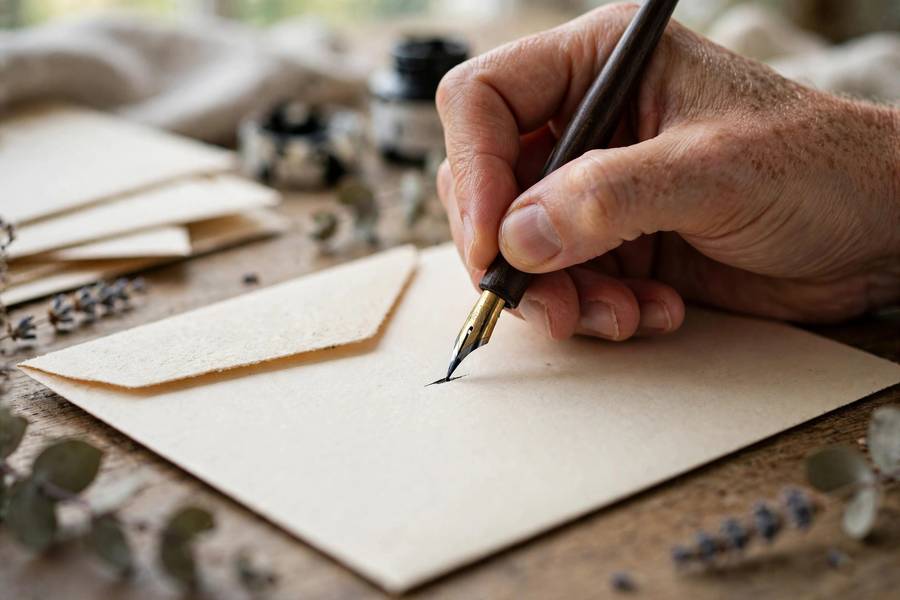
Hand calligraphy ($3–6 per envelope): the luxury standard. Beautiful, personal, impressive. Worth it for formal weddings and small guest lists. Book 2–3 months out; provide your guest list in a spreadsheet. Digital calligraphy ($1–2 per envelope): a calligrapher’s handwriting rendered digitally and printed. Looks nearly identical at arm’s length, costs half. The smart compromise. DIY printing (free–$0.50): print directly on envelopes with a nice font. Totally acceptable for casual weddings. Use a light-colored envelope and a readable script font. Handwriting them yourself: only if your handwriting is genuinely good. Your wedding invitations aren’t the time to discover it’s not.
Timing: addressing takes longer than you think — 150 envelopes by hand is 6–8 hours. Start early, do 20 per night, don’t rush (mistakes mean reprints). Order extra envelopes (15–20% extra — you WILL make mistakes).
What matters most: correct names and titles (see above), legible addresses, and sufficient postage (have one weighed at the post office — square envelopes and heavy suites cost extra). Add invitation tasks to your wedding planning checklist at the 3-month mark.
Tracking RSVPs: The Envelope Connection
Your addressing choices affect RSVP tracking:
Number your response cards. On the back of each RSVP card, write a tiny number corresponding to your guest list spreadsheet. When cards come back (some guests forget to write their names — it happens constantly), you’ll know who’s who. This is the #1 RSVP tracking tip in the industry.
The inner envelope is your record. Keep a copy of exactly who was invited per household (inner envelope names). When RSVPs are unclear (“we’re coming!” — who is “we”?), your inner envelope record clarifies. Plus-one clarity: if the inner envelope says “James and Guest,” and the RSVP says “+1 Sarah Mitchell” — now you have her name for the seating chart and place card.
Follow up kindly. For non-responders (there will be many): “Hi! We’re finalizing numbers — are you able to make it?” Text or call, 2 weeks after the RSVP deadline. Don’t take it personally; people are busy and forgetful, not rude. The final count: give your caterer the number 7–10 days before (check their deadline). Include vendors who need meals. And add 2–3 buffer (someone always shows up unconfirmed).
Envelope Etiquette: The Details
The small things that matter:
Return address: on the back flap (traditional) or front upper-left (modern). Either is fine. Include it — invitations get lost, and you want them returned, not vanished. Postage: use beautiful stamps (the USPS wedding series, or vintage stamps for a curated look). It costs the same as ugly stamps and looks 10x better. Have one complete invitation weighed — square envelopes, multiple cards, and wax seals all add postage.
Inner vs outer: the outer envelope is formal (full names, titles, no abbreviations). The inner envelope is personal (first names). If you’re skipping inner envelopes (common now), put everything on the outer. Hand-canceling: ask the post office to hand-cancel (instead of machine) — it prevents ugly ink marks across your beautiful envelopes. Some post offices do it free; some charge. Worth asking.
Mailing timeline: send 6–8 weeks out (not earlier — guests forget; not later — they can’t plan). Mail on a Tuesday or Wednesday (avoids weekend postal delays). Keep a spreadsheet: who was invited (exact names), when sent, RSVP received, meal choice, thank-you sent. This spreadsheet is your command center from invitations through thank-yous.
Key Takeaways
Never assume the wife changed her name. Ask. This is the #1 addressing mistake. Use full formal names on the outer envelope. No nicknames, no abbreviations (except titles). Alphabetical by last name when names differ or for same-sex couples. Honor earned titles. Dr., military rank, clergy — people notice and appreciate it. The inner envelope is personal. First names only — warm and intimate. When in doubt about anything, ask. A quick question beats a lasting offense.
Pro tip: the spreadsheet. Create one master spreadsheet with columns for: outer envelope name, inner envelope names, address, plus-one status, RSVP, meal choice, and thank-you sent. This single document carries you from invitations through thank-you notes. Update it religiously — when you’re managing 150 households across 6 months, memory fails but the spreadsheet doesn’t.
Correct addressing is a small detail with outsized impact. Guests notice when their names are right — and they remember when they are wrong. Take the time, check the names, and send invitations you are proud of.
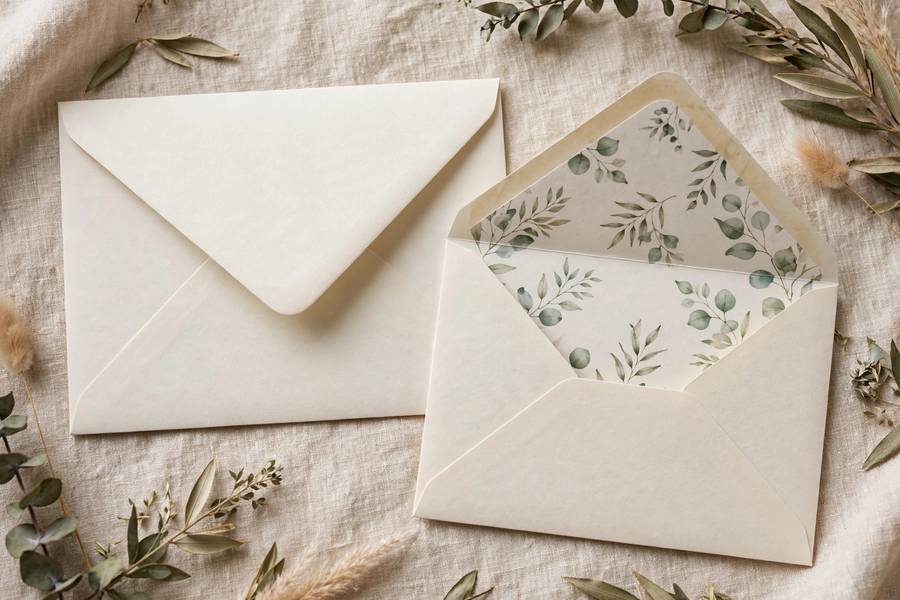
Mr. James Carter and Ms. Sarah Mitchell — alphabetical by last name on the outer envelope, first names on the inner.
Traditionally the husband’s; modern etiquette uses alphabetical order by last name, or the titled person first (Dr., military rank).
Same format, alphabetical by last name: ‘Mr. David Liu and Mr. James Park’ on the outer, first names on the inner.
Mrs. if she uses her husband’s name; Ms. if she kept her own. When unsure, Ms. is the safe default — or just ask.
‘Drs. James and Sarah Carter’ or formally ‘The Doctors Carter.’