How to Roast Garlic: Creamy, Caramelized, and Impossible to Mess Up

The first time someone served me roasted garlic, I did not believe it was garlic. It was sweet, nutty, spreadable like butter — nothing like the sharp, aggressive raw cloves I knew. I ate half a head smeared on bread and then asked, slightly embarrassed, for the “recipe,” expecting something complicated. It was garlic, olive oil, salt, foil, and an oven. That is the whole miracle. Learning how to roast garlic is one of the highest-return skills in home cooking: twenty minutes of near-zero effort, and you get an ingredient that makes everything it touches taste like you tried much harder than you did.
What Roasting Actually Does to Garlic
Raw garlic’s bite comes from sulfur compounds that form the instant you cut or crush a clove — it is literally the plant’s defense mechanism. Heat dismantles those compounds and triggers the Maillard reaction, the same browning magic that makes toast taste like toast. The cloves turn golden, then amber, then deeply caramelized; the texture goes from firm to custardy; the flavor goes from pungent to sweet and mellow with a roasted, almost nutty depth.
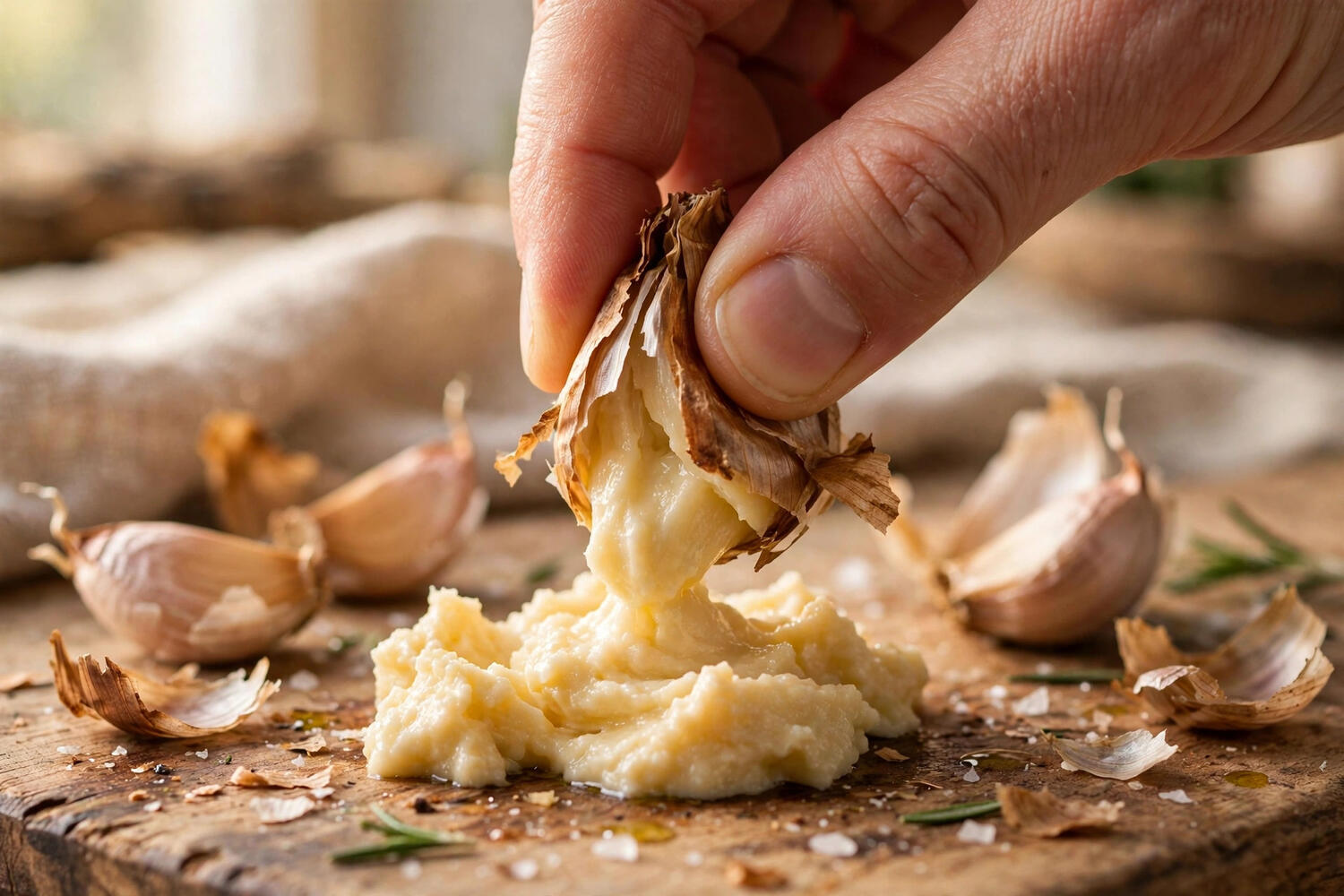
A whole roasted head squeezes out like a paste. You can spread it on anything, mash it into anything, or eat the cloves whole like candy — I have strong opinions about this and zero regrets. One head yields roughly two to three tablespoons of roasted garlic paste, and a little goes a long way.
How to Roast Garlic: The Classic Whole-Head Method
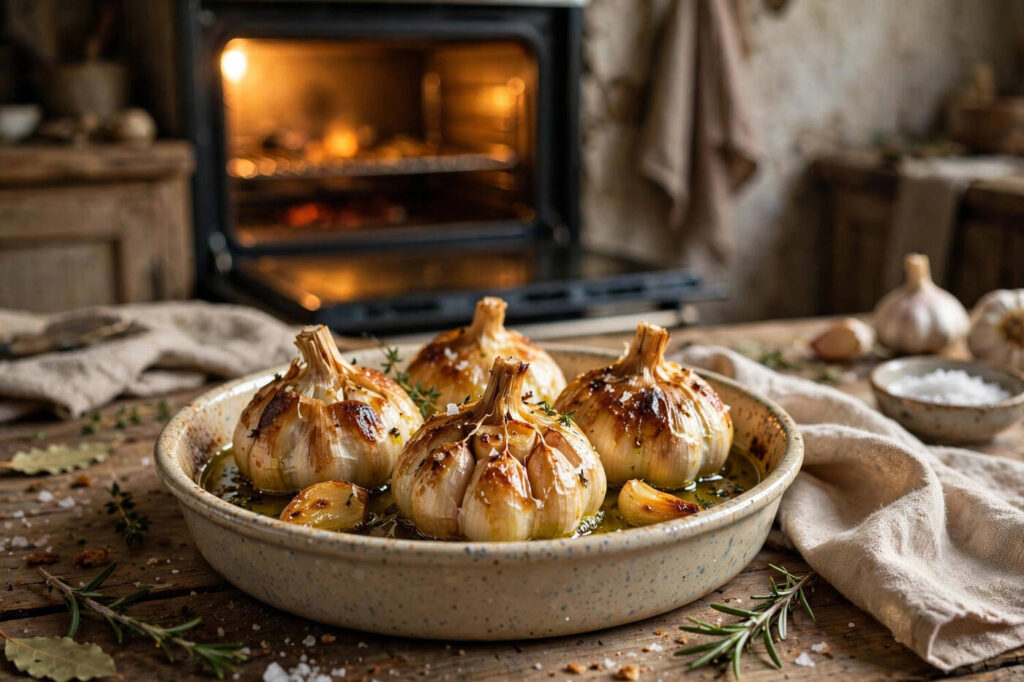
Preheat your oven to 400°F (200°C). Take a whole head of garlic — not a clove, the whole head — and slice off the top quarter, exposing the tops of the cloves inside. You want to see the pale flesh of every clove. Place the head cut-side up on a square of foil, drizzle generously with olive oil so it seeps between the cloves, and sprinkle with salt.
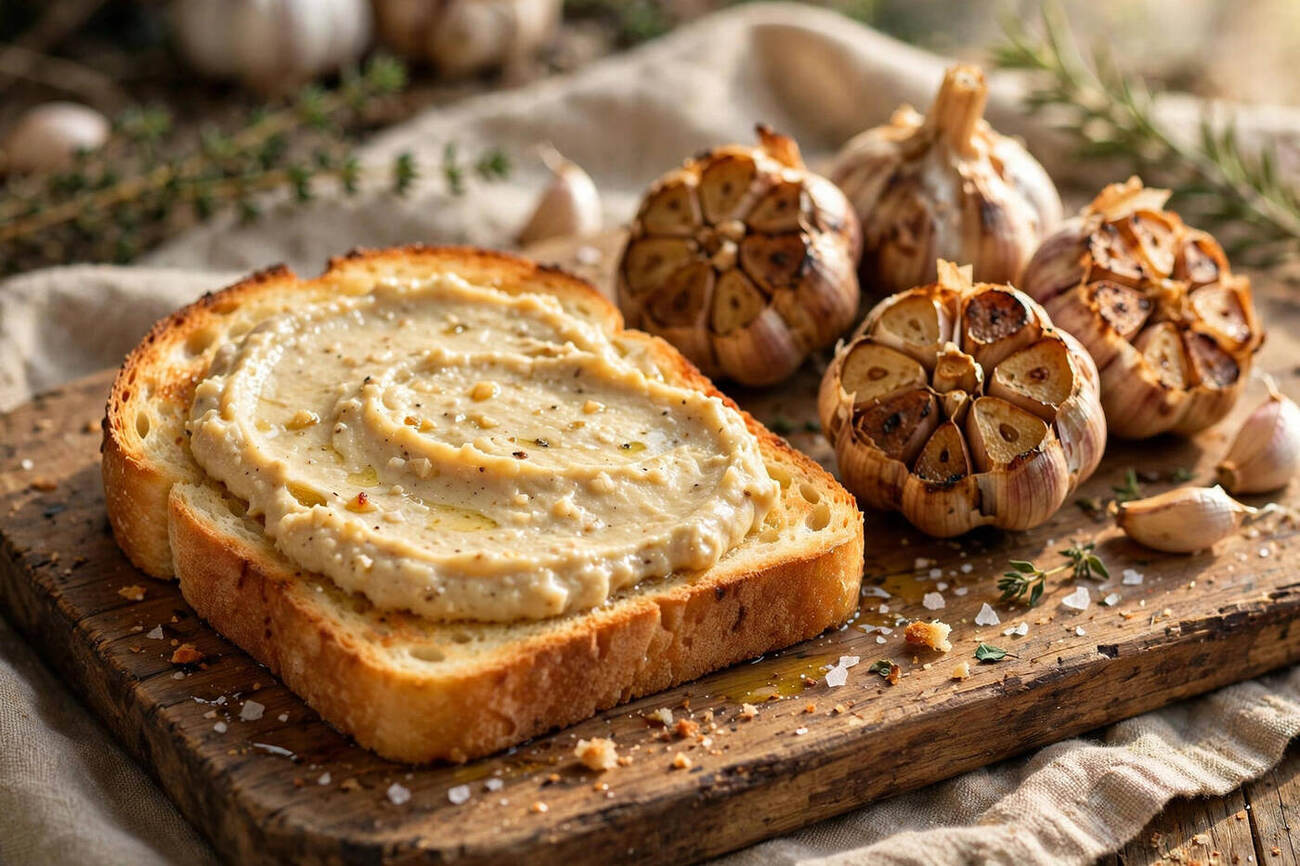
Wrap the foil loosely around the head, creating a sealed packet with a little room inside — not vacuum-tight, just closed. Place it directly on the oven rack or on a small baking sheet and roast for 35 to 45 minutes. Smaller heads finish closer to 35; big, fat heads need the full 45. You will know it is done when the cloves are deeply golden and the whole packet smells like the best thing that has ever happened in your kitchen. Let it cool for ten minutes — molten garlic is a real burn hazard — then squeeze the head from the bottom and watch the cloves slip out like soft little treasures.
Faster Methods: Cloves, Skillet, and Air Fryer
Do not always have 45 minutes? Separate the cloves, peel them, toss with olive oil and salt in an oven-safe dish, cover tightly with foil, and roast at 400°F for 20 to 25 minutes. Same result, half the time, though you lose the drama of squeezing the whole head.
The skillet method works too: peeled cloves in a small pan with enough olive oil to come halfway up, over the lowest possible heat, 20 to 30 minutes, shaking occasionally. This is technically garlic confit — garlic poached in oil — and it is outrageously good, plus you get garlic-infused oil as a bonus. The air fryer does the job at 350°F in about 20 minutes for a foil-wrapped head; check early, because air fryers run hot and garlic goes from golden to bitter quickly past the finish line.
How to Tell When It Is Perfectly Done
Under-roasted garlic is the most common mistake, and it is easy to spot: the cloves are still pale and firm in the center, and the flavor stays sharp instead of sweet. Perfectly roasted garlic is uniformly golden to light amber, completely soft all the way through — a clove should mash with zero resistance under a fork — and sweet-smelling, almost like caramelized onions met a campfire in the best way.
Over-roasted garlic is dark brown, bitter, and acrid. The line between golden and burnt is about five minutes, so start checking at the early end of the range. Every oven lies a little about its temperature; yours might need 40 minutes where mine needs 35. Trust your eyes and nose over the clock.
Seven Ways to Use Roasted Garlic (Beyond Bread)
Bread is the gateway, but roasted garlic deserves a wider life. Mash cloves into softened butter with herbs and salt for the compound butter that will ruin restaurant bread baskets for you forever. Stir a head’s worth into mashed potatoes — it melts in and adds a depth that makes people ask what your secret is. Whisk it into salad dressings and vinaigrettes, where it adds body without the harshness of raw garlic.
Blend it into hummus or white bean dip. Spread it under the skin of a roast chicken before cooking. Stir it into pasta sauces, soups, and stews in the last few minutes. Or do what I do most often: squeeze a few cloves onto a piece of toast with a drizzle of good olive oil and flaky salt, and call it dinner when nobody is watching. No judgment in this kitchen.
Storing Roasted Garlic Safely
This part matters, because roasted garlic stored wrong is a genuine food safety issue. Squeezed cloves or paste keep in an airtight container in the refrigerator for up to two weeks — cover with a thin layer of olive oil to keep them from drying out. For longer storage, freeze: portion the paste into an ice cube tray, freeze solid, then transfer the cubes to a freezer bag. They keep for three months and thaw in minutes.
One serious warning: do not store roasted garlic submerged in oil at room temperature. Low-acid foods in oil at room temperature can grow the bacteria that causes botulism — this is rare but real, and it is why garlic-in-oil products are acidified commercially. Refrigerate anything garlicky in oil, always, no exceptions. Your refrigerator is the only safe home for it.
Roasted Garlic vs. Raw Garlic: When to Use Which
They are barely the same ingredient, so choose deliberately. Raw garlic is sharp, pungent, and assertive — right for pesto, aioli, salad dressings, and anywhere you want garlic to announce itself. Roasted garlic is sweet, mellow, and rich — right for spreads, mashed dishes, roasted meats, and anywhere you want depth without bite. A recipe calling for four raw cloves might want a whole head roasted, because the intensity drops so much in the oven. When in doubt, taste: roasted garlic should never make your eyes water.
Roasted Garlic Butter: The Recipe You’ll Make Forever
If roasted garlic had a greatest hit, it would be compound butter. Take one stick of softened butter — real butter, salted or unsalted — and mash in the cloves from one whole roasted head, plus a tablespoon of chopped fresh herbs (parsley, thyme, and rosemary are all excellent), a pinch of salt, and a squeeze of lemon. Roll it into a log in plastic wrap, chill until firm, and slice coins of it onto everything: steaks, roasted vegetables, baked potatoes, warm bread, corn on the cob.
It keeps two weeks in the refrigerator and three months in the freezer, and it is the kind of thing that makes weeknight cooking feel intentional. I keep a log in my freezer at all times, the way some people keep emergency chocolate. A coin melting over a just-grilled steak is a restaurant trick you can do on a Tuesday, and guests will assume you have secrets. You do. It is garlic and butter and ten minutes of oven time.
Roasting Garlic for a Crowd
Holiday cooking is where roasted garlic earns its keep, because it scales effortlessly. Need roasted garlic for twenty people? Line up six or eight heads on a sheet pan, prep them all the same way — tops sliced, oil, salt, foil packets — and roast them together. The timing barely changes; just rotate the pan once halfway. Squeeze all the cloves into a bowl and you have a mountain of golden paste ready to go into mashed potatoes, stuffing, gravy, or a big batch of compound butter.
You can also roast garlic two days ahead — a genuine gift during holiday chaos. Refrigerate the squeezed cloves in an airtight container under a thin layer of olive oil, and they are ready to deploy whenever the recipe calls. The flavor holds beautifully, and one frantic task disappears from the big day. While the oven is already hot for the turkey or the pies, the garlic rides along for free. Efficiency tastes like caramelized allium.
Roasted Garlic Quick Reference
Whole head at 400°F: 35 to 45 minutes. Peeled cloves at 400°F: 20 to 25 minutes. Air fryer at 350°F: about 20 minutes. Skillet confit on lowest heat: 20 to 30 minutes. Done means golden-amber, completely soft, sweet-smelling. Store refrigerated up to two weeks, frozen up to three months, never in oil at room temperature. One head yields two to three tablespoons of paste. Tape this to the inside of your spice cabinet and you will never look it up again.
Frequently Asked Questions
What temperature do you roast garlic at?
400°F (200°C) is the standard — hot enough to caramelize, gentle enough not to burn. Lower temperatures like 350°F work too but take closer to an hour.
How long does it take to roast garlic?
A whole head takes 35 to 45 minutes at 400°F; separated peeled cloves take 20 to 25 minutes. The cloves should be golden and completely soft.
Do you peel garlic before roasting?
For the classic whole-head method, no — you roast it in its papery skin and squeeze the soft cloves out afterward. For the faster method, peel the individual cloves first.
How long does roasted garlic last?
Up to two weeks refrigerated in an airtight container, or three months frozen. Never store garlic in oil at room temperature due to botulism risk.
Can you roast garlic in an air fryer?
Yes — wrap the prepared head in foil and air fry at 350°F for about 20 minutes, checking early since air fryers run hot and garlic burns quickly.
Why is my roasted garlic bitter?
It went too far — dark brown or blackened cloves turn bitter and acrid. Pull garlic when it is golden-amber, and start checking five minutes before the recipe says.