Solar Eclipse vs Lunar Eclipse: What’s the Real Difference?

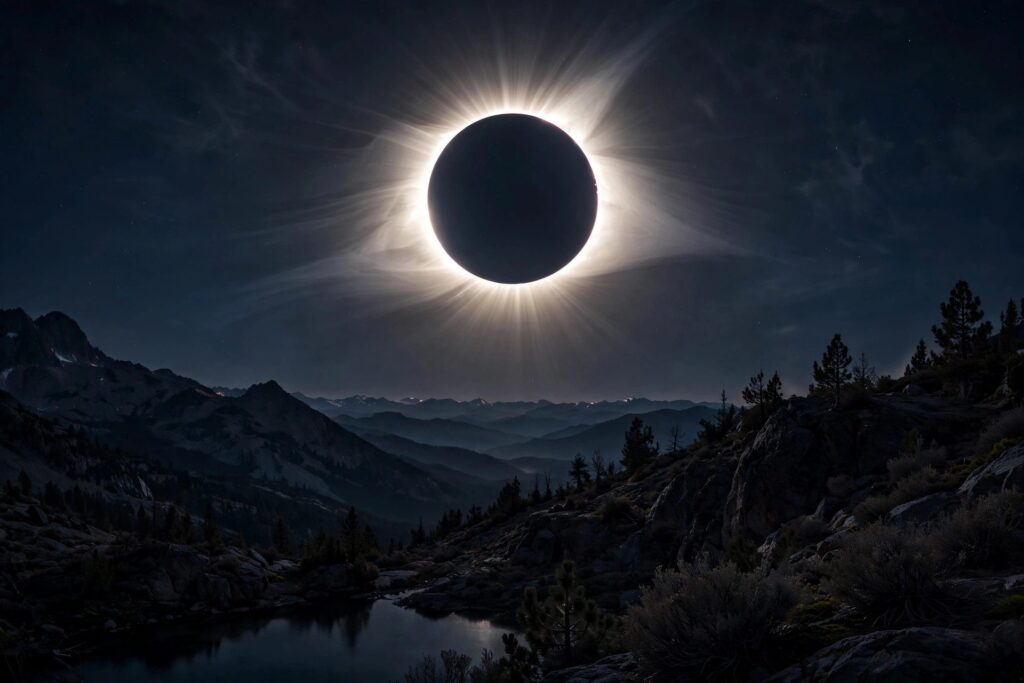
Every few years, the moon throws a shadow across the Earth and millions of people stand outside in special glasses staring at the sky. Other times, the moon itself turns a deep, eerie red overnight. If you’ve ever mixed up which one is which, the solar eclipse vs lunar eclipse question is simpler than it looks: it all comes down to what’s casting a shadow on what. One is the moon blocking the sun; the other is the Earth blocking the sun’s light from reaching the moon.
In this guide, I’ll break down exactly how each eclipse works, why they don’t happen every month, how to watch each one safely, and which one you’re more likely to see in your lifetime. By the end, you’ll never confuse them again.
Solar Eclipse vs Lunar Eclipse: The Short Version
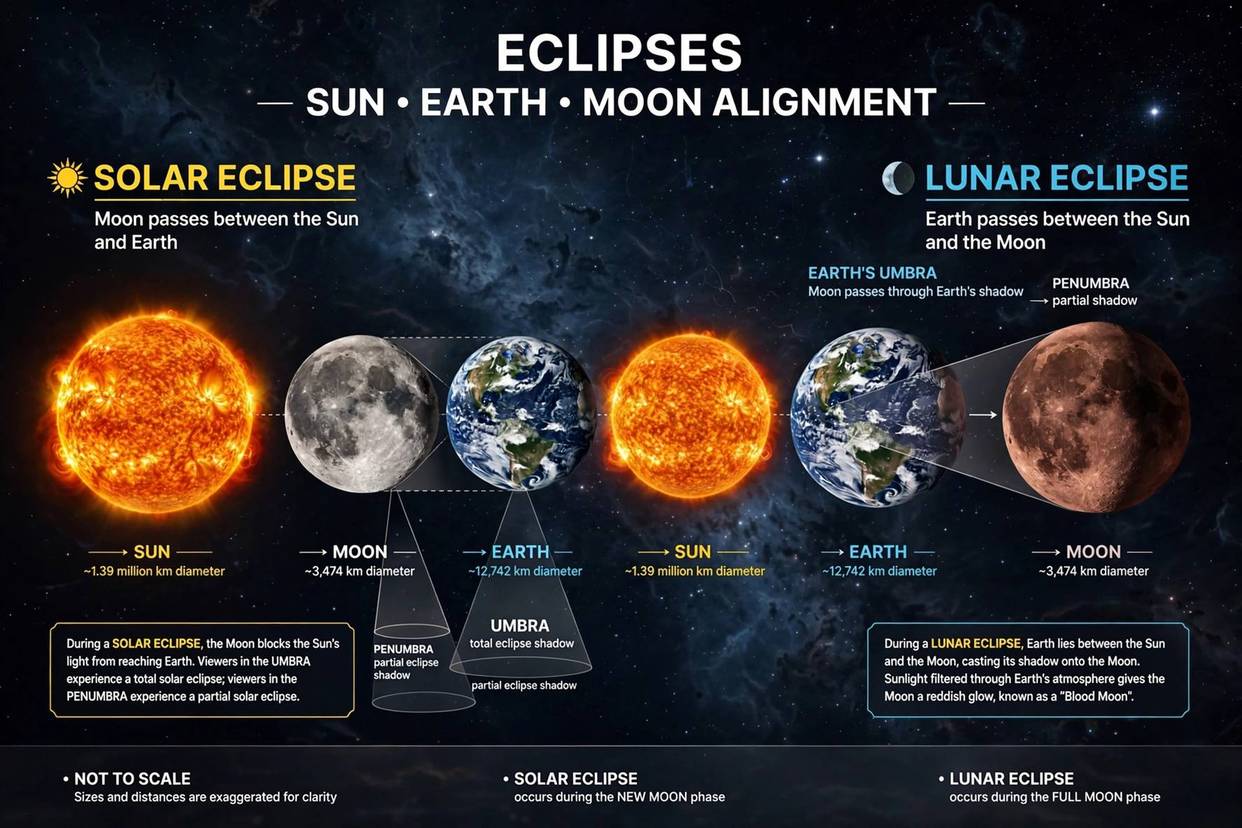
Here’s the whole thing in two sentences. A solar eclipse happens when the moon passes between the sun and the Earth, casting its shadow on us — day briefly turns to twilight along a narrow path. A lunar eclipse happens when the Earth passes between the sun and the moon, casting our planet’s shadow on the moon — and the moon often glows red.
The memory trick I always use: the name tells you what’s being eclipsed. Solar = the sun is eclipsed (by the moon). Lunar = the moon is eclipsed (by Earth’s shadow).
How a Solar Eclipse Works
A solar eclipse is a lineup: sun, moon, Earth, in that order. The moon is much smaller than the sun, but it’s also much closer to us — one of nature’s great coincidences is that the two appear almost exactly the same size in our sky. So when the moon slides directly in front of the sun, it can cover it completely.
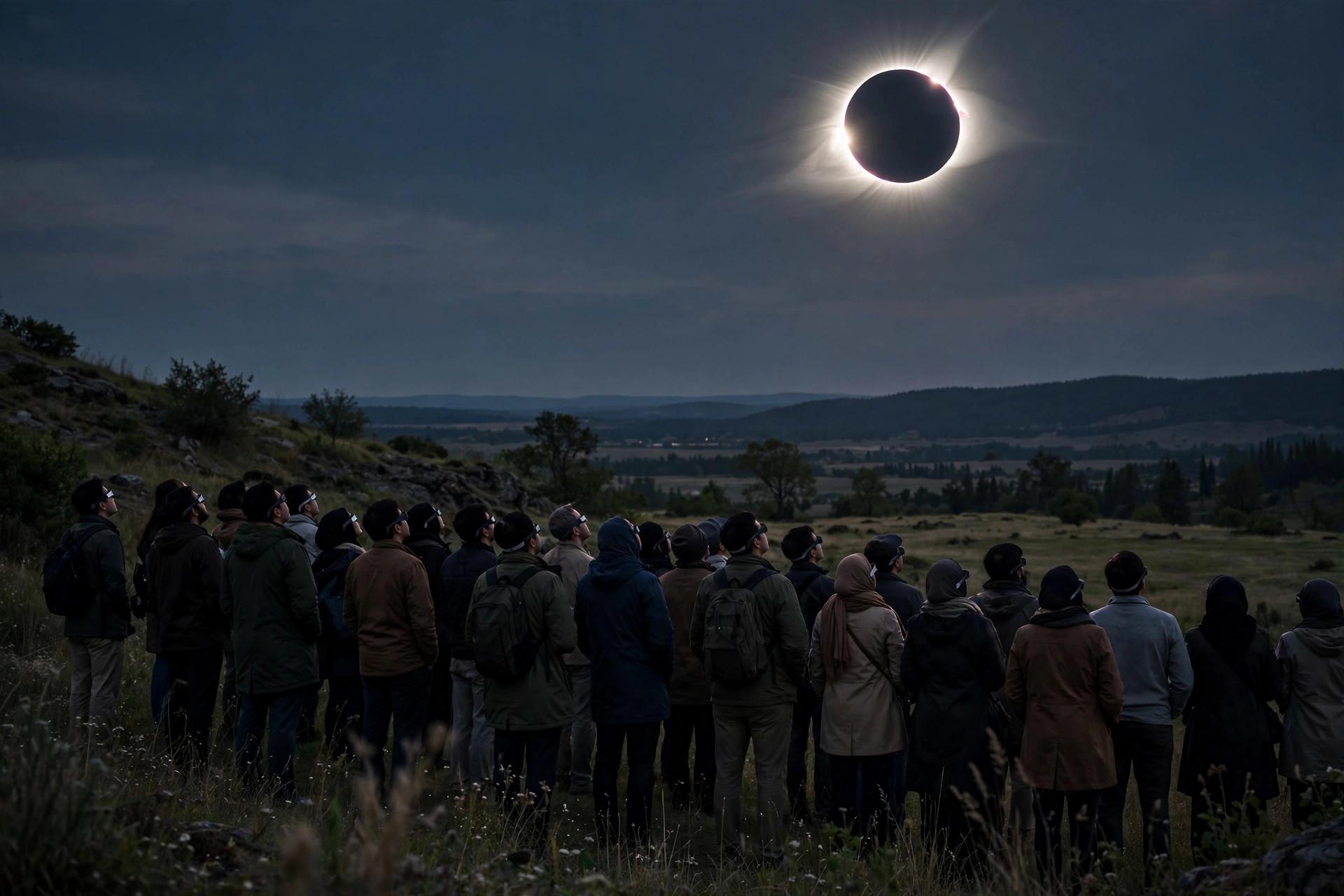
There are three main flavors. A total solar eclipse is the showstopper: the moon fully covers the sun, the sky darkens, stars come out, and the sun’s wispy outer atmosphere — the corona — blazes around the black disk of the moon. A partial solar eclipse is when the alignment is off-center and the moon only takes a bite out of the sun. An annular eclipse happens when the moon is a bit farther from Earth in its orbit and looks slightly too small to cover the sun, leaving a brilliant “ring of fire” around its edge.
How a Lunar Eclipse Works
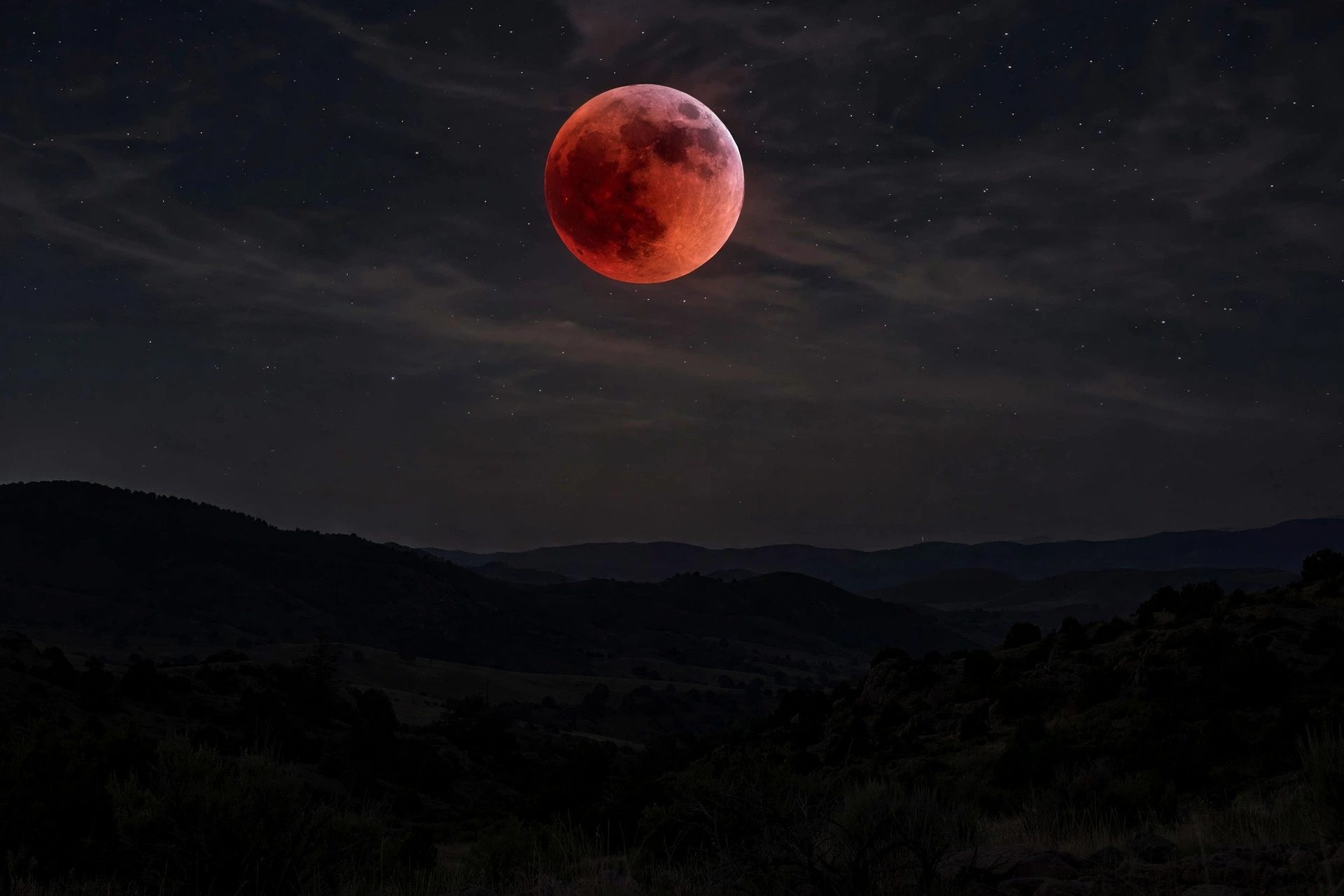
A lunar eclipse is the mirror image: sun, Earth, moon. Our planet’s shadow falls on the moon, and instead of vanishing, the moon usually turns a coppery red. That famous “blood moon” color comes from sunlight bending through Earth’s atmosphere — the same physics that makes sunsets red — and landing on the lunar surface.
Lunar eclipses also come in varieties. A total lunar eclipse darkens the whole moon and gives you the full red effect. A partial lunar eclipse darkens only part of it. And a penumbral eclipse — when the moon passes through only the faint outer part of Earth’s shadow — is so subtle that most people wouldn’t notice it without being told.
Why Don’t Eclipses Happen Every Month?
This is the question that unlocks the whole topic. The moon orbits Earth roughly once a month, so you’d think we’d get a solar and lunar eclipse every single month. The reason we don’t is that the moon’s orbit is tilted about five degrees relative to Earth’s orbit around the sun. Most months, the moon passes a little above or below the perfect line, and no shadow lines up.
Eclipses only happen during “eclipse seasons” — windows of a few weeks, twice a year, when the tilt lines up and the three bodies can actually fall into a row. That’s why eclipses come in clusters and then disappear for months at a time.
Watching Them: Safety and Rarity
Here’s where the two eclipses differ most in practice. A lunar eclipse is completely safe to watch with your naked eyes — you’re just looking at moonlight, and the whole thing can last for hours. Anyone on the night side of Earth can see it, which is why most people will witness several in their lifetime without even trying.
A solar eclipse requires eye protection, and this is non-negotiable. Looking directly at the sun — even a partially eclipsed one — can permanently damage your eyes, because your pupils don’t constrict for the dimmed light the way they should. Use certified eclipse glasses or a proper solar filter, except during the brief minutes of totality when the sun is fully covered. And total solar eclipses are rare for any given spot: the path of totality is only about a hundred miles wide, so most people have to travel to see one.
Which One Should You Try to See?
If you just want a beautiful sky event with zero effort, wait for the next total lunar eclipse — step outside, look up, done. If you want the single most dramatic thing you can see in the daytime sky, chase a total solar eclipse at least once. People who’ve seen totality describe it as genuinely life-changing: the temperature drops, animals go quiet, and the corona hangs in a darkened sky like something from another world. A lunar eclipse is lovely. A total solar eclipse is an event.
The Saros Cycle: Why Eclipses Run on a Schedule
Eclipses feel random, but they’re clockwork — and ancient astronomers figured out the pattern long before anyone knew what caused them. The Babylonians discovered that nearly identical eclipses repeat every 18 years, 11 days, and 8 hours, a period we now call the Saros cycle. They could predict eclipses without understanding a thing about orbital mechanics, just by counting.
Here’s why it works: the Saros is the period after which the sun, moon, and Earth return to nearly the same relative geometry — same moon phase, same distance, same position relative to the tilt that causes eclipse seasons. So an eclipse happens, and one Saros later, a very similar eclipse happens again. The extra 8 hours means Earth has rotated a third of a turn, so the path of a solar eclipse shifts about 120 degrees west each cycle — the “same” eclipse visits a different part of the planet.
Modern astronomers use the Saros plus precise orbital math to predict eclipses centuries out. NASA’s eclipse catalogs list every solar and lunar eclipse from thousands of years in the past to thousands of years in the future. When someone tells you the exact date of the next total solar eclipse visible from your town, that prediction rests on Babylonian pattern-spotting refined by three thousand years of astronomy.
Eclipses That Changed History
A few eclipses earned their place in the history books:
- The eclipse of 1919. During a total solar eclipse, astronomer Arthur Eddington measured starlight bending around the sun — exactly as Einstein’s general relativity predicted. The results made Einstein world-famous overnight. An eclipse quite literally confirmed our modern understanding of gravity.
- The “Battle of the Eclipse,” 585 BC. According to the ancient historian Herodotus, a solar eclipse interrupted a battle between the Lydians and the Medes, and both sides were so awestruck they stopped fighting and made peace. Modern astronomers have dated the eclipse, making it one of the earliest precisely dated events in ancient history.
- Columbus and the lunar eclipse of 1504. Stranded in Jamaica with his crew starving and the locals no longer willing to supply food, Columbus — who knew a total lunar eclipse was coming from his astronomical tables — reportedly told the local leaders his god would darken the moon in anger. When it did, the supplies resumed. It’s part astronomy, part theater, and entirely a story about the power of prediction.
- Ancient Chinese eclipse records. Chinese astronomers recorded eclipses as far back as 2137 BC (the famous — if debated — account of royal astronomers executed for failing to predict one). Their meticulous records over millennia helped modern scientists measure how Earth’s rotation has gradually slowed.
Every one of these stories is really about the same thing: for most of human history, predicting an eclipse meant you understood something profound about the heavens. Today the predictions are routine — but standing in the moon’s shadow still feels anything but.
Photographing an Eclipse (Without Frying Your Camera)
Want to capture it? A few ground rules. For a lunar eclipse, photography is easy and safe: any camera with a zoom will do, a tripod helps enormously since exposures run long in the dark, and the red color comes through beautifully. For a solar eclipse, the safety rules apply to your gear too — pointing an unprotected camera or phone at the sun can damage the sensor, and looking through an optical viewfinder at the sun can damage your eyes just like looking directly. Use a certified solar filter over the lens for all partial phases; during the brief window of totality only, the filter comes off.
Honestly? For your first total solar eclipse, consider watching it with your eyes instead of your camera. Experienced eclipse chasers will tell you the same thing: totality lasts a couple of minutes, the corona is best seen by human eyes, and plenty of professional photographers will capture it better than a first-timer fumbling with settings in the dark. Be present for the main event; photograph the partial phases before and after, when there’s time to fiddle.
FAQ: Solar Eclipse vs Lunar Eclipse
Can a solar and lunar eclipse happen in the same month?
Yes, actually — they often come in pairs about two weeks apart during an eclipse season. If the alignment is good for a solar eclipse at new moon, it’s usually good for a lunar eclipse at the full moon two weeks before or after.
Why does the moon turn red during a lunar eclipse?
Sunlight passing through Earth’s atmosphere gets scattered, and the blue light is scattered away while the red light bends through and reaches the moon. It’s the same reason sunsets look red — you’re seeing Earth’s sunrises and sunsets projected onto the moon.
Is it true animals act strangely during a solar eclipse?
There are plenty of reports of birds going quiet, crickets starting up, and farm animals heading for shelter during totality. Scientists think they’re simply responding to the sudden darkness as if night fell — their internal clocks get briefly confused.
How often do total solar eclipses happen?
Somewhere on Earth, roughly every 18 months. But the path of totality is narrow, so for any specific location, a total solar eclipse might come around only once every few hundred years. That’s why eclipse chasers travel.
Do other planets have eclipses?
Yes — anywhere a moon passes between its planet and the sun, you get an eclipse. Jupiter’s big moons cast shadows on the planet regularly. But the perfect apparent size match of our sun and moon, which makes our total eclipses so spectacular, is a rare coincidence.