How to Unclog a Drain Without Chemicals: 7 Methods That Actually Work

Standing water in the sink, a shower that turns into a foot bath — a clogged drain is one of those household annoyances that always shows up at the worst time. Before you reach for that bottle of caustic drain cleaner, hear me out: learning how to unclog a drain without chemicals is a skill every homeowner should have, and in most cases the non-chemical methods work better, cost less, and will not eat your pipes from the inside out.
I have been fixing things around houses for decades, and I will tell you straight — chemical drain cleaners are harsh on pipes (especially older ones), bad for septic systems, and dangerous to have under the sink. The methods below use tools and household items you probably already own. Let us get that water flowing again.
How to Unclog a Drain Without Chemicals: First, Diagnose the Clog
Not all clogs are the same, and the right fix depends on what you are dealing with:
- Slow drain, not fully blocked: Usually buildup — soap scum, grease, hair coating the pipe walls. Easiest to fix.
- Standing water that drains very slowly: A partial blockage deeper in the pipe. Needs mechanical action.
- Completely blocked, water will not budge: A solid obstruction. Start with a plunger, then move to a snake.
- Multiple fixtures backing up: If the sink, tub, and toilet are all slow, the clog is likely in the main line — that is plumber territory. Do not waste your afternoon on it.
One more thing: if you already poured chemical cleaner down there and it did not work, wear gloves and eye protection from here on, and ventilate the area. We are going mechanical now.
Method 1: The Plunger (Do It Right)
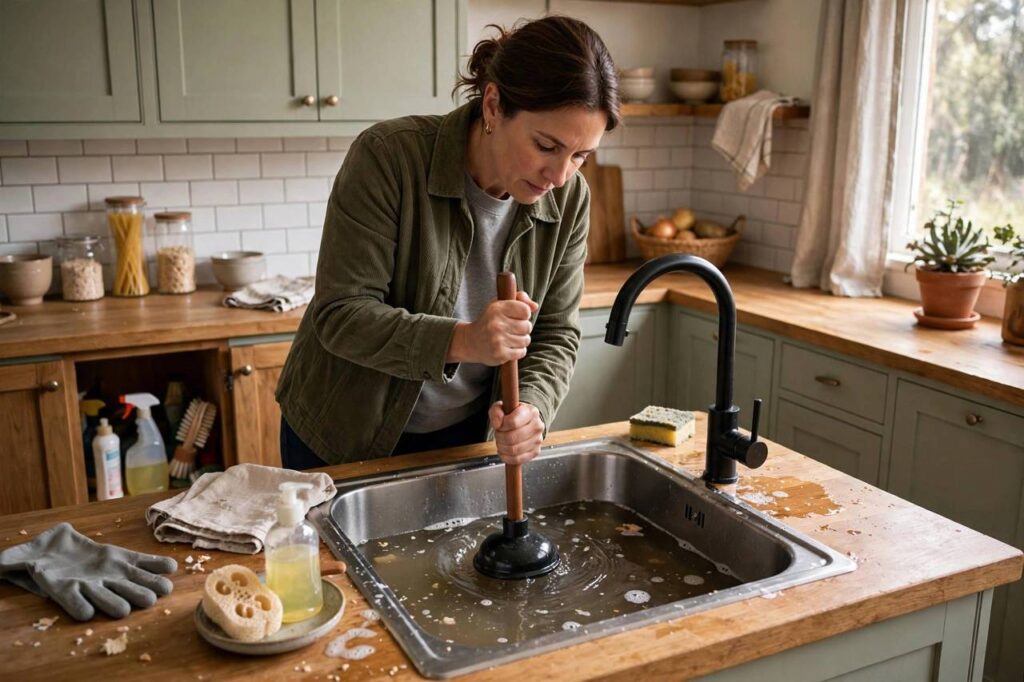
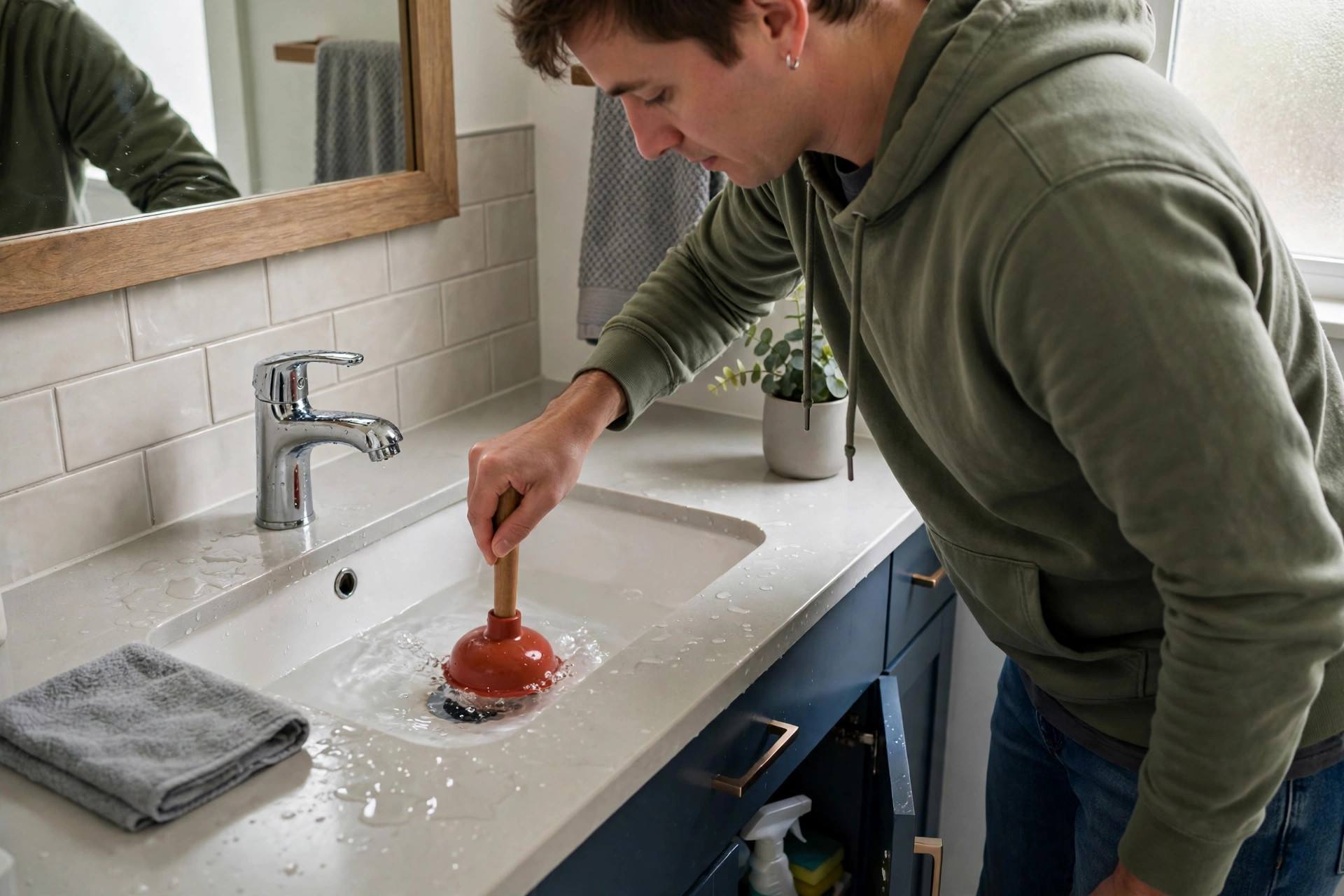
The humble plunger fixes more clogs than anything else in this list — but most people use it wrong. Here is the right way:
- Use a cup plunger (the simple dome shape) for sinks and tubs, not the flange type meant for toilets.
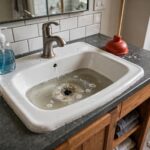
- Fill the sink or tub with enough water to cover the plunger’s cup — the seal needs water to work.
- If it is a bathroom sink, plug the overflow hole with a wet rag. This forces all the pressure toward the clog.
- Seat the plunger firmly over the drain and plunge vigorously — short, sharp strokes — for 20 to 30 seconds.
- Pull the plunger off sharply on the last stroke. The suction breaking loose is often what dislodges the clog.
Give it three or four rounds. If the water starts draining, run hot water for a minute to flush the loosened gunk through. No luck? Move on — no shame in it.
Method 2: Baking Soda and Vinegar (the Right Way)
You have seen this one all over the internet. It does work — for mild buildup — but only if you do it properly. The fizzing reaction helps loosen grime; it will not dissolve a solid hairball.
- Boil a kettle of water and pour it down the drain first (skip this step for PVC pipes — use very hot tap water instead, since boiling water can soften PVC joints).
- Pour about half a cup of baking soda directly into the drain.
- Follow with one cup of white vinegar. You will hear it fizz — that is the reaction working.
- Cover the drain with a stopper or rag for 15 minutes to keep the reaction directed downward.
- Flush with another kettle of hot (not boiling, for PVC) water.
Think of this as maintenance and mild-clog treatment, not a miracle cure. It is great as a monthly preventive, which I will cover below.
Method 3: The Drain Snake (Your Best Friend)
A drain snake — also called a plumber’s auger — is the single best investment for a homeowner. A basic 25-foot hand snake costs little and will clear clogs that laugh at plungers.
- Feed the snake’s end into the drain slowly, turning the handle clockwise as you go.
- When you feel resistance, you have hit the clog. Keep turning — the auger tip either grabs the clog or bores through it.
- Work it back and forth a few times, then slowly retract the snake, pulling the gunk out with it. (Have a bucket and old towels ready — this part is not glamorous.)
- Run hot water to flush the line clear.
For bathroom sinks and tubs, hair is almost always the culprit, and a snake pulls it out in satisfying, disgusting clumps. For kitchen sinks, it is usually grease buildup — the snake breaks it up so hot water can flush it away.
Method 4: Remove and Clean the Drain Stopper
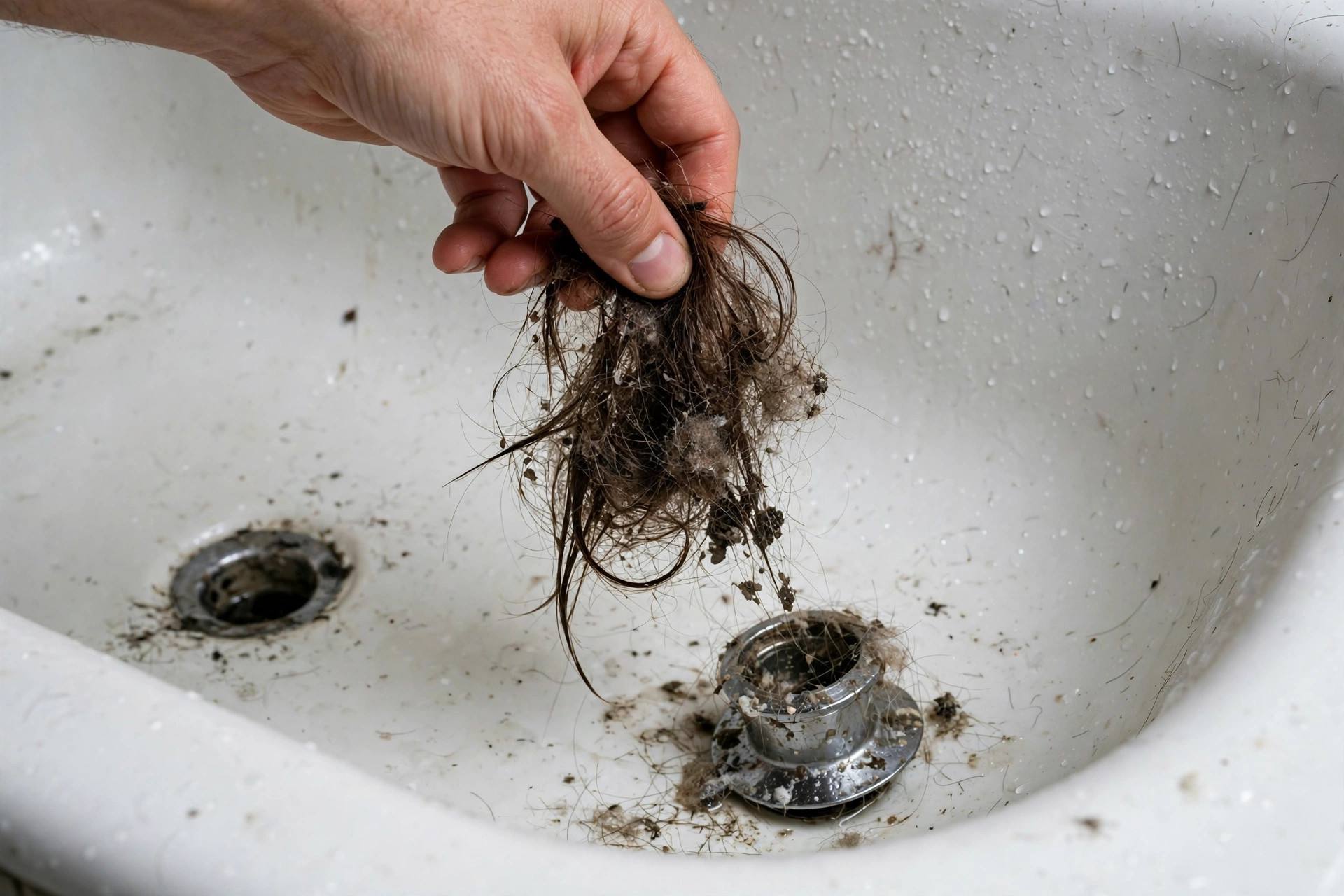
Sometimes the “clog” is not in the pipe at all — it is wrapped around the stopper mechanism. Pop-up stoppers in bathroom sinks collect an astonishing amount of hair and soap scum.
- For tub drains, unscrew or lift out the stopper and pull off the accumulated hair (gloves recommended).
- For bathroom sinks with a pop-up stopper, look under the sink for the pivot rod nut, loosen it, and lift the stopper out. Clean it thoroughly, then reassemble.
- While it is out, shine a flashlight down the drain — you can often see and grab the clog with needle-nose pliers.
I have “fixed” countless slow drains with this five-minute job alone. Always check the easy stuff first.
Method 5: The P-Trap Cleanout
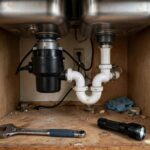
The P-trap is that curved pipe under your sink, and it is clog central — it is designed to hold water, which means it also catches everything else. Cleaning it is straightforward:
- Place a bucket directly under the trap.
- Loosen the slip nuts on both ends of the curved section by hand or with channel-lock pliers. (Lefty-loosey, and put a towel down — water will spill.)
- Dump the trap’s contents into the bucket and scrub the inside with an old bottle brush or rag.
- Reassemble hand-tight, then run water and check for leaks.
This takes ten minutes, requires zero chemicals, and solves a huge percentage of kitchen and bathroom sink clogs. If you have never done it, you will be amazed at what comes out.
Method 6: Dish Soap and Hot Water (Grease Clogs)
Kitchen sink draining slowly after years of cooking? Grease is the likely villain. Here is the fix:
- Squirt a generous amount of dish soap (the grease-cutting kind) directly into the drain.
- Follow with a kettle of hot — not boiling — water, poured slowly.
- Wait five minutes, then run the hot tap for two full minutes.
Dish soap is a surfactant — it breaks grease into tiny droplets that water can carry away. Repeat once if needed. And going forward, wipe greasy pans with a paper towel before washing, and never pour cooking oil down the drain. Your pipes will thank you.
Method 7: Wet/Dry Vacuum
If you own a shop vacuum, you have a surprisingly effective drain tool. Set it to vacuum liquids, create a tight seal over the drain with the hose (an old plunger head with the stick removed makes a great adapter), and let it suck the clog out. It works on the same principle as a plunger, but with far more power. Just make sure the vacuum is rated for wet use — this matters.
Preventing Future Clogs
An ounce of prevention and all that. These habits will keep you from repeating this whole adventure:
- Bathroom: Use inexpensive mesh drain catchers in showers and tubs. They catch hair before it becomes a problem — empty them weekly.
- Kitchen: Never pour grease down the drain. Scrape plates into the trash first. Run hot water for 30 seconds after each use.
- Monthly flush: Pour a kettle of hot water down each drain once a month, followed by the baking soda and vinegar treatment. Five minutes of maintenance beats an hour of unclogging.
- What not to flush: “Flushable” wipes (they are not), cotton balls, dental floss, and coffee grounds all belong in the trash.
When to Call a Plumber
I am all for DIY, but know your limits. Call a professional if:
- Multiple drains are backing up at once (likely a main-line issue)
- You smell sewage coming from drains
- Water backs up in one fixture when you use another (e.g., the tub fills when you flush)
- You have tried the methods above and nothing has worked after an honest effort
- Your home has very old pipes and you are unsure what they can handle
A plumber with a professional auger or hydro-jet can clear in twenty minutes what might take you all weekend. No shame in it — that is what they are for.
What About Enzyme Drain Cleaners?
You may have seen enzyme-based drain products marketed as the natural alternative to chemical cleaners. Here is my honest take: they are genuinely non-corrosive and safe for pipes and septic systems, which puts them miles ahead of caustic chemicals. They work by introducing bacteria and enzymes that digest organic matter like soap scum, grease, and food residue.
The catch is speed. Enzyme cleaners work slowly – often needing overnight or multiple applications – and they are preventive maintenance, not emergency rescue. They will not clear a solid hair clog today. My recommendation: use the mechanical methods above to clear the actual blockage, then use an enzyme treatment monthly to keep buildup from returning. It is a solid one-two punch: snake now, enzymes later.
FAQ
Does baking soda and vinegar really unclog drains?
It helps with mild buildup and works well as preventive maintenance, but it will not dissolve a solid clog like a mass of hair or heavy grease. For real blockages, use a plunger or drain snake. Think of baking soda and vinegar as drain maintenance, not a rescue tool.
Can I use boiling water on PVC pipes?
Be cautious. Boiling water (212°F / 100°C) can soften PVC pipe and loosen glued joints over time. For PVC drains, use very hot tap water instead. Boiling water is fine for metal pipes like copper or cast iron.
Why should I avoid chemical drain cleaners?
Chemical cleaners generate heat and corrosive reactions that can damage pipes — especially older metal pipes and PVC — harm septic systems, and pose burn and fume hazards to you. They also often fail on solid clogs like hair, leaving you with a sink full of caustic water. Mechanical methods are safer and more effective.
How do I unclog a shower drain full of hair?
Start by removing the drain cover and pulling out visible hair with gloved hands or needle-nose pliers. Then use a drain snake to grab what is deeper. Finish with hot water. A $2 plastic hair-catcher tool from the hardware store also works wonders for shallow shower clogs.
How often should I clean my drains to prevent clogs?
A monthly hot-water flush plus a baking soda and vinegar treatment keeps most drains clear. In the shower, clean the hair catcher weekly. In the kitchen, avoid putting grease, coffee grounds, and starchy foods like pasta down the disposal or drain.