How to Fix Low Water Pressure in a House: DIY Guide

You turn on the shower and get a sad trickle. The garden hose barely reaches the flower bed. Filling a pot takes long enough to question your life choices. I have fixed this exact problem in more houses than I can count over twenty years of DIY work, and here is the good news: most low water pressure problems are diagnosable in an afternoon and fixable with basic tools. So let us get systematic about how to fix low water pressure in a house — starting with the single most important question, which determines everything else.
That question is: is the problem at one fixture, or everywhere? One weak faucet is a completely different problem from a whole house with no pressure, with different causes and different fixes. Get this diagnosis right and you will save yourself hours. Get it wrong and you will be replacing parts that were never the problem. Everything below follows from that first fork in the road, so let us start there.
How to Fix Low Water Pressure in a House: Start With Diagnosis
Before you touch a wrench, run this diagnostic. It takes twenty minutes and tells you exactly where to look.
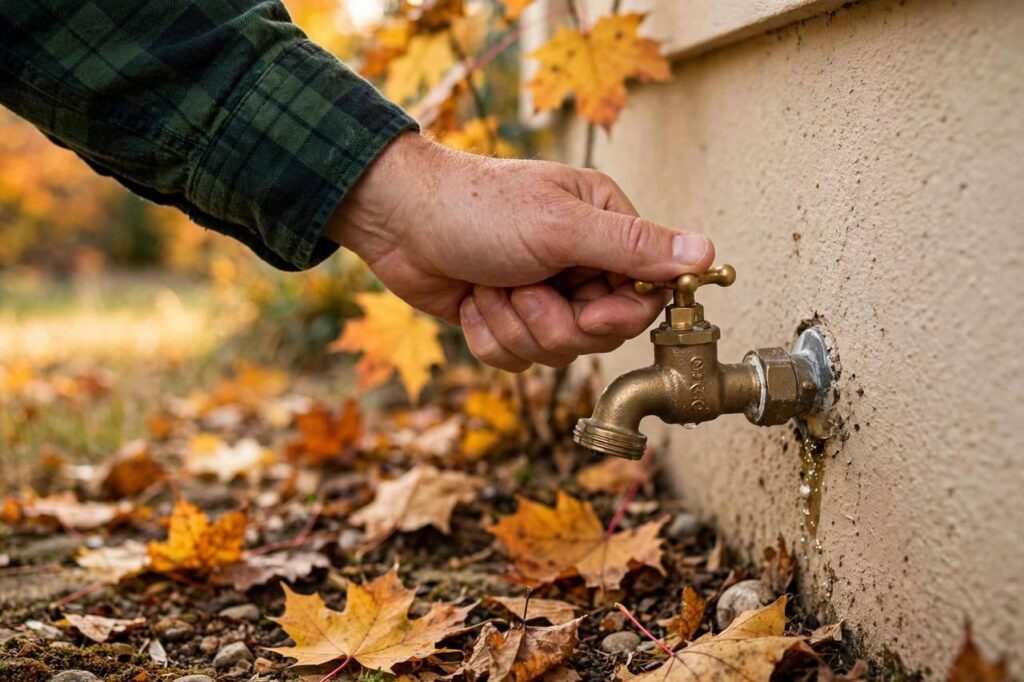
Test multiple fixtures. Run the cold water at the kitchen sink, a bathroom sink, the shower, and an outdoor hose bib. Note which are weak and which are fine. One weak fixture means the problem is local — the faucet, the showerhead, or the supply line to that fixture. Several weak fixtures — especially on the same floor or branch — suggests a partially closed valve or a localized blockage. Every fixture weak, hot and cold means the problem is at the main supply: the main shutoff valve, the pressure regulator, or the supply line from the street or well.
Test hot vs. cold separately. If only the hot water has low pressure, the problem is almost certainly at the water heater — sediment buildup, a failing dip tube, or a partially closed valve on the heater. Cold water fine plus hot water weak is one of the most diagnostic patterns in plumbing, and it narrows your search enormously.
Check with neighbors. If you are on municipal water and your neighbors have the same problem, it is a supply issue — a water main break, municipal maintenance, or a pressure problem on the utility’s side. Call the water company before you dismantle anything. I have seen homeowners replace a pressure regulator only to learn the city was flushing hydrants that week.
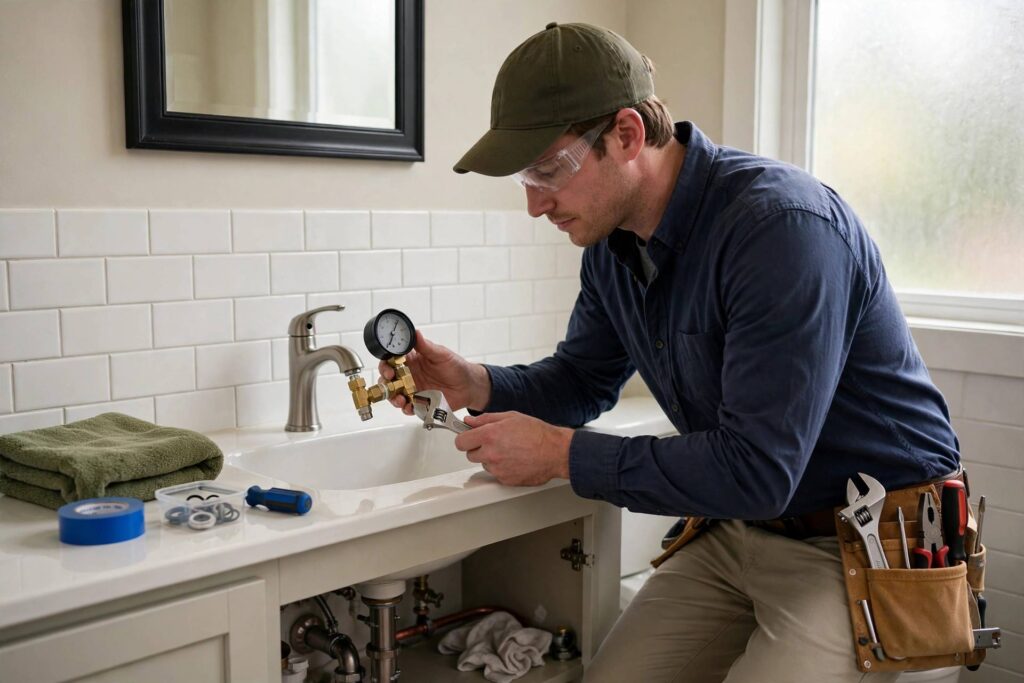
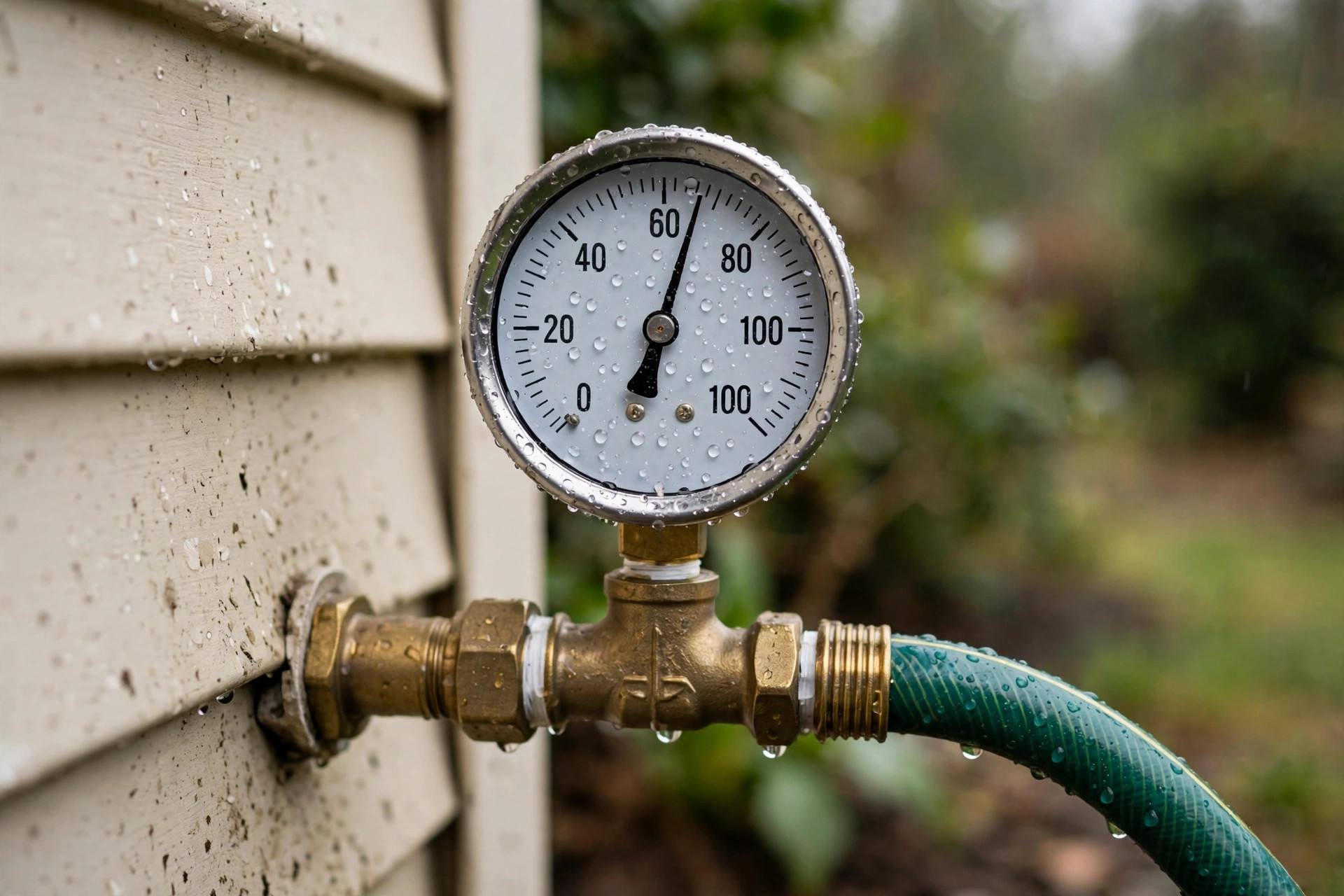
Measure it. A ten-dollar pressure gauge that screws onto a hose bib gives you a number instead of a feeling. Normal residential pressure is typically 40 to 60 psi. Below 40, you have a genuine low-pressure problem. Above 80, you have the opposite problem — too much pressure, which damages fixtures and appliances over time. Knowing the number turns guesswork into troubleshooting.
Single-Fixture Problems: Faucets, Showerheads, and Aerators
If the diagnosis points to one fixture, you are in luck — these are the easiest fixes in plumbing.
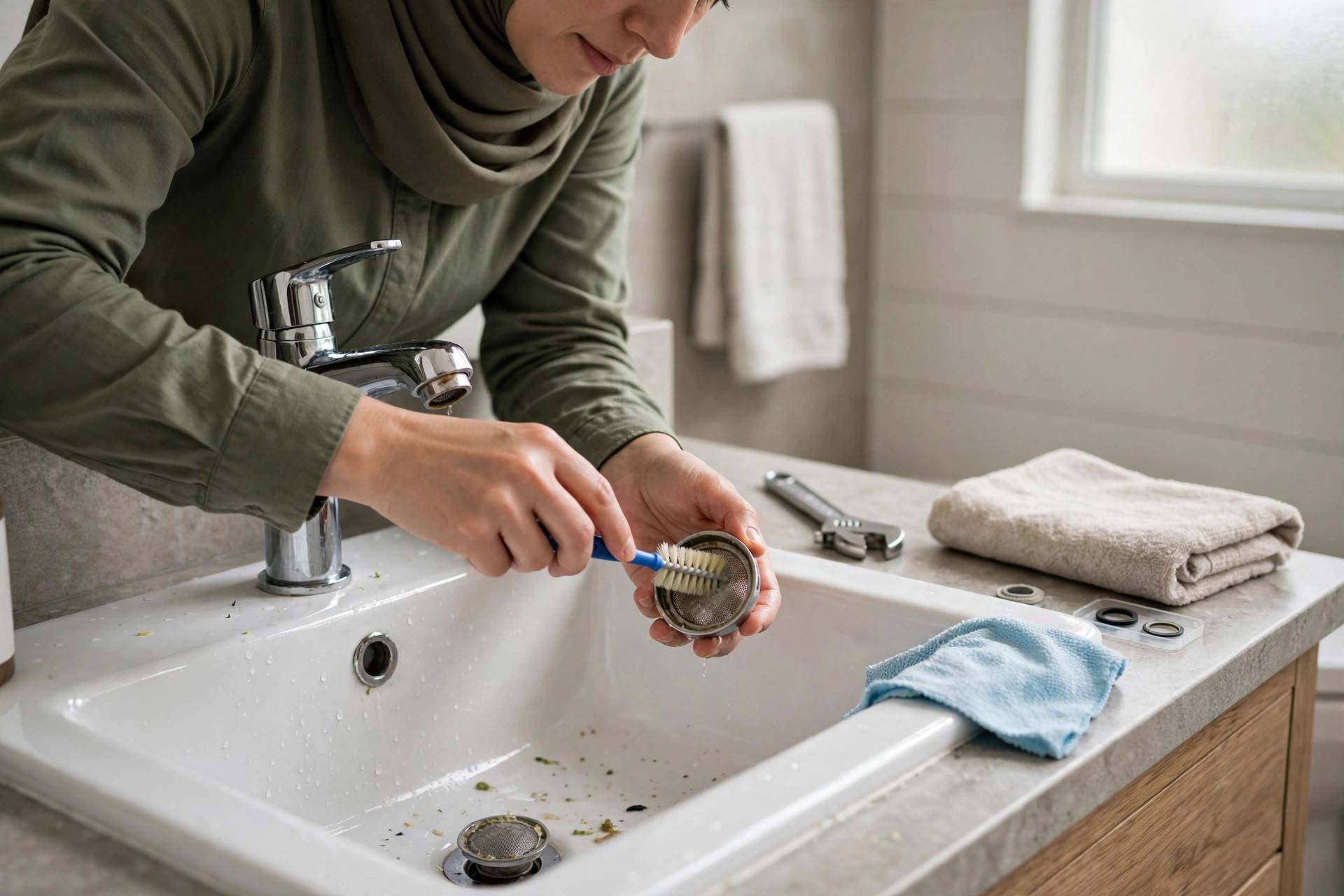
Clean the aerator. The little screen at the tip of the faucet catches sediment and mineral deposits, and when it clogs, flow drops dramatically. Unscrew it (usually by hand or with pliers wrapped in a cloth to protect the finish), rinse out the debris, soak it in vinegar if it is crusty with mineral scale, and screw it back on. This five-minute fix resolves an astonishing percentage of “low pressure” complaints. I always check this first.
Clean or replace the showerhead. Showerheads clog with mineral deposits the same way, especially in hard-water areas. Unscrew it, soak it in white vinegar for a few hours or overnight, scrub the nozzles with an old toothbrush, and reinstall. If it is old and heavily scaled, a replacement showerhead is inexpensive and takes ten minutes. While you are at it, check the flow restrictor — a small disc inside modern showerheads that limits flow to meet efficiency standards. Removing it increases flow, though it also increases water use; that tradeoff is yours to make.
Check the supply valves. Under every sink and behind every toilet is a small shutoff valve. These get bumped, or a previous repair left one half-closed. Make sure they are fully open — turn counterclockwise until they stop. I have diagnosed “mysterious” single-fixture pressure drops that were just a valve nudged three-quarters closed during a cleaning.
Inspect the supply lines. Flexible supply lines can kink, and older rigid lines can corrode internally. If the aerator is clean and the valve is open but flow is still weak, disconnect the supply line (water off first, bucket underneath) and check flow at the valve itself. Good flow at the valve plus weak flow at the faucet means the blockage is in the faucet body or cartridge — often a replaceable part.
Whole-House Problems: Valves, Regulators, and Supply Lines
When every fixture is weak, work from the outside in — starting where water enters the house.
The main shutoff valve. Find it (usually near where the water line enters the house, or at the meter). Gate-style valves — the ones with round handles — need multiple full turns to open completely, and they are notorious for being left partially closed after plumbing work. Ball valves — the lever type — are open when the handle is parallel to the pipe. Verify it is fully open. This is the “is it plugged in” of plumbing troubleshooting, and yes, it is the cause more often than anyone admits.
The pressure regulator. Many homes have a pressure-reducing valve (PRV) where the main line enters — a bell-shaped device that keeps street pressure at safe household levels. These wear out, typically after 10 to 15 years, and a failing regulator often manifests as gradually declining pressure. Most have an adjustment bolt on top: turning it clockwise increases pressure. Try a careful adjustment first — a quarter turn, then recheck with your gauge. If adjustment does nothing, the regulator needs replacement. That is a moderate DIY job (water off, basic pipe fittings) or a straightforward plumber visit.
Old, corroded pipes. In older homes with galvanized steel plumbing, the inside of the pipes corrodes and narrows over decades — sometimes to a fraction of the original diameter. No valve adjustment fixes this. Signs include gradually worsening pressure over years, discolored water when you first turn on taps, and a house old enough to have original galvanized lines. Repiping is a big job — the only real fix — but knowing the cause stops you from wasting money on fixes that cannot work.
Hidden leaks. A significant leak in the main supply line bleeds off pressure before water reaches your fixtures. Signs: the water meter runs when everything is off, soggy spots in the yard along the supply line’s path, or an unexplained jump in the water bill. The meter test is definitive — check the meter, use no water for two hours, check again. Any movement means water is going somewhere it should not.
Hot Water Only: The Water Heater Suspects
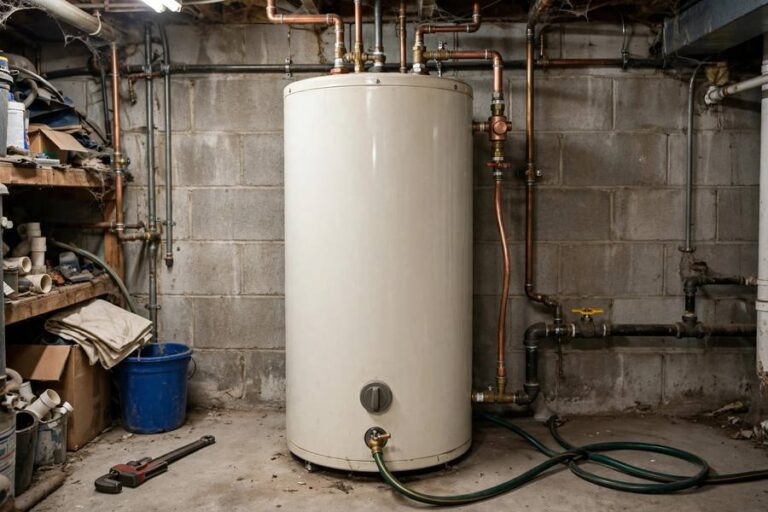
Weak hot water with normal cold water points squarely at the water heater or its connections. Sediment buildup is the prime suspect: minerals settle at the bottom of the tank over years, reducing capacity and sometimes clogging the outlet. Draining and flushing the tank annually prevents this; if it has never been done in an old heater, a flush may help or may reveal that the tank is at end of life.
Check the shutoff valve on the cold inlet to the heater — partially closed means restricted hot water throughout the house. Also inspect the flexible connectors; old ones can collapse internally. And in older heaters, a deteriorated dip tube (the pipe that carries cold water to the tank bottom) can break apart and send plastic fragments into the hot water lines, clogging aerators and showerheads on the hot side only. If your hot-side aerators keep clogging with white or blue plastic bits, the dip tube is your culprit.
Well Water Systems: Pressure Tanks and Switches
If you are on a private well, you have extra suspects. The pressure tank uses compressed air to maintain steady pressure; when its air bladder fails (waterlogged tank), pressure surges and drops instead of holding steady. Check the air charge with a tire gauge at the tank’s Schrader valve — it should match the system’s cut-in pressure, usually noted on the pressure switch.
The pressure switch itself — the small box that tells the pump when to run — has adjustable cut-in/cut-out settings and contacts that corrode over time. And the pump may simply be wearing out or undersized for the household demand. Well systems are very DIY-serviceable up to a point, but pump replacement and deep electrical work are where most homeowners sensibly call a professional.
When to Call a Plumber (No Shame In It)
I am a DIY evangelist, but I am also honest about limits. Call a plumber when: the problem is in the main supply line from the street (often the utility’s or a pro’s territory), repiping is needed, the pressure regulator replacement involves soldering you are not comfortable with, you suspect a slab leak or hidden leak you cannot locate, or you have done the full diagnostic above and the cause is still unclear. A good plumber with a pressure gauge and experience will find in an hour what might take you a weekend.
Also call promptly — not eventually — if you find signs of a major leak: water where it should not be, the sound of running water with everything off, or a water bill that doubled. Water damage compounds by the hour. The service call is always cheaper than the repair of what the water destroys while you think about it.
What to tell the plumber: your diagnostic results. “Every fixture is weak, hot and cold, pressure reads 28 psi at the hose bib, main valve is fully open, neighbors are fine” gets you a faster, cheaper visit than “the water seems low.” You did the homework — let it pay off.
Frequently Asked Questions
What is normal water pressure for a house?
Typically 40 to 60 psi (pounds per square inch), measured at an outdoor hose bib with a pressure gauge. Below 40 psi usually feels noticeably weak; above 80 psi risks damaging fixtures, appliances, and supply lines over time. If your pressure is high, a regulator adjustment or installation solves it.
Why is my water pressure low in only one bathroom?
Localized problems have localized causes: a clogged aerator or showerhead, a partially closed supply valve under the sink, a kinked supply line, or a failing faucet cartridge. Work through those in order — aerator first, since it is the most common and takes five minutes.
Can a water softener cause low water pressure?
Yes — a malfunctioning or incorrectly sized softener can restrict flow, especially if the resin bed is fouled or the unit is stuck in a regeneration cycle. Bypass the softener temporarily (most have a bypass valve); if pressure returns to normal, the softener is your problem.
How do I know if my pressure regulator is bad?
Signs include gradually declining whole-house pressure, pressure that fluctuates, or no response when you adjust the regulator’s bolt. Regulators typically last 10 to 15 years. If adjustment does nothing and everything else checks out, replacement is the fix.
Is low water pressure the city’s problem or mine?
Check with neighbors first. If they are affected too, call the water utility — it may be main work, a break, or a supply issue on their side. If it is just your house, the problem is in your plumbing (or the service line to your house), and it is yours to fix.