How to Shoot a Basketball Better: Form, Drills & Fixes

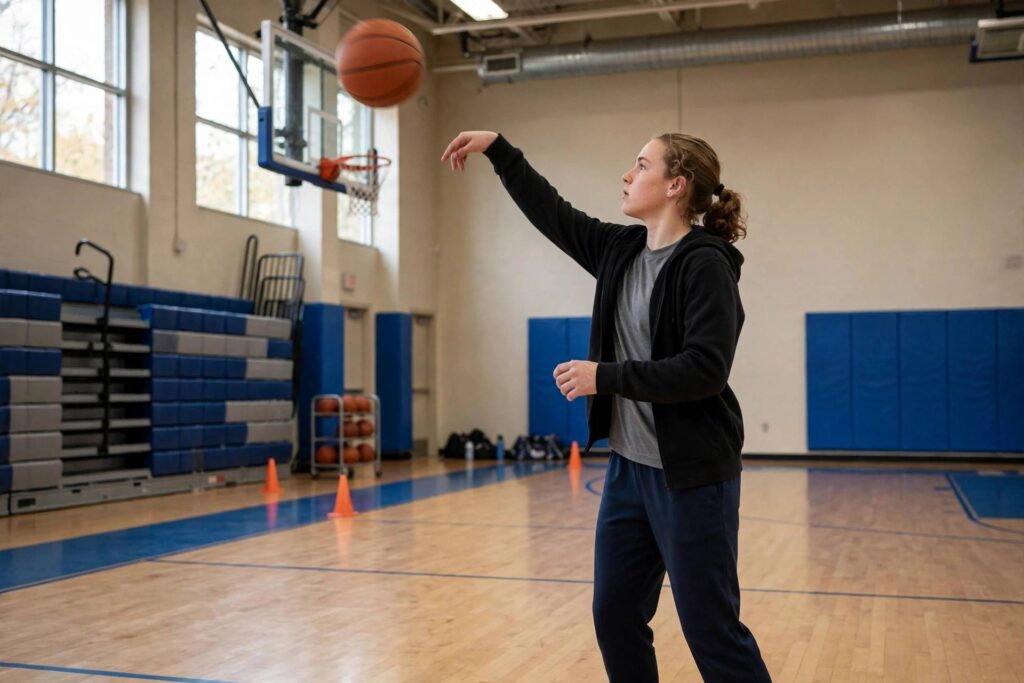
Every basketball player knows the feeling: wide open, good rhythm, clean look — clank. Then the next game you can’t miss. Shooting feels mysterious, but it’s not. It’s mechanics, and mechanics can be trained. If you want to learn how to shoot a basketball better, forget the highlight reels and focus on the boring fundamentals that every great shooter shares: balance, alignment, arc, and about a thousand quality reps.
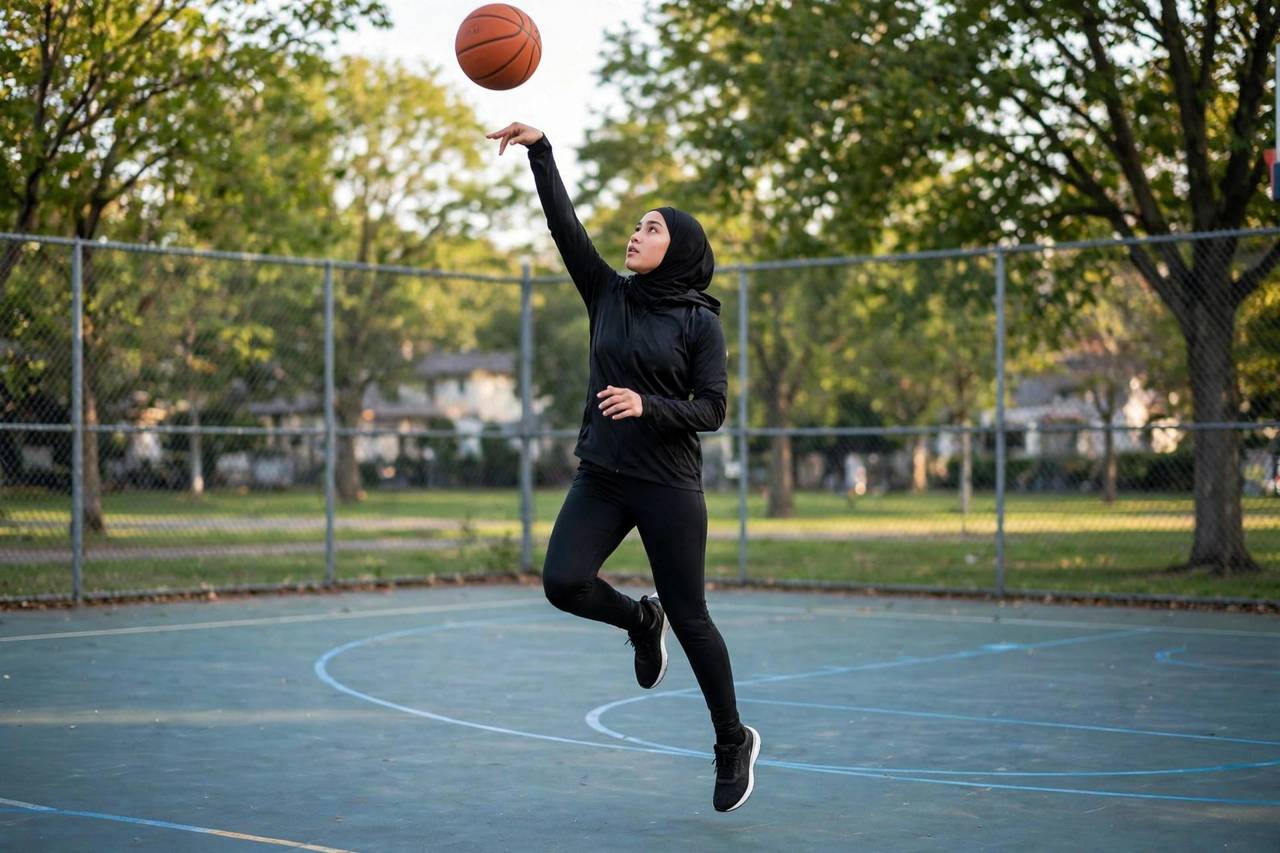
This guide breaks down the shooting form step by step, the drills that actually improve your percentage, the mental side nobody talks about, and the mistakes keeping your shot inconsistent. Let’s get to work.
The Foundation: B.E.E.F. Shooting Form
Coaches have taught the B.E.E.F. principle for decades because it works. Memorize it:
B — Balance. Feet shoulder-width apart, shooting foot slightly ahead. Knees bent, weight balanced. Every good shot starts from a stable base — if your feet are wrong, everything above them compensates.
E — Elbow. Your shooting elbow should be tucked in, forming roughly an L shape, aligned under the ball and pointing at the basket. A flying elbow is the #1 form flaw in young shooters — it sends the ball sideways.
E — Eyes. Pick a target and lock on: the front of the rim, the back of the rim, whatever works — but pick one and look at it on every shot. Your body follows your eyes. Shooters who stare at the ball or the defender miss more.
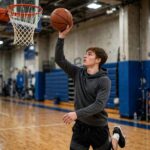
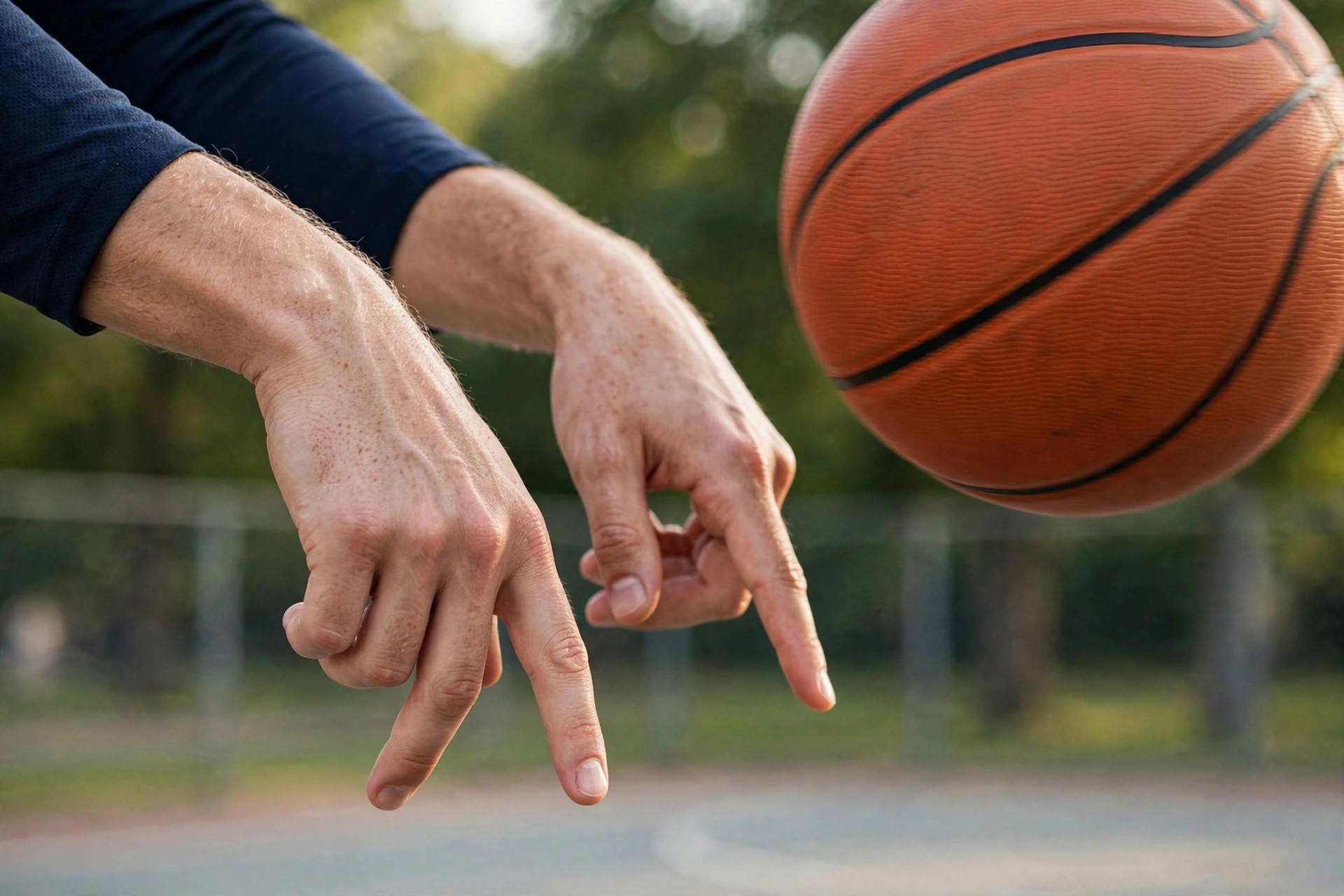
F — Follow through. Snap your wrist so your fingers point down at the floor — “reach into the cookie jar.” Hold the follow-through until the ball hits the rim. A complete follow-through is proof of a complete shooting motion; short follow-throughs produce flat, short shots.
Film yourself from the side and front. What you feel and what you’re doing are often different — video doesn’t lie, and one session of film usually reveals the flaw you’ve been missing.
Arc, Backspin, and the Physics of Makes
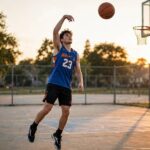
Arc: the best shooters shoot with a 45-50 degree arc. Flat shots have a tiny margin for error — the rim is a smaller target from a flat angle. Think “up, not out.” A good cue: the top of your arc should be above the top of the backboard (from your perspective). If your shots are consistently hitting the front rim, you’re probably shooting flat.
Backspin: comes from the wrist snap and finger roll at release — your index and middle fingers should be the last to touch the ball. Backspin softens the bounce on the rim (the “shooter’s roll”), turning near-misses into makes. No spin or sidespin means hard bounces and unpredictable rolls.
Straight lines: everything should move in one plane toward the basket — feet, knees, hips, elbow, wrist. Any sideways motion (drifting left on the jump, elbow flaring) introduces sideways error. The basket is straight ahead; your motion should be too.
Understanding the game’s structure helps too — how long a basketball game is gives context on pace and rhythm, and studying shooting fundamentals fundamentals alongside this guide reinforces the mechanics from multiple angles.
How to Shoot a Basketball Better: Drills That Raise Your Percentage
Form shooting (the non-negotiable). Start every session 3-5 feet from the basket: one hand, perfect B.E.E.F. form, 25-50 makes. No jumping, no speed — just grooving the motion. Every great shooter does this. Every single one. Skip it and you’re building on sand.
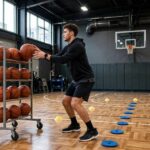
Spot shooting. Pick 5 spots around the court (corners, wings, top). Shoot 10 from each, tracking makes. Your goal: know your percentages from each spot. This data tells you where to shoot in games — and where not to.
Free throws with consequence. Shoot free throws in sets of 10, but add pressure: sprint a court length between sets (tired legs simulate game conditions), or do pushups for every miss. Practice must include pressure or it doesn’t transfer.
Catch-and-shoot rhythm drill. Have a partner pass to you at different spots; catch, one-two step (or hop), shoot — all in one fluid motion. Game shots come off movement, not from standing still holding the ball. Train the catch-to-shot transition specifically.
The 100-makes workout. Pick your spots, shoot until you’ve made 100. Track attempts. Watch the attempts-to-makes ratio drop over weeks. This is the simplest, most honest measure of improvement there is.
Add the “51” drill to your routine — it’s the best shooting drill you’ve never heard of. Start at the free-throw line: you need to make 5 shots before you can move to the next spot, and there are 10 spots around the court (corners, wings, top, elbows, short corners). Miss, and the count for that spot resets — the pressure of the reset is the whole point, because it simulates game pressure better than casual shooting ever will. When you can complete all 10 spots, you’ve made 50 shots under mild pressure, and your in-game percentages will show it.
For free throws specifically, try the swish streak: shoot free throws until you swish (nothing but net) three in a row. Rim-in doesn’t count. This forces you to focus on touch and arc rather than just “making” it, and it builds the exact kind of concentration free throws demand in close games.
Fixing the Most Common Shooting Flaws
Consistently short: you’re not using your legs. Dip lower, explode up, and make sure your shot starts from your legs, not your arms. Legs provide power; arms provide direction.
Consistently long: you’re pushing with your arms or jumping forward. Stay balanced, shoot up, land where you jumped from.
Missing left/right: alignment issue — elbow flaring, guide hand interfering, or feet pointed off-target. Check your elbow first; it’s the culprit most often. Also make sure your guide hand comes off cleanly and doesn’t push the ball.
Inconsistent — good one day, terrible the next: your form isn’t grooved yet. More form shooting, fewer game-speed reps until the motion is automatic. Inconsistency is just un-grooved mechanics revealing themselves under pressure.
Thumb flick from the guide hand: sneaky and common. Your guide hand should be exactly that — a guide. If your off-hand thumb is adding spin or push, practice one-handed form shooting until the shooting hand works independently.
The Mental Side: Confidence and Routine
Shooting is maybe 30% mental, and nobody trains it. Start here:
Develop a pre-shot routine. Same dribbles, same breath, same rhythm — every free throw, every practice shot. Routines quiet the mind and trigger muscle memory. Yours can be simple: two dribbles, deep breath, shoot. The content doesn’t matter; the consistency does.
Shoot through slumps correctly. Every shooter slumps. The wrong response: changing your form mid-slump (now you have two problems). The right response: go back to form shooting close to the basket, rebuild the feel, and trust the reps. Slumps end; panicked mechanical changes extend them.
Take good shots. Shot selection is a skill. A contested fadeaway is a low-percentage shot no matter your form; an open rhythm jumper is high-percentage. The easiest way to “shoot better” in games is to shoot better shots — move without the ball, use screens, and don’t force it.
Visualize makes. Before games and during practice, see the ball going in. It sounds soft; the research on visualization and performance is real. Your brain doesn’t fully distinguish vivid visualization from reps.
How Much Should You Practice?
Quality beats quantity, but quantity still matters. A focused 30-minute session (form shooting, spot shooting, free throws with pressure) 4-5 times a week will transform most players within 2-3 months. Marathon 3-hour sessions once a week don’t groove mechanics — they groove fatigue.
Track your numbers. Free throw percentage, spot-shooting makes out of 50, 100-makes workout attempts. What gets measured gets improved, and nothing motivates like watching your own percentages climb. The players who improve fastest aren’t the most talented — they’re the most consistent. Show up, do the boring work, trust the process. The results follow.
And if you want to round out your game beyond shooting, dunking breaks down the athleticism side — because the best shooters are usually the best all-around athletes on the floor, not just the best technicians.
Shooting Off the Dribble and Off the Catch
Spot-up shooting with perfect form is the foundation — but games aren’t shootarounds. Most of your shots will come in one of two ways: off the catch (someone passes, you shoot) or off the dribble (you create the shot yourself). Each one breaks your form in a predictable way, so let’s fix both.
Off the catch: the number one mistake is catching the ball and then getting your feet set. By then, the defender has closed out and the rhythm is gone. The fix is footwork before the catch: as the pass is in the air, hop or step into your shooting stance so your feet hit the floor as the ball hits your hands. This is called “shot prep,” and it’s what separates good catch-and-shoot players from streaky ones. Your shooting pocket should be loaded before the ball arrives, not after.
Off the dribble: the killer here is the last dribble. Most players take a hard final dribble that bounces up to their chest, forcing them to bring the ball down before shooting — that’s a hitch, and it kills rhythm and gives defenders time to contest. Instead, make your last dribble a soft “setup” dribble that comes up right into your shooting pocket at waist height. The ball should flow dribble-to-shot in one continuous motion, like pulling it up on a string. Practice this specifically: one hard dribble, one soft setup dribble, rise into the shot. It’ll feel strange for a week, then it’ll feel like the only way you’ve ever shot.
The 1-2 step vs. the hop: for pull-ups, the 1-2 step (inside foot, then outside foot) gives most players better balance and is easier to learn. The hop (both feet landing together) is quicker and better for catch-and-shoot. Learn both, but master the 1-2 first — it’s more forgiving when you’re tired late in games, which is exactly when your shot needs the most help.
FAQ
How can I improve my basketball shooting accuracy?
Master B.E.E.F. form (Balance, Elbow, Eyes, Follow-through), shoot with proper arc (45-50 degrees), and do daily form shooting close to the basket. Track your makes from specific spots to measure real improvement.
Why is my basketball shot always flat?
Flat shots usually come from pushing with the arms instead of shooting up with the legs, or from a short follow-through. Focus on exploding up from your legs, snapping your wrist fully, and holding your follow-through until the ball hits the rim.
Should I practice shooting every day?
A focused 30-minute session 4-5 times a week beats occasional marathon sessions. Always start with form shooting close to the basket before moving to game-speed reps — grooved mechanics first, then volume.
How do I stop missing free throws under pressure?
Develop an identical pre-shot routine for every free throw, practice with consequences (sprints or pushups for misses), and train tired — pressure practice is what transfers to games. Never change your form mid-slump.
What is the correct arc for a basketball shot?
Around 45-50 degrees. A good visual cue: the top of your shot’s arc should appear above the top of the backboard from your perspective. Higher arc means a bigger effective target at the rim.
Should I completely rebuild my shooting form or just tweak it?
Tweak it — unless your form is fundamentally broken (two-handed push shot, shooting from the chest). A full rebuild tanks your percentage for months and most players quit halfway, ending up worse than they started. Instead, fix the single biggest flaw first: usually the guide hand interfering, inconsistent footwork, or a flat arc. Change one thing, drill it for three weeks until it’s automatic, then address the next flaw. Evolution beats revolution in shooting form every time.