How to Organize Your Closet: 10 Steps to a Tidy Wardrobe

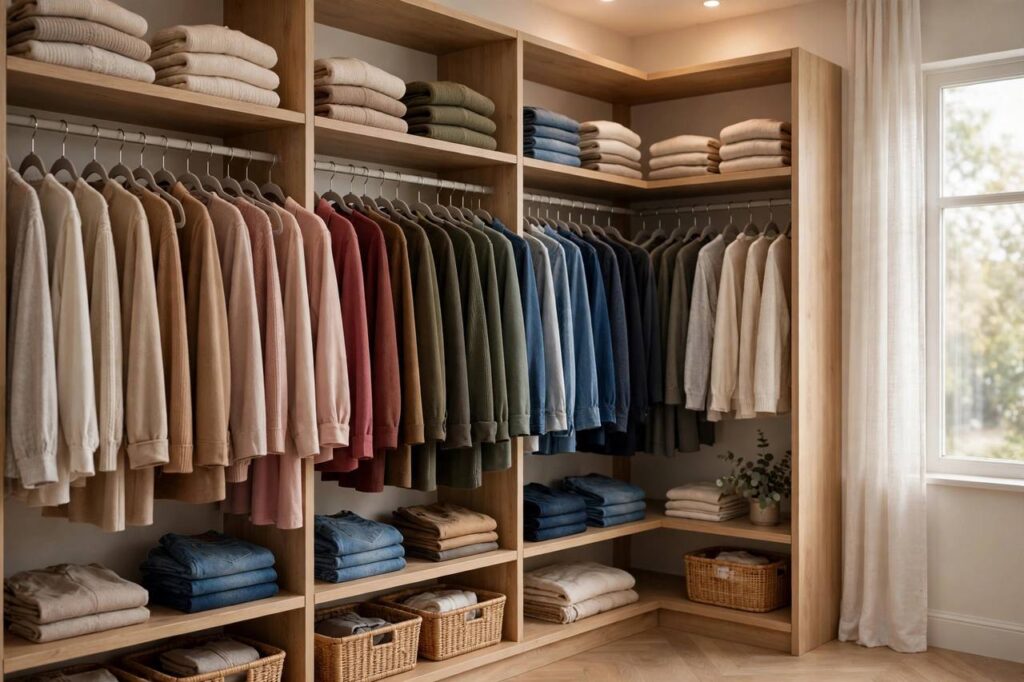
Your closet isn’t messy because you’re messy. It’s messy because it has no system. Every item in there made an individual decision to live wherever it landed, and now getting dressed feels like archaeology.
This guide gives your closet what it’s missing: a complete organize-system. Not just decluttering (that’s the prequel — see our closet declutter guide if you haven’t done that part), but the full ten steps: planning, emptying, deciding, sorting, zoning, and the maintenance routine that keeps it working. Follow it in order, and you’ll end the weekend with a closet that practically runs itself.
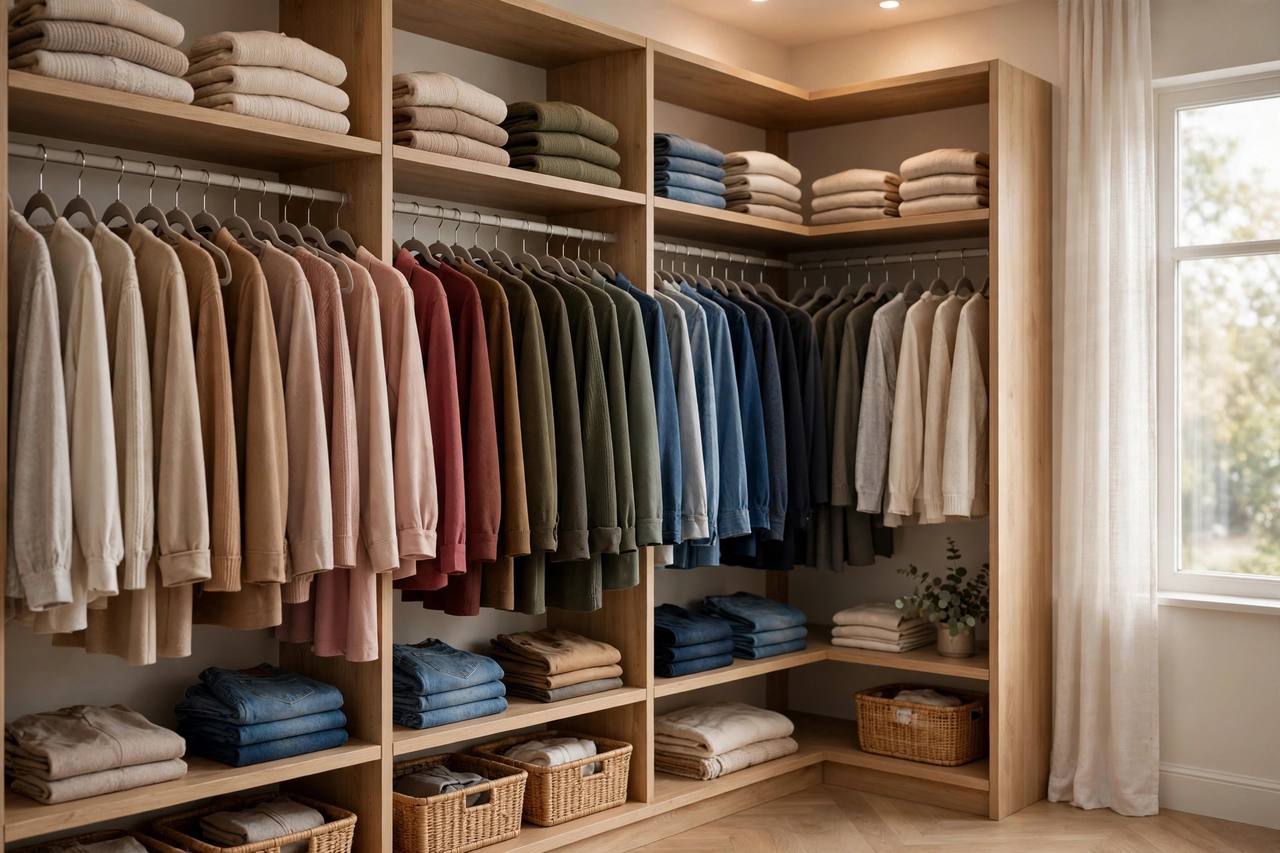
Why Closets Get Messy (Organizing Is Not Decluttering)
First, an important distinction: decluttering and organizing are two different jobs. Decluttering removes things. Organizing gives everything that remains a home. Most “organized closet” attempts fail because people skip straight to buying bins while the closet is still full of things they don’t wear.
A closet gets messy for three predictable reasons. One: too much stuff for the space — every item needs a parking spot, and overflow has nowhere to go. Two: no zones — when every shelf is generic storage, everything migrates everywhere. Three: no maintenance rule — without a system for what comes in, the closet refills faster than you can tidy it.
This guide fixes all three in order. Steps 1–4 handle the volume. Steps 5–8 build the zones. Steps 9–10 install the maintenance. If you’ve already decluttered, you’ll move through the early steps quickly — consider them verification, not repetition.
Steps 1–2: Plan (30 Minutes) + Take Everything Out
Spend 30 minutes planning before you touch a single hanger. This half hour saves you hours of mid-project stalling. Gather: four bags or boxes (labeled for the sort categories below), cleaning supplies, a measuring tape, and a notepad. Measure your closet — rod lengths, shelf depths, floor space — so any storage you consider later actually fits. Note what’s not working now: the avalanche shelf, the floor pile, the “chairdrobe.” Write down your goal in one sentence: “work clothes visible, everything else stored.”
Then take everything out. Everything. Yes, it’s dramatic, and yes, your bedroom will look like a clothing bomb went off for a few hours. This is non-negotiable: you cannot organize around the clutter. An empty closet lets you clean properly, see the actual space you’re working with, and — psychologically — prevents the “I’ll just put this back where it was” trap. Pile it on the bed in rough groups (tops, bottoms, dresses, shoes) so the sorting step goes faster.
Step 3: The 3 Questions — Fits? Worn in a Year? Matches Lifestyle?
With everything out and visible, pick up each item and ask three questions. Be honest — the closet you’re building is for the life you have, not the life you planned in 2019.
Question 1: Does it fit, right now? Not “after I lose ten pounds,” not “it almost fits.” Right now, today. Clothes that don’t fit aren’t wardrobe; they’re storage, and they don’t belong in prime closet real estate.
Question 2: Have I worn it in the last year? A full year covers every season. If it survived twelve months unworn, it’s decoration. (Exceptions: genuine occasion wear — the suit, the formal dress — which gets stored, not prime-hung.)
Question 3: Does it match my current lifestyle? The five blazers from the office job you left, the maternity clothes from three years ago, the “someday” hobby gear — if your life changed, your closet gets to change too.
Three yeses: it stays. Any no: it goes to a sort pile. Don’t agonize — the average decision should take ten seconds. Momentum matters more than perfection here, and you can always rescue something from the donate bag before it leaves the house.
Step 4: Sort into Keep / Donate-or-Sell / Repair / Discard
Every item that didn’t earn three yeses goes into exactly one of four categories. Four boxes, four fates, no fifth “maybe” pile — the maybe pile is where organizing goes to die.
Keep: Earned its place. These go back in during the zoning steps.
Donate or sell: Good condition, wrong for you. Bag donations immediately and schedule the drop-off within a week — bags that sit become closet residents again. For sell-worthy pieces, list them within 48 hours or they become donations. Be honest about which you’ll actually do.
Repair: The hem, the button, the small fix. Rule: if it won’t reach the tailor this week, it’s a donate. The repair pile gets seven days, then it’s deported to donations.
Discard: Worn out, stained, stretched, pilled beyond rescue. Let it go — it served its time.
Some organizers use three piles (keep, donate-or-sell, discard) with repairs decided on the spot. Either works — pick the one you’ll finish. For tight spaces specifically, see our small closet on a budget guide.
Step 5: Clean the Empty Closet
While the closet is empty — the only time this is ever convenient — clean it properly. Vacuum or sweep the floor, wipe down every shelf and rod, and check for issues: wobbly rods, loose brackets, scuffed paint. Fix the hardware now, because you will never empty it again voluntarily.
This is also the moment to notice what the space is telling you. Is there dead air above the top shelf? That’s vertical storage waiting to happen. A dark corner? A ten-dollar stick-on light changes everything. Dust on the top shelf means nothing has lived there in months — plan that zone for low-use items deliberately rather than by default. A clean, inspected closet also just feels like a fresh start, which is useful motivation for the zoning work ahead.
Step 6: Build the Zone Map (Eye-Level Daily, Upper Low-Use, Lower Shoes, Drawers, Hooks)
Here’s the core of the whole system: every zone has a job, and every item lives in the zone matching how often you touch it.
Eye level (the prime zone): Your daily and weekly clothes. This is the most valuable real estate in your home — reserve it ruthlessly for what you actually wear. Work outfits, favorite casual pieces, current-season go-tos.
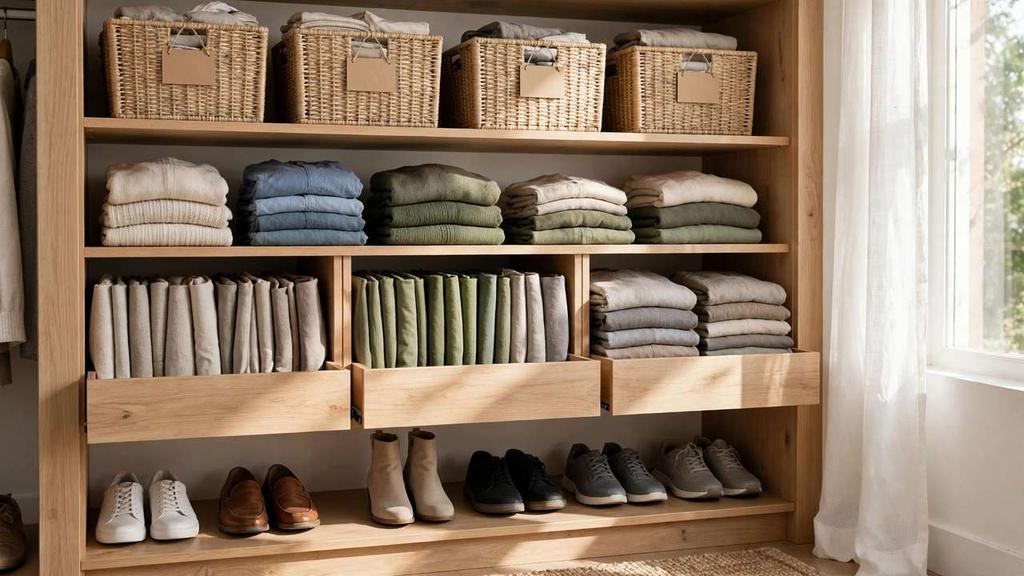
Upper shelves (low-use): Occasion wear, off-season storage, sentimental pieces — in labeled bins, touched maybe four times a year.
Lower area: Shoes in pairs on a rack, bags on hooks or a shelf (never the floor), heavy items like denim and sweaters low.
Drawers: One category per drawer, file-folded vertically so everything is visible — stacked piles hide everything underneath.
Hooks and doors: Tomorrow’s outfit, the robe, this week’s bag. Hooks are for in-transition items — anything there a month needs a real zone.
Sketch the map before anything goes back in. Ten minutes now prevents the slow drift back to chaos.
Step 7: Hang vs Fold Rules + Matching Hangers
What hangs and what folds is not a preference — it’s physics. Hang: dresses, blouses, button-downs, blazers, skirts, trousers (folded over the bar). Fold: knitwear and sweaters (hanging stretches them), tees, jeans, workout wear, undergarments.
Now the part that sounds fussy but transforms the look instantly: matching hangers. One type, one color, for everything. It sounds cosmetic, but uniform hangers do three real things: they take up less rod space (no bulky mixed shapes), they make the closet visually calm so you can actually see your clothes, and they stop the slow slide of garments off wire hangers onto the floor. Slim velvet hangers are the usual recommendation — they grip, they’re thin, and a pack is inexpensive. Swap them in as you rehang during this step; don’t buy them as step one before you’ve decluttered.
Within each hanging zone, organize by category first, then by color within category — all the blouses together, arranged light to dark. It makes outfit-building dramatically faster because your eye finds things instead of searching.
Step 8: Shoes, Bags, Jewelry, and Accessories Storage
Accessories are where closets go to die quietly, so give them explicit homes.
Shoes: Pairs together, visible, off the floor. An angled rack beats stacked boxes — unseen shoes go unworn. Prime zone gets current-season pairs only.
Bags: Stuffed lightly, upright on a shelf or one per hook. Daily bag gets the prime hook.
Jewelry: A drawer organizer, wall holder, or tray — the only rule is no tangling. Tangled jewelry is unworn jewelry. Keep everyday pieces where you get dressed.
Scarves, belts, hats: Scarves folded or on a multi-loop hanger, belts rolled in a drawer, hats on a high shelf. Small items in small containers. If putting it away takes more than five seconds, the storage is wrong.
Step 9: Small Closets — Double Rods, Vertical Space, Over-Door Organizers
Small closet? The system still works — it just goes vertical. A standard single rod wastes the bottom half of the closet; a double-hang rod (one high, one low) roughly doubles your hanging capacity for shirts, blouses, and folded trousers. It’s the highest-impact small-closet upgrade there is.
Beyond that: use the full height — high shelves with labeled bins, the floor for shoe racks (not piles), the door back for an over-door organizer. Slim hangers matter even more here; bulky ones can eat a fifth of a small rod.
Be stricter with the prime zone: “daily and weekly” has to mean it. Everything else goes to harder-to-reach storage — under the bed, labeled bins up high. A small closet with a strict system beats a big one with none. For a tighter wardrobe overall, see our capsule wardrobe guide, and for the room around it, organizing a small apartment.
Step 10: Seasonal Rotation + One-in-One-Out Maintenance
The closet is organized. Now keep it that way with two routines.
Seasonal rotation (twice a year, six steps): (1) Pull the prime zone. (2) Re-ask the 3 questions on anything doubtful. (3) Move off-season clothes to upper bins. (4) Bring the new season to eye level. (5) Wipe shelves while it’s half-empty. (6) Donate the waiting bag. Two hours, twice a year.
One-in-one-out (always): Every new item in means one item out. Buy a sweater, retire a sweater. Closets don’t get messy all at once — they refill one “I’ll find room” at a time. Enforce it at the shopping bag.
That’s the system: plan, empty, decide, sort, clean, zone, hang right, house accessories, go vertical if tight, maintain with rotation plus one-in-one-out. Do it once, properly, and getting dressed stops being a chore.

Frequently Asked Questions
What is the first step to organizing a closet?
Spend 30 minutes gathering four labeled sort boxes, measuring the closet, and writing a one-sentence goal. Then take everything out — an empty closet prevents the “put it back where it was” trap.
How do I decide what clothes to keep or get rid of?
Does it fit right now? Worn in the last year? Matches your current lifestyle? Three yeses and it stays; the rest goes to Keep, Donate-or-Sell, Repair (seven days max), or Discard. No “maybe” pile.
How should I organize a small closet with no space?
Go vertical: a double-hang rod roughly doubles capacity, high shelves with labeled bins use dead air, an over-door organizer claims the door. Slim hangers throughout; only daily and weekly clothes earn the prime zone.
Should I organize my closet by color or by type?
Type first, then color within type — blouses together, light to dark. It matches how you build outfits and makes items findable.
How often should I declutter my closet?
Twice a year: pull the prime zone, re-ask the 3 questions, swap seasons between eye level and upper storage, donate the waiting bag. Two hours, and the closet never drifts.
What is the one-in-one-out rule for closets?
Every new item in means one item out — donated, sold, or discarded. Buy a sweater, retire a sweater. It stops the slow one-“I’ll find room”-at-a-time refill.