How to Organize a Small Closet on a Budget: 15 Ideas

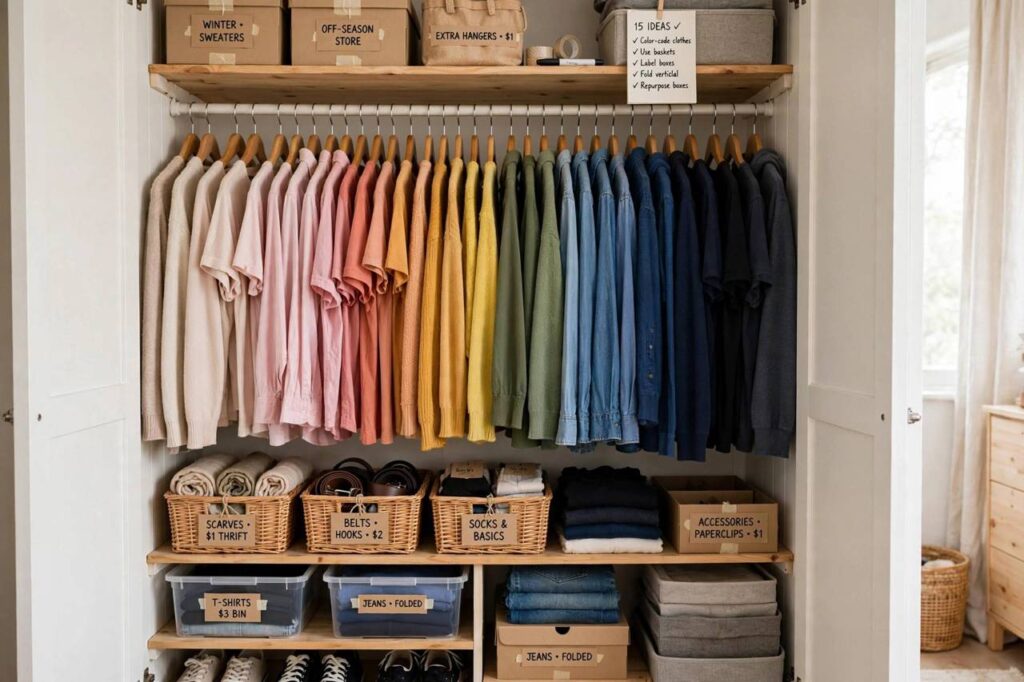
A small closet can feel like a daily argument — doors that barely close, an avalanche of shoes, and that one shirt you can never find when you need it. But here is the secret professional organizers know: small closets are easier to fix than big ones, because every inch has to earn its place and there is nowhere for clutter to hide. Learning how to organize a small closet on a budget is not about buying a fancy built-in system; it is about editing what is inside, using vertical space, and spending strategically on a few pieces that multiply your storage. Fifteen ideas, most under the cost of a takeout dinner, coming right up.
Step One: Empty It Completely
You cannot organize around clutter, so start by taking everything out — every hanger, every shoe, every mystery box on the shelf. Yes, it will look worse before it looks better; that is the process working. Sort into four piles: keep, donate, relocate (belongs elsewhere in the house), and toss. Be honest about the “maybe” pile — if you have not worn it in a year and it does not fit your current life, it is a donate. This purge is the highest-value step in the whole project and it costs nothing. Most people remove a third of their closet’s contents here, which instantly makes the remaining space feel twice as big. If you need a method for the hard decisions, read our guide to declutter your closet before you start.
Measure Before You Buy Anything
The budget-killer in closet organization is buying storage that does not fit. Measure the width, depth, and height of your closet, plus the rod height and shelf depth, and write the numbers on your phone. Note the door swing and any obstacles like vents or sloped ceilings. With measurements in hand, you can shop dollar stores, thrift shops, and discount aisles with confidence instead of guessing. This ten-minute step prevents the classic mistake: a beautiful organizer that is two inches too wide, now living in the return pile. Organizers who skip measuring always end up making a second trip; organizers who measure buy once.
Go Vertical: The Walls Are Free Real Estate
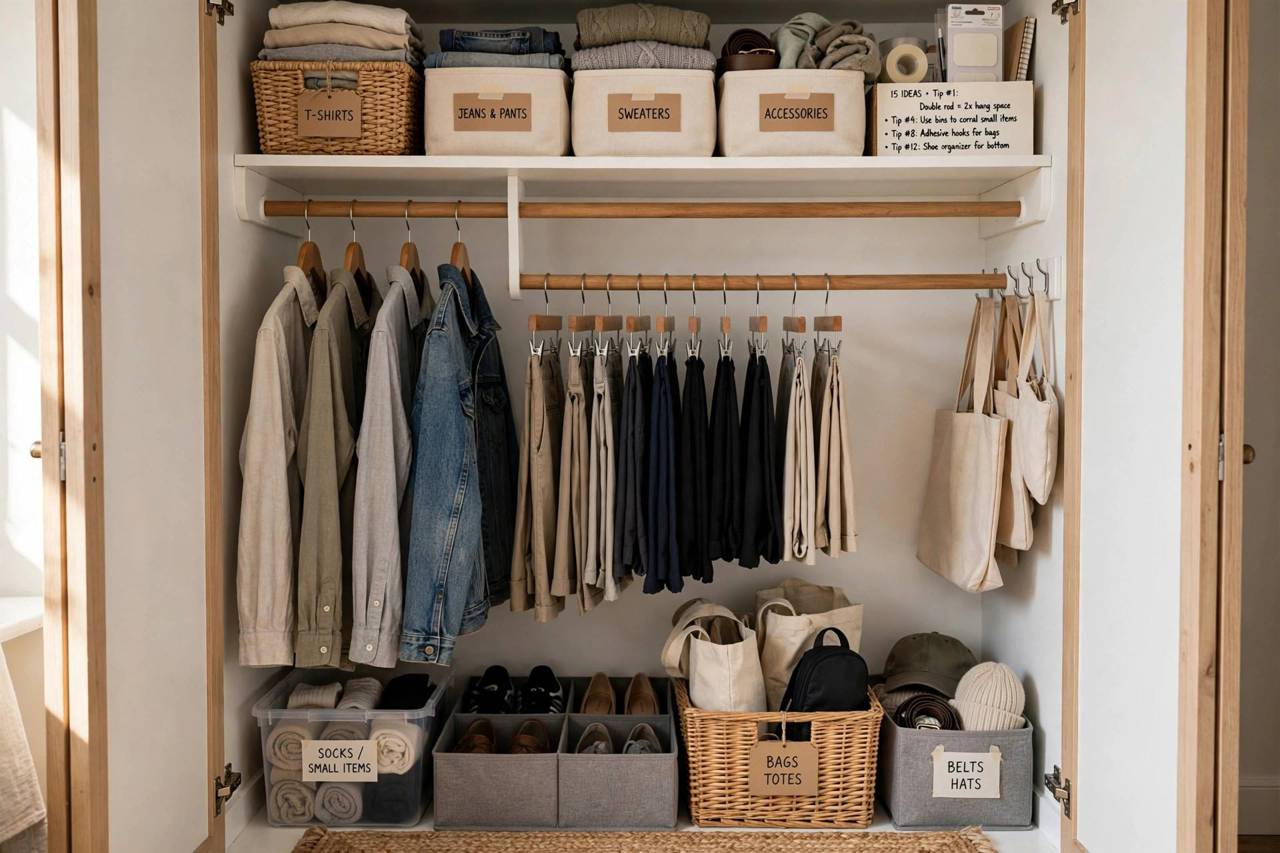
In a small closet, the air above your head is the most underused storage in the house. Add a second hanging rod below the existing one — tension rods cost little and need no tools — and you have instantly doubled hanging space for shirts and folded pants. Use the back of the door for an over-door shoe organizer or hook rack (it holds accessories, scarves, and bags too, not just shoes). High shelves hold out-of-season clothes in labeled bins. Even the side walls can carry hooks for tomorrow’s outfit or a bag. Vertical thinking turns a 2-foot-deep closet from a cave into a tower of accessible storage.
Hang Smarter, Not More
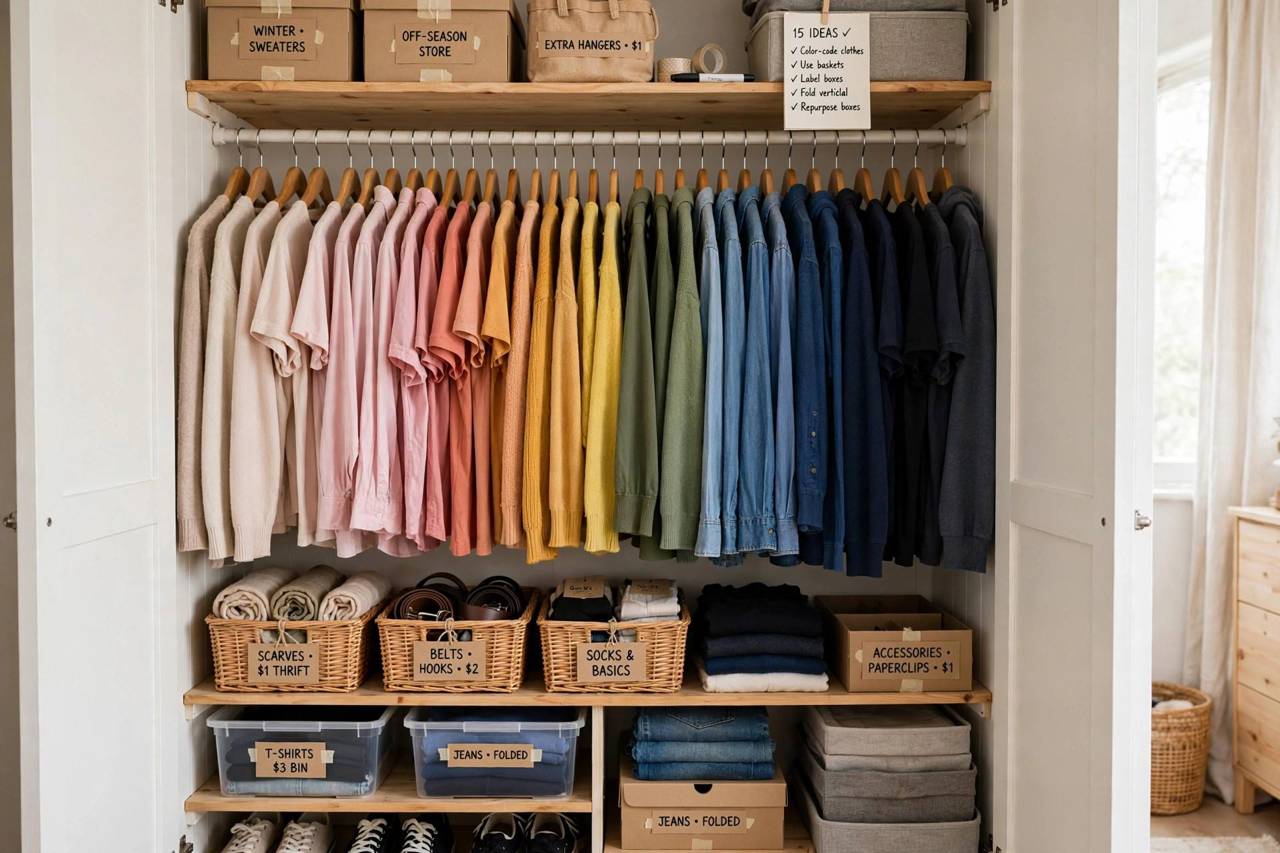
How you hang matters as much as what you hang. Switch to slim velvet hangers — they grip clothes so nothing slides off, and their thin profile can free up a surprising amount of rod space compared to bulky plastic or wood hangers. Hang in categories (shirts together, pants together), then by color within categories; you will find things faster and the closet looks instantly calmer. Use cascading hooks to hang multiple items vertically from one hanger — brilliant for tank tops or scarves. Reserve hanging space for what wrinkles; everything else can be folded. A twenty-pack of slim hangers is one of the cheapest transformations in home organization.
Shelves and Bins: Contain the Chaos
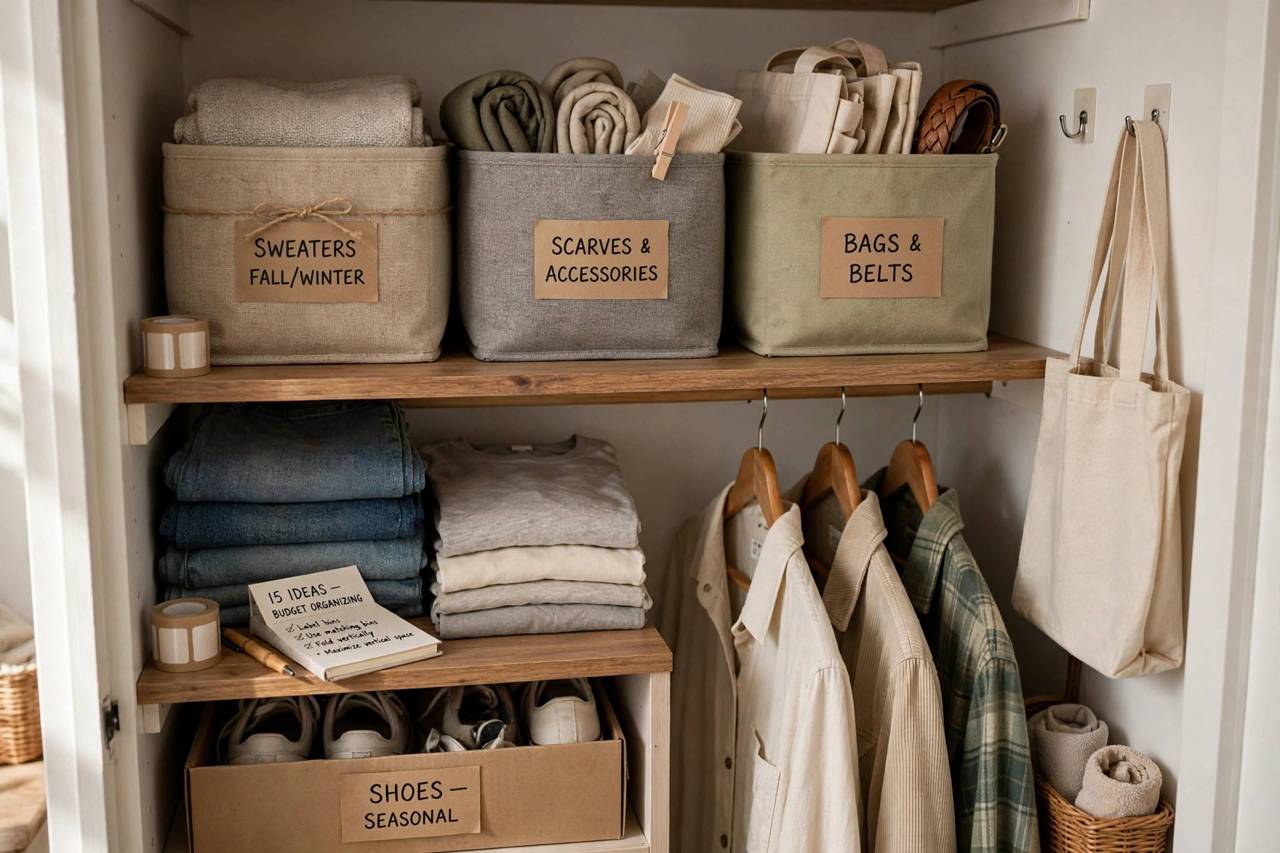
Open shelves without containers become clutter shelves within a month — everything needs a home with walls. Inexpensive fabric bins, labeled clearly, turn a shelf into a filing system: one for gym clothes, one for off-season, one for accessories. Stackable clear bins work for shoes and bags so you can see contents at a glance. On deep shelves, use bins like drawers — pull the bin out rather than digging behind. For the floor, a low shoe rack or even a tension rod near the base keeps pairs together and off the pile. Labels are not fussy; they are what keeps the system alive after the initial enthusiasm fades.
The $50 Closet Makeover: A Sample Plan
Here is a realistic budget breakdown. Slim velvet hangers (30-pack): the single biggest upgrade. One tension rod for double-hanging: instant second tier. Three fabric bins for the shelf: containment. An over-door hook rack: accessories and bags. A small shoe rack or stackable shoe boxes: floor order. Adhesive LED strip or a battery puck light: visibility, because you cannot organize what you cannot see. Total: roughly fifty dollars, one afternoon of work. Compare that to custom closet systems costing twenty times more — the budget version achieves perhaps eighty percent of the function, which is the sweet spot for renters and anyone watching spending.
Fold Like You Mean It
Folding technique multiplies shelf and drawer space. File-folding — folding clothes into rectangles that stand upright in rows — lets you see every item at once instead of digging through stacks. It works for t-shirts, jeans, sweaters, and gym clothes, and it is the reason drawer organizers look so satisfying. Roll instead of fold for travel and for soft items like scarves. Vacuum bags compress bulky winter coats and spare bedding to a fraction of their size for off-season storage on the high shelf. These methods cost nothing and, combined with bins, make a small closet hold an almost unreasonable amount.
Keep It That Way: The Maintenance Habit
Organization decays without a maintenance loop, so build tiny habits. The one-in-one-out rule: a new item means an old one leaves. A seasonal ten-minute reset: swap seasons, purge what you skipped wearing, wipe shelves. Hang things up the same day — the chair pile is where closets go to die. And once a year, repeat the full empty-and-sort; it takes an hour and resets everything. Small closets actually reward these habits more than big ones, because there is no spare room to absorb slippage. The same principles scale up beautifully — see our guide to organize a small apartment for whole-home thinking. Master how to organize a small closet on a budget once, and you will never fear a tiny wardrobe again.
How to Organize a Small Closet on a Budget: The 15-Idea Checklist
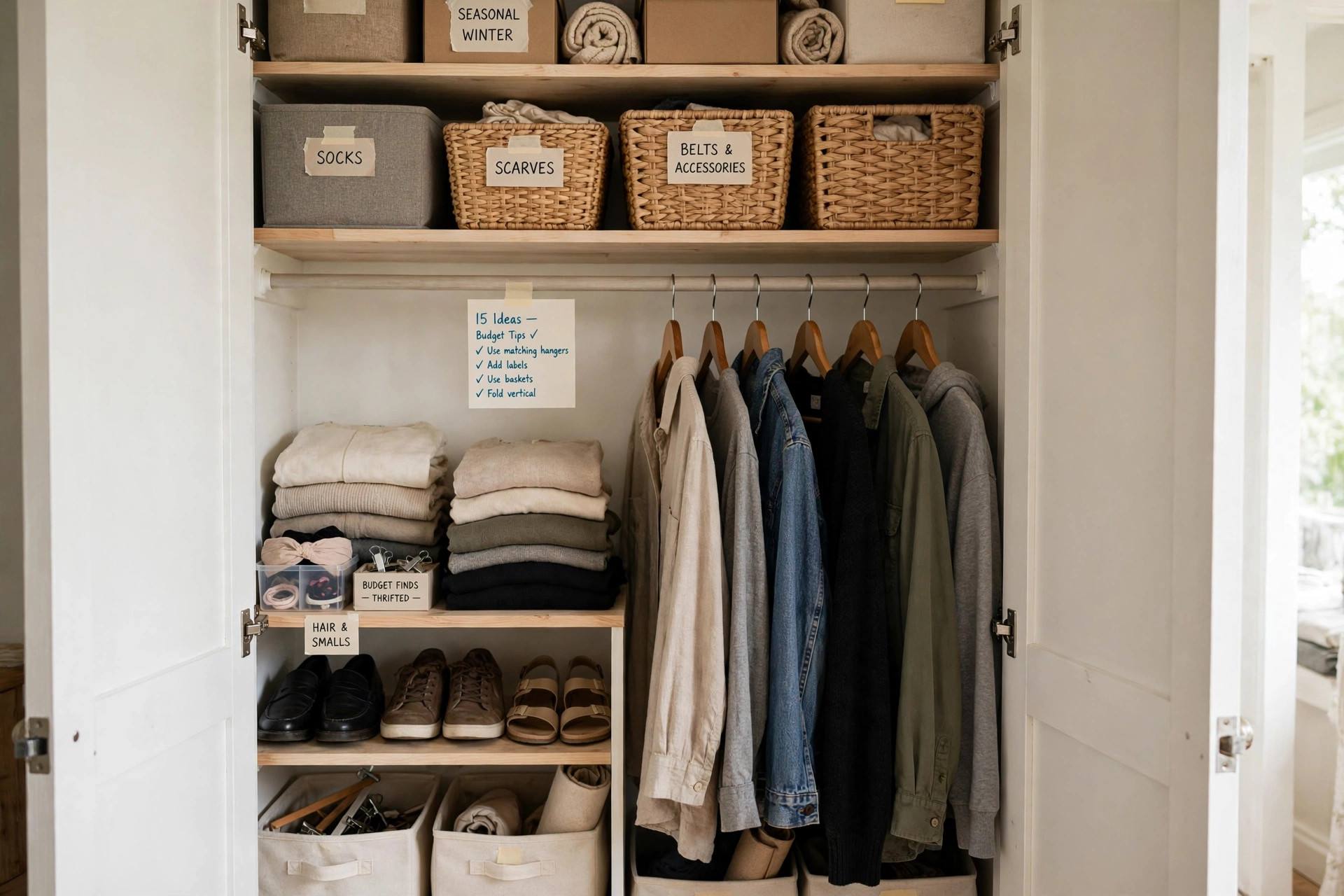
Here is the whole system as a checklist you can work through in an afternoon. 1. Empty the closet completely. 2. Sort into keep, donate, relocate, and toss. 3. Measure everything and save the numbers. 4. Clean shelves and rod before restocking. 5. Add a tension rod for double hanging. 6. Switch to slim velvet hangers. 7. Hang by category, then by color. 8. Put labeled fabric bins on shelves. 9. Use the door back for hooks or a shoe organizer. 10. Add stackable shoe storage on the floor. 11. File-fold everything on shelves. 12. Vacuum-bag off-season bulky items for the high shelf. 13. Add a battery light so you can see. 14. Label every bin. 15. Set a calendar reminder for a ten-minute seasonal reset. Work top to bottom, back to front, and do not buy anything until steps 1 through 3 are done — the purge and the measurements decide everything else.
Renter-Friendly Upgrades That Don’t Damage Walls
Renters can do nearly all of this without risking the deposit. Tension rods need no screws. Over-door hooks hang without hardware. Freestanding shoe racks and stackable bins sit on the floor and shelves. Adhesive hooks (the removable kind) hold lightweight accessories and come off cleanly. A freestanding garment rack beside the closet can absorb overflow. Battery-operated LED lights stick on with adhesive strips. The only things to avoid are drilling into walls and anything requiring permanent mounting — and honestly, the non-permanent versions work just as well. When you move, it all packs into a box and the closet looks untouched.
Small Closet, Big Style: The Capsule Wardrobe Connection
Here is the advanced move: the easiest closet to organize is one with fewer, better clothes. A capsule wardrobe — a small set of versatile pieces that all work together — is the natural partner of a small closet. Start by identifying your real uniform: the 20 percent of your clothes you wear 80 percent of the time. Build around a neutral palette (navy, gray, white, black, denim) with a few accent pieces, so everything mixes. Aim for around 30 to 40 pieces per season, excluding underwear and workout gear. Each new purchase must work with at least three existing pieces — the “three-outfit rule” stops impulse buys cold. The result is a closet that feels spacious because it is curated, mornings that take five minutes, and a style that looks intentional rather than accidental. Small closet, solved at the source.
Closet Lighting on a Budget: See What You Own
The cheapest closet upgrade is light. Most small closets have a single dim bulb or none at all, which means you cannot see colors accurately or find anything quickly. Battery-operated LED puck lights cost little, install with adhesive in seconds, and transform visibility — place one on the underside of each shelf. Adhesive LED strip lights along the door frame create even, flattering illumination. Motion-sensor versions turn on when you open the door, a small daily delight. Good lighting also makes the closet feel larger and the clothes look better, which subtly discourages clutter — mess is less tempting in a well-lit space. For under twenty dollars, it is the highest impact-per-dollar change in this entire guide.
Frequently Asked Questions
How can I organize a small closet with no money?
Start with the free steps: empty it fully, purge ruthlessly, and reorganize by category and color. Repurpose shoeboxes as drawer dividers and use existing bags for containment. Rearranging what you own costs nothing and solves half the problem.
What is the best way to double closet space?
Add a second hanging rod below the existing one with a tension rod — it doubles hanging capacity for shirts and pants instantly, with no tools or damage, making it ideal for renters.
How do I organize shoes in a small closet?
Use vertical space: an over-door organizer, a stackable shoe rack, or clear shoe boxes on the shelf. Keep only current-season shoes in the closet; store the rest elsewhere.
Should I use bins or leave shelves open?
Use bins. Open shelves accumulate clutter quickly, while labeled bins create a filing system that stays tidy. Clear or labeled fabric bins work best so you can identify contents.
How often should I reorganize my closet?
Do a ten-minute seasonal reset when you swap wardrobes, and a full empty-and-sort once a year. The one-in-one-out rule for new purchases prevents gradual re-cluttering.