How to Be More Organized at Home: A Room-by-Room Guide

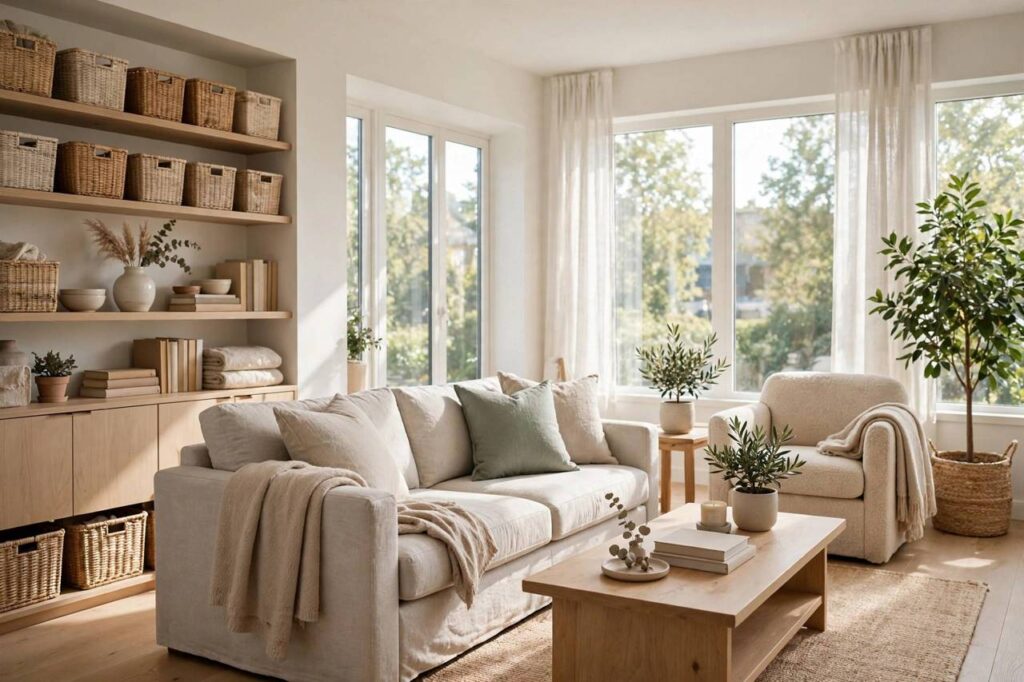
An organized home is not about perfection. It is about the quiet relief of knowing where things are, the calm of clear surfaces, and the gift of time you stop spending searching for keys. If your home feels chaotic, please hear this: it is not a character flaw. It is a systems problem, and systems can be learned. This guide on how to be more organized at home walks you room by room, with gentle methods and small habits that actually last.
How to Be More Organized at Home: Start With Mindset, Not Storage Bins
The biggest organizing mistake is buying containers first. Beautiful bins in a chaotic system just become beautiful clutter. Organization starts with decisions: what stays, what goes, and where things live. Everything else is execution.
Adopt this principle: everything needs a home. Every object in your house should have a designated place where it lives when not in use. If something has no home, it will live everywhere, which is the definition of clutter. The work of organizing is mostly the work of assigning homes.
Second principle: less is easier to organize than more. You cannot organize your way out of owning too much. Decluttering is not a separate project from organizing; it is the first step. Fewer things, each with a home, maintained by small daily habits, that is the entire formula.
The Decluttering Methods That Actually Work
The four-box method. Take any area and sort everything into four boxes: keep, donate, trash, relocate. The relocate box is the secret weapon; it catches things that belong elsewhere without derailing your momentum.
The 15-minute sweep. Set a timer and declutter one small zone: a drawer, a shelf, the bathroom counter. Small wins compound, and the timer makes starting painless. Do one sweep daily and your home transforms in a month.
The one-in-one-out rule. For every new item entering your home, one leaves. This maintains equilibrium forever and makes you think twice before buying. It is the simplest anti-clutter system ever devised.
The “would I buy this again” test. Hold an item and ask: if I saw this in a store today, full price, would I buy it? If not, thank it and let it go. This cuts through guilt-based keeping like nothing else.
For a broader framework on intentional living, our article on how to be more organized in general covers the mindset behind all of this.
The Kitchen: The Heart of Home Organization
Kitchens accumulate gadgets, duplicates, and expired mysteries. Start by emptying one cabinet at a time. Group like with like: all baking together, all daily dishes together. Store items near their point of use: pots near the stove, coffee supplies near the coffee maker, food storage near where you pack lunches.
Be honest about unitaskers. That avocado slicer, banana hanger, and third vegetable peeler are clutter wearing a costume. Keep multipurpose tools; release the rest. Decant pantry staples into clear containers only if it genuinely helps you; for many people, it is aesthetic pressure, not functional improvement. Do what serves your cooking.
Create zones: a cooking zone, a prep zone, a cleaning zone. Zones turn a kitchen from a storage room into a workflow, and workflows stay tidy naturally because everything has a logical place.
The Bedroom: Your Rest Sanctuary
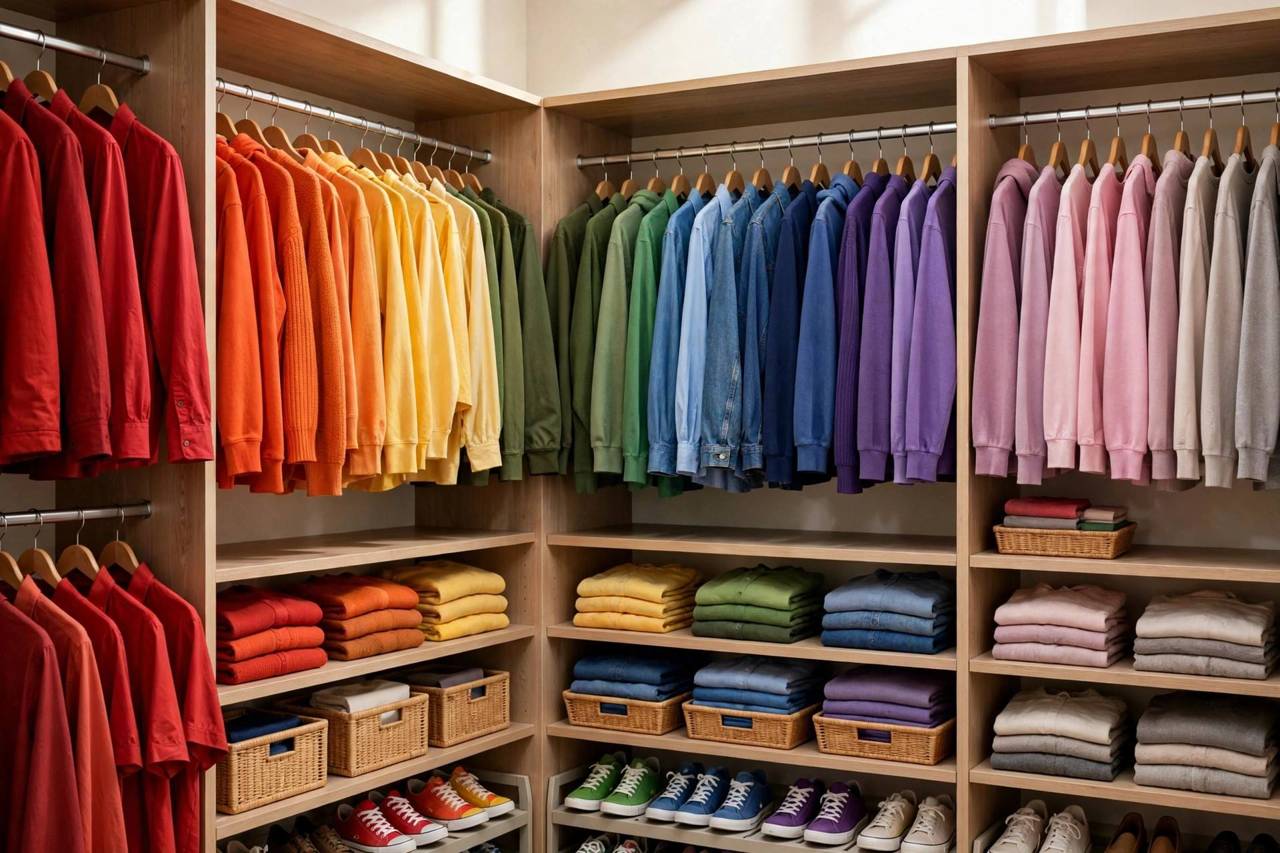
Your bedroom should lower your heart rate, not raise it. Start with surfaces: nightstands and dressers clear of everything but the intentional. Then the closet: if you have not worn it in a year, it goes. Arrange remaining clothes so you can see everything; hidden clothes are unworn clothes.
The bed itself matters enormously. Making it each morning takes two minutes and sets a tone of order that echoes through the day. Keep only sleep-related items in the bedroom if you can; a workspace in the corner imports work stress into rest space.
For laundry, the system that works is the one you will maintain: one hamper for lights, one for darks, and a rule that laundry gets folded the day it dries. Piles of clean laundry are just clutter with extra steps.
The Living Room: Taming the Shared Spaces
Living rooms collect everyone else’s stuff: toys, mail, chargers, half-finished projects. The fix is containment with style. A beautiful basket per person for their daily items. A dedicated charging station so cables stop colonizing every surface. A mail triage spot by the door: recycle junk immediately, file the rest weekly.
Apply the flat-surface rule: counters and tables should be at least half clear at all times. When a surface fills, it is a signal to process, not to find more surface. And do a five-minute evening reset: everyone returns their items to their homes before bed. Waking to a tidy living room changes the whole morning.
Bathrooms and Small Spaces
Small spaces punish clutter fastest because there is nowhere to hide it. In bathrooms, keep only daily-use items on the counter; everything else lives in cabinets. Decanting is actually useful here since space is so tight. Expired medications and ancient cosmetics should go; check dates twice a year.
For small homes generally, think vertical: shelves, over-door organizers, and wall hooks multiply storage without consuming floor space. Multi-functional furniture, ottomans with storage, beds with drawers, pays double. Our guide to how to organize a small apartment goes deep on space-maximizing strategies.
The Home Office: Organizing Your Work Life
Paper is the cockroach of home organization: it multiplies in the dark. Go digital where possible: scan important documents, opt into paperless billing, photograph receipts. For remaining paper, one inbox tray for incoming, processed weekly, and a simple filing system: action, reference, archive.
Cable management transforms a desk: one power strip, labeled cables, and a cable tray under the desk. Digital organization matters too: a consistent file naming system and a weekly desktop cleanup prevent the digital equivalent of junk drawers.
Daily Habits That Maintain It All
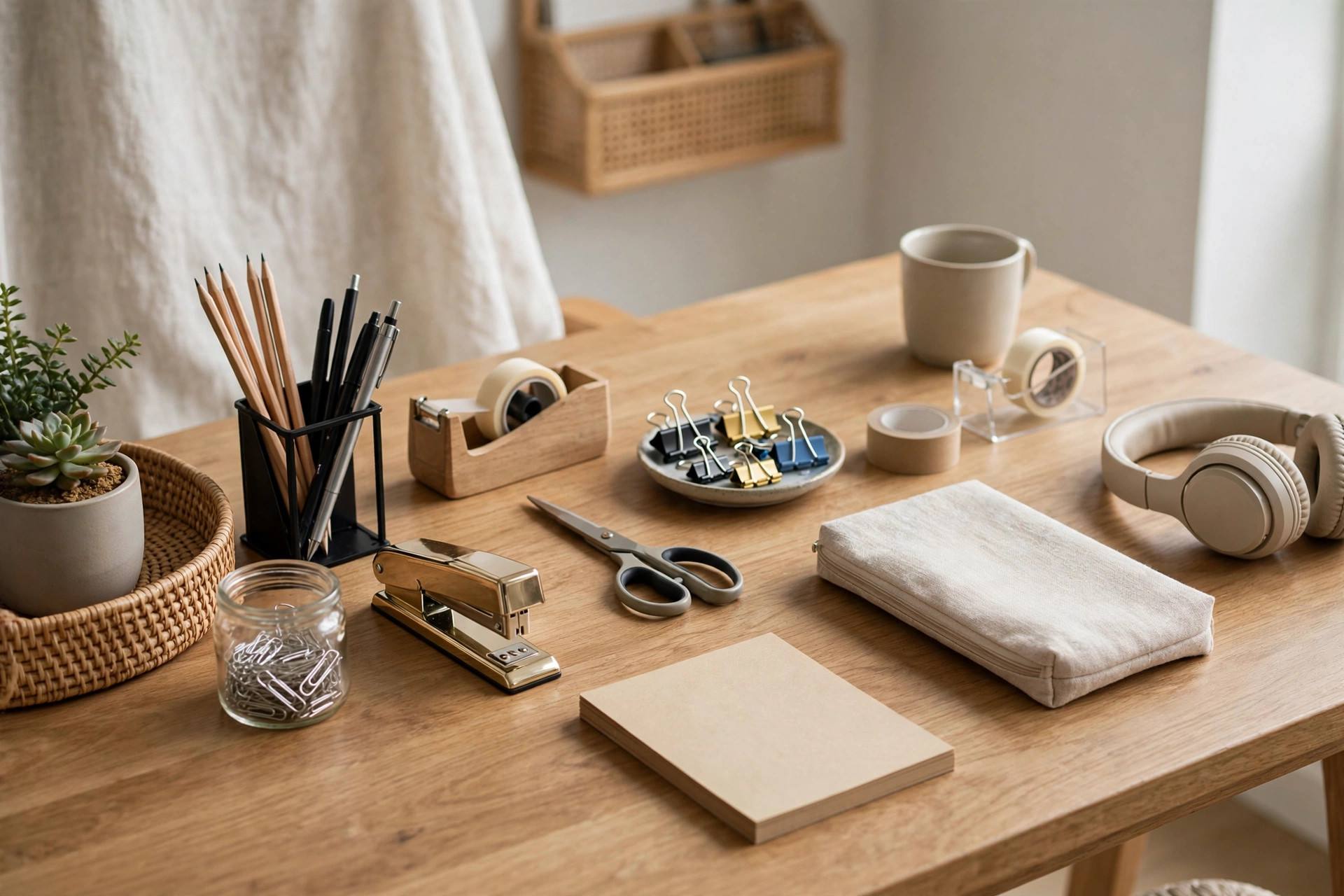
Systems beat motivation. These five habits maintain any organized home: the evening reset (10 minutes returning everything to its home), one-load-a-day laundry (never a mountain), dishes before bed (waking to a clean kitchen is transformative), the two-minute rule (if it takes under two minutes, do it now), and weekly 15-minute zone focus (one area gets deeper attention on rotation).
None of these is heroic. That is the point. Organization maintained by tiny daily actions survives; organization depending on weekend marathons collapses. If your space also needs aesthetic warmth, small apartment decorating ideas show how organized and beautiful reinforce each other.
The Entryway, Kids’ Rooms, and Garage
The entryway sets the tone for the whole house and absorbs the chaos of arrivals. Give everyone a hook for coats and bags at their height, a shoe tray or cubby per person, and a small bowl for keys and sunglasses. A bench with storage underneath handles overflow. The rule: nothing lives in the entryway that belongs elsewhere. Coats get hung, shoes get parked, mail gets triaged, immediately, not eventually.
Kids’ rooms need systems designed for small humans, not small adults. Open bins beat lidded boxes (lids are where organizing goes to die with kids). Label with pictures for pre-readers. Limit toy inventory ruthlessly: a toy rotation system, where half the toys live in a closet and swap monthly, keeps rooms manageable and makes old toys feel new again. One bookshelf, one art supply caddy, one stuffed-animal limit. Involve kids in the system design; they maintain what they helped create.
The garage is where organizing dreams go to be tested. Zone it like the kitchen: tools, sports gear, gardening, automotive, seasonal. Wall-mounted pegboards and shelving get things off the floor, which is the entire battle. Purge honestly: broken items awaiting repair for over a year, duplicate tools, and “someday” project materials are clutter with a story. If the car does not fit, the garage has failed its primary job. Reclaim it zone by zone, and do not buy a single bin until the purge is done.
These three areas share a truth: they are transition zones where stuff enters the home or awaits a decision. Systems at the boundaries prevent clutter from ever reaching the living spaces.
Conquering Paper Clutter for Good
Paper deserves its own section because it defeats more organizing efforts than any other category. The system is simple: an inbox tray where all incoming paper lands, processed once a week in a 15-minute session. During processing, every item gets one of four fates: act (with a deadline), file (in a simple alphabetical or category system), digitize (scan and shred), or recycle. Most paper wants to be recycled; let it go. Go paperless for bills and statements, photograph receipts worth keeping, and keep only truly essential originals: property deeds, birth certificates, current insurance policies. A single small filing box handles what remains. Paper handled weekly never becomes paper chaos.
Key Takeaways
To be more organized at home: start with decisions, not storage bins; give everything a home; declutter before organizing using the four-box method and 15-minute sweeps; organize room by room with zones and point-of-use storage; think vertical in small spaces; tame paper with a simple inbox system; and maintain it all with tiny daily habits like the evening reset and the two-minute rule. An organized home is not a perfect home. It is a home where everything has a place, and you can find peace in it.
FAQ
How do I start organizing my home when it feels overwhelming?
Start with one tiny zone, a single drawer or shelf, using the 15-minute sweep. Small wins build momentum. Never try to organize the whole house in a weekend; work zone by zone.
Should I declutter or organize first?
Declutter first, always. Organizing things you do not need just creates pretty clutter. Sort with the four-box method (keep, donate, trash, relocate), then assign homes to what remains.
How do I keep my home organized with kids?
Lower the bar and build systems kids can use: labeled bins at their height, one basket per child for daily items, and a five-minute family reset each evening. Containment beats perfection.
What is the fastest way to make my home look organized?
Clear all flat surfaces, make the beds, do the dishes, and hide visual clutter in baskets. These four actions take 20 minutes and transform how a home feels.
How do I maintain organization long-term?
Daily tiny habits: the evening reset, the two-minute rule, dishes before bed, and one load of laundry a day. Plus the one-in-one-out rule for new purchases. Systems, not motivation, sustain organization.